Iberia itinerary — July 2026
For the Iberia trip (Lisbon, Madrid & Barcelona), July 2026 is mixed for weather comfort. Across Lisbon, Madrid and Barcelona, daytime highs run from about 28°C / 82°F to 33°C / 91°F. Plan around 8–10 days for the full Lisbon, Madrid & Barcelona loop.
In this order — about 8–10 days:
- Lisbon3 nightsPortugal
- Madrid2 nightsSpain
- Barcelona3 nightsSpain
- Route noteReserve the longest intercity leg first and keep transfer days free of timed sights.
By TripSapien · Updated October 22, 2026
Lisbon
Lisbon in July
TempTemperature
82°F / 65°F
27.8°C / 18.3°C
RainPrecipitation
1d
0in · 0mm
LightDaylight
14.5h
Sea
67.6°F
19.8°C
July is dry, so schedule Belém, river walks, and Sintra gardens early before strong sun on stone streets.
City overview
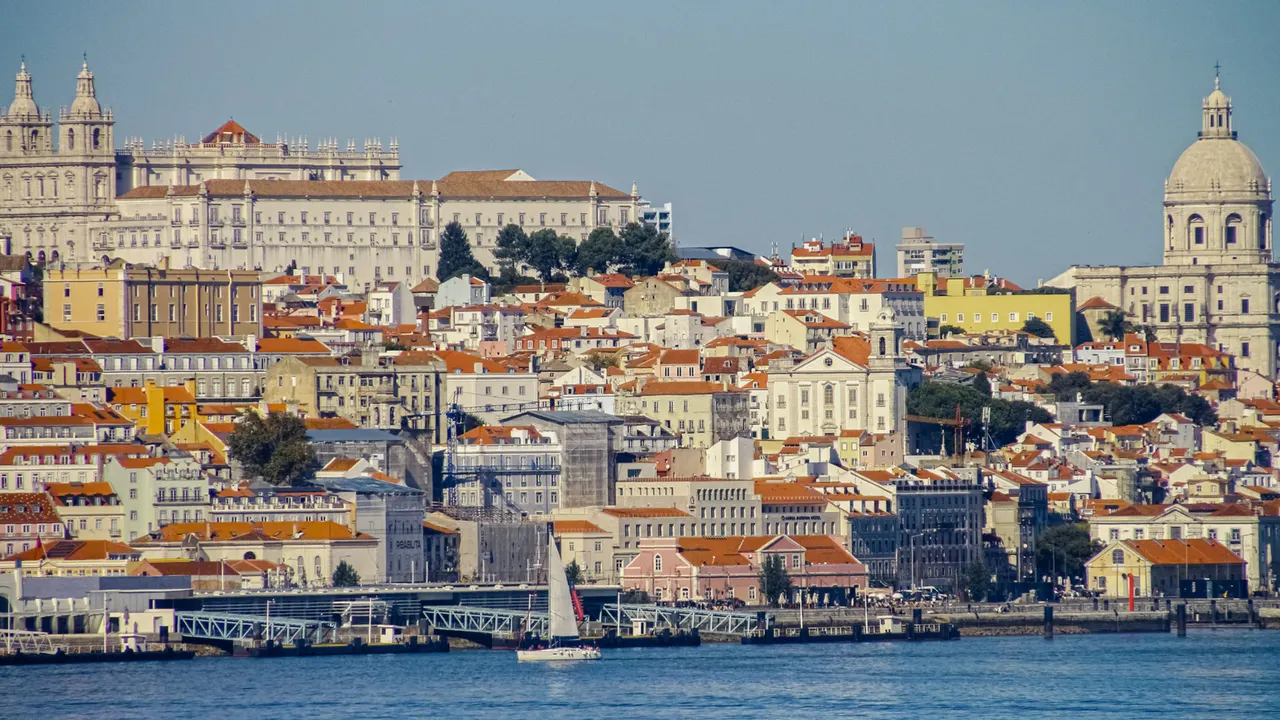
Lisbon is a Tagus River capital built across seven hills, with Alfama lanes, Baixa Pombalina grids, Bairro Alto climbs, and Belém monuments showing how the 1755 earthquake and Atlantic navigation shaped the city. Baixa and Chiado make the central walking spine, Alfama and Graça hold the older Moorish street pattern, and Parque das Nações adds the Expo 98 riverfront east of the center.
Food & drink
Lisbon food centers on pastéis de nata, bacalhau à brás, grilled sardines, caldo verde, bifana sandwiches, amêijoas à Bulhão Pato, ginjinha, and seafood rice. Time Out Market in Mercado da Ribeira, Rua das Portas de Santo Antão, Belém pastry shops, Alfama fado restaurants, and Cais do Sodré counters give the most useful first eating route.
Events & festivals
- Jul 3 – Jul 4
' It’s known for its house, techno, disco and electronic-focused lineup featuring both international and local DJs and producers, all framed by a park-like, open-air amphitheatre that creates a unique atmosphere blending nature, music and city culture.
Source: TripSapien festival dataset
- Jul 9 – Jul 11
Be prepared for sunny weather, an eclectic lineup, and to party all night in Lisbon.
Source: TripSapien festival dataset
- Jul 27 – Jul 31
Cinalfama Lisbon International Film Awards
Lisbon International Film Awards.
Source: TripSapien festival dataset
Top sights
Ranked for July suitability using weather, setting, ratings, and review volume.
- 1Praça do Comércio
- 2Padrão dos Descobrimentos
- 3Oceanário de Lisboa
- 4Castelo de São Jorge
- 5Mosteiro dos Jerónimos
- 6Sé de Lisboa
 1
1Praça do Comércio
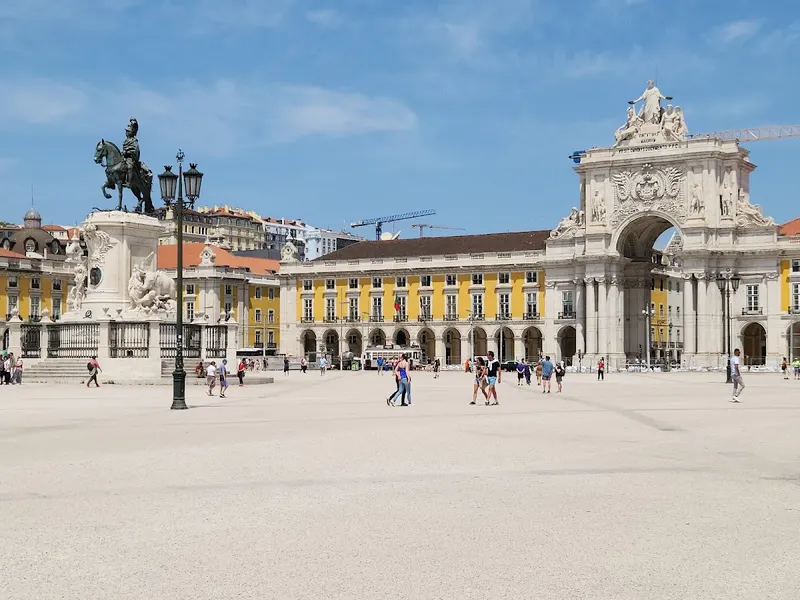
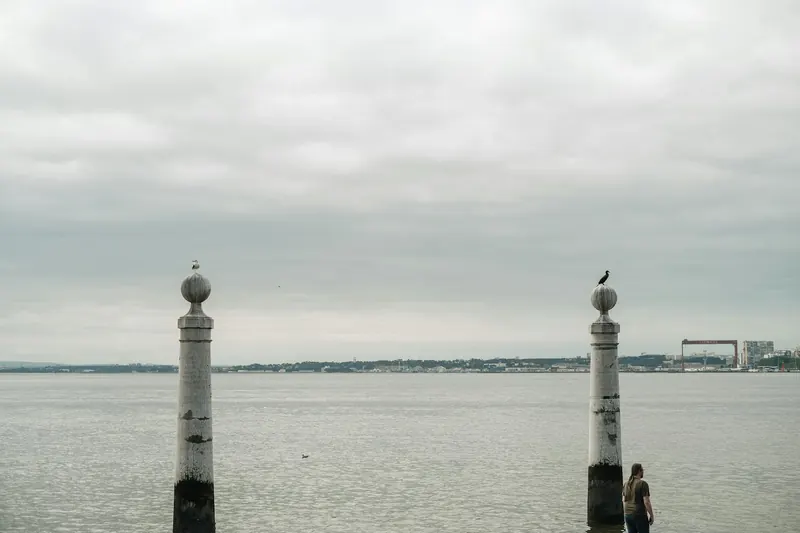
4.7★ · 130,782outdoorOpen dailyThis riverfront square replaced the royal palace area after the 1755 earthquake and opens Baixa toward the Tagus. The Arco da Rua Augusta frames the grid of Rua Augusta behind the equestrian statue of King José I.
Wikipedia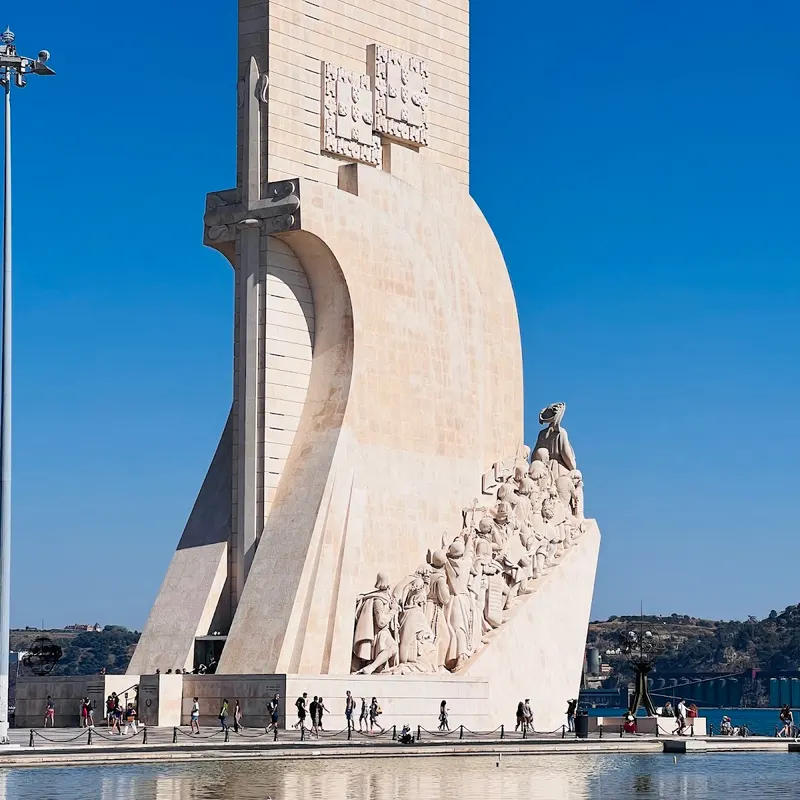 2
2Padrão dos Descobrimentos
4.6★ · 64,350outdoorOpen dailyThe Monument to the Discoveries faces the Tagus near Belém, with sculpted figures connected to Portuguese navigation. The riverside position explains Lisbon as an Atlantic port rather than only a hill city.
Wikipedia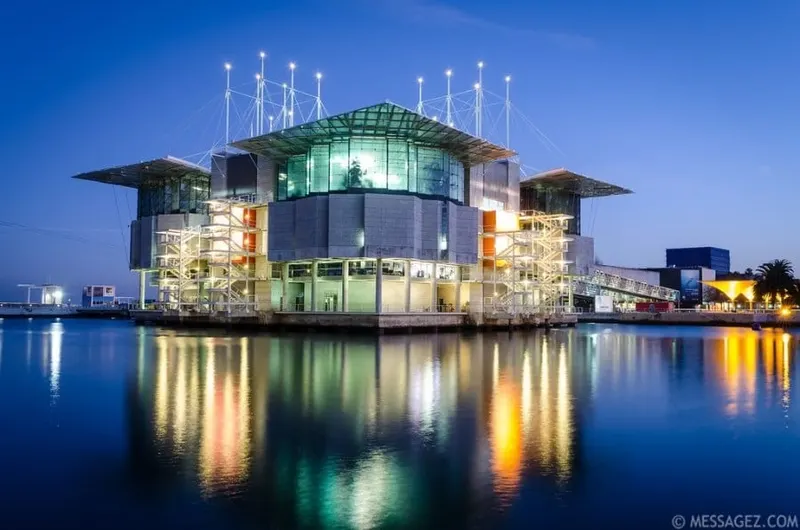 3
3Oceanário de Lisboa
4.7★ · 101,140indoorOpen dailyThe Oceanarium opened for Expo 98 in Parque das Nações and remains the eastern waterfront district highlight. Its central tank and marine exhibits work well with the cable car and Oriente station area.
Show 3 more sights
- 4Castelo de São Jorge
- 5Mosteiro dos Jerónimos
- 6Sé de Lisboa
Neighborhoods
 1
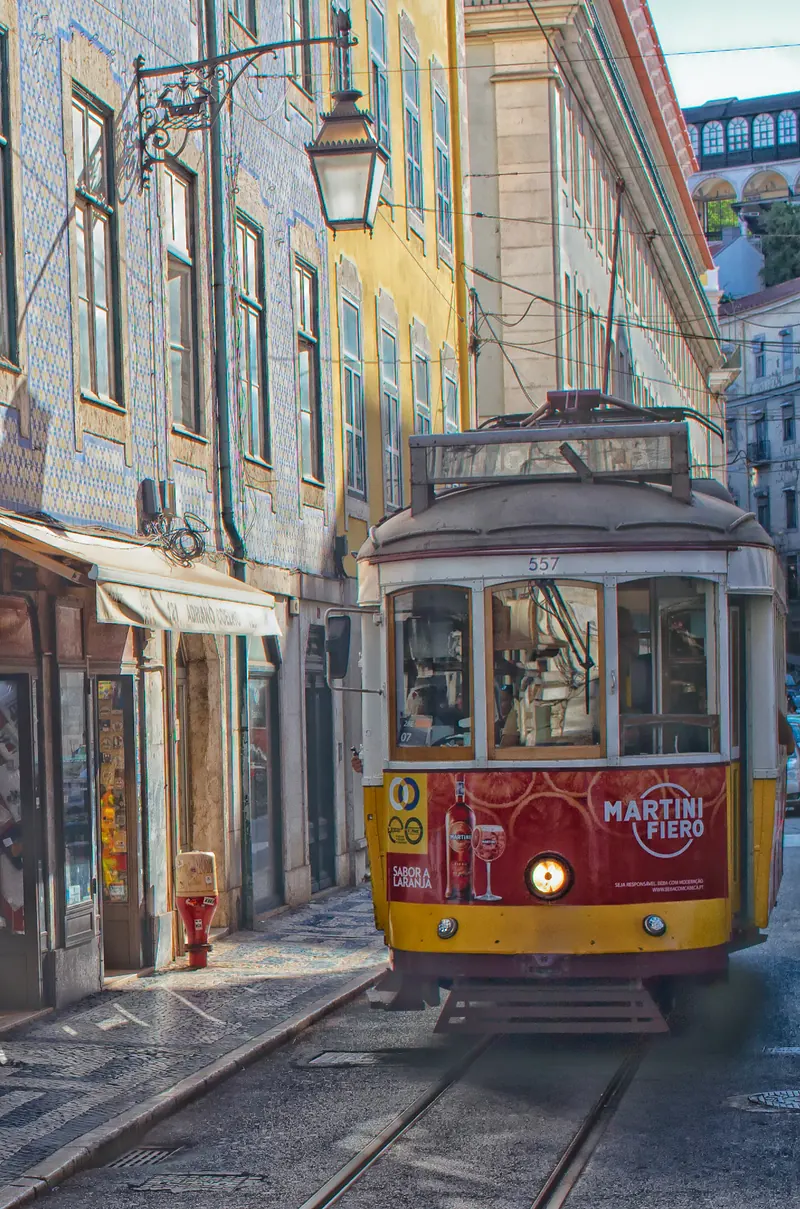
1Alfama and Graça
Alfama and Graça are steep, irregular, and old, with São Jorge Castle, Lisbon Cathedral, fado rooms, miradouros, tile walls, and tram 28 passing tight corners.
 2
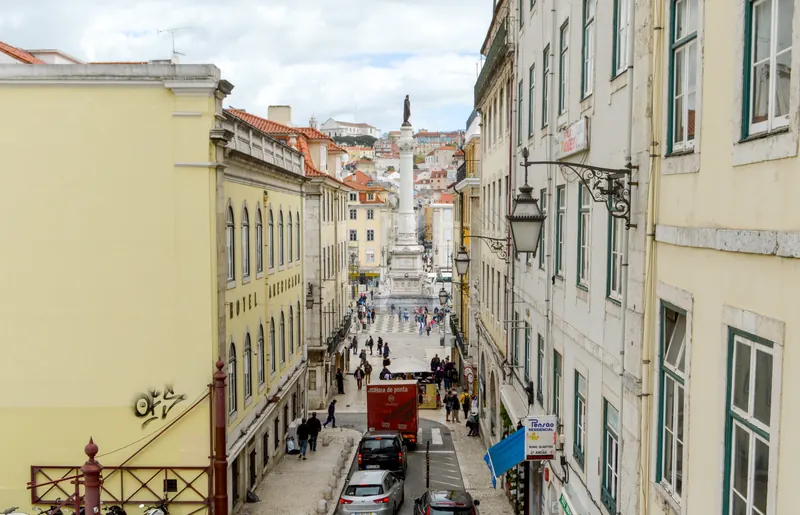
2Baixa and Rossio
Baixa is the 1755 earthquake rebuild, with Rua Augusta, Praça do Comércio, Rossio, Praça da Figueira, and flat streets that make the easiest first-day walk.
 3
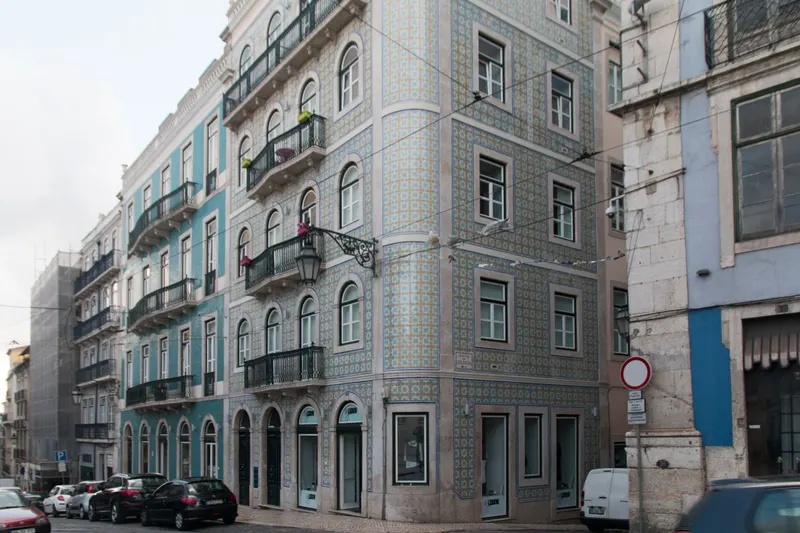
3Chiado and Bairro Alto
Chiado and Bairro Alto sit above Baixa with Carmo ruins, theatres, bookstores, Rua Garrett shops, tiny bars, fado rooms, and elevators or funiculars for the climb.
 4
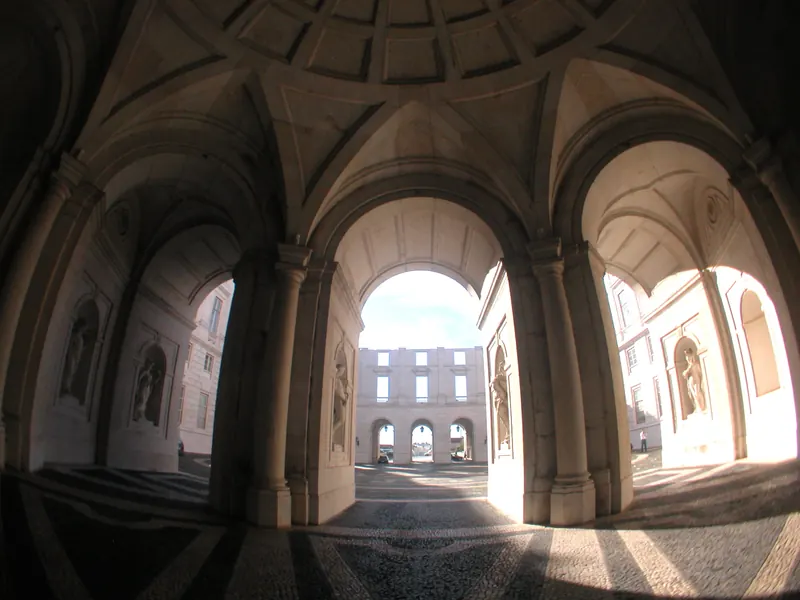
4Belém and Ajuda
Belém and Ajuda face the Tagus with Jerónimos Monastery, Belém Tower, the Monument to the Discoveries, the coach museum, gardens, and pastéis de nata queues.
 5
5Cais do Sodré and Santos
Cais do Sodré and Santos link ferry piers, the Time Out Market, Pink Street bars, design shops, and train access to Cascais and Estoril.
 6
6Parque das Nações
Parque das Nações is Expo 98 Lisbon, with Oriente station, the Oceanarium, river promenades, cable cars, modern hotels, and broad bike paths.
Getting around
Use Navegante cards for Lisbon Metro, Carris buses, trams, funiculars, suburban trains, and ferries; metro lines are strongest for airport, Baixa-Chiado, Santa Apolónia, and Oriente. Tram 15E reaches Belém from the center, tram 28E crosses Alfama and Bairro Alto hills, and walking works best inside Baixa, Chiado, and Alfama if cobblestones and slopes are manageable.
Madrid
Madrid in July
TempTemperature
92°F / 65°F
33.4°C / 18.6°C
RainPrecipitation
2d
0.6in · 15mm
LightDaylight
14.6h
July is very hot and dry, making siesta pacing, shaded museums, and late dinners essential.
City overview
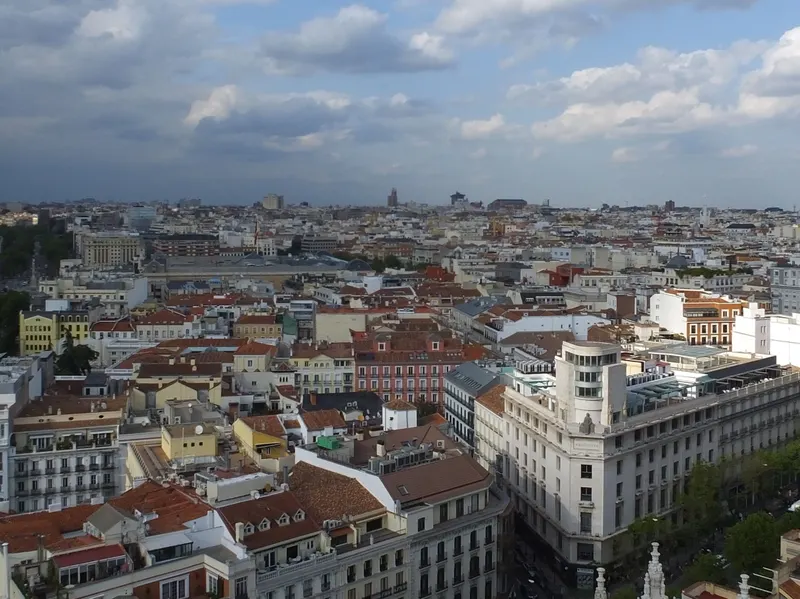
Madrid sits high on Spain's central plateau, with Sol, La Latina, Lavapiés, Malasaña, Chueca, Salamanca, Chamberí, Retiro, and Paseo del Arte linking royal power, late meals, football, art museums, plazas, and park life. The city's visitor rhythm is built around the Prado-Reina Sofía-Thyssen museum triangle by day and tapas streets around La Latina, Huertas, and Malasaña at night.
Food & drink
Madrid food is late, fried, and tavern-led: bocadillo de calamares stuffs fried squid rings into a crusty roll, cocido madrileno serves chickpea-and-meat stew in stages, tortilla espanola sets potato and egg into a thick omelet, and churros con chocolate anchors early-morning or late-night stops. Mercado de San Miguel, La Latina's Cava Baja, San Ginés, Lavapiés, Huertas, Chamberí taverns, and Mercado de la Paz add callos, jamon iberico, croquetas, patatas bravas, vermouth, and tapas crawls.
Events & festivals
- Dates unconfirmed
Madrid Gay Pride
Annual event held between the last week of June and the first of July, with more than 1.
Planning lead · dates set closer in · Source: Month Signals
- Jul 4
Associated occasion: Pride Day / Pride Month.
Source: TripSapien festival dataset
- Jul 8 – Jul 11
Simply put, Mad Cool Festival puts together one of the best lineups in the world.
Source: TripSapien festival dataset
Top sights
Ranked for July suitability using weather, setting, ratings, and review volume.
- 1Royal Palace of Madrid
- 2Plaza Mayor
- 3Mercado de San Miguel
- 4Templo de Debod
- 5Gran Vía
- 6Prado Museum
- 7Thyssen-Bornemisza Museum
- 8Santiago Bernabéu Stadium
- 9Reina Sofía Museum
 1
1Royal Palace of Madrid
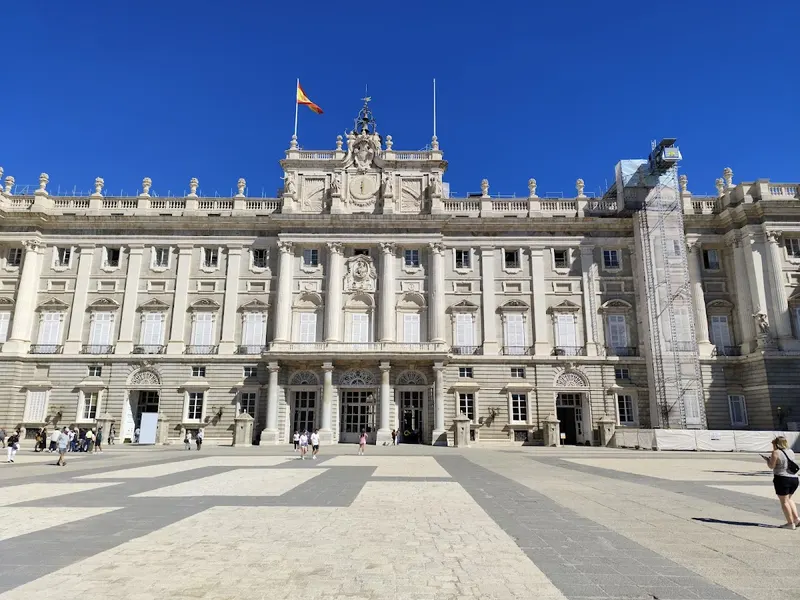
4.7★ · 128,967outdoorOpen dailyThe Bourbon palace was built in the 18th century on the old Alcázar site and includes state rooms, armory, pharmacy, frescoes, and royal collections. It stands beside Almudena Cathedral and Plaza de Oriente.
Wikipedia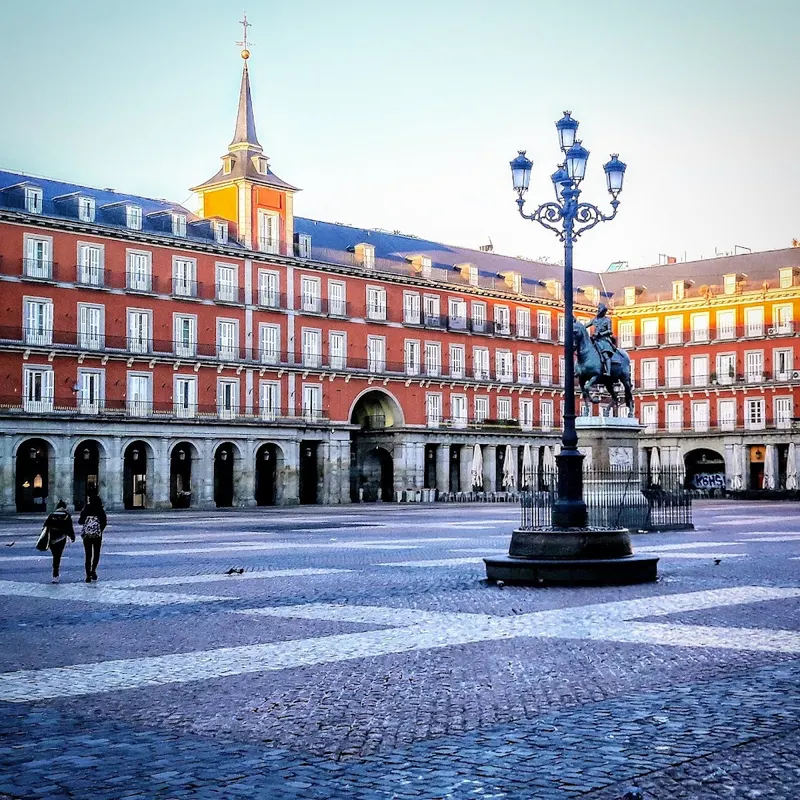 2
2Plaza Mayor
4.6★ · 200,855outdoorThe arcaded Habsburg square was laid out in the 17th century and still frames cafes, arches, street performers, and seasonal markets. It is a short walk from Sol and Mercado de San Miguel.
 3
3Mercado de San Miguel
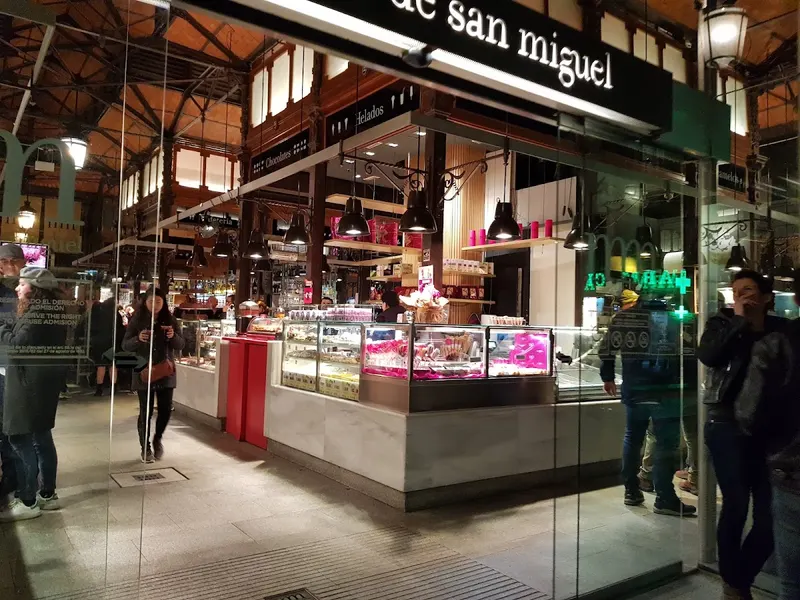
4.4★ · 159,914outdoorOpen dailyThe 1916 iron-and-glass market hall near Plaza Mayor now concentrates tapas counters, seafood, vermouth, ham, olives, and sweets. It is popular and crowded but useful for first-time sampling.
Wikipedia
Show 6 more sights
- 4Templo de Debod
- 5Gran Vía
- 6Prado Museum
- 7Thyssen-Bornemisza Museum
- 8Santiago Bernabéu Stadium
- 9Reina Sofía Museum
Neighborhoods
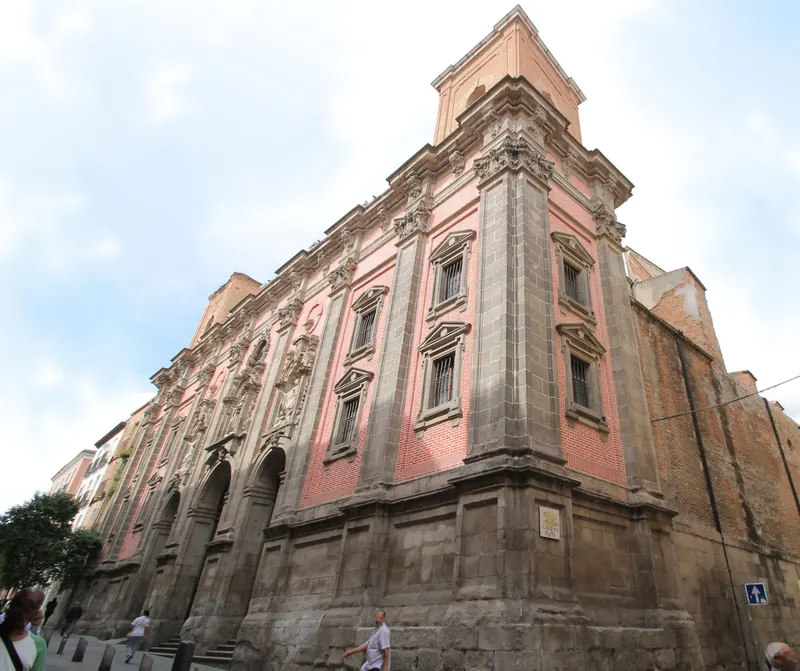 1
1Sol, Letras, and Lavapiés
Sol, Letras, and Lavapiés are central and mixed, with Puerta del Sol, Huertas bars, theatres, immigrant restaurants, galleries, and Atocha access.
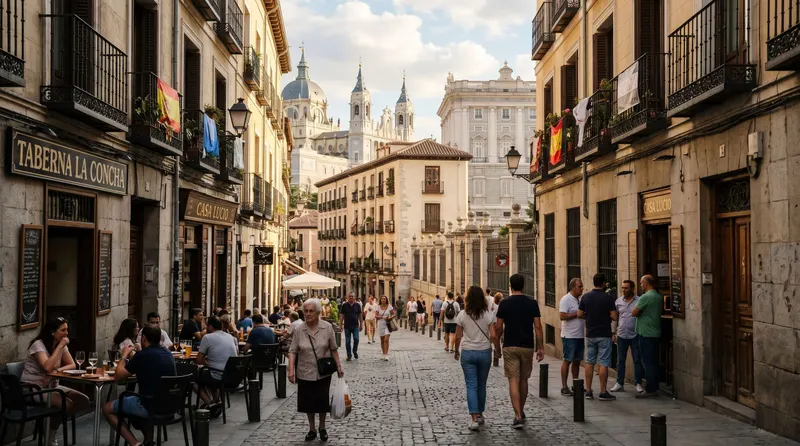 2
2La Latina and Austrias
La Latina and Austrias are old-town Madrid, with Plaza Mayor, Cava Baja tapas, El Rastro, Royal Palace, Almudena, and narrow lanes.
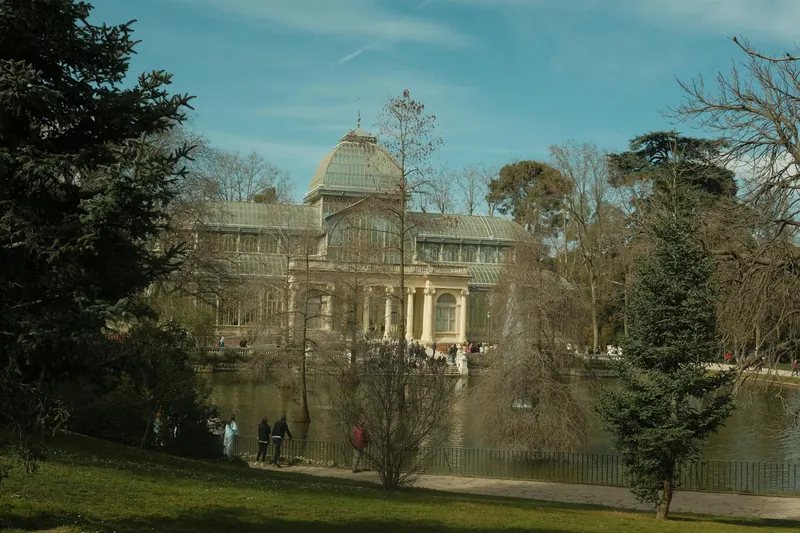 3
3Retiro and Paseo del Arte
Retiro and Paseo del Arte are museum-and-park focused, with Prado, Reina Sofía, Thyssen, Cibeles, Atocha, and shaded park routes.
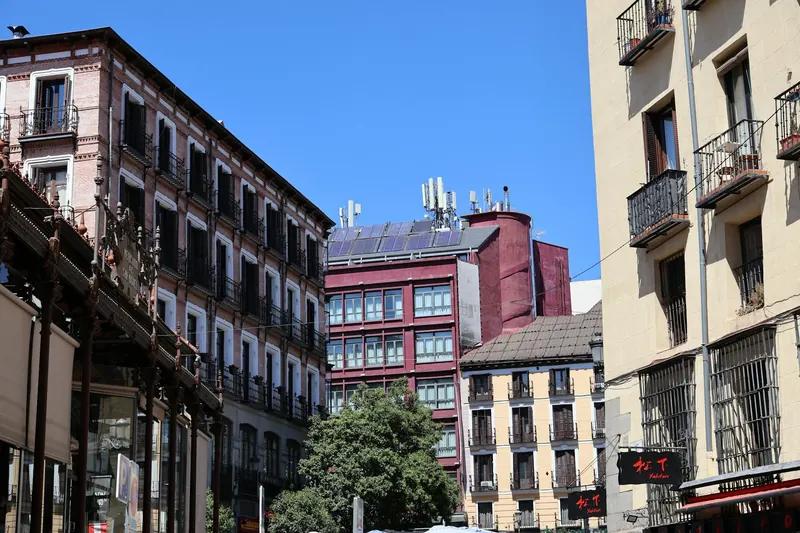 4
4Malasaña and Chueca
Malasaña and Chueca are nightlife-and-design dense, with Conde Duque, Fuencarral, Plaza del Dos de Mayo, bars, cafes, and LGBTQ nightlife.
 5
5Salamanca
Salamanca is polished and shopping-led, with Serrano, Ortega y Gasset, Retiro edges, restaurants, galleries, and upscale hotels.
 6
6Chamberí and Castellana
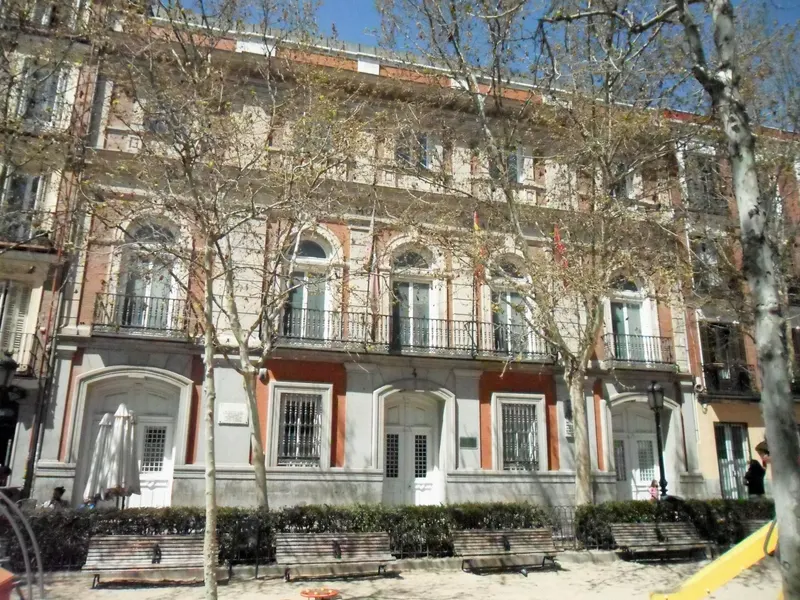
Chamberí and Castellana feel local and residential, with canal-side museums, plazas, old taverns, office towers, and Bernabéu access.
Getting around
Metro de Madrid, Cercanias trains, buses, and contactless Multi cards cover the city and suburbs. Use Metro for neighborhoods and stadiums, Cercanias for Atocha-Chamartín links and El Escorial, and AVE trains for Toledo and Segovia.
Barcelona
Barcelona in July
TempTemperature
83°F / 69°F
28.4°C / 20.7°C
RainPrecipitation
2d
0.8in · 20mm
LightDaylight
14.7h
Sea
81°F
27.2°C
July is hot and crowded, so book Gaudí tickets early and use mornings for exposed Montjuïc sites.
City overview
Barcelona is the Catalan Mediterranean city where the Collserola hills, Montjuïc, and the old port frame Eixample blocks, Gothic lanes, and Barceloneta beaches. Its strongest days link Gaudí architecture in Eixample and Gràcia with medieval streets in the Gothic Quarter and El Born, then finish on the waterfront or a Poble-sec tapas crawl.
Food & drink
Barcelona food is Catalan before it is generic Spanish: pa amb tomaquet is bread rubbed with tomato, olive oil, and salt, bombas are fried potato-and-meat balls with brava sauce or allioli, and fideua swaps paella rice for short noodles. La Boqueria, Santa Caterina Market, Carrer de Blai in Poble-sec, Barceloneta seafood houses, and Gràcia plazas add escalivada, seafood rice, crema catalana, jamon, calcots in season, and vermouth with conservas.
Events & festivals
- Jun 26 – Jul 4
International short film festival: fantasy, horror or sci-fi.
Source: TripSapien festival dataset
- Dates unconfirmed
The most famous and biggest one day/night electronic music festivals in Spain is in the desert of Fraga, from Barcelona.
Planning lead · dates set closer in · Source: Month Signals
- Jul 2 – Jul 4
Tucked away in the woody reserves of the ancient Masia de Can Parellada just south of Barcelona, this boutique fest has become a welcome addition to the Spanish summer.
Source: TripSapien festival dataset
- Jul 3 – Jul 5
Rock Fest Barcelona is a rock and heavy metal festival held in Barcelona.
Source: TripSapien festival dataset
- Jul 8 – Jul 11
It's summer in the city and Cruilla Barcelona arrives to continue the party with a full weekend of music at the Parc del Fòrum (the same home of Primavera Sound).
Source: TripSapien festival dataset
- Jul 17 – Jul 18
SoundIT Festival was born with a clear intention, to create a space where you can discover, dance and feel with 5 stages, 2 days, 24 hours of music and more than 60 artists.
Source: TripSapien festival dataset
Top sights
Ranked for July suitability using weather, setting, ratings, and review volume.
- 1Casa Batlló
- 2Mercat de la Boqueria
- 3Park Güell
- 4Barceloneta Beach and Port Vell
- 5Sagrada Família
- 6Palau de la Música Catalana
- 7Montjuïc and Museu Nacional d'Art de Catalunya
- 8La Pedrera - Casa Milà
- 9Barcelona Cathedral and the Gothic Quarter
- 10Picasso Museum
 1
1Casa Batlló
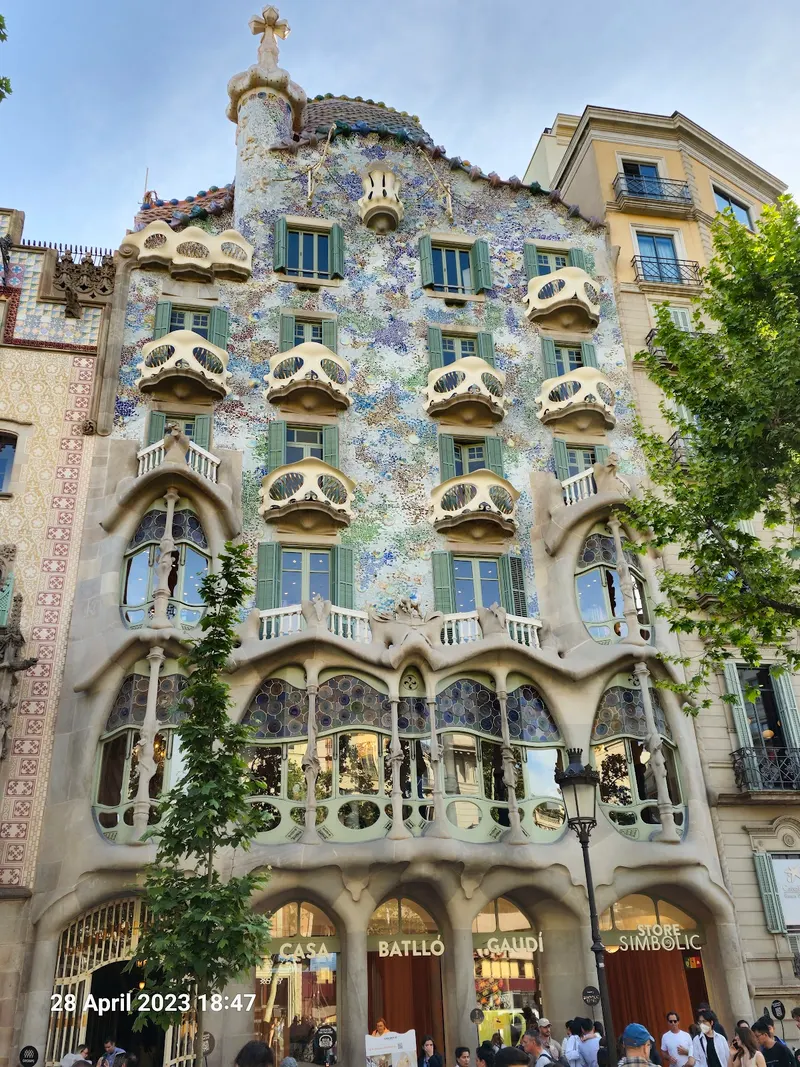
4.7★ · 206,425outdoorOpen dailyGaudí remodeled the Passeig de Gràcia house from 1904 to 1906 with a skeletal facade, tiled roof, light well, and marine interior details. It stands a short walk from Plaça de Catalunya and La Pedrera.
Wikipedia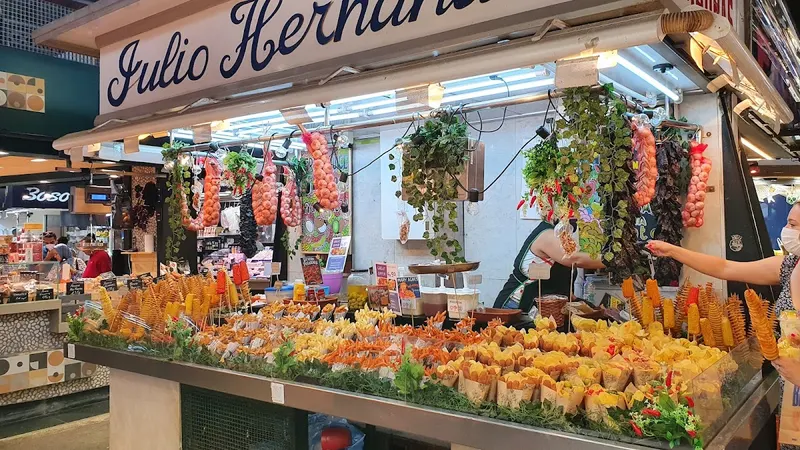 2
2Mercat de la Boqueria
4.5★ · 211,136outdoorClosed SunLa Boqueria traces market activity on La Rambla for centuries and the present iron market hall dates from the 19th century. Fruit stalls, seafood counters, jamon, and tapas bars make it a central food stop near the Gothic Quarter.
Wikipedia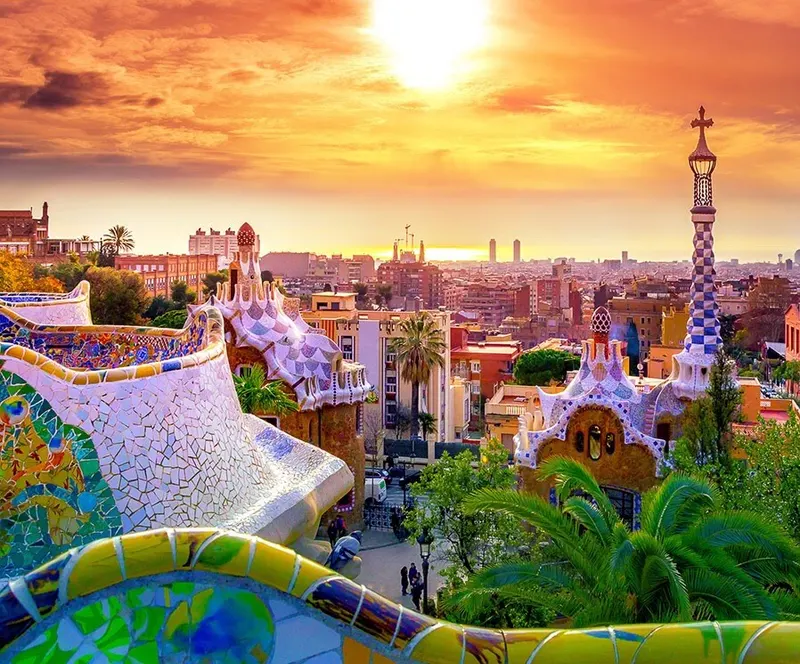 3
3Park Güell
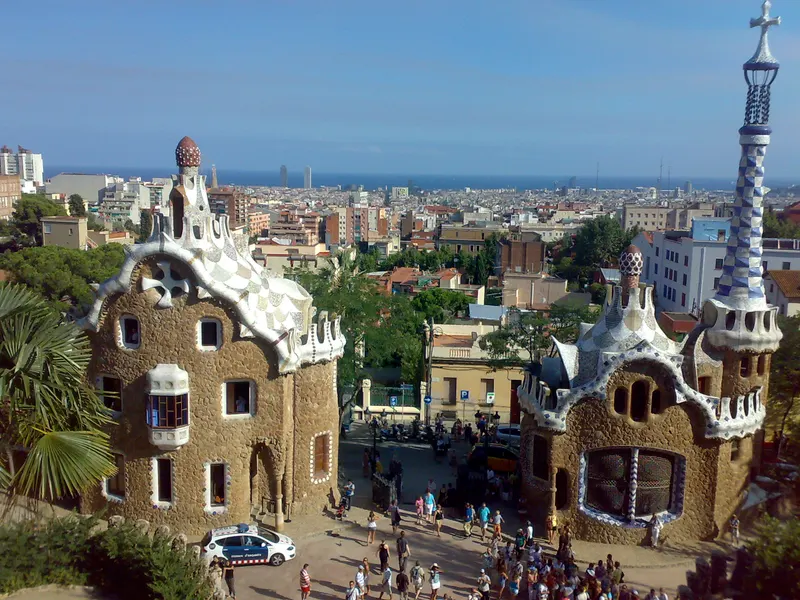
4.4★ · 234,370outdoorOpen dailyGaudí and patron Eusebi Güell developed the hillside garden-city project between 1900 and 1914. The mosaic terrace, serpentine bench, dragon stairway, Hypostyle Room, and city views sit above Gràcia.
WikipediaThe Monumental Zone requires timed entry and is easiest by bus or taxi uphill.
Show 7 more sights
- 4Barceloneta Beach and Port Vell
- 5Sagrada Família
- 6Palau de la Música Catalana
- 7Montjuïc and Museu Nacional d'Art de Catalunya
- 8La Pedrera - Casa Milà
- 9Barcelona Cathedral and the Gothic Quarter
- 10Picasso Museum
Neighborhoods
 1
1Eixample
Eixample is ordered and architectural, with chamfered blocks, Passeig de Gràcia, Sagrada Família, Casa Batlló, La Pedrera, boutiques, and broad cafe corners.
 2
2Barri Gòtic
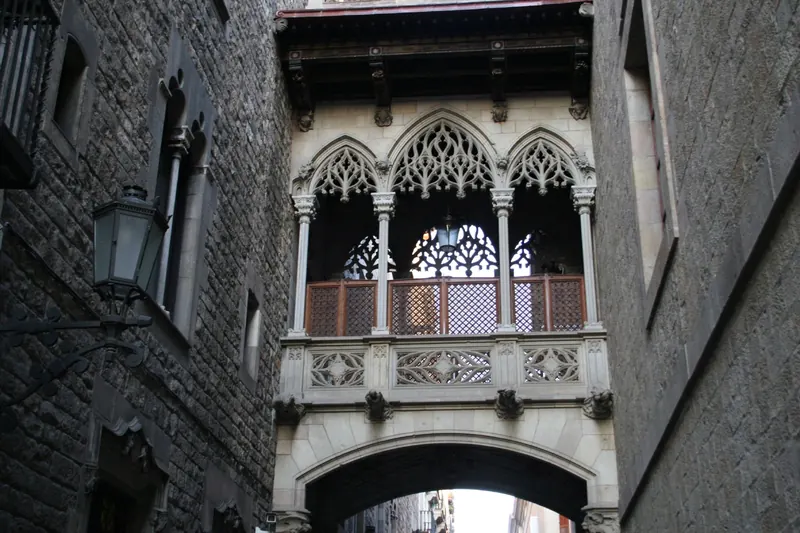
The Gothic Quarter is dense and medieval, with Barcelona Cathedral, Plaça del Rei, Roman walls, Plaça Sant Jaume, bars, shops, and heavy pedestrian flow.
 3
3El Born and La Ribera
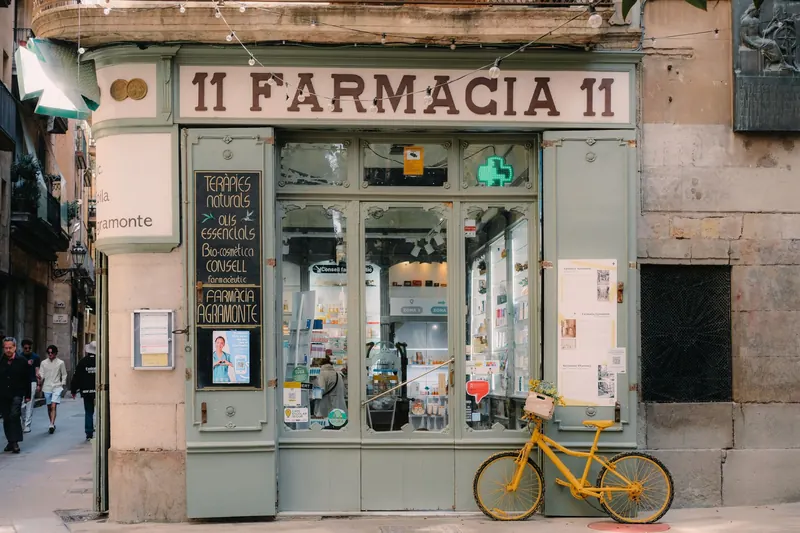
El Born is creative and evening-ready, with Santa Maria del Mar, Picasso Museum, Carrer de Montcada palaces, cocktail bars, and small design stores.
 4
4Gràcia
Gràcia feels village-like and local, with Plaça del Sol, small cinemas, independent shops, vermouth bars, and uphill access toward Park Güell.
 5
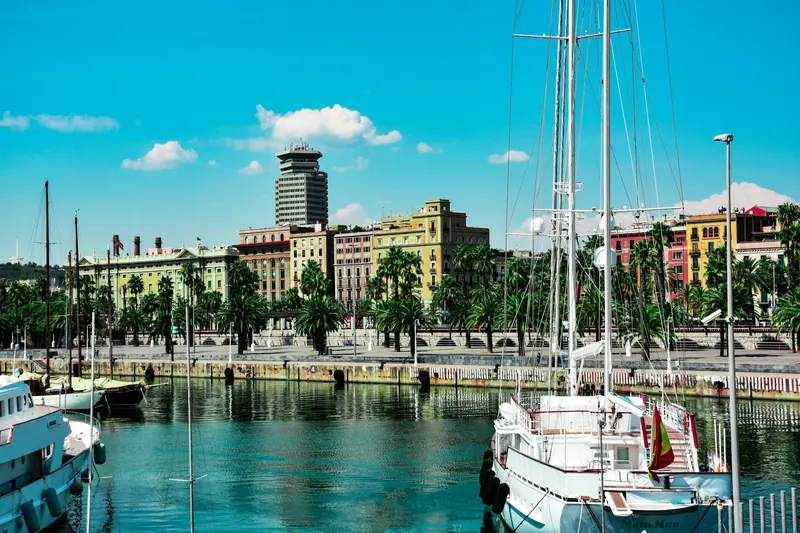
5Barceloneta and Port Vell
The waterfront side is salty and open, with beaches, seafood counters, marina walks, Port Vell, beach clubs, and bike paths.
 6
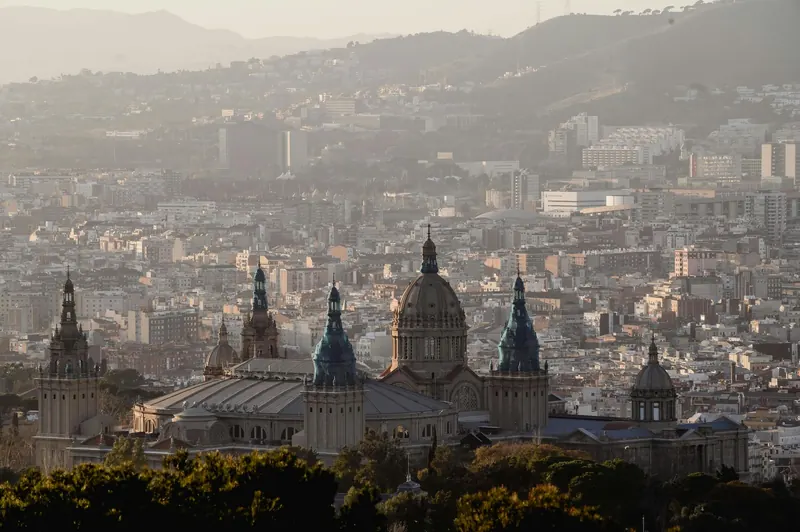
6Poble-sec and Montjuïc
Poble-sec is tapas-heavy and hill-backed, with Carrer de Blai, theaters on Paral-lel, Montjuïc gardens, Olympic sites, and MNAC above it.
Getting around
TMB metro, buses, trams, Rodalies trains, FGC trains, and integrated T-casual or contactless tickets cover nearly every visitor route. The Gothic Quarter, El Born, Barceloneta, and Eixample are best linked by walking and metro hops rather than taxis through narrow streets.
Planning the Iberia route?
Add your dates and we'll pace all 3 cities — every place checked for closures, limited hours, and booking needs in July.
Weather by month for the Iberia trip
In July, climate averages for Lisbon, Madrid and Barcelona show daytime highs from 28°C / 82°F to 33°C / 91°F, with nights down to about 18°C / 64°F in the coolest of those cities. The rainiest of those cities averages about 2 rainy days. Based on climate averages for Lisbon, Madrid and Barcelona, July is mixed for weather comfort.
The most comfortable months for this route are September, May and June, based on average daytime temperatures and rainfall in Lisbon, Madrid and Barcelona. July 2026 is mixed for weather comfort.
Common questions about the Iberia trip
- When is the best time to do the Iberia trip?
- The most comfortable months across Lisbon, Madrid and Barcelona are September, May and June, based on average daytime temperatures and rainfall for those cities. July is mixed for weather comfort — see the city climate sections below for the averages in July 2026.
- How many days do you need for the Iberia trip?
- A comfortable Iberia trip runs about 8–10 days, allowing roughly Lisbon 3, Madrid 2, Barcelona 3 nights plus travel between stops. Add a day if you want a slower pace or extra day trips.
- What's the route for the Iberia trip?
- The classic order is Lisbon, Madrid & Barcelona. The detailed month sections below cover Lisbon, Madrid and Barcelona.
Ready to plan the Iberia trip?
Turn this route into a day-by-day plan for July 2026, every stop checked for closures and booking needs on your exact dates.