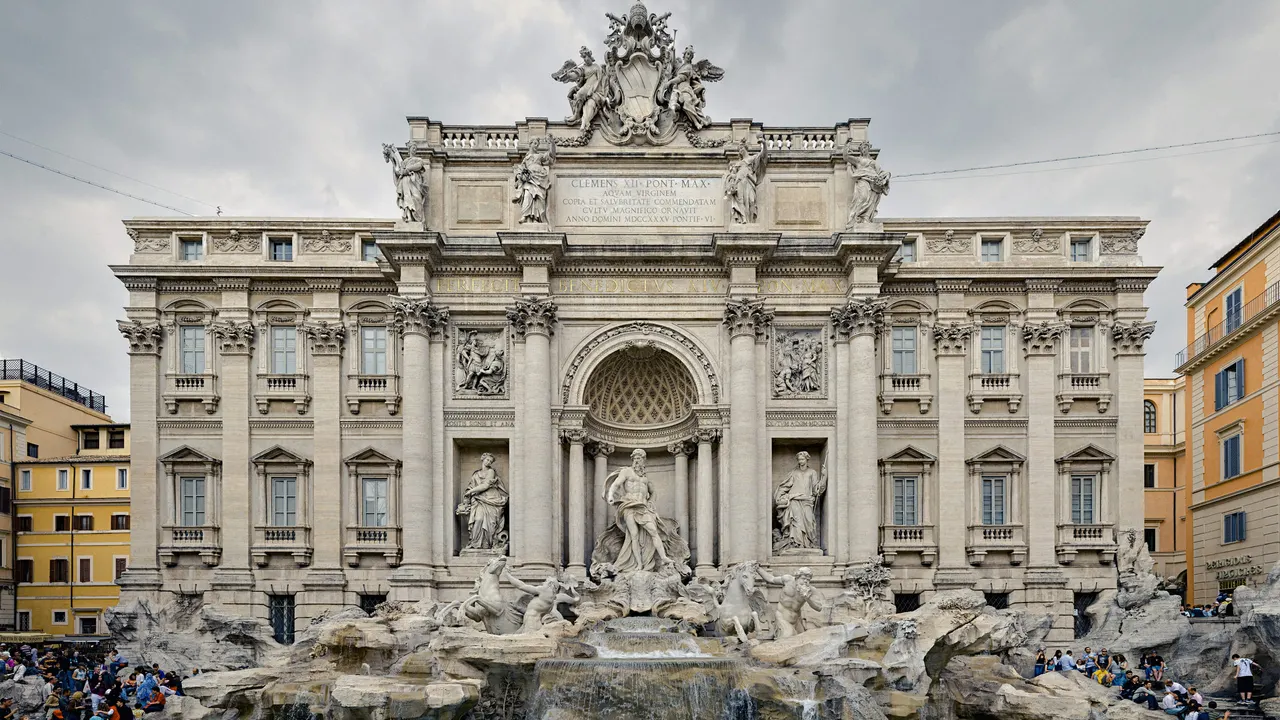
Southern Italy itinerary — July 2026
For the Southern Italy trip (Rome, Naples & the Amalfi Coast), July 2026 is mixed for weather comfort. Daytime highs sit around 31°C / 88°F in Rome and Naples. Plan around 6–8 days for the full Rome, Naples & the Amalfi Coast loop.
In this order — about 6–8 days:
- Rome3 nights
- Naples3 nights
- Route noteReserve the longest intercity leg first and keep transfer days free of timed sights.
By TripSapien · Updated October 22, 2026
Rome
Rome in July
TempTemperature
89°F / 69°F
31.8°C / 20.5°C
RainPrecipitation
8d
0.9in · 21.6mm
LightDaylight
15.2h
Sea
78.6°F
25.9°C
July is hot and dry, so schedule Colosseum or Vatican entries early and carry water between fountains.
City overview
Rome is built around the Tiber crossing, the Seven Hills, and 2,500 years of reuse: imperial forums, Renaissance piazzas, Baroque fountains, and Vatican territory sit within a few metro stops. First-time visitors usually split time between Centro Storico, Colosseo, Trastevere, Prati, Testaccio, and the Villa Borghese/Spanish Steps side of the north centre.
Food & drink
Rome is a pasta-and-market city first: carbonara, cacio e pepe, amatriciana, gricia, supplì, carciofi alla giudia, and thin Roman pizza all have local anchors. Testaccio and Trastevere handle trattoria dinners, the Jewish Ghetto is the place to look for artichokes, and coffee/gelato remain cheaper at stand-up counters than at seated piazza tables despite Rome's Michelin-level fine dining scene.
Events & festivals
- Dates unconfirmed
If you are in Rome during summertime don’t miss the chance to experience a lyric opera in the truly unique setting of the Caracalla Baths.
Planning lead · dates set closer in · Source: Month Signals
- Jul 13 – Jul 18
Top sights
Ranked for July suitability using weather, setting, ratings, and review volume.
- 1Colosseum
- 2Pantheon
- 3Trevi Fountain
- 4Spanish Steps & Trinità dei Monti
- 5Piazza Navona, Campo de' Fiori & the Jewish Ghetto
- 6Trastevere & Testaccio
- 7Roman Forum & Palatine Hill
- 8St Peter's Basilica & Vatican Museums
- 9Villa Borghese & Galleria Borghese
- 10Via Appia Antica
 1
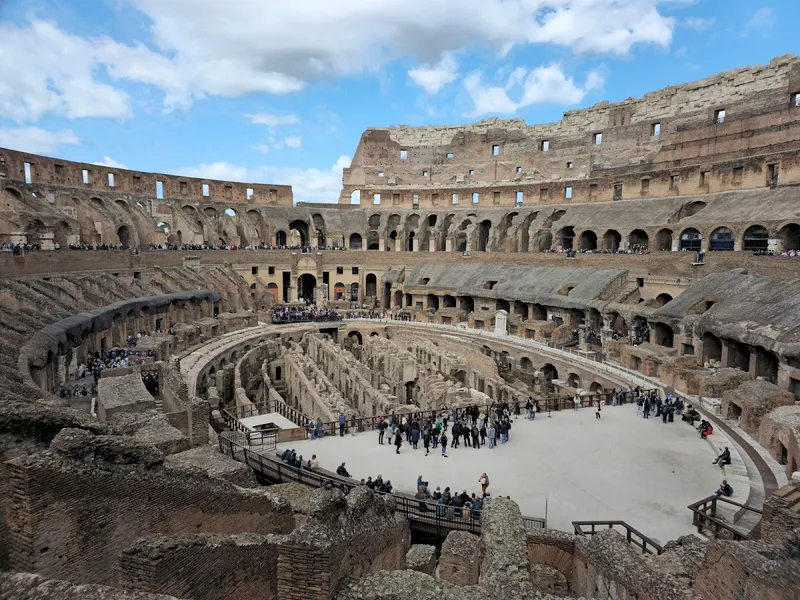
1Colosseum
4.8★ · 493,292outdoorOpen dailyThe Flavian amphitheatre anchors the Colosseo district and is the visual shorthand for imperial Rome. It pairs with the Roman Forum and Palatine Hill on the same archaeological axis.
WikipediaTimed tickets and identity checks are normal; reserve the arena or underground tiers only when the ticket explicitly includes them.
 2
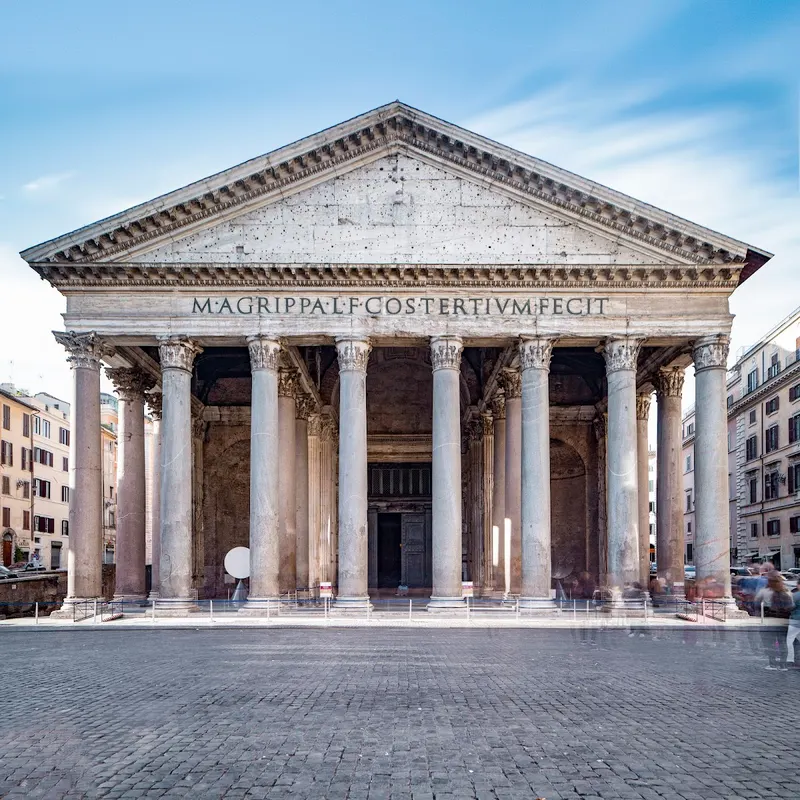
2Pantheon
4.8★ · 279,735outdoorOpen dailyThe ancient temple-turned-church keeps its concrete dome and central oculus intact in the middle of the old city. Piazza della Rotonda makes it easy to combine with coffee, gelato, and nearby churches.
 3
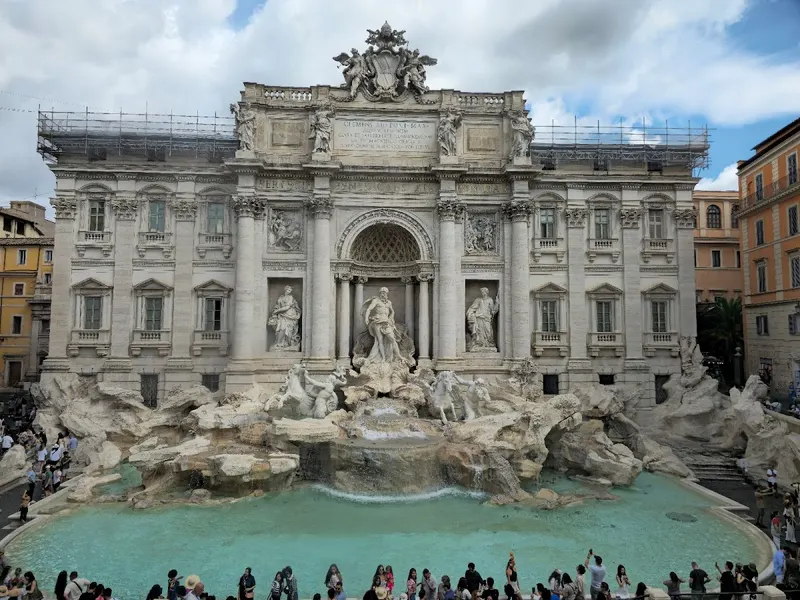
3Trevi Fountain
4.7★ · 506,090outdoorOpen dailyThe Baroque fountain sits in a tight piazza between the Pantheon and Spanish Steps walking routes. Early morning is the only reliable quiet window.
Wikipedia
Show 7 more sights
- 4Spanish Steps & Trinità dei Monti
- 5Piazza Navona, Campo de' Fiori & the Jewish Ghetto
- 6Trastevere & Testaccio
- 7Roman Forum & Palatine Hill
- 8St Peter's Basilica & Vatican Museums
- 9Villa Borghese & Galleria Borghese
- 10Via Appia Antica
Neighborhoods
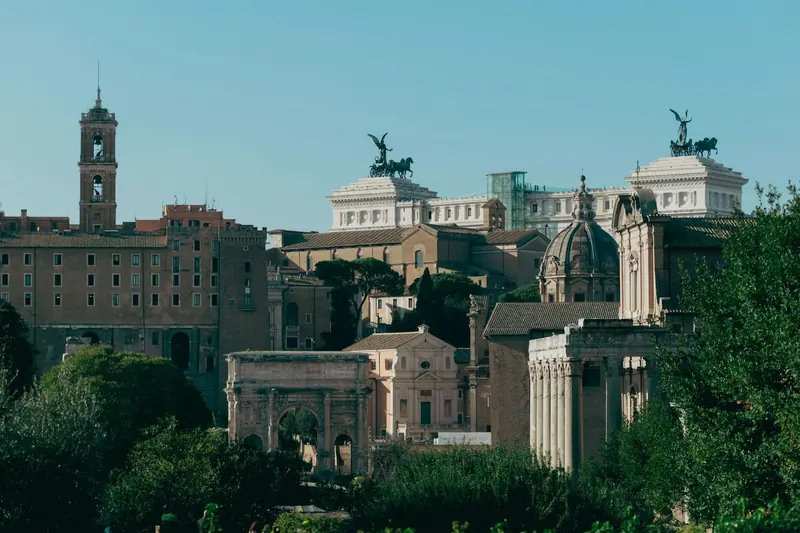 1
1Centro Storico
The old centre is a maze of piazzas and church facades around the Pantheon, Piazza Navona, Campo de' Fiori, and the Jewish Ghetto. It is walkable, expensive, and unbeatable for first-night Rome.
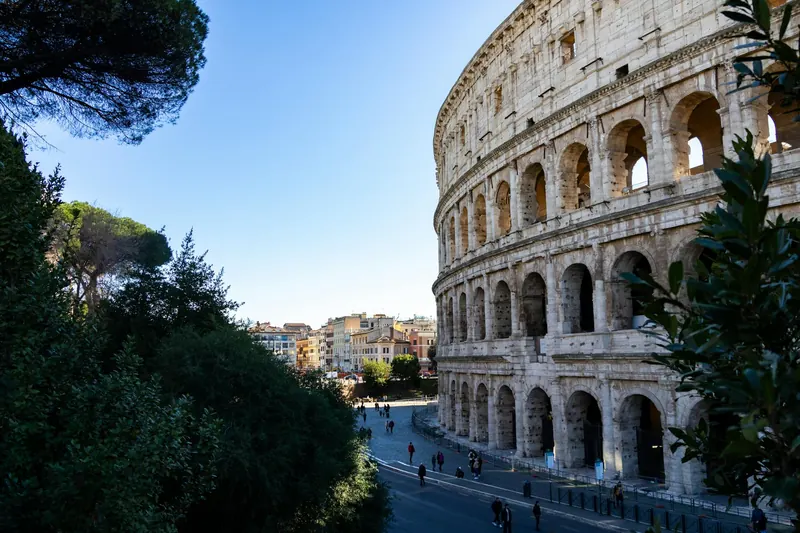 2
2Colosseo & Monti
Colosseo is ancient stone and tour groups; Monti just north of it adds wine bars, boutiques, and sloped lanes around Via Urbana. It is a strong base when the Forum and Palatine matter more than Vatican mornings.
 3
3Prati & Vatican
Prati is gridded, calmer, and useful for Vatican Museums entries, St Peter's Basilica, and shopping on Via Cola di Rienzo. It feels less medieval than Centro Storico and works well for families.
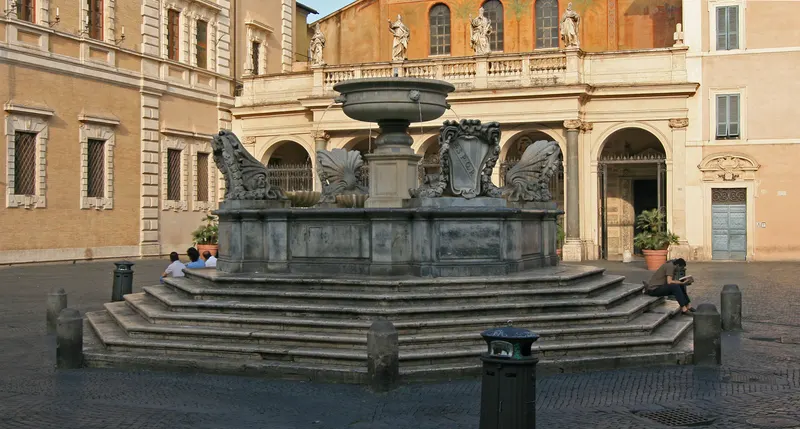 4
4Trastevere
Trastevere sits west of the Tiber with cobbled lanes, Santa Maria in Trastevere, aperitivo crowds, and trattorias. Sleep here for evening atmosphere, not fast metro access.
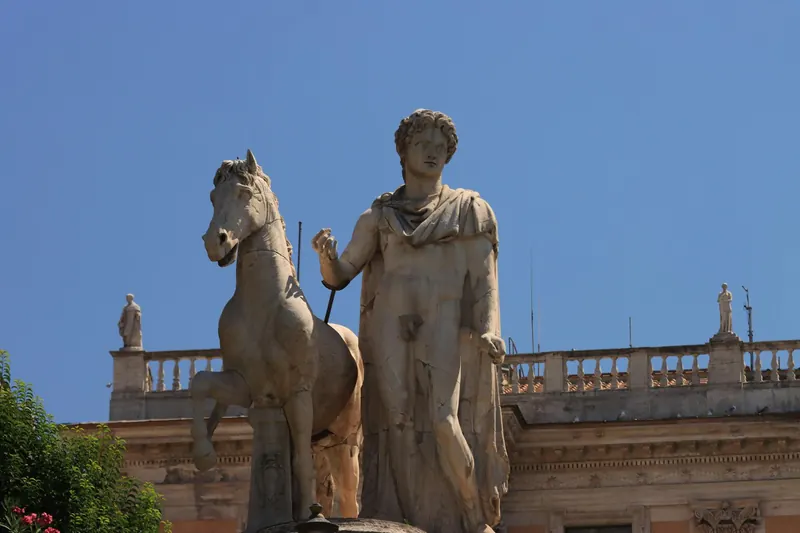 5
5Testaccio & Aventino
Testaccio is Rome's food district, anchored by the market, Monte Testaccio, and old slaughterhouse spaces. Aventino above it is quieter, with orange gardens and the famous keyhole view.
 6
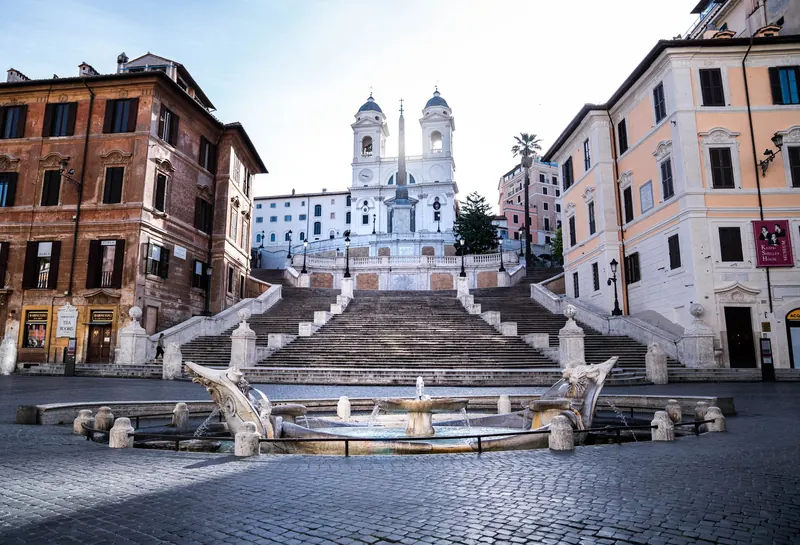
6Spanish Steps, Via Veneto & Villa Borghese
This northern-centre zone is Rome at its polished end: hotels, fashion streets, embassies, the Trevi-Spagna walk, and park access. It costs more but reduces taxi time for gallery-heavy days.
Getting around
Rome uses ATAC buses, trams, and Metro lines A, B, and C; contactless fares are EUR1.50 per 100-minute ride with a EUR7 daily cap, and Termini is the main rail/metro interchange. The Leonardo Express links Fiumicino Airport to Termini in about 30 minutes, but walking is still fastest inside Centro Storico because many marquee sights sit off the metro grid.
Naples
Naples in July
TempTemperature
87°F / 69°F
30.6°C / 20.4°C
RainPrecipitation
2d
1in · 25mm
LightDaylight
14.7h
Sea
79.7°F
26.5°C
July is very hot and dry, making exposed ruins and Vesuvius climbs best at opening time.
City overview
Naples is the Bay of Naples port city where Spaccanapoli cuts through a UNESCO historic center, Mount Vesuvius anchors the horizon, and ferries, funiculars, markets, and pizzerias keep the city moving at street level. The essential map runs from Centro Storico and Quartieri Spagnoli to Chiaia, Vomero, Sanità, and the waterfront castles, with Pompeii, Herculaneum, Capri, and the Amalfi Coast close enough to shape almost every itinerary.
Food & drink
Naples food is pizza and street frying before fine dining: pizza marinara uses tomato, garlic, oregano, and oil, margherita adds mozzarella and basil, pasta e patate cooks pasta with potatoes until creamy, and ragu napoletano is a long-simmered meat sauce. Via dei Tribunali, Pignasecca market, Porta Nolana fish stalls, Chiaia dining rooms, and Vomero pizzerias add spaghetti alle vongole, cuoppo fritto, sfogliatella, baba, espresso, and Campania buffalo mozzarella.
Events & festivals
- Jul 23 – Jul 24
A summer concert series, Noisy Naples brings the biggest bands in the world to Flegrea Arena for huge shows.
Source: TripSapien festival dataset
Top sights
Ranked for July suitability using weather, setting, ratings, and review volume.
- 1Spaccanapoli and Centro Storico
- 2Naples Cathedral and San Gennaro Chapel
- 3Teatro di San Carlo
- 4Cappella Sansevero
- 5Naples National Archaeological Museum
- 6Royal Palace of Naples and Piazza del Plebiscito
- 7Museo e Real Bosco di Capodimonte
- 8Certosa di San Martino and Castel Sant'Elmo
- 9Castel Nuovo - Maschio Angioino
 1
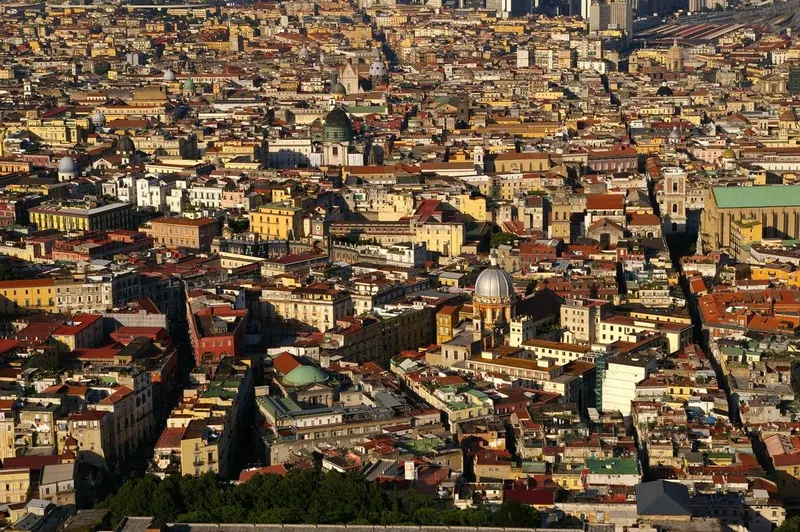
1Spaccanapoli and Centro Storico
4.7★ · 1,684outdoorOpen dailySpaccanapoli is the long east-west street line that visually splits the old center through Via Benedetto Croce and Via San Biagio dei Librai. Churches, artisan workshops, palaces, shrines, and pizzerias crowd the UNESCO-listed street grid.
 2
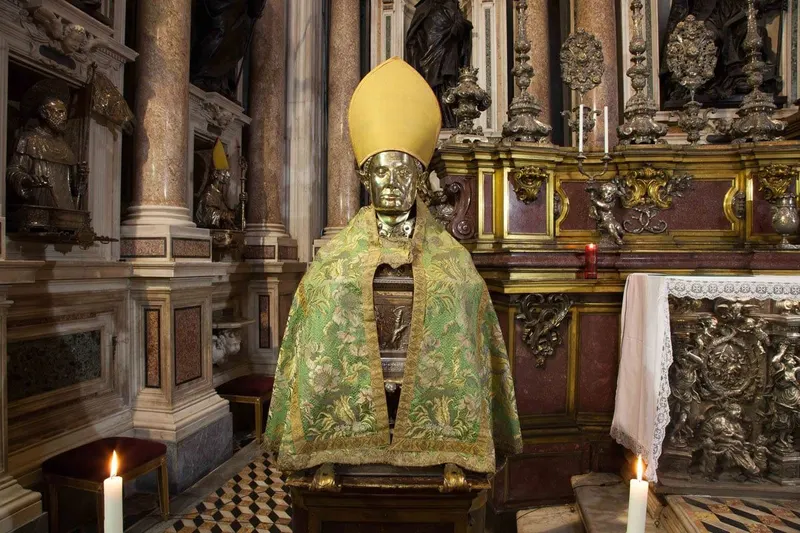
2Naples Cathedral and San Gennaro Chapel
4.8★ · 5,298indoorOpen dailyThe Duomo began in the 13th century and layers Gothic, Baroque, and earlier Christian remains in one complex. The Chapel of San Gennaro holds the city patron's relics and anchors Naples' best-known religious ceremonies.
 3
3Teatro di San Carlo
4.8★ · 9,462indoorOpen dailyThe opera house opened in 1737 under Bourbon king Charles VII, making it older than La Scala and central to Naples' music history. It sits beside the Royal Palace and Galleria Umberto I.
Wikipedia
Show 6 more sights
- 4Cappella Sansevero
- 5Naples National Archaeological Museum
- 6Royal Palace of Naples and Piazza del Plebiscito
- 7Museo e Real Bosco di Capodimonte
- 8Certosa di San Martino and Castel Sant'Elmo
- 9Castel Nuovo - Maschio Angioino
Neighborhoods
 1
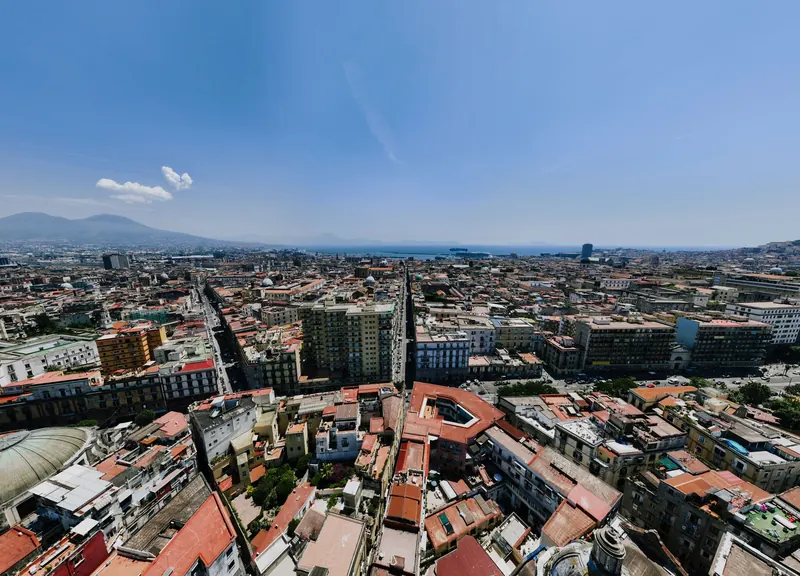
1Centro Storico and Spaccanapoli
The old center is dense and intense, with Via dei Tribunali, San Gregorio Armeno, the Duomo, Cappella Sansevero, shrines, pizzerias, scooters, and layered history.
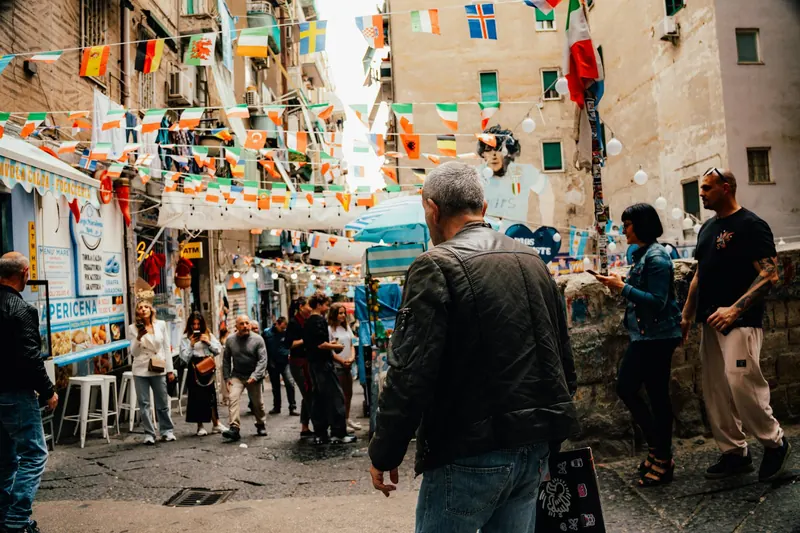 2
2Quartieri Spagnoli and Via Toledo
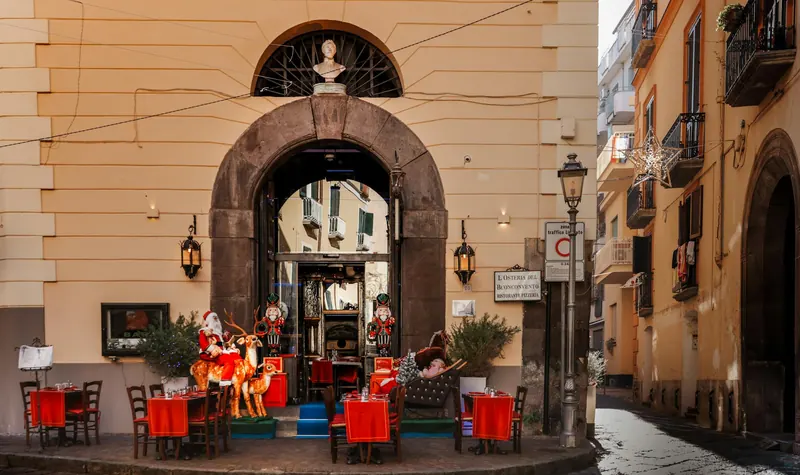
The Spanish Quarter is steep and packed, with laundry lines, murals, trattorias, street life, Toledo metro, and quick access to Piazza del Plebiscito.
 3
3Chiaia, Santa Lucia, and Lungomare
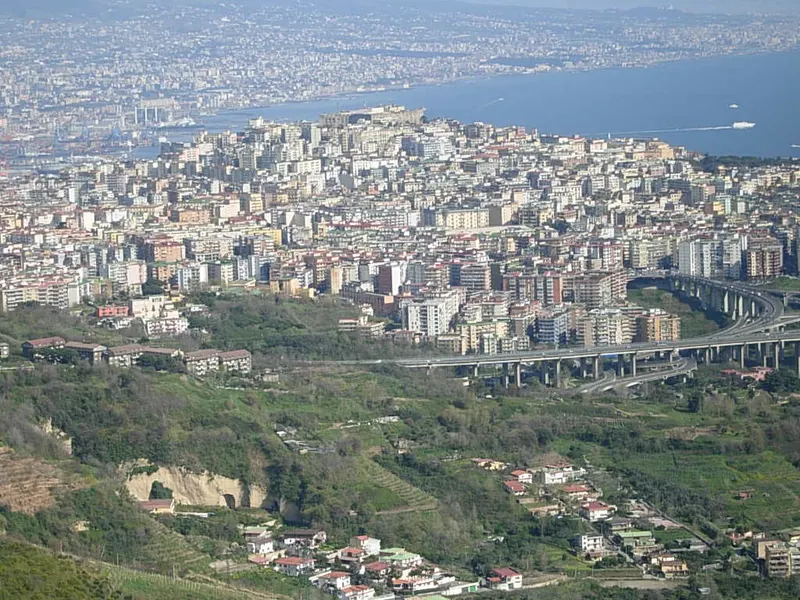
The waterfront side is polished and scenic, with Castel dell'Ovo, Via Partenope, Chiaia shops, seaside restaurants, hotels, and views toward Vesuvius.
 4
4Vomero
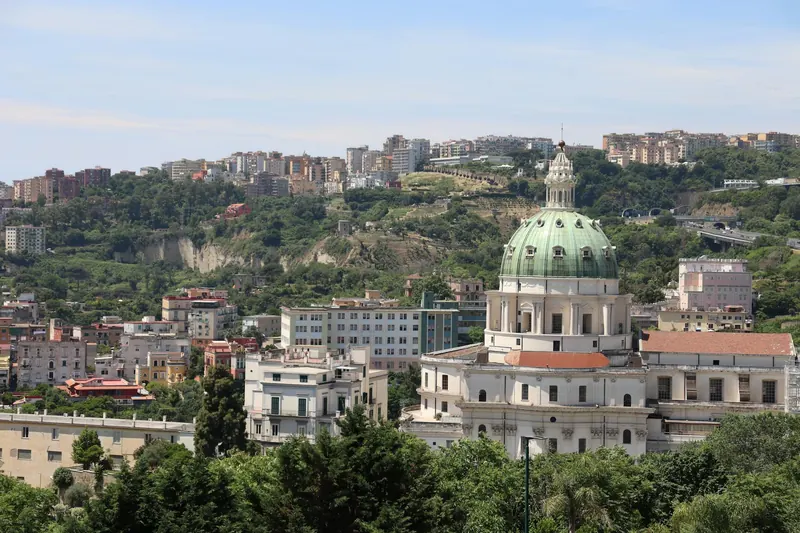
Vomero is hilltop and residential, with funiculars, Castel Sant'Elmo, San Martino, shopping streets, pizzerias, and the cleanest wide views over the bay.
 5
5Sanità and Capodimonte
Sanità is historic and raw-edged, with catacombs, palazzi, markets, street art, local pastry shops, and routes up toward Capodimonte.
 6
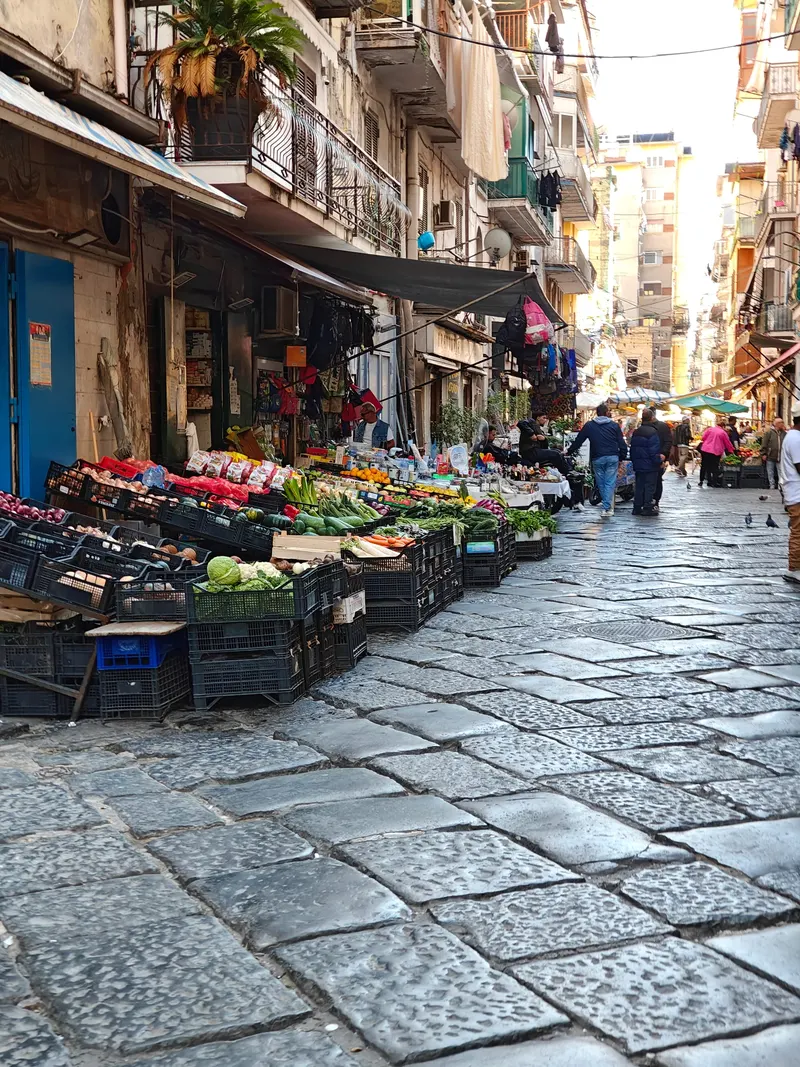
6Forcella, Porta Nolana, and Garibaldi
The station-side edge is busy and practical, with fish markets, budget hotels, Circumvesuviana access, old gates, and some of the city's most famous pizza addresses.
Getting around
Metro lines, funiculars, buses, Circumvesuviana trains, ferries, hydrofoils, and Unico Campania tickets cover Naples, but the historic core is best walked. Use Line 1 for Toledo, Municipio, and Vomero links, funiculars for hill climbs, and ferries or trains rather than rental cars for the bay.
Planning the Southern Italy route?
Add your dates and we'll pace all 2 cities — every place checked for closures, limited hours, and booking needs in July.
Don't-miss stops along the way

Pompeii & the Amalfi Coast
The buried Roman city of Pompeii and the cliff-hugging Amalfi Coast (Positano, Ravello, Sorrento) are day trips from Naples — the classic southern extension to a Rome trip.
Weather by month for the Southern Italy trip
In July, climate averages for Rome and Naples show daytime highs near 31°C / 88°F, with nights down to about 19°C / 66°F in the coolest of those cities. The rainiest of those cities averages about 2 rainy days. Based on climate averages for Rome and Naples, July is mixed for weather comfort.
The most comfortable months for this route are May, September and June, based on average daytime temperatures and rainfall in Rome and Naples. July 2026 is mixed for weather comfort.
Common questions about the Southern Italy trip
- When is the best time to do the Southern Italy trip?
- The most comfortable months across Rome and Naples are May, September and June, based on average daytime temperatures and rainfall for those cities. July is mixed for weather comfort — see the city climate sections below for the averages in July 2026.
- How many days do you need for the Southern Italy trip?
- A comfortable Southern Italy trip runs about 6–8 days, allowing roughly Rome 3, Naples 3 nights plus travel between stops. Add a day if you want a slower pace or extra day trips.
- What's the route for the Southern Italy trip?
- The classic order is Rome, Naples & the Amalfi Coast. Pompeii & the Amalfi Coast is a featured stop along the way. The detailed month sections below cover Rome and Naples.
Ready to plan the Southern Italy trip?
Turn this route into a day-by-day plan for July 2026, every stop checked for closures and booking needs on your exact dates.