Things to do in New York
Top things to do in New York include Statue of Liberty & Ellis Island, Empire State Building, Lower Manhattan, Financial District, Battery Park & Tribeca. Plan each day around one neighborhood to avoid backtracking, then add your dates to check opening hours and booking needs.
First visit? Start with these — and plan each day around one neighborhood:
- Statue of Liberty & Ellis IslandThe 1886 statue and the Ellis Island immigration museum sit in New York Harbor, reached by Statue City Cruises ferries from Battery Park.
- Empire State Building★ 4.7 · 127.1k reviewsThe 1931 Art Deco tower rises at 350 Fifth Avenue, two blocks south of Herald Square and a short walk from Bryant Park.
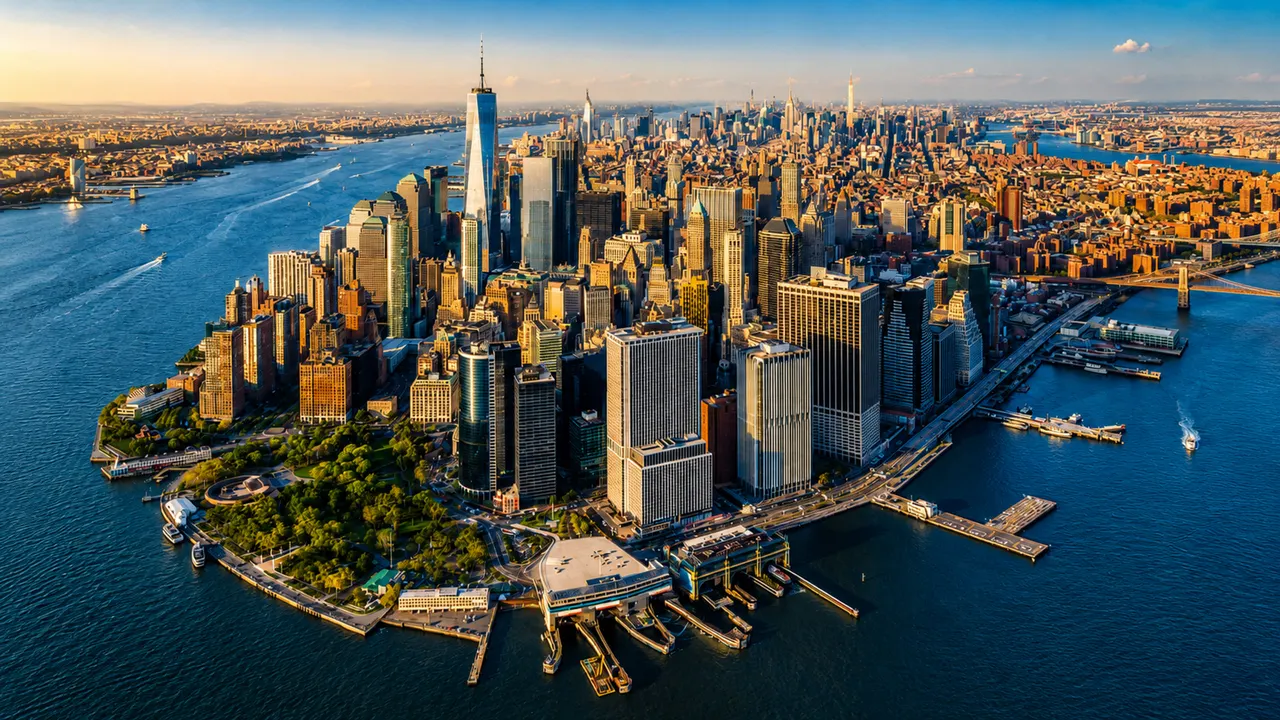
- Lower Manhattan, Financial District, Battery Park & TribecaThe harbor end of Manhattan feels older and tighter, with Wall Street, Stone Street, the Battery, the Staten Island Ferry terminal, One World Trade…
- Getting aroundThe MTA subway is the visitor backbone: OMNY tap-to-pay works with contactless cards, phones, watches, and OMNY Cards, the current subway and local bus fare is $3, and…
By TripSapien · Updated August 24, 2026
About New York
City overview
New York is a five-borough harbor city where Manhattan, Brooklyn, Queens, the Bronx, and Staten Island sit between the Hudson River, East River, and Upper New York Bay. For first-time planning, Manhattan is the spine: the numbered grid begins above 14th Street, while Greenwich Village, SoHo, the Lower East Side, Chinatown, and Lower Manhattan keep older pre-grid lanes closer to the harbor.
Food & drink
New York food is tied to blocks: NY-style pizza by the slice, bagels with lox and cream cheese, pastrami on rye, halal-cart chicken-and-rice, Chinatown dim sum, black-and-white cookies, cheesecake, and deli pickles all have local routes. Russ & Daughters at 179 East Houston Street, Katz's Delicatessen at 205 East Houston Street, Mott Street and Mulberry Street in Chinatown and Little Italy, Chelsea Market, and Smorgasburg in Williamsburg make a practical first food map.
What New York is best for
New York is best for history, architecture, art, shopping, and food.
- How long to stay
- A few days to over a week
- Typical budget
- Higher-end
Top sights
Ranked using weather, setting, ratings, and review volume.
- 1Central Park
- 2Metropolitan Museum of Art
- 3American Museum of Natural History
- 4Times Square & Theater District
- 5Brooklyn Bridge
- 69/11 Memorial & Museum
- 7The High Line
- 8Top of the Rock & Rockefeller Center
 1
1Central Park
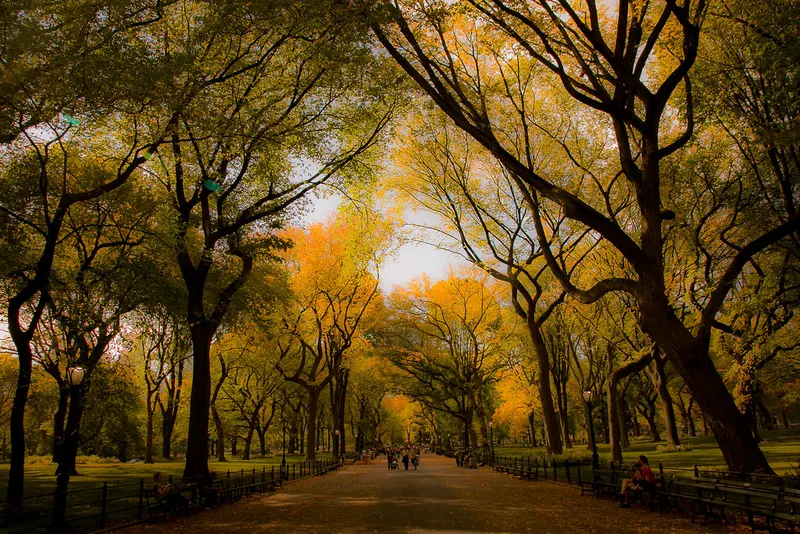
4.8★ · 299,710Frederick Law Olmsted and Calvert Vaux designed the 843-acre park selected in 1858, with the Ramble, Bethesda Terrace, Sheep Meadow, the Mall, and the Jacqueline Kennedy Onassis Reservoir spanning 59th to 110th streets. Start at 59 St-Columbus Circle on the A/B/C/D/1 or at Fifth Avenue-59th Street on the N/R/W, then cross toward the Met or the Natural History Museum.
Wikipedia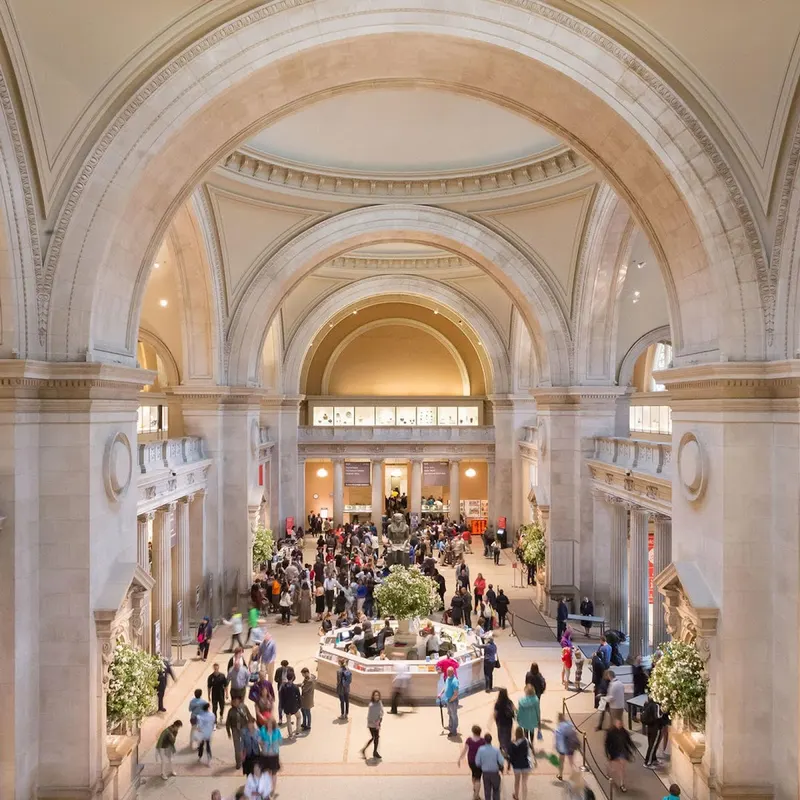 2
2Metropolitan Museum of Art
4.8★ · 92,841The Met was founded in 1870 and anchors Fifth Avenue at 82nd Street, beside Central Park and the Museum Mile stretch of the Upper East Side. The 86 St station on the 4/5/6 is the closest major subway stop, with a crosstown walk past the park wall.
WikipediaThe permanent collection is too large for one pass; choose Greek and Roman art, Egyptian art, or the American Wing before adding special exhibitions.
 3
3American Museum of Natural History
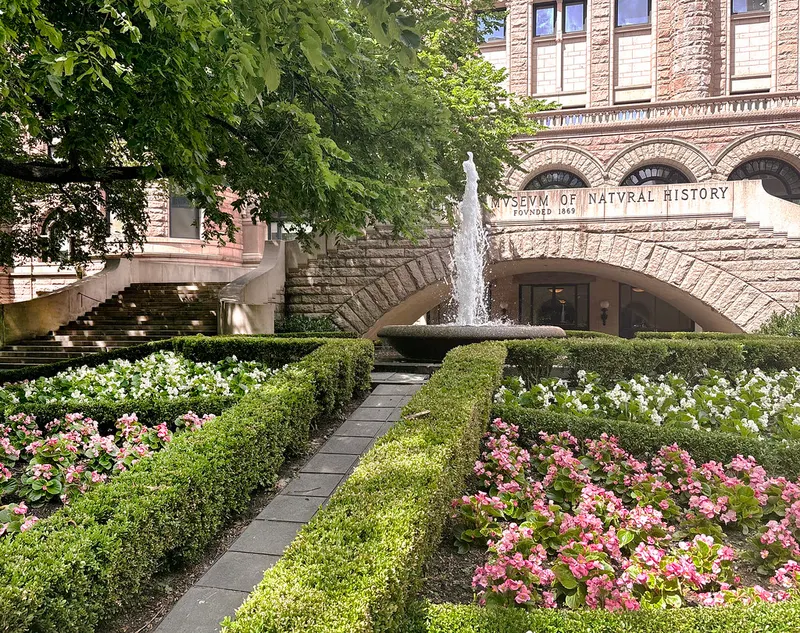
4.6★ · 24,639Founded in 1869, AMNH fills the Central Park West and 79th Street block with dinosaur halls, the Milstein Hall of Ocean Life, and the Rose Center for Earth and Space. The 81 St-Museum of Natural History station on the B/C opens beside the museum, across Central Park from the Met.
Wikipedia
Show 3 more sights
- 4Times Square & Theater District
- 5Brooklyn Bridge
- 69/11 Memorial & Museum
Neighborhoods
 1
1SoHo, NoLita & Lower East Side
SoHo is cast-iron lofts on Greene, Mercer, and Broadway; NoLita shifts smaller around Elizabeth and Mulberry streets; the Lower East Side adds Orchard Street, Ludlow Street, Essex Market, and the Tenement Museum. The Delancey Street-Essex Street F/J/M/Z hub makes this side easy to pair with Chinatown.
 2
2Greenwich Village, West Village & Meatpacking District
Greenwich Village keeps the crooked pre-grid street pattern around Washington Square Park, MacDougal Street, Bleecker Street, and Christopher Street-Sheridan Square. West of Seventh Avenue, the West Village narrows into townhouse lanes before the Meatpacking District reaches Gansevoort Street, the Whitney, and the High Line entrance.
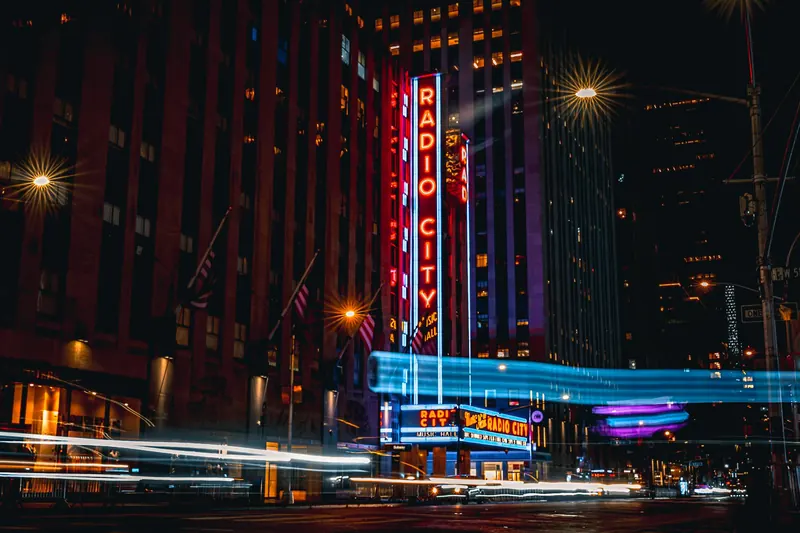 3
3Midtown, Times Square, Rockefeller Center & Fifth Avenue
Midtown is the visitor-heavy spine: Grand Central Terminal, Bryant Park, the New York Public Library, Times Square, Broadway theaters, Rockefeller Center, St. Patrick's Cathedral, and Fifth Avenue shopping sit within a few avenue blocks. It is crowded, bright, and practical when trains at Penn Station or Grand Central shape the day.
Day trips
95km / 80-90min by Metro-North Hudson Line from Grand Central to Beacon
Hudson Valley: Beacon, Dia Beacon & Storm King
Beacon gives a rail-simple Hudson River day with Dia Beacon in a former Nabisco box-printing factory and Main Street cafes uphill from the station. Storm King Art Center near New Windsor needs a shuttle, taxi, or car, but its large-scale sculpture fields pair naturally with the same Hudson Valley corridor.
185km / about 3h by LIRR from Penn Station or Grand Central Madison to Montauk
The Hamptons & Montauk
South Fork towns such as Southampton, East Hampton, Sag Harbor, and Montauk trade Manhattan density for beaches, marinas, and Atlantic light. Summer Fridays are the hardest travel window, so reserve LIRR seats or rental cars early.
150km / about 1h15 by Amtrak Acela from Penn Station to 30th Street Station
Philadelphia
Philadelphia is the easiest out-of-state rail day, with Independence Hall, the Liberty Bell, Reading Terminal Market, and the Philadelphia Museum of Art all reachable from 30th Street by transit or taxi. It works best as a full day because the historic district and museum axis sit on opposite sides of Center City.
Getting around
The MTA subway is the visitor backbone: OMNY tap-to-pay works with contactless cards, phones, watches, and OMNY Cards, the current subway and local bus fare is $3, and using the same card or device caps subway/local bus rides at $35 after 12 paid fares in 7 days. Subway trains run 24 hours a day, 7 days a week, but late-night service patterns change; Penn Station, Grand Central, Atlantic Terminal, JFK, LGA, and EWR all need separate airport or rail timing.
Planning a New York trip?
Add your dates and we'll check every place for closures, limited hours, and booking needs before you go.
Things to do in New York by month
Pick a month for weather, any sourced events, holidays or observances, and seasonal timing. September, June and May have the most comfortable weather (tagged below).
Common questions about New York
- Which neighborhoods should I explore in New York?
- Lower Manhattan, Financial District, Battery Park & Tribeca, SoHo, NoLita & Lower East Side, Greenwich Village, West Village & Meatpacking District are useful starting points. Plan each day around one or two neighboring areas to avoid unnecessary backtracking.
- When is the best time to visit New York?
- September, June, May balance comfortable temperatures with fewer rainy days in New York.
- How many days do you need in New York?
- a few days to over a week gives you time for history, architecture, and art in New York. Choose your month to see date-specific details.
- What is New York known for?
- New York is best for history, architecture, art, shopping, and food. For matched places, TripSapien checks available hours, closure signals, and booking links.
Ready to plan New York?
Turn everything above into a day-by-day New York plan, with every place checked for closures and booking needs on your dates.