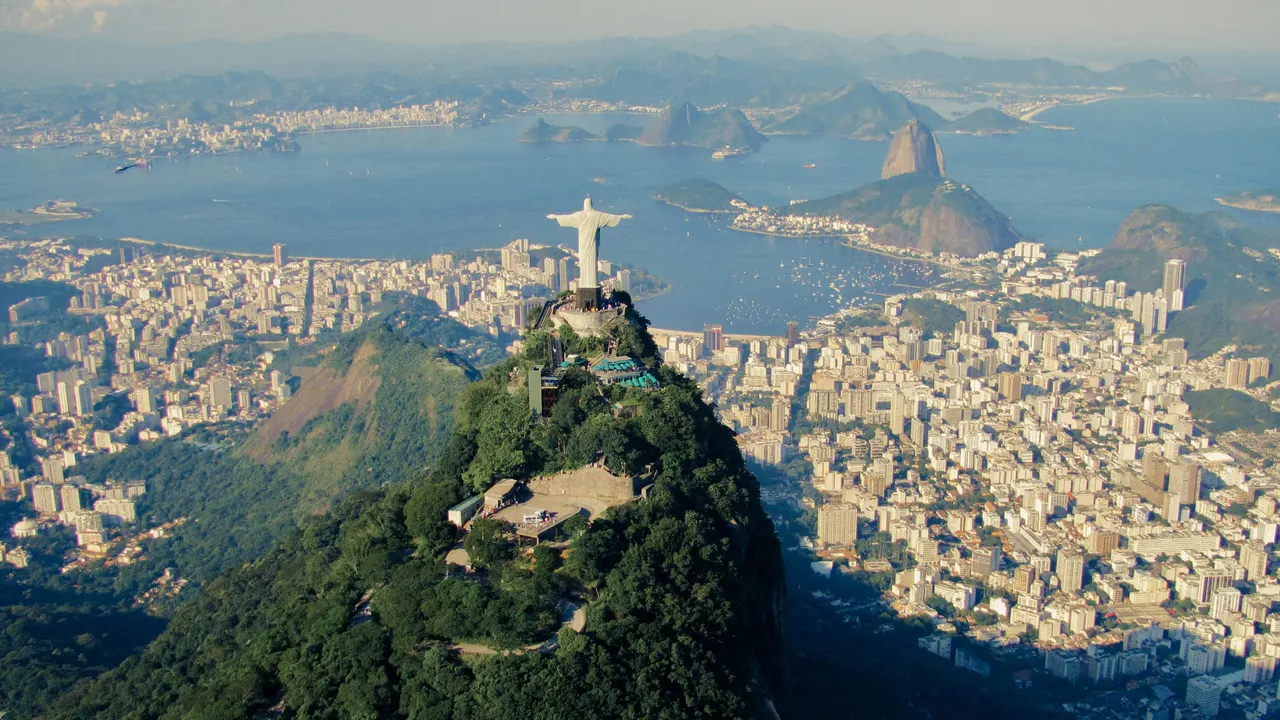
Things to do in Rio de Janeiro
Top things to do in Rio de Janeiro include Christ the Redeemer and Corcovado, Sugarloaf Mountain, Copacabana and Leme. Plan each day around one neighborhood to avoid backtracking, then add your dates to check opening hours and booking needs.
First visit? Start with these — and plan each day around one neighborhood:
- Christ the Redeemer and Corcovado★ 4.8 · 132.8k reviewsThe Art Deco statue opened in 1931, with Brazilian engineer Heitor da Silva Costa and French sculptor Paul Landowski shaping the monument above Tijuca…
- Sugarloaf Mountain★ 4.8 · 9.0k reviewsThe cable car to Morro da Urca and Pão de Açúcar began operating in 1912, making it one of Rio’s classic engineering sights.
- Copacabana and LemeCopacabana and Leme are dense, democratic beach Rio, with Avenida Atlântica, Forte de Copacabana, kiosks, older apartment blocks, and metro links…
- Getting aroundMetrôRio is the easiest spine for Ipanema, Copacabana, Botafogo, Centro, Maracanã, and Barra connections, while VLT trams cover the port and downtown.
By TripSapien · Updated November 3, 2026
About Rio de Janeiro
City overview
Rio de Janeiro is a mountain-and-bay city where granite peaks, Atlantic beaches, samba neighborhoods, and imperial avenues press into one another between Guanabara Bay and the ocean. Zona Sul carries Copacabana, Ipanema, and Leblon; Santa Teresa and Lapa hold the hillside and nightlife layers; Centro and the port show royal, republican, and Olympic-era Rio.
Food & drink
Rio eating moves between feijoada, churrasco, bolinho de bacalhau, pão de queijo, coxinha, açaí, brigadeiro, and beachside mate with biscoito Globo. Confeitaria Colombo in Centro, Cadeg market in Benfica, Copacabana kiosks, and botecos around Lapa and Botafogo give the city its classic food map.
What Rio de Janeiro is best for
Rio de Janeiro is best for nature, shopping, nightlife, architecture, and art.
- How long to stay
- A few days to a week
- Typical budget
- Mid-range
Top sights
Ranked using weather, setting, ratings, and review volume.
- 1Copacabana Beach
- 2Ipanema Beach and Arpoador
- 3Maracanã Stadium
- 4Escadaria Selarón
- 5Museum of Tomorrow
- 6Municipal Theatre
- 7Royal Portuguese Cabinet of Reading
- 8Tijuca National Park and Vista Chinesa
 1
Copacabana Beach
4.7★ · 9,679Copacabana’s 4km crescent is lined by Avenida Atlântica hotels, kiosks, and Roberto Burle Marx wave-pattern pavements from the 1970 redesign. Leme anchors the north end, while Forte de Copacabana marks the Ipanema side.
Wikipedia 2
Ipanema Beach and Arpoador
4.8★ · 5,956Ipanema is the beach made famous by Tom Jobim and Vinicius de Moraes, with Posto 9, Arpoador rocks, and sunset clapping toward Dois Irmãos. It connects directly to Leblon by the beachfront cycle path.
 3
Maracanã Stadium
4.7★ · 115,074Built for the 1950 FIFA World Cup, Maracanã became Brazil’s football cathedral and was rebuilt for the 2014 World Cup and 2016 Olympics. It sits in the north zone beside Maracanã metro and train stations.
Wikipedia
Show 5 more sights
4Escadaria Selarón
Chilean artist Jorge Selarón covered the Lapa-to-Santa Teresa steps with thousands of tiles between 1990 and 2013. The staircase links Joaquim Silva Street with the lower Santa Teresa hill.
Wikipedia5Museum of Tomorrow
Santiago Calatrava designed this white waterfront science museum, which opened in 2015 during the Porto Maravilha redevelopment. It stands on Praça Mauá near the VLT tram and the Rio Art Museum.
Wikipedia6Municipal Theatre
The theatre opened in 1909 with Paris Opera influence, gilded interiors, stained glass, and a grand facade facing Cinelândia. It anchors the old civic center beside the National Library and Museu Nacional de Belas Artes.
Wikipedia7Royal Portuguese Cabinet of Reading
Portuguese immigrants completed this neo-Manueline library in 1887, filling its iron galleries with a major Portuguese-language collection. The reading room is in Centro, a short walk from Uruguaiana metro.
Wikipedia8Tijuca National Park and Vista Chinesa
The 19th-century reforestation of Tijuca helped protect Rio’s water sources, and the park now surrounds waterfalls, trails, Corcovado roads, and the Chinese-style Vista Chinesa pavilion. Access is easiest by taxi or guided tour from Jardim Botânico.
Neighborhoods
 1
Ipanema and Leblon
Ipanema and Leblon feel more polished, with Posto 9, Arpoador, Lagoa access, boutiques, bars, and views toward Dois Irmãos.
 2
Botafogo and Urca
Botafogo and Urca hold bay views, Sugarloaf access, Praia Vermelha, bars, malls, and a calmer residential feel below the cliffs.
 3
Santa Teresa and Glória
Santa Teresa is the hilltop bohemian quarter, with the bondinho tram, Selarón steps, ateliers, and old mansions; use taxis at night and avoid wandering unmarked hillside favela lanes.
Show 26 more neighborhoods
- 4Lapa and Centro
Lapa and Centro are music, arches, theatres, offices, and history, with the Municipal Theatre, Cinelândia, Praça XV, bars, and samba clubs busiest after dark.
- 5Barra da Tijuca
Barra is the car-oriented western beach district, with long beaches, malls, Olympic venues, condominiums, and a different scale from Zona Sul.
- 6Alto da Boa Vista
Tijuca National Park, known for hiking, waterfalls, and birdwatching, as well as the Christ the Redeemer Statue at Corcovado peak. Dining options include Bar da Pracinha, serving fondue and steaks in a romantic setting.
- 7Andaraí
Shopping Boulevard, a covered shopping destination with fashion, accessories, and a multi-screen theater. Dining options include Oliva for Brazilian cuisine and Salomé Bar for drinks.
- 8Bangu
A mix of shopping malls, bars, and concert halls, with Bangu Shopping and local markets nearby. It's a quiet area with two samba schools and close to the Olympic Park of Deodoro.
- 9Barra de Guaratiba
Barra de Guaratiba features Guaratiba Beach and is surrounded by mangroves and mountains of virgin rainforest. The area is known for numerous seafood restaurants and bars.
- 10Barra Olímpica
The Olympic Park, home to various sports facilities and events like Rock in Rio, is a major attraction in Barra Olímpica, alongside the newly opened Rita Lee Park, which features skateboarding ramps and multi-sport courts. The area also has shopping malls like Shopping Metropolitano and plenty of dining options nearby.
- 11Benfica
19th-century houses from when it was part of the Imperial Quarter, but it has declined since the aristocracy moved to the South Zone. The area is known as the "entrance to the Rio suburbs" and features the Prefeito Mendes de Moraes Residential Complex.
- 12Bonsucesso
- 13Botafogo
A beachfront atmosphere with a mix of upper middle-class residences and small commerce. The area is known for its Latin American ballroom dance scene, which originated here, and offers access to local markets and nightlife.
- 14Cachambi
Cachambi has several dining options and is located near Norte Shopping and Shopping Nova América, with Newton Santos Stadium (Engenhão) just under 3 km away. It's a lively area with street corners full of food choices.
- 15Caju
- 16Califórnia
- 17Cantagalo–Pavão–Pavãozinho
Between Ipanema and Copacabana, with a history of violent crime that has improved since the establishment of a Pacifying Police Unit in 2009. The Rubem Braga Complex, featuring the "Mirante da Paz" overlook, connects the favela to the General Osório Metro Station.
- 18Catete
Tree-lined streets with historic buildings and a mix of shops, bars, and restaurants, including options for Italian and Japanese cuisine. The area is home to the Museum of the Republic in the former Catete Palace and is close to Aterro do Flamengo park, perfect for outdoor activities.
- 19Catumbi
Catumbi in Rio de Janeiro is known for its parish churches, including the Church Our Lady of La Salette.
- 20Centro
A mix of historic landmarks like the Municipal Theater, the National Library, and the Arcos da Lapa, alongside modern attractions such as the Museum of Tomorrow. The area is well-connected by public transport and offers a variety of bars and restaurants, particularly around Rua Riachuelo.
- 21Cidade Nova
One of the most traditional neighborhoods in downtown Rio, Cidade Nova is historically significant as the birthplace of samba, with the Estácio de Sá samba school nearby. The area has busy streets filled with bars, restaurants, and shops, and is close to the Sambódromo and the Praça Onze metro station.
- 22Complexo do Alemão
- 23Copacabana
Known for its 4 km beach, one of the most famous in the world. The area features a lively atmosphere with numerous bars and restaurants along the beachfront promenade.
- 24Cosme Velho
Cosme Velho has local stops such as Rio Coffee House, Metiers Café, and Chocolate Lugano, along with Largo do Boticário, a remnant of Rio's colonial past tucked behind Corcovado mountain.
- 25Del Castilho
A north-zone crossroads built around rail lines, expressways, and the suburban shopping economy rather than postcard Rio.
- 26Encantado
- 27Engenho de Dentro
Antiguidades RJ, a well-rated antique market, and the Images of the Unconscious Museum, which houses over 350,000 artistic works created by psychiatric patients. Mundo do Vinil offers a selection of vinyl records for music enthusiasts.
- 28Engenho Novo
A middle-class neighborhood with easy access to public transportation and nearby commercial areas like Méier, featuring supermarkets, pharmacies, and restaurants. It has a historical background linked to colonial sugar mills and is close to the Engenhão stadium.
- 29Estácio
A mix of markets, bakeries, and bars, with plenty of public transportation options nearby, including the Estácio de Sá subway station. It's close to the Sambadrome and the first samba school, with local dining options around Praça da Bandeira.
Day trips
13km / 20min by ferry from Praça XV to Niterói
Niterói
The bay crossing gives skyline views, Oscar Niemeyer’s MAC museum, Icaraí waterfront, and a direct look back at Rio’s peaks.
70km / about 1.5h by bus from Novo Rio bus station
Petrópolis
The imperial mountain city has the Imperial Museum, Crystal Palace, German-influenced streets, and cooler Serra dos Órgãos air.
170km / 3h by bus or car from Rio
Búzios
The peninsula adds beaches, boat trips, Rua das Pedras restaurants, and a resort-town contrast to Rio’s urban shoreline.
Getting around
MetrôRio is the easiest spine for Ipanema, Copacabana, Botafogo, Centro, Maracanã, and Barra connections, while VLT trams cover the port and downtown. Use taxis or rideshares at night, for hillside neighborhoods, and for Tijuca Forest trailheads; ordinary buses require more local route confidence.
Planning a Rio de Janeiro trip?
Add your dates and we'll check every place for closures, limited hours, and booking needs before you go.
Things to do in Rio de Janeiro by month
Pick a month for weather, any sourced events, holidays or observances, and seasonal timing. July, August and June have the most comfortable weather (tagged below).
Common questions about Rio de Janeiro
- Which neighborhoods should I explore in Rio de Janeiro?
- Copacabana and Leme, Ipanema and Leblon, Botafogo and Urca are useful starting points. Plan each day around one or two neighboring areas to avoid unnecessary backtracking.
- When is the best time to visit Rio de Janeiro?
- July, August, June balance comfortable temperatures with fewer rainy days in Rio de Janeiro.
- How many days do you need in Rio de Janeiro?
- a few days to a week gives you time for nature, shopping, and nightlife in Rio de Janeiro. Choose your month to see date-specific details.
- What is Rio de Janeiro known for?
- Rio de Janeiro is best for nature, shopping, nightlife, architecture, and art. For matched places, TripSapien checks available hours, closure signals, and booking links.
Ready to plan Rio de Janeiro?
Turn everything above into a day-by-day Rio de Janeiro plan, with every place checked for closures and booking needs on your dates.