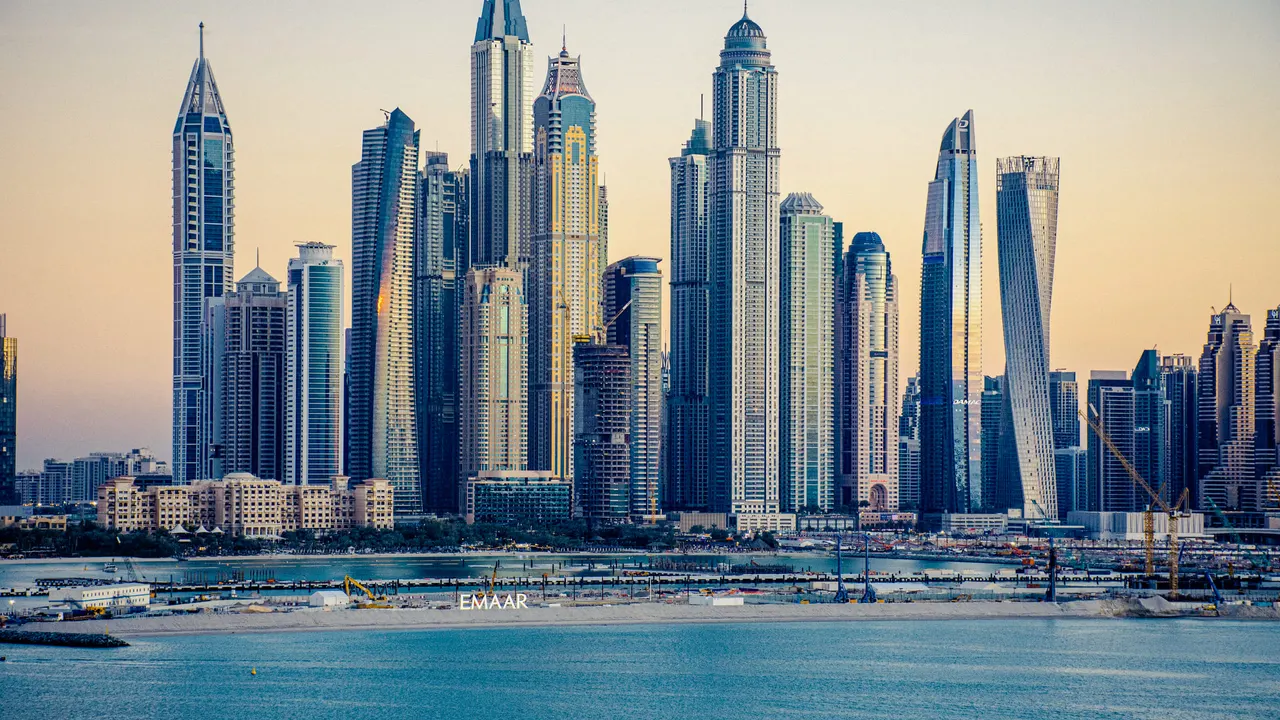
Arabian Gulf itinerary — July 2027
For the Arabian Gulf trip (Dubai, Doha & Muscat), July 2027 is one of the less comfortable months by weather. Across Dubai, Doha and Muscat, daytime highs run from about 37°C / 99°F to 42°C / 108°F. Plan around 8–10 days for the full Dubai, Doha & Muscat loop.
In this order — about 8–10 days:
- Dubai3 nightsUnited Arab Emirates
- Doha2 nightsQatar
- Muscat3 nightsOman
- Route noteReserve the longest intercity leg first and keep transfer days free of timed sights.
By TripSapien · Updated October 29, 2026
Dubai
Dubai in July
TempTemperature
108°F / 88°F
42°C / 31°C
RainPrecipitation
0d
0in · 1mm
LightDaylight
13.4h
Brutally hot — daily highs regularly past 42°C / 108°F, overnight lows of 31°C / 88°F+. Indoor itineraries only.
City overview
Dubai is the largest emirate of the UAE by population — a Persian Gulf trading post that turned into a global skyline in 30 years. The city splits between Old Dubai (Deira and Bur Dubai, on either side of the historic Dubai Creek where wooden abras still ferry workers across) and New Dubai (Downtown's Burj Khalifa, the Marina, Palm Jumeirah). The Metro Red Line runs the length of the city; the desert is half an hour outside it.
Food & drink
Emirati cuisine itself is rare in restaurants but findable: machboos (spiced rice with meat), harees (slow-cooked wheat and meat), luqaimat (sweet fried dough balls with date syrup), khameer bread, Arabic coffee with dates. The city's actual food scene is global — Lebanese, Iranian, Indian, Filipino, every cuisine the expat workforce brought with them — and Dubai now has more Michelin stars than any other Middle Eastern city. Friday brunch is a city-wide institution; book ahead.
Top sights
Ranked for July suitability using weather, setting, ratings, and review volume.
- 1Dubai Fountain
- 2Desert safari (evening)
- 3Burj Khalifa
- 4Al Fahidi Historical Neighbourhood
- 5Dubai Creek abra ride
- 6Dubai Frame (Zabeel Park)
- 7Gold Souk (Deira)
- 8Spice Souk (Deira)
- 9Dubai Mall
- 10Museum of the Future
 1
Dubai Fountain
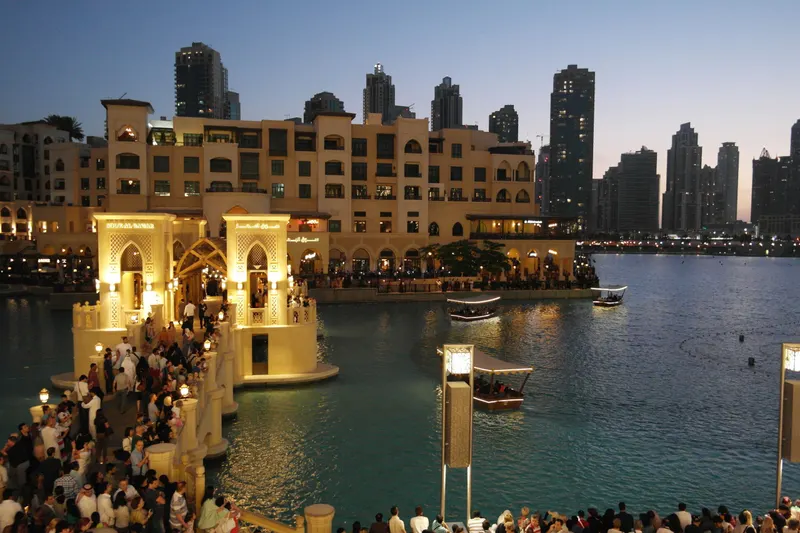
4.8★ · 138,896outdoorFree 5-minute choreographed water-and-music show on the lake outside Dubai Mall, every 30 minutes from 18:00–23:00. The best viewing platform is the bridge from Souk Al Bahar.
Wikipedia 2
Desert safari (evening)
4.8★ · 2,898outdoorOpen daily4×4 dune bashing at sunset followed by a Bedouin-style camp dinner (grilled meats, henna, falconry demonstrations, belly dancing). Most operators pick up from hotels; 5–6 hours door to door.
Book with a Tourism-licensed operator — Platinum Heritage and Arabian Adventures are the higher-end choices; cheaper operators cut corners on driver training.
 3
Burj Khalifa
4.7★ · 173,194outdoorOpen dailyThe world's tallest building (828m). The 'At The Top' observation deck on floors 124 and 125 is the standard ticket; the higher 'Sky' lounge on 148 costs more. Sunset slots sell out 1–2 weeks ahead.
WikipediaBuy timed tickets on burjkhalifa.ae 1–2 weeks in advance for sunset slots; same-day gate tickets are roughly double the price.
Show 7 more sights
4Al Fahidi Historical Neighbourhood
Bur Dubai's restored 19th-century wind-tower district — coral-block walls, narrow lanes, the Sheikh Mohammed Centre for Cultural Understanding (which runs cultural breakfasts), and the Coffee Museum.
5Dubai Creek abra ride
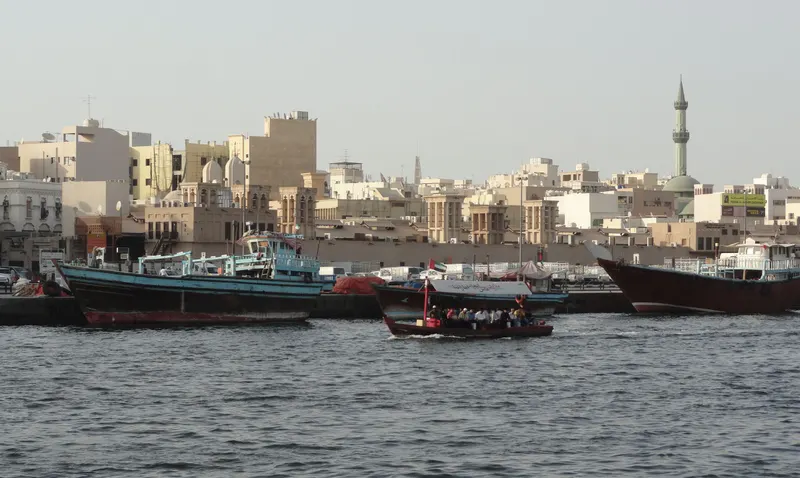
AED 1 per crossing on a wooden water-taxi between Deira and Bur Dubai — the cheapest tourist experience in the city. The Deira Old Souk Abra Station to Bur Dubai Abra Station is the short route.
6Dubai Frame (Zabeel Park)
A 150m-tall picture frame with two glass-floored observation decks at the top — Old Dubai on one side, New Dubai on the other, with an exhibition on the city's growth in the middle.
7Gold Souk (Deira)
Roughly 380 retailers selling certified-purity gold by weight + the daily international gold price. Window-shopping is welcome; bargaining is expected.
8Spice Souk (Deira)
A few minutes' walk from the Gold Souk — saffron, dried lime, rose buds, dried fruit, oud incense. Far smaller than the Istanbul equivalent; still atmospheric.
9Dubai Mall
1,200+ stores, the Dubai Aquarium with a walk-through underwater tunnel, a 22-screen cinema, and an Olympic-size ice rink. Connected to the Burj Khalifa base. Just walking the place takes a full afternoon.
Wikipedia10Museum of the Future
Calligraphy-engraved oval-torus building near Emirates Towers Metro — themed exhibits on space, climate, and digital health. Tickets are AED 145 and sell out 2–3 days ahead in season.
Book on museumofthefuture.ae at least 3 days ahead — the museum frequently sells out.
Wikipedia
Neighborhoods
 1
Downtown Dubai
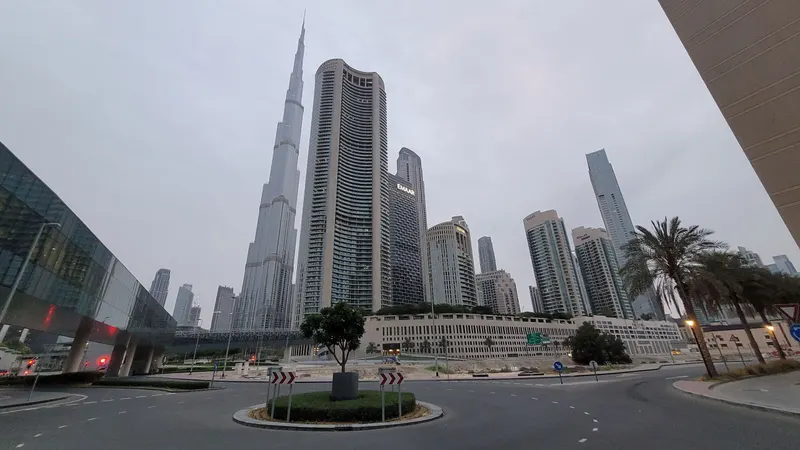
Burj Khalifa, Dubai Mall, Dubai Fountain, Opera District. Modern, hotel-dense, and the visual centre of the new city — the place most photos are taken.
 2
Old Dubai (Deira & Bur Dubai)
Either side of Dubai Creek — gold and spice souks, wind-tower architecture, the Sheikh Mohammed Centre for Cultural Understanding. The slower, lower, more historic Dubai.
 3
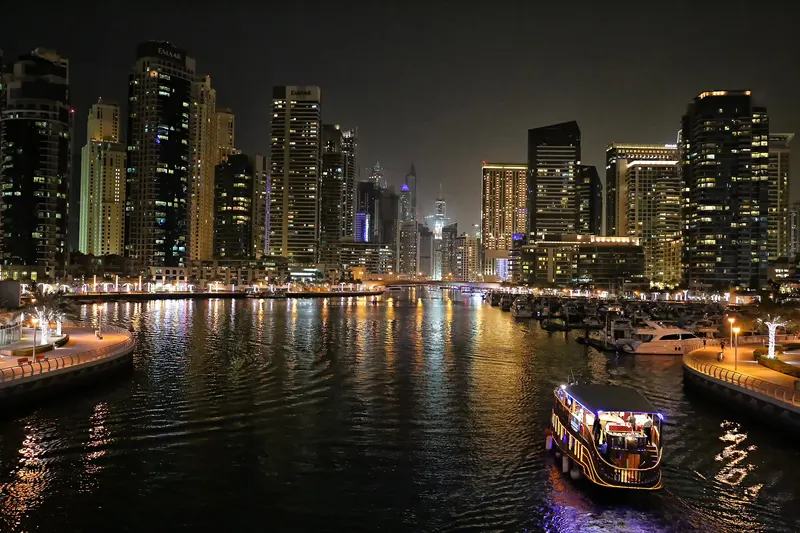
Dubai Marina
High-rise residential strip along a man-made canal — restaurants, bars, the Marina Walk, beach access at JBR. Younger, expat-heavy, walkable in a city that mostly isn't.
 4
Jumeirah & JBR
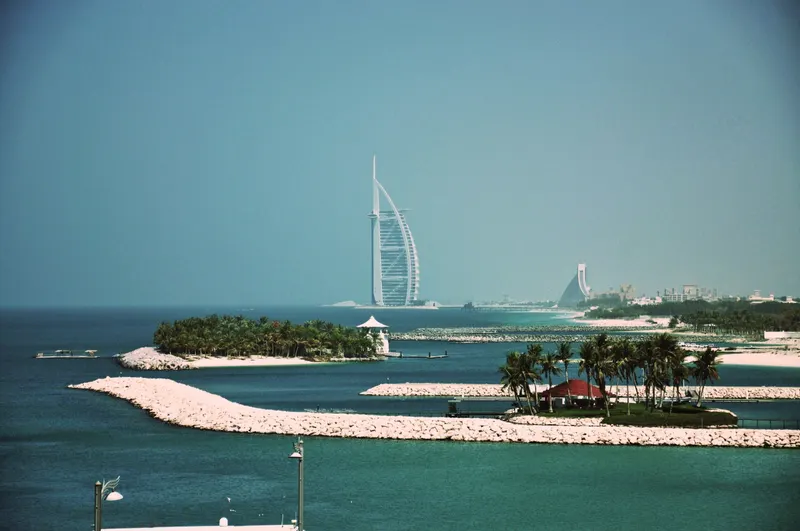
The coastal belt — Jumeirah Beach (public), Burj Al Arab, Wild Wadi Waterpark, Madinat Jumeirah souk-themed resort complex. Beach hotels concentrate here.
 5
Palm Jumeirah
The 5km artificial palm-shaped island — Atlantis The Palm at the tip, beach clubs along the fronds, and the Palm Jumeirah Monorail running the spine. Connected to the mainland by a single 4-lane bridge.
 6
Business Bay
Skyscraper-canyon district just south of Downtown — office towers, hotels, the Dubai Water Canal, the high-end brunch scene. Walkable to Downtown but quieter at street level.
Getting around
The Dubai Metro (driverless) has two lines — Red (running the length of Sheikh Zayed Road from the airport through Downtown and the Marina to Expo City) and Green (cutting through Old Dubai/Deira). Use a Nol card (AED 25 incl. starter credit) at any station. Outside the Metro corridor, taxis (cream, with the RTA logo) and Careem (a regional Uber bought by Uber in 2020) are cheap. The Marina has a tram; Palm Jumeirah has a monorail.
Doha
Doha in July
TempTemperature
106°F / 85°F
41°C / 29.3°C
RainPrecipitation
0d
0in · 0mm
LightDaylight
13.4h
July is the hottest month, with outdoor sightseeing around West Bay and The Pearl best avoided midday.
City overview
Doha is a Gulf capital where the Corniche, Souq Waqif, Msheireb, West Bay towers, Katara, and The Pearl compress old harbor trade and new-state architecture into one coastal city. The useful first map runs from Museum of Islamic Art and Souq Waqif through Msheireb and West Bay, then north to Katara and The Pearl.
Food & drink
Doha food moves between machboos, harees, madrouba, balaleet, luqaimat, grilled hammour, karak tea, Iranian grills, Lebanese mezze, and South Asian canteens. Souq Waqif, Msheireb, Katara, Al Matar Street, and hotel Friday brunches give the clearest first food map.
Top sights
Ranked for July suitability using weather, setting, ratings, and review volume.
- 1Doha Corniche
- 2Souq Waqif
- 3The Pearl-Qatar
- 4Al Bidda Park
- 5Qatar National Library
- 6Museum of Islamic Art
- 7National Museum of Qatar
- 8Katara Cultural Village
- 9Mathaf: Arab Museum of Modern Art
- 10Msheireb Downtown
 1
Doha Corniche
4.8★ · 4,197outdoorThe waterfront promenade curves along Doha Bay between the Museum of Islamic Art and West Bay. Dhow boats, skyline photos, and winter walks make it the city simplest orientation route.
Wikipedia 2
Souq Waqif
4.7★ · 34,240outdoorOpen dailyThe rebuilt market district keeps alleys for spices, textiles, falcons, perfumes, restaurants, and evening street life. It is walkable from Msheireb and the Corniche.
Wikipedia 3
The Pearl-Qatar
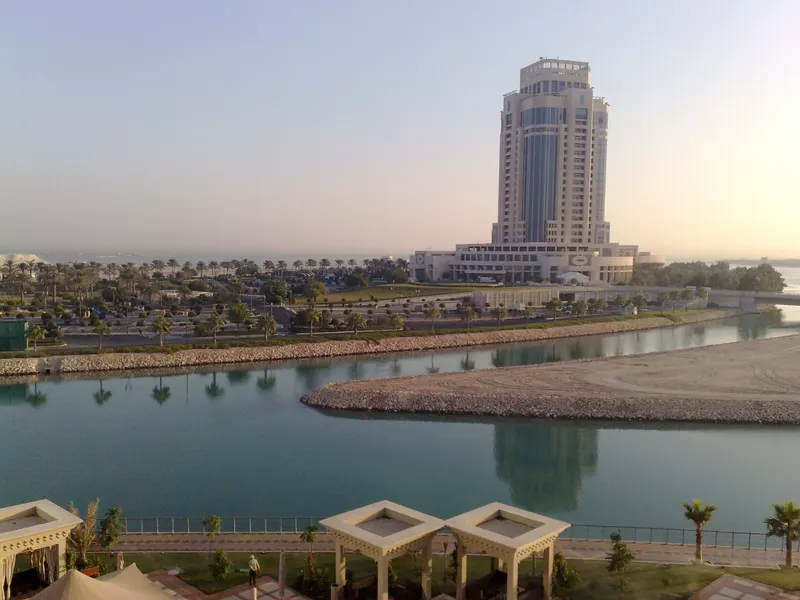
4.7★ · 3,732outdoorThe artificial island has marinas, apartment towers, Porto Arabia promenades, Qanat Quartier canals, shops, and restaurants. It is car- or metro-plus-taxi territory.
Wikipedia
Show 7 more sights
4Al Bidda Park
The park spreads beside the Corniche with lawns, playgrounds, cycling tracks, and views toward the bay. It is useful in winter and nearly unusable in summer midday heat.
Wikipedia5Qatar National Library
OMA designed the large Education City library, which holds public collections, heritage material, and a dramatic open reading room. The Education City tram and metro make it reachable.
Wikipedia6Museum of Islamic Art
I. M. Pei designed the museum on its own island beside the Corniche, with galleries covering Islamic art from Spain to Central Asia. MIA Park gives skyline views across the bay.
7National Museum of Qatar
Jean Nouvel designed the desert-rose building around the old palace of Sheikh Abdullah bin Jassim Al Thani. The galleries tell Qatar history through archaeology, pearling, oil, and state-building.
Wikipedia8Katara Cultural Village
Katara combines amphitheater, galleries, mosques, beach, restaurants, and festival spaces north of West Bay. It is a strong evening stop when the heat drops.
Wikipedia9Mathaf: Arab Museum of Modern Art
Mathaf in Education City focuses on modern and contemporary Arab art. It pairs well with Qatar National Library and campus architecture.
Wikipedia10Msheireb Downtown
The redeveloped central district uses shaded streets, museums, trams, cafes, and restored houses to link Souq Waqif with modern Doha. It is one of the best places to walk in the city.
Neighborhoods
 1
Souq Waqif and Al Najada
The old-market core is lively at night, with restaurants, falcon shops, spice lanes, hotels, mosques, and direct access to Msheireb.
 2
Msheireb Downtown
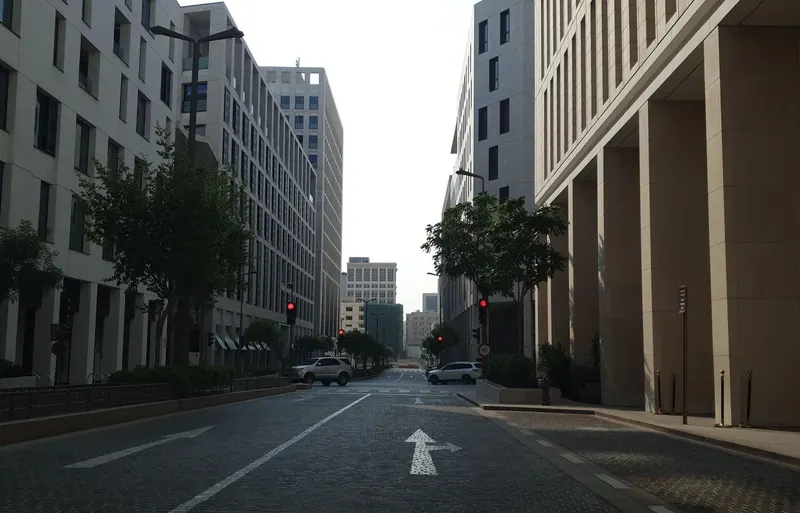
Msheireb is designed, shaded, and walkable, with museums, cafes, plazas, tram stops, and restored Gulf-house references.
 3
Corniche and Al Bidda
The bayfront is open and civic, with parks, dhow piers, skyline views, museums, and winter jogging paths.
 4
West Bay
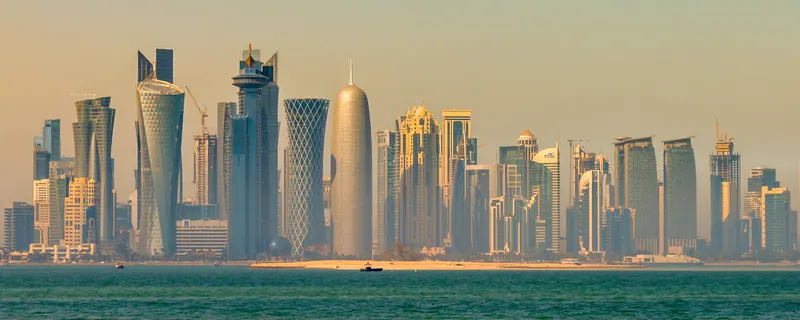
West Bay is the glass-tower business district, with hotels, offices, malls, diplomatic buildings, and quick car access to the Corniche.
 5
Katara and West Bay Lagoon
The north-coast cultural strip mixes galleries, beach clubs, amphitheater events, mosques, villas, and restaurant terraces.
 6
The Pearl and Lusail edge
The Pearl and Lusail edge feel newer and upscale, with marinas, malls, apartment towers, promenades, and destination dining.
Getting around
Doha Metro links Hamad Airport, Souq Waqif, Msheireb, West Bay, Katara, Lusail, and Education City, with feeder buses and taxis filling gaps. Summer heat makes short map distances misleading, so plan door-to-door movement rather than long daytime walks.
Muscat
Muscat in July
TempTemperature
99°F / 85°F
37.4°C / 29.7°C
RainPrecipitation
1d
0.1in · 3mm
LightDaylight
13.3h
July stays punishingly hot, though the sea and resort pools are the main outdoor options.
City overview
Muscat stretches along the Gulf of Oman between rocky hills, old harbors, royal forts, beach districts, and low-rise modern suburbs. First-time visits work by grouping Old Muscat, Mutrah, Qurum, Al Ghubrah, and Al Bustan rather than trying to walk a single center.
Food & drink
Muscat food includes shuwa, majboos, harees, mishkak skewers, grilled hammour, Omani halwa, dates, karak tea, and strong South Asian restaurant influence. Mutrah, Ruwi, Qurum, Turkish grills, and seaside fish restaurants give the easiest first route.
Top sights
Ranked for July suitability using weather, setting, ratings, and review volume.
- 1Mutrah Corniche
- 2Al Alam Palace
- 3Mutrah Souq
- 4Qurum Beach
- 5Al Jalali and Al Mirani forts
- 6Sultan Qaboos Grand Mosque
- 7Royal Opera House Muscat
- 8National Museum of Oman
- 9Bait Al Zubair
- 10Al Ansab Wetlands
 1
Mutrah Corniche
4.6★ · 5,577outdoorOpen dailyThe harborfront promenade curves past cruise berths, old merchant houses, Mutrah Fort, and the fish market. It is best at sunrise or after sunset in hot months.
 2
Al Alam Palace
4.6★ · 6,773outdoorOpen dailyThe ceremonial palace sits in Old Muscat between Al Jalali and Al Mirani forts. Visitors see it from the gates and plaza rather than inside.
Wikipedia 3
Mutrah Souq
4.4★ · 30,340outdoorOpen dailyThe covered market sells frankincense, khanjars, textiles, silver, perfumes, spices, and tourist goods in a maze just off the Corniche.
Show 7 more sights
4Qurum Beach
The long urban beach and nearby park form Muscat easiest seaside walk. Evenings are better than midday for heat and light.
5Al Jalali and Al Mirani forts
The Portuguese-built forts guard the old harbor approaches above Al Alam Palace. They frame the strongest old-city views even when interiors are closed.
6Sultan Qaboos Grand Mosque
The mosque opened in 2001 with a huge prayer hall, Persian carpet, chandelier, arcades, and gardens. Non-Muslim visiting hours and dress rules are strict.
Wikipedia7Royal Opera House Muscat
The opera house opened in 2011 in Shati Al Qurum with Omani and Italianate design, performances, restaurants, and formal dress expectations for events.
Wikipedia8National Museum of Oman
The museum in Old Muscat covers Omani maritime trade, Islam, weaponry, architecture, and modern state history. It pairs naturally with the palace district.
Wikipedia9Bait Al Zubair
The private museum displays Omani dress, weapons, jewelry, stamps, household objects, and old photographs in Old Muscat. It gives quick cultural context before the souq.
Wikipedia10Al Ansab Wetlands
The protected wetland near the airport has bird hides and guided access to lagoons used by migratory species. Book or check access before going.
Neighborhoods
 1
Old Muscat
Old Muscat is ceremonial and quiet, with Al Alam Palace, forts, museums, government buildings, and cliffs around the harbor.
 2
Mutrah
Mutrah is the historic trade quarter, with the Corniche, souq, fish market, fort, cruise port, and frankincense-heavy lanes.
 3
Ruwi
Ruwi is busy and practical, with South Asian restaurants, shops, banks, budget hotels, and bus connections.
 4
Qurum and Shati Al Qurum
Qurum is beach-facing and residential, with the opera house, cafes, parks, malls, embassies, and seaside walks.
 5
Al Ghubrah and Bawshar
The central suburbs hold the Grand Mosque, malls, hotels, schools, and long arterial roads through modern Muscat.
 6
Al Bustan, Qantab, and Bandar Jissah
The eastern coves feel resort-like and rocky, with palace roads, small beaches, diving boats, and mountain backdrops.
Getting around
Muscat is spread out and hot, so taxis, ride-hail, rental cars, and Mwasalat buses matter more than walking. Group Old Muscat with Mutrah, and handle Qurum, the Grand Mosque, and airport-side stops as separate car-based moves.
Planning the Arabian Gulf route?
Add your dates and we'll pace all 3 cities — every place checked for closures, limited hours, and booking needs in July.
Weather by month for the Arabian Gulf trip
In July, climate averages for Dubai, Doha and Muscat show daytime highs from 37°C / 99°F to 42°C / 108°F, with nights down to about 29°C / 84°F in the coolest of those cities. The rainiest of those cities averages about 1 rainy day. Based on climate averages for Dubai, Doha and Muscat, July is one of the less comfortable months by weather.
The most comfortable months for this route are January, February and December, based on average daytime temperatures and rainfall in Dubai, Doha and Muscat. July 2027 is a lower-comfort month.
Common questions about the Arabian Gulf trip
- When is the best time to do the Arabian Gulf trip?
- The most comfortable months across Dubai, Doha and Muscat are January, February and December, based on average daytime temperatures and rainfall for those cities. July is one of the less comfortable months by weather — see the city climate sections below for the averages in July 2027.
- How many days do you need for the Arabian Gulf trip?
- A comfortable Arabian Gulf trip runs about 8–10 days, allowing roughly Dubai 3, Doha 2, Muscat 3 nights plus travel between stops. Add a day if you want a slower pace or extra day trips.
- What's the route for the Arabian Gulf trip?
- The classic order is Dubai, Doha & Muscat. The detailed month sections below cover Dubai, Doha and Muscat.
Ready to plan the Arabian Gulf trip?
Turn this route into a day-by-day plan for July 2027, every stop checked for closures and booking needs on your exact dates.