Brazil itinerary — July 2027
For the Brazil trip (Rio de Janeiro & São Paulo), July 2027 is one of the most comfortable months by weather. Across Rio de Janeiro and Sao Paulo, daytime highs run from about 23°C / 73°F to 25°C / 77°F. Plan around 7–9 days for the full Rio de Janeiro & São Paulo loop.
In this order — about 7–9 days:
- Rio de Janeiro4 nights
- Sao Paulo3 nights
- Route noteReserve the longest intercity leg first and keep transfer days free of timed sights.
By TripSapien · Updated October 29, 2026
Rio de Janeiro
Rio de Janeiro in July
TempTemperature
80°F / 63°F
26.5°C / 17°C
RainPrecipitation
11d
1.7in · 44mm
LightDaylight
10.8h
Sea
70.7°F
21.5°C
July is the driest month, ideal for Christ the Redeemer, Sugarloaf, and long beachfront walks.
City overview
Rio de Janeiro is a mountain-and-bay city where granite peaks, Atlantic beaches, samba neighborhoods, and imperial avenues press into one another between Guanabara Bay and the ocean. Zona Sul carries Copacabana, Ipanema, and Leblon; Santa Teresa and Lapa hold the hillside and nightlife layers; Centro and the port show royal, republican, and Olympic-era Rio.
Food & drink
Rio eating moves between feijoada, churrasco, bolinho de bacalhau, pão de queijo, coxinha, açaí, brigadeiro, and beachside mate with biscoito Globo. Confeitaria Colombo in Centro, Cadeg market in Benfica, Copacabana kiosks, and botecos around Lapa and Botafogo give the city its classic food map.
Top sights
Ranked for July suitability using weather, setting, ratings, and review volume.
- 1Christ the Redeemer and Corcovado
- 2Sugarloaf Mountain
- 3Ipanema Beach and Arpoador
- 4Tijuca National Park and Vista Chinesa
- 5Copacabana Beach
- 6Escadaria Selarón
- 7Municipal Theatre
- 8Royal Portuguese Cabinet of Reading
- 9Maracanã Stadium
- 10Museum of Tomorrow
 1
Christ the Redeemer and Corcovado
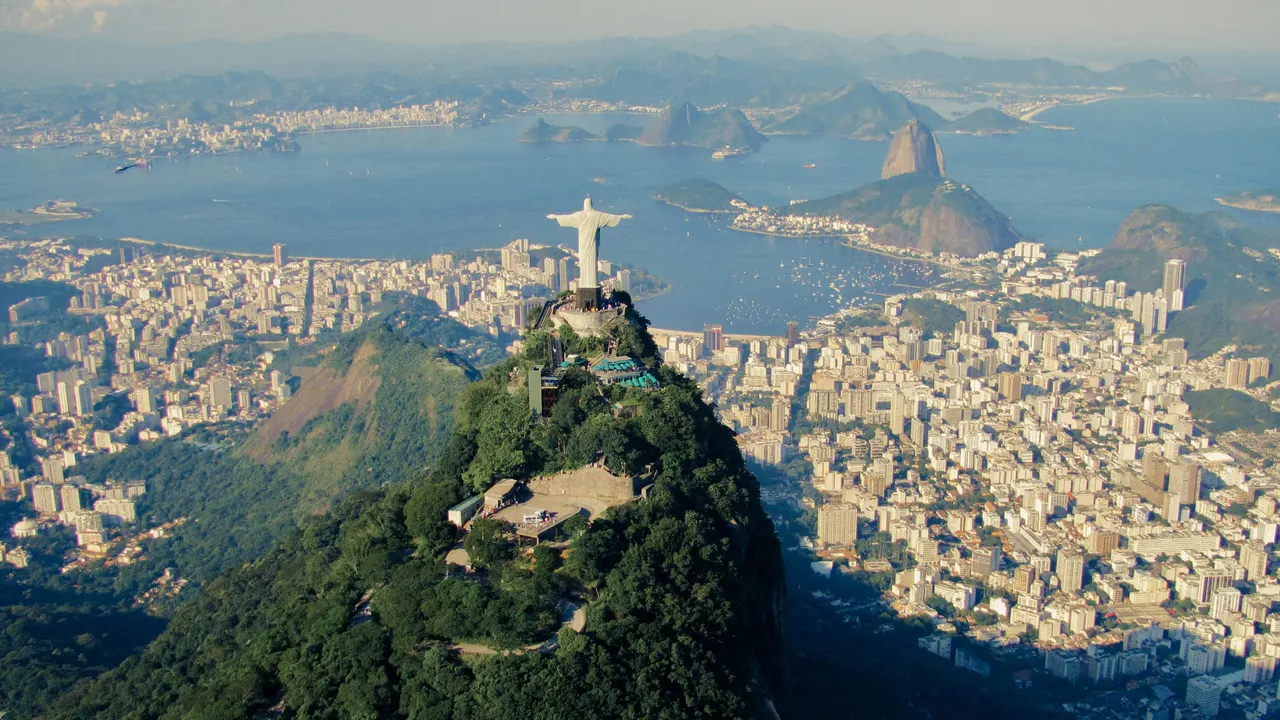
4.8★ · 132,832outdoorOpen dailyThe Art Deco statue opened in 1931, with Brazilian engineer Heitor da Silva Costa and French sculptor Paul Landowski shaping the monument above Tijuca Forest. The cog railway climbs from Cosme Velho to the summit view over Lagoa, Sugarloaf, and Zona Sul.
Book timed train or van tickets ahead during weekends, Carnaval, and New Year season.
 2
Sugarloaf Mountain
4.8★ · 8,973outdoorThe cable car to Morro da Urca and Pão de Açúcar began operating in 1912, making it one of Rio’s classic engineering sights. The lower station is in Urca, beside Praia Vermelha and the Claudio Coutinho walking path.
Wikipedia 3
Ipanema Beach and Arpoador
4.8★ · 5,956outdoorIpanema is the beach made famous by Tom Jobim and Vinicius de Moraes, with Posto 9, Arpoador rocks, and sunset clapping toward Dois Irmãos. It connects directly to Leblon by the beachfront cycle path.
Show 7 more sights
4Tijuca National Park and Vista Chinesa
The 19th-century reforestation of Tijuca helped protect Rio’s water sources, and the park now surrounds waterfalls, trails, Corcovado roads, and the Chinese-style Vista Chinesa pavilion. Access is easiest by taxi or guided tour from Jardim Botânico.
5Copacabana Beach
Copacabana’s 4km crescent is lined by Avenida Atlântica hotels, kiosks, and Roberto Burle Marx wave-pattern pavements from the 1970 redesign. Leme anchors the north end, while Forte de Copacabana marks the Ipanema side.
Wikipedia6Escadaria Selarón
Chilean artist Jorge Selarón covered the Lapa-to-Santa Teresa steps with thousands of tiles between 1990 and 2013. The staircase links Joaquim Silva Street with the lower Santa Teresa hill.
Wikipedia7Municipal Theatre
The theatre opened in 1909 with Paris Opera influence, gilded interiors, stained glass, and a grand facade facing Cinelândia. It anchors the old civic center beside the National Library and Museu Nacional de Belas Artes.
Wikipedia8Royal Portuguese Cabinet of Reading
Portuguese immigrants completed this neo-Manueline library in 1887, filling its iron galleries with a major Portuguese-language collection. The reading room is in Centro, a short walk from Uruguaiana metro.
Wikipedia9Maracanã Stadium
Built for the 1950 FIFA World Cup, Maracanã became Brazil’s football cathedral and was rebuilt for the 2014 World Cup and 2016 Olympics. It sits in the north zone beside Maracanã metro and train stations.
Wikipedia10Museum of Tomorrow
Santiago Calatrava designed this white waterfront science museum, which opened in 2015 during the Porto Maravilha redevelopment. It stands on Praça Mauá near the VLT tram and the Rio Art Museum.
Wikipedia
Neighborhoods
 1
Copacabana and Leme
Copacabana and Leme are dense, democratic beach Rio, with Avenida Atlântica, Forte de Copacabana, kiosks, older apartment blocks, and metro links under the hotels.
 2
Ipanema and Leblon
Ipanema and Leblon feel more polished, with Posto 9, Arpoador, Lagoa access, boutiques, bars, and views toward Dois Irmãos.
 3
Botafogo and Urca
Botafogo and Urca hold bay views, Sugarloaf access, Praia Vermelha, bars, malls, and a calmer residential feel below the cliffs.
 4
Santa Teresa and Glória
Santa Teresa is the hilltop bohemian quarter, with the bondinho tram, Selarón steps, ateliers, and old mansions; use taxis at night and avoid wandering unmarked hillside favela lanes.
 5
Lapa and Centro
Lapa and Centro are music, arches, theatres, offices, and history, with the Municipal Theatre, Cinelândia, Praça XV, bars, and samba clubs busiest after dark.
 6
Barra da Tijuca
Barra is the car-oriented western beach district, with long beaches, malls, Olympic venues, condominiums, and a different scale from Zona Sul.
Getting around
MetrôRio is the easiest spine for Ipanema, Copacabana, Botafogo, Centro, Maracanã, and Barra connections, while VLT trams cover the port and downtown. Use taxis or rideshares at night, for hillside neighborhoods, and for Tijuca Forest trailheads; ordinary buses require more local route confidence.
Sao Paulo
Sao Paulo in July
TempTemperature
74°F / 56°F
23.2°C / 13.4°C
RainPrecipitation
7d
1.8in · 45mm
LightDaylight
10.7h
July is the coolest and driest month, excellent for parks and walking if nights include a jacket.
City overview
São Paulo is Brazil largest city, a highland megacity of business towers, immigrant food districts, museums, football, nightlife, and heavy traffic. Avenida Paulista, Centro, Vila Madalena, Pinheiros, Liberdade, Bela Vista, and Ibirapuera form a better first map than trying to treat the whole metropolis as one center.
Food & drink
São Paulo food is a city inventory: pizza, pastel, mortadella sandwiches, feijoada, coxinha, pão de queijo, sushi, ramen, Lebanese esfihas, and Italian cantina meals. Mercado Municipal, Liberdade, Bixiga, Pinheiros, Vila Madalena, and Paulista lunch counters show why food is the city strongest travel hook.
Top sights
Ranked for July suitability using weather, setting, ratings, and review volume.
- 1Ibirapuera Park
- 2Pinacoteca do Estado
- 3Theatro Municipal
- 4Avenida Paulista and MASP
- 5Catedral da Sé
- 6Museu do Futebol
- 7Farol Santander
- 8Beco do Batman
- 9Mercado Municipal
- 10Liberdade
 1
Ibirapuera Park
4.8★ · 297,567mixedOpen dailyThe major city park opened in 1954 for São Paulo 400th anniversary and includes Niemeyer buildings, lakes, museums, and running paths. It is the most useful green break from traffic.
Wikipedia 2
Pinacoteca do Estado
4.8★ · 41,638indoorClosed TueThe art museum occupies a 19th-century brick building reworked by Paulo Mendes da Rocha near Luz station. It pairs well with Jardim da Luz and the Portuguese Language Museum.
Wikipedia 3
Theatro Municipal
4.8★ · 34,909indoorOpen dailyThe theater opened in 1911 with Paris-inspired architecture and became central to the 1922 Modern Art Week. It stands in the historic center near Viaduto do Chá.
Show 7 more sights
4Avenida Paulista and MASP
Paulista is the city symbolic business and cultural avenue, and Lina Bo Bardi designed MASP suspended on red concrete frames in 1968. The museum plaza, Sunday street closures, and nearby cafes make it the best orientation stop.
5Catedral da Sé
The neo-Gothic cathedral dominates Praça da Se and marks the symbolic zero point of the city. The surrounding center is important but busy, so go by day and stay aware.
Wikipedia6Museu do Futebol
The football museum sits inside Pacaembu Stadium and explains Brazilian football through audio, film, fans, and national memory. It is close to Higienopolis and Paulista by taxi or bus.
7Farol Santander
The former Banespa tower is an Art Deco downtown skyscraper with exhibitions and an observation deck. It gives one of the clearest views over the dense center.
8Beco do Batman
The Vila Madalena alley is covered with rotating murals and graffiti, drawing photographers, bars, and weekend crowds. It is best paired with Pinheiros or Vila Madalena food stops.
Wikipedia9Mercado Municipal
The 1930s market hall is known for stained glass, produce, cod, spices, pastel de bacalhau, and huge mortadella sandwiches. It sits in the historic center near Rua 25 de Março.
10Liberdade
Liberdade is the Japanese-Brazilian and wider East Asian district, with lanterns, groceries, ramen shops, festivals, and weekend street markets. It is reached by metro from the center.
Neighborhoods
 1
Paulista, Jardins, and Consolacao
This central high ridge mixes MASP, museums, business towers, hotels, shops, cafes, cinemas, and subway lines with quick access to nightlife.
 2
Centro, Se, and República
The old center is architecturally rich and intense, with Theatro Municipal, Farol Santander, Se cathedral, markets, office crowds, and safety conditions that favor daytime visits.
 3
Vila Madalena and Pinheiros
The west-side creative belt has murals, bars, restaurants, galleries, music, Beco do Batman, food markets, and late-night crowds.
 4
Liberdade
Liberdade is dense and food-focused, with Japanese, Chinese, and Korean groceries, ramen counters, festivals, street markets, and lanterned streets.
 5
Bela Vista and Bixiga
Bixiga carries Italian-Brazilian dining, theaters, samba spaces, cantinas, old houses, and easy walks toward Paulista and Centro.
 6
Itaim Bibi, Vila Olímpia, and Moema
The southwest business-and-dining belt feels modern and car-heavy, with offices, hotels, malls, restaurants, nightlife, and access to Ibirapuera and Congonhas.
Getting around
Metro, CPTM trains, buses, and the Bilhete Unico card handle the biggest corridors, but distances and traffic still shape every day. Use metro for Paulista, Centro, Liberdade, Pinheiros, and Luz, then taxis or ride-hail for late nights, Ibirapuera, and cross-town moves.
Planning the Brazil route?
Add your dates and we'll pace all 2 cities — every place checked for closures, limited hours, and booking needs in July.
Weather by month for the Brazil trip
In July, climate averages for Rio de Janeiro and Sao Paulo show daytime highs from 23°C / 73°F to 25°C / 77°F, with nights down to about 13°C / 55°F in the coolest of those cities. The rainiest of those cities averages about 7 rainy days. Based on climate averages for Rio de Janeiro and Sao Paulo, July is one of the most comfortable months by weather.
The most comfortable months for this route are July, June and August, based on average daytime temperatures and rainfall in Rio de Janeiro and Sao Paulo. July 2027 is among the highest-comfort months.
Common questions about the Brazil trip
- When is the best time to do the Brazil trip?
- The most comfortable months across Rio de Janeiro and Sao Paulo are July, June and August, based on average daytime temperatures and rainfall for those cities. July is one of the most comfortable months by weather — see the city climate sections below for the averages in July 2027.
- How many days do you need for the Brazil trip?
- A comfortable Brazil trip runs about 7–9 days, allowing roughly Rio de Janeiro 4, Sao Paulo 3 nights plus travel between stops. Add a day if you want a slower pace or extra day trips.
- What's the route for the Brazil trip?
- The classic order is Rio de Janeiro & São Paulo. The detailed month sections below cover Rio de Janeiro and Sao Paulo.
Ready to plan the Brazil trip?
Turn this route into a day-by-day plan for July 2027, every stop checked for closures and booking needs on your exact dates.