
Krakow

Prague

Budapest
Central Europe · Multi-city itinerary
Eastern Europe itinerary — July 2026
By Tripsapien Research · Updated May 20, 2026
July 2026 is a good time for the Eastern Europe trip (Kraków, Prague & Budapest). Daytime highs run from about 25°C / 77°F to 28°C / 82°F across the stops. Plan around 7–9 days for the full Kraków, Prague & Budapest loop. Tripsapien checks every place on your list against your exact dates — hours, closures and booking pressure at each stop.
The route
About 7–9 days · 3 cities
Three cities of old Central Europe: Kraków, Poland's medieval royal capital with Wawel Castle and the gateway to Auschwitz, Prague with its castle and Old Town astronomical clock, and Budapest, split by the Danube into hilly Buda and Pest with its thermal baths. Fast trains and short flights connect them.
Krakow
Krakow in July
Temperature
78°F / 57°F
25.3°C / 13.8°C
Precipitation
11d
3.9in · 100mm
Daylight
15.7h
July is the warmest and wettest month, so mix outdoor touring with indoor ticketed museums.
July is the warmest and wettest month, so mix outdoor touring with indoor ticketed museums.
City overview
Krakow is the historic capital of Malopolska, where the Old Town, Wawel hill, Kazimierz, and Podgorze sit around the Vistula with one of Central Europe strongest medieval cores. The city balances royal Polish history, Jewish heritage, communist-era Nowa Huta, student life, museums, and compact tram-linked neighborhoods.
Food & drink
Krakow eating runs from obwarzanek street rings and zapiekanka from Plac Nowy to pierogi, zurek, bigos, oscypek, kielbasa, and milk-bar lunches. Kazimierz is strong for casual nights, the Old Town handles tourist dining, and local snacks around markets or tram stops often beat square-side menus.
Top sights
Ranked for July suitability using weather, setting, ratings, and review volume.
- 1St Mary Basilica
- 2Princes Czartoryski Museum
- 3Wawel Castle and Cathedral
- 4Main Market Square and Cloth Hall
- 5Oskar Schindler Enamel Factory
- 6Rynek Underground
- 7Kazimierz
- 8Nowa Huta
- 9Vistula Boulevards and Bernatek Footbridge
- 10St Florian Gate and the Barbican
 1
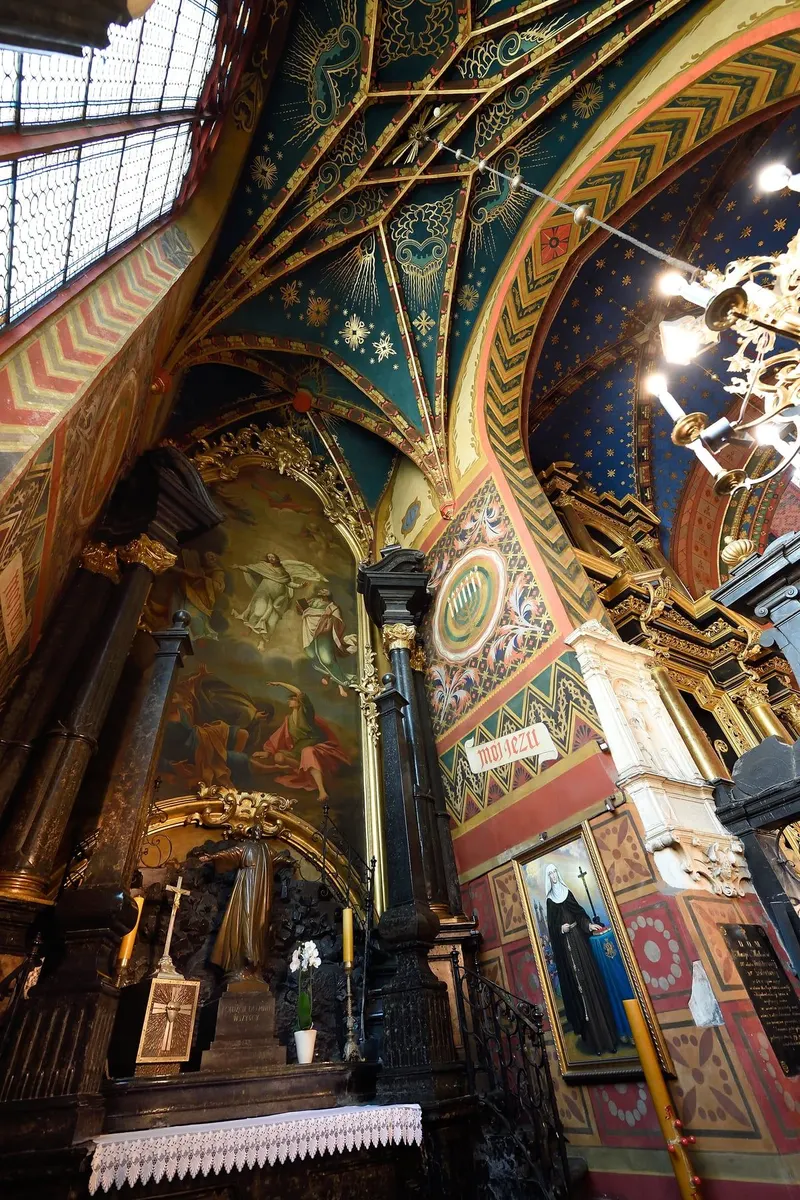
1St Mary Basilica
4.8★ · 19,368indoorOpen dailySt Mary Basilica anchors the northeast corner of the Main Market Square with an asymmetrical brick facade, carved altarpiece, and hourly trumpet call from the tower. It pairs naturally with the Cloth Hall and Florianska Street.
 2
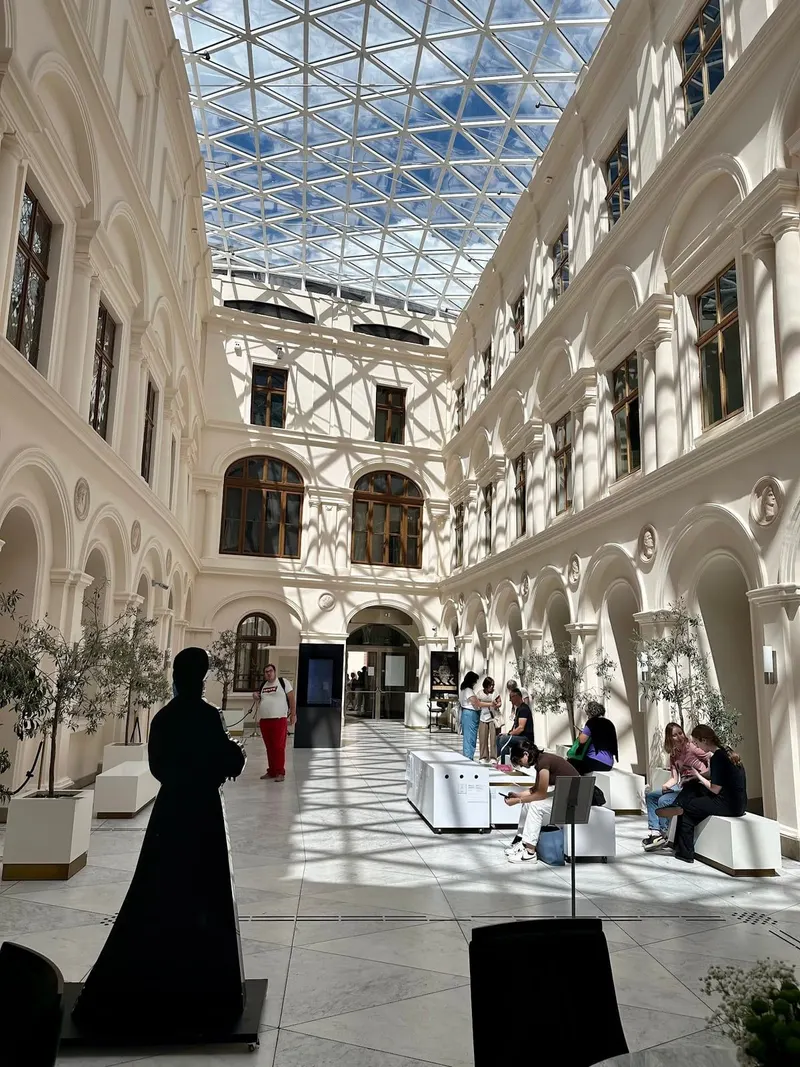
2Princes Czartoryski Museum
4.8★ · 9,730indoorClosed MonThe Czartoryski collection is best known for Leonardo da Vinci Lady with an Ermine, plus Polish, European, and antiquities holdings. It sits close to the Barbican and Old Town hotel cluster.
 3
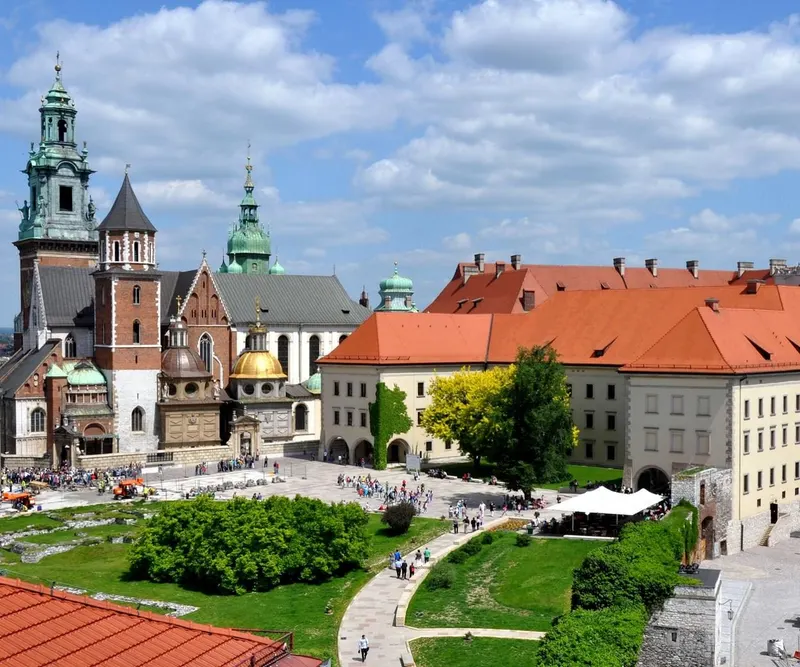
3Wawel Castle and Cathedral
4.7★ · 163,689indoorOpen dailyWawel rises above the Vistula at the south end of the Old Town with the royal castle, cathedral, courtyards, exhibitions, and river views. It is the clearest single stop for Krakow political, religious, and dynastic history.
Castle exhibitions use separate tickets and timed limits, so choose rooms before arriving in peak months.
Show 7 more sights
- 4Main Market Square and Cloth Hall
- 5Oskar Schindler Enamel Factory
- 6Rynek Underground
- 7Kazimierz
- 8Nowa Huta
- 9Vistula Boulevards and Bernatek Footbridge
- 10St Florian Gate and the Barbican
Neighborhoods
 1
1Old Town
The Old Town holds Rynek Glowny, St Mary, the Cloth Hall, Florianska Street, the Barbican, Planty park, hotels, restaurants, and the densest sightseeing streets.
 2
2Wawel and Stradom
Wawel and Stradom bridge the royal hill, cathedral precinct, Vistula paths, churches, and the route south toward Kazimierz.
 3
3Kazimierz
Kazimierz mixes synagogues, Jewish heritage sites, Plac Nowy food stands, small galleries, pubs, late bars, and a rougher evening energy than the Old Town.
 4
4Podgorze
Podgorze sits across the Vistula with Ghetto Heroes Square, Schindler factory, Eagle Pharmacy, quieter streets, and easy links back to Kazimierz.
 5
5Nowa Huta
Nowa Huta is the broad-avenue socialist realist district east of the center, useful for Cold War history, architecture tours, and a break from medieval Krakow.
 6
6Zwierzyniec and Krowodrza
Zwierzyniec and Krowodrza bring Blonia meadow, Kosciuszko Mound, Las Wolski, student streets, and greener edges west of the old center.
Getting around
Krakow center is compact enough for walking between the Old Town, Wawel, Kazimierz, and Podgorze, while MPK trams and buses cover Nowa Huta, the station, and outer districts. Use ticket machines or transport apps for time-based tickets, and keep taxis or ride-hail for late nights outside the tram grid.
Prague
Prague in July
Temperature
78°F / 59°F
25.3°C / 15.2°C
Precipitation
19d
3.1in · 79.5mm
Daylight
16.3h
July is Prague's warmest and wettest month, with peak crowds on Charles Bridge and tram 22 before midday.
July is Prague's warmest and wettest month, with peak crowds on Charles Bridge and tram 22 before midday.
City overview
Prague is a Vltava River capital where the 9th-century castle ridge faces Old Town, Josefov, and the New Town that Charles IV ordered in the 14th century. The UNESCO historic centre is compact but layered: Hradcany and Mala Strana climb the west bank, Stare Mesto and Josefov crowd the right bank, and Vinohrady, Zizkov, Holesovice, and Smichov show the city outside the postcard core.
Food & drink
Prague food is hearty and beer-led: goulash, svickova with dumplings, roast pork with cabbage, chlebicek open-faced sandwiches, parek v rohliku hot dogs, and trdelnik stands fill the central route even when locals argue over the last item. Avoid Old Town Square markups; Vinohrady, Zizkov, and markets around Jiriho z Podebrad usually beat the castle-to-clock corridor, while Staropramen is the Prague-brewed name alongside Pilsner Urquell and Budvar taps.
Top sights
Ranked for July suitability using weather, setting, ratings, and review volume.
- 1St. Vitus Cathedral
- 2Wenceslas Square & National Museum
- 3Convent of Saint Agnes
- 4Josefov Jewish Quarter
- 5Vysehrad
- 6Charles Bridge
- 7Prague Castle
- 8Old Town Square & Astronomical Clock
- 9Municipal House & Powder Tower
- 10Letna Park & Prague Metronome
 1
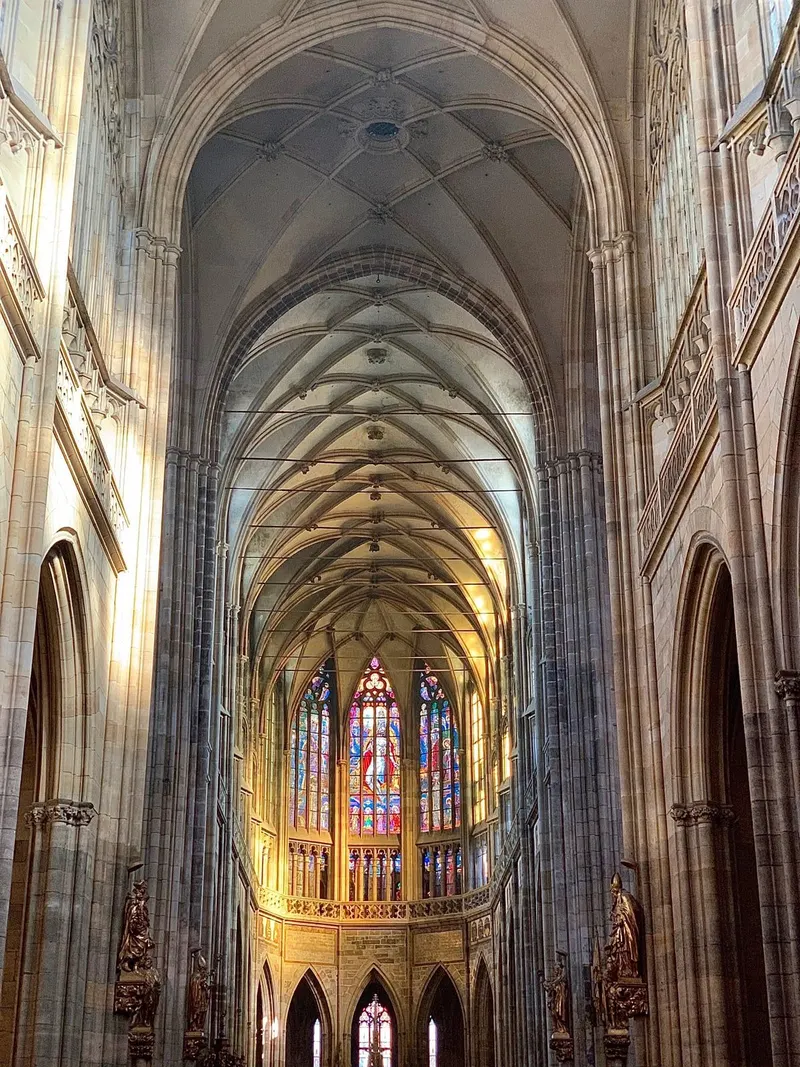
1St. Vitus Cathedral
4.8★ · 93,861indoorOpen dailyThe cathedral's oldest parts date to the 14th century, while the west portal and towers were completed in the 19th and early 20th centuries. Inside, the St. Wenceslas Chapel holds walls decorated with gold and more than 1,300 gems, and the bell tower climb has 287 stairs.
Wikipedia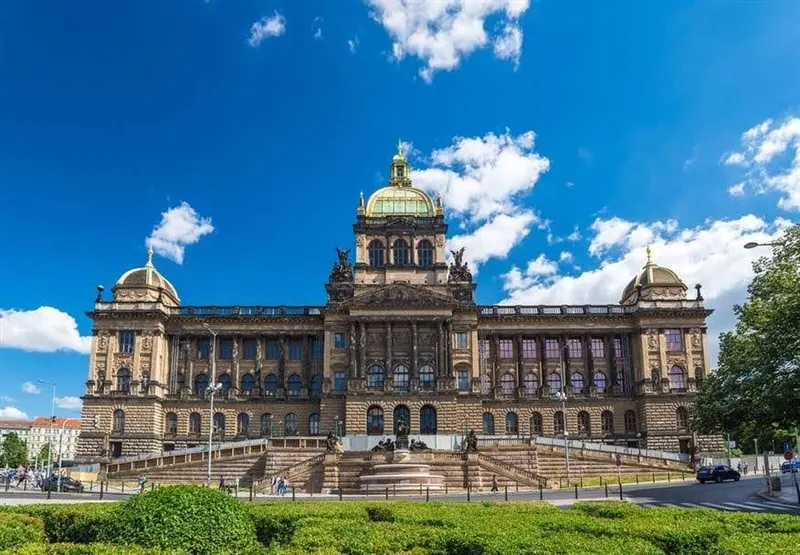 2
2Wenceslas Square & National Museum
4.6★ · 47,101indoorOpen dailyWenceslas Square is a long commercial boulevard in the 14th-century New Town, with the Czech National Museum at the upper end. It is the simplest way to read modern Prague between trams, shops, arcades, and political gathering space.
 3
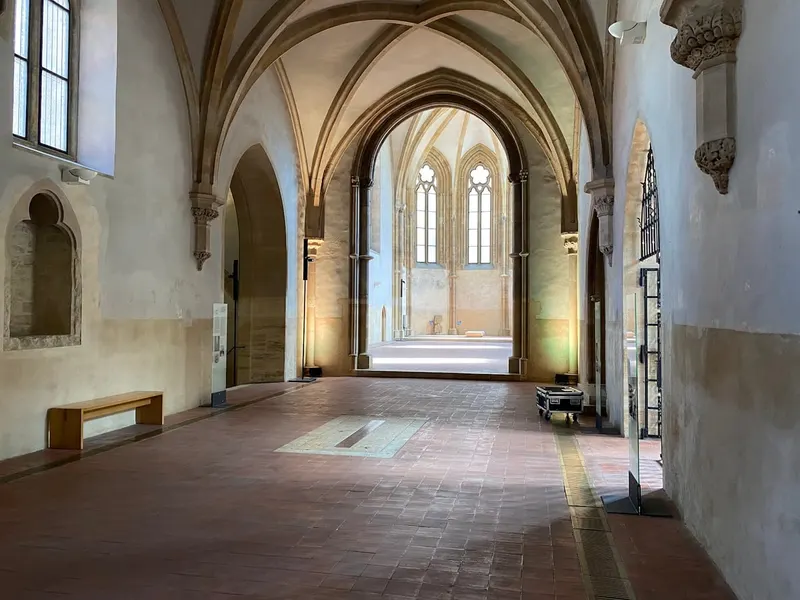
3Convent of Saint Agnes
4.6★ · 2,145indoorClosed MonThe convent was founded in 1234 and now holds part of the National Gallery collection. It gives the Old Town route a quieter medieval stop away from clock and bridge crowds.
Wikipedia
Show 7 more sights
- 4Josefov Jewish Quarter
- 5Vysehrad
- 6Charles Bridge
- 7Prague Castle
- 8Old Town Square & Astronomical Clock
- 9Municipal House & Powder Tower
- 10Letna Park & Prague Metronome
Neighborhoods
 1
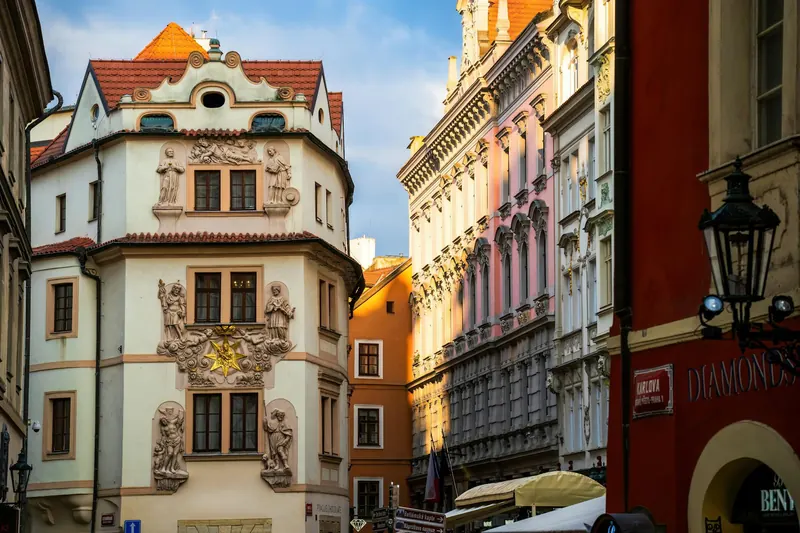
1Old Town (Stare Mesto) & Josefov
This is Prague's densest visitor core: Old Town Square, the Astronomical Clock, Tyn Church, Josefov synagogues, and Charles Bridge approaches are packed into short cobbled lanes.
 2
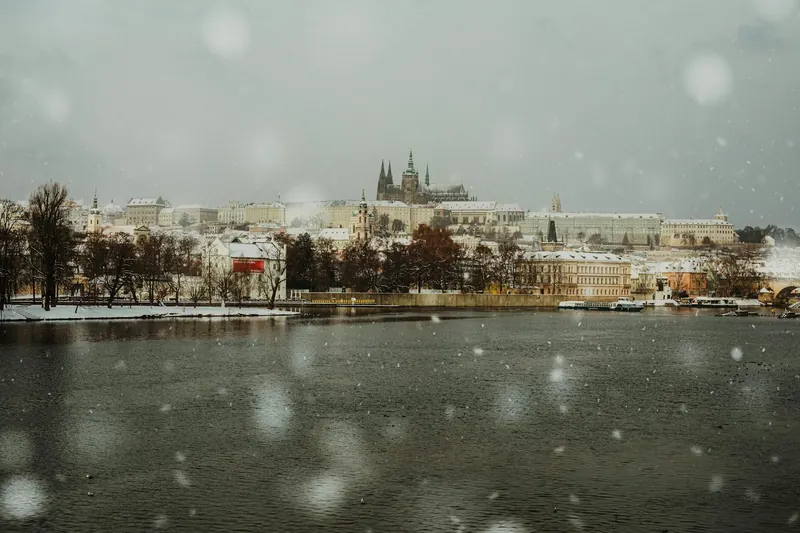
2Castle District (Hradcany) & Lesser Town (Mala Strana)
The west bank climbs from Malostranska station and tram 22 to Prague Castle, St. Vitus, Nerudova Street, Kampa, and Petrin Hill. It feels slower than Old Town once tour groups leave the castle gates.
 3
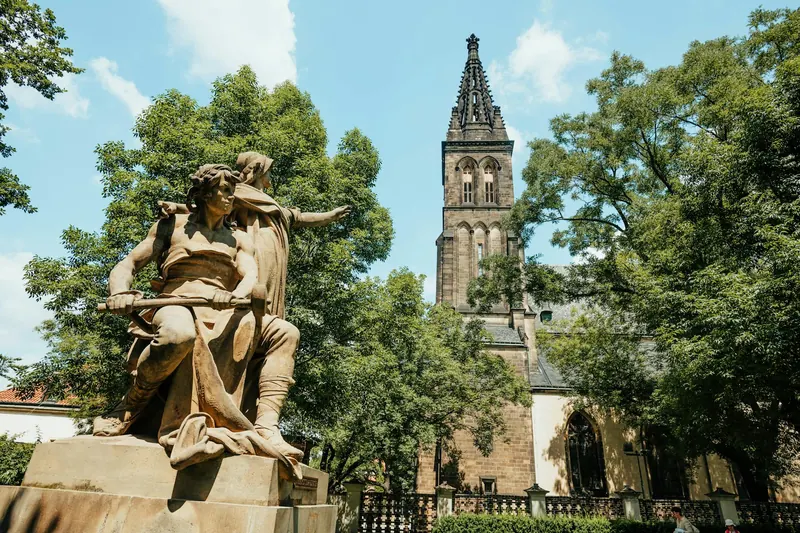
3New Town (Nove Mesto) & Vysehrad
Charles IV's New Town holds Wenceslas Square, the National Theatre edge, river embankments, and Vysehrad. It is practical for hotels because metro lines and trams spread from here in every direction.
 4
4Vinohrady
Vinohrady is the polished residential eating-and-drinking district around Namesti Miru, Jiriho z Podebrad, cafes, wine bars, and Art Nouveau apartment blocks. It is central without Old Town pricing.
 5
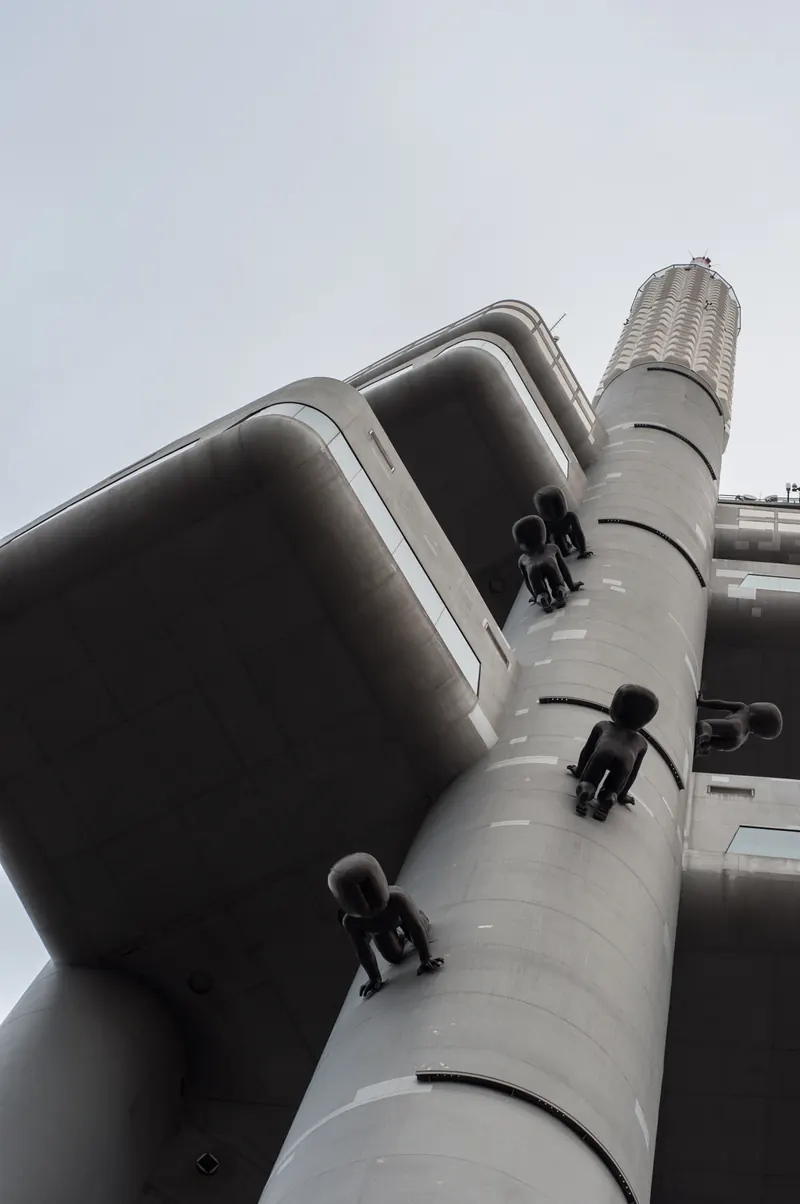
5Zizkov
Zizkov is hillier, rougher, and bar-heavy, with the TV tower, small pubs, and fast tram links back to the centre. It works for travelers who want cheaper nights after castle-and-bridge days.
 6
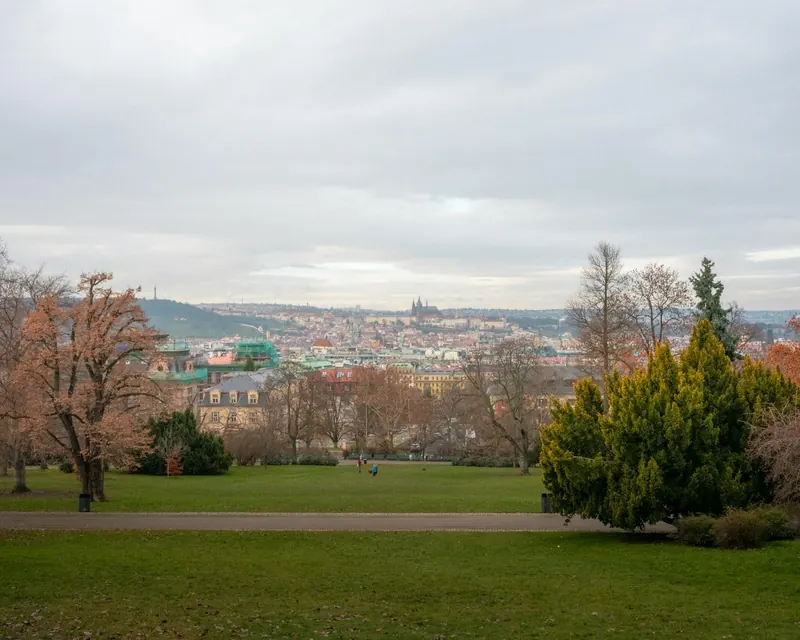
6Holesovice & Letna
Holesovice and Letna put modern galleries, market halls, Stromovka, Veletrzni Palace, and the Letna beer-garden ridge north of the tourist core. The district is better for repeat visitors than first-night orientation.
Getting around
Prague public transport uses metro lines A, B, and C plus an excellent tram network; buses stay mostly outside the protected historic districts, so trams and walking handle Old Town, Lesser Town, and the castle. Validate time tickets before riding, because inspectors check on trams and around Malostranske namesti; from the airport, bus 119 links to Nadrazi Veleslavin on metro A.
Budapest
Budapest in July
Temperature
82°F / 59°F
27.6°C / 15.2°C
Precipitation
6d
2.2in · 55mm
Daylight
15.4h
July is hot and busy, so use early Castle Hill walks and evening river views.
July is hot and busy, so use early Castle Hill walks and evening river views.
City overview
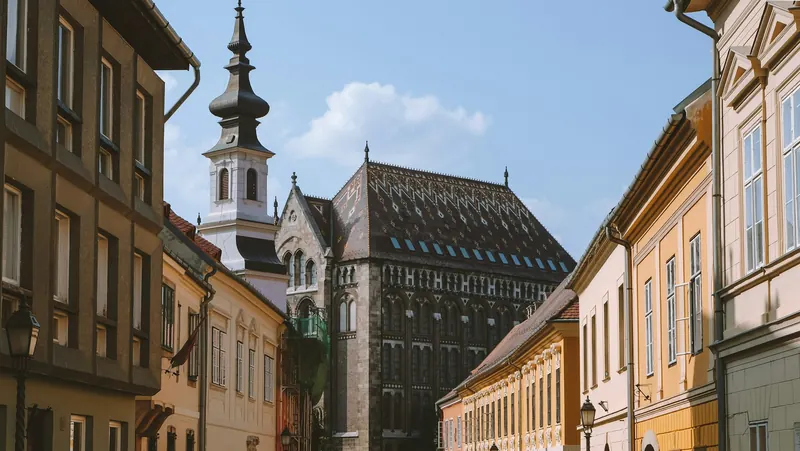
Budapest is a Danube capital formed from hilly Buda, flat Pest, and older Obuda, with bridges, thermal springs, Habsburg boulevards, and yellow trams tying the halves together. Castle Hill and Víziváros give the Buda layer, Belváros and Lipótváros handle the riverfront core, Erzsébetváros carries the Jewish Quarter and ruin bars, and Városliget adds baths and museums.
Food & drink
Budapest food means gulyás, chicken paprikás, pörkölt, töltött káposzta, lángos, túrós csusza, chimney cake, Dobos torte, Unicum, Tokaji, and fröccs. Great Market Hall, Hold Street Market, Jewish Quarter street food, Central Market paprika stalls, and classic cafes such as Gerbeaud or Ruszwurm show the useful range.
Top sights
Ranked for July suitability using weather, setting, ratings, and review volume.
- 1Hungarian Parliament Building
- 2Széchenyi Chain Bridge
- 3Heroes' Square and City Park
- 4Great Market Hall
- 5Buda Castle and Castle Hill
- 6Fisherman's Bastion and Matthias Church
- 7St. Stephen's Basilica
- 8Dohány Street Synagogue
- 9Széchenyi Thermal Bath
- 10House of Terror Museum
 1
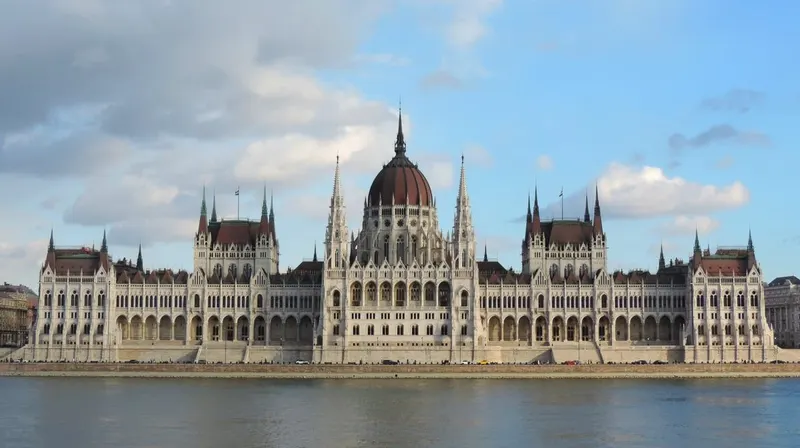
1Hungarian Parliament Building
4.8★ · 27,026outdoorOpen dailyThe neo-Gothic riverside parliament opened in 1904 and stretches along Kossuth Lajos Square on the Pest bank. Guided tours show the grand staircase, crown jewels, and assembly spaces when parliament schedule allows.
WikipediaReserve official timed tours ahead; passport or ID checks are required for entry.
 2
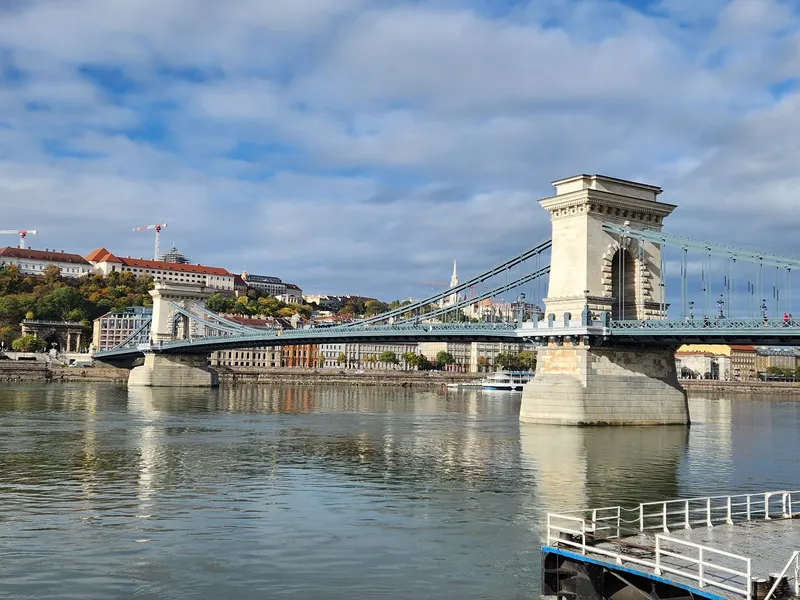
2Széchenyi Chain Bridge
4.7★ · 63,645outdoorThe 1849 suspension bridge was Budapest's first permanent Danube crossing and links Clark Adam Square with the Pest riverfront. Night lighting makes it the city's signature bridge view.
Wikipedia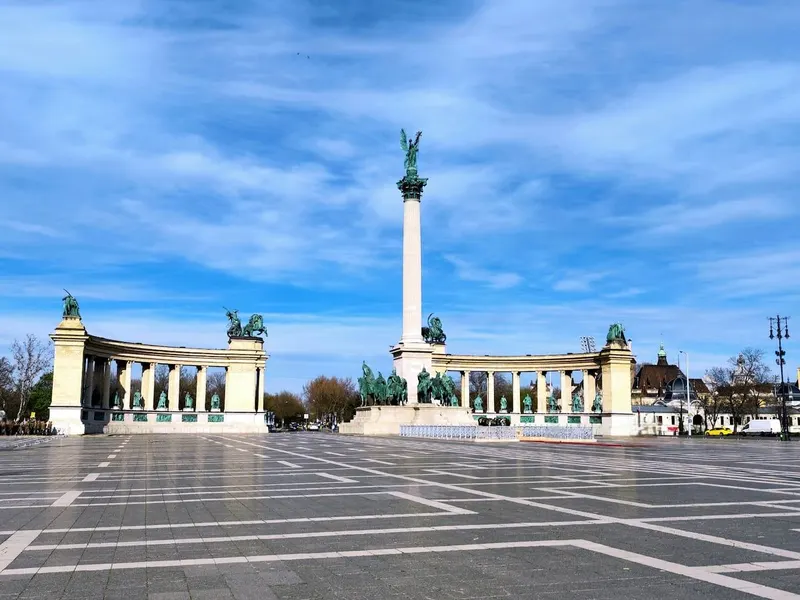 3
3Heroes' Square and City Park
4.7★ · 85,830outdoorThe Millennium Monument marks the 1896 Hungarian millennium axis beside the Museum of Fine Arts, Kunsthalle, Vajdahunyad Castle, and Széchenyi Bath. Metro Line M1 runs below Andrássy Avenue to Hősök tere.
Show 7 more sights
- 4Great Market Hall
- 5Buda Castle and Castle Hill
- 6Fisherman's Bastion and Matthias Church
- 7St. Stephen's Basilica
- 8Dohány Street Synagogue
- 9Széchenyi Thermal Bath
- 10House of Terror Museum
Neighborhoods
 1
1Budavár and Várnegyed
Budavár is Castle Hill Budapest, with the palace, Matthias Church, Fisherman's Bastion, museums, cobbled streets, and expensive but scenic hotels.
 2
2Víziváros and Gellért Hill
Víziváros and the Buda riverfront hold baths, Danube views, Gül Baba's tomb area, Clark Adam Square, Gellért Hill paths, and calmer evenings.
 3
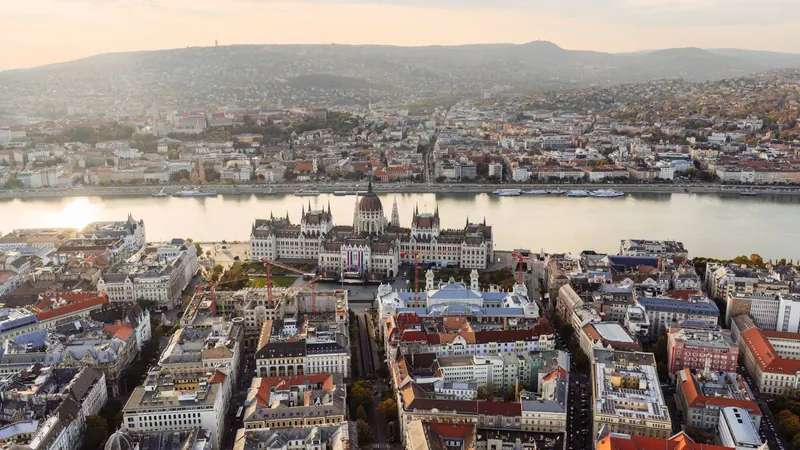
3Belváros and Lipótváros
Belváros and Lipótváros are central Pest, with Parliament, St. Stephen's Basilica, Váci utca, river promenades, hotels, and tram 2 views.
 4
4Terézváros and Andrássy Avenue
Terézváros follows Andrássy Avenue with the Opera House, House of Terror, Oktogon, embassies, cafes, and the M1 metro under the boulevard.
 5
5Erzsébetváros and the Jewish Quarter
Erzsébetváros is dense and late-night, with Dohány Synagogue, Kazinczy Street, ruin bars, courtyards, street food, and heavy weekend crowds.
 6
6Ferencváros and Józsefváros
Ferencváros and Józsefváros add the Great Market Hall, Corvin Quarter, universities, the Palace District, craft beer bars, and less-polished residential streets.
Getting around
BKK tickets and BudapestGO cover metro lines M1-M4, trams, buses, trolleybuses, and HÉV inside city limits, with trams 2, 4, and 6 especially useful for visitors. Airport bus 100E links Ferenc Liszt Airport with the center, bus 200E connects to Kőbánya-Kispest, and walking works well inside Belváros, Castle Hill, and the Jewish Quarter.
Best time to do the Eastern Europe trip
In July, the Eastern Europe trip runs daytime highs from 25°C / 77°F to 28°C / 82°F, with nights down to about 13°C / 55°F at the coolest stop. It is one of the wetter months, with up to 11 rainy days at the wettest stop. Weighed across all 3 stops, July is a good time to travel.
The most comfortable months across Kraków, Prague & Budapest are September, August and June, based on average daytime temperatures and rainfall at every stop. July 2026 is a good time to go.
Check this route against your dates
Tripsapien starts with the sights on this page or places you paste, then checks hours, closures, booking pressure and neighborhoods for your exact July dates — across every city on the Eastern Europe trip.
Plan this Eastern Europe tripCommon questions about the Eastern Europe trip
- When is the best time to do the Eastern Europe trip?
- The most comfortable months across Krakow, Prague, Budapest are September, August and June, based on average daytime temperatures and rainfall at each stop. July is a good time — see the per-stop weather below for the exact picture in July 2026.
- How many days do you need for the Eastern Europe trip?
- A comfortable Eastern Europe trip runs about 7–9 days, allowing roughly Krakow 2, Prague 3, Budapest 2 nights plus travel between stops. Add a day if you want a slower pace or extra day trips.
- What's the route for the Eastern Europe trip?
- The classic order is Kraków, Prague & Budapest. Each city below has its own July weather, events and top-sights list.
- Will the sights be open during my July Eastern Europe trip?
- Opening days and hours vary by weekday, season and public holiday, and they differ from city to city on a multi-stop trip. Paste your Eastern Europe list into Tripsapien and it checks every place in Krakow, Prague, Budapest against your exact dates, flagging closures and what needs booking ahead before you go.