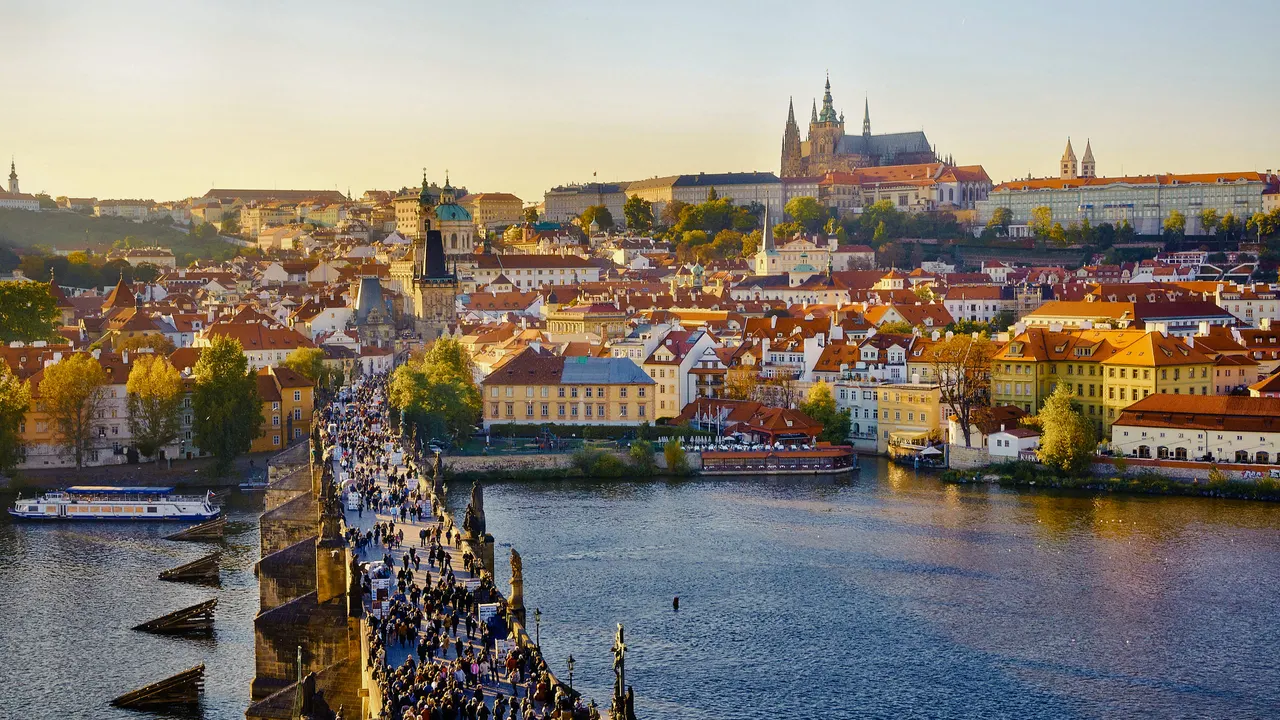
Imperial Cities itinerary — July 2027
For the Imperial Cities trip (Prague, Vienna & Budapest), July 2027 is a comfortable month by weather. Across Prague, Vienna and Budapest, daytime highs run from about 25°C / 77°F to 28°C / 82°F. Plan around 9–11 days for the full Prague, Vienna & Budapest loop.
In this order — about 9–11 days:
- Prague3 nightsCzech Republic
- Vienna3 nightsAustria
- Budapest3 nightsHungary
- Route noteReserve the longest intercity leg first and keep transfer days free of timed sights.
By TripSapien · Updated October 29, 2026
Prague
Prague in July
TempTemperature
78°F / 59°F
25.3°C / 15.2°C
RainPrecipitation
19d
3.1in · 79.5mm
LightDaylight
16.3h
July is Prague's warmest and wettest month, with peak crowds on Charles Bridge and tram 22 before midday.
City overview
Prague is a Vltava River capital where the 9th-century castle ridge faces Old Town, Josefov, and the New Town that Charles IV ordered in the 14th century. The UNESCO historic centre is compact but layered: Hradčany and Malá Strana climb the west bank, Staré Město and Josefov crowd the right bank, and Vinohrady, Zizkov, Holesovice, and Smíchov show the city outside the postcard core.
Food & drink
Prague food is hearty and beer-led: goulash, svickova with dumplings, roast pork with cabbage, chlebicek open-faced sandwiches, parek v rohliku hot dogs, and trdelnik stands fill the central route even when locals argue over the last item. Avoid Old Town Square markups; Vinohrady, Zizkov, and markets around Jiřího z Poděbrad usually beat the castle-to-clock corridor, while Staropramen is the Prague-brewed name alongside Pilsner Urquell and Budvar taps.
Events & festivals
- Jul 20
Holidays & observances
- Jul 5Saints Cyril and Methodius DayPublic holiday
- Jul 6Jan Hus DayPublic holiday
Top sights
Ranked for July suitability using weather, setting, ratings, and review volume.
- 1St. Vitus Cathedral
- 2Wenceslas Square & National Museum
- 3Convent of Saint Agnes
- 4Josefov Jewish Quarter
- 5Vyšehrad
- 6Charles Bridge
- 7Prague Castle
- 8Old Town Square & Astronomical Clock
- 9Municipal House & Powder Tower
- 10Letná Park & Prague Metronome
 1
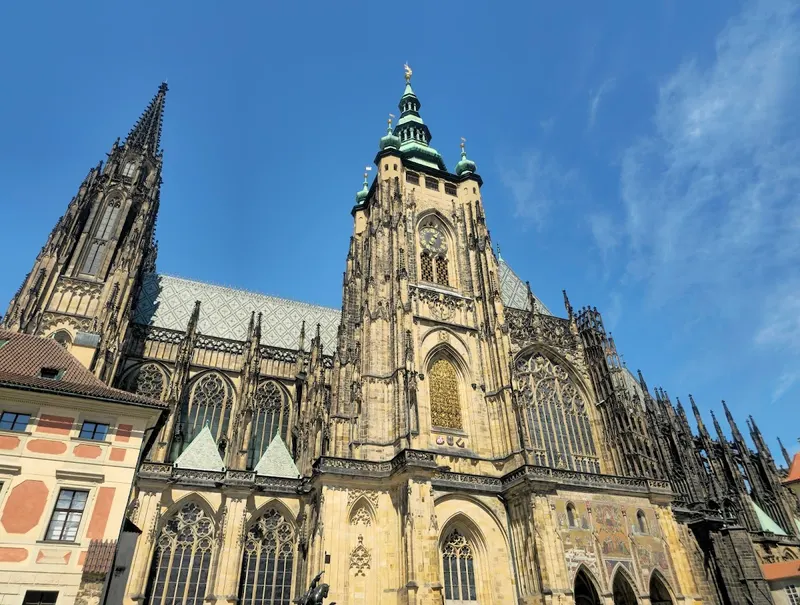
St. Vitus Cathedral
4.8★ · 96,937indoorOpen dailyThe cathedral's oldest parts date to the 14th century, while the west portal and towers were completed in the 19th and early 20th centuries. Inside, the St. Wenceslas Chapel holds walls decorated with gold and more than 1,300 gems, and the bell tower climb has 287 stairs.
Wikipedia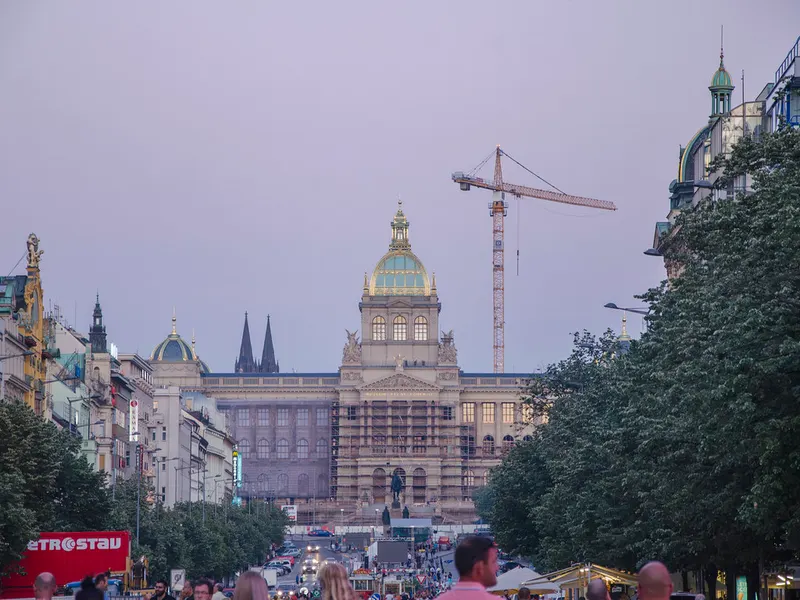 2
Wenceslas Square & National Museum
4.6★ · 50,316indoorOpen dailyWenceslas Square is a long commercial boulevard in the 14th-century New Town, with the Czech National Museum at the upper end. It is the simplest way to read modern Prague between trams, shops, arcades, and political gathering space.
 3
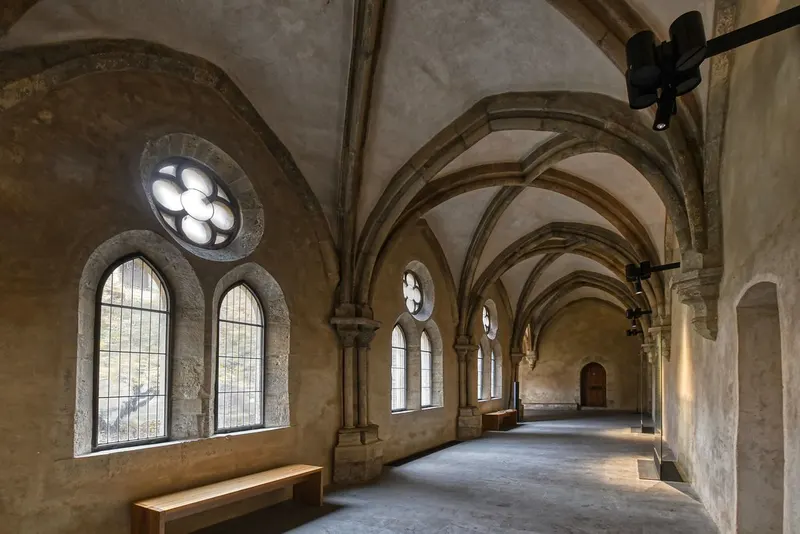
Convent of Saint Agnes
4.6★ · 2,253indoorClosed MonThe convent was founded in 1234 and now holds part of the National Gallery collection. It gives the Old Town route a quieter medieval stop away from clock and bridge crowds.
Wikipedia
Show 7 more sights
4Josefov Jewish Quarter
Josefov preserves the Old New Synagogue, Spanish Synagogue, Pinkas Synagogue, Ceremonial Hall, and Old Jewish Cemetery in a small area north of Old Town Square. The Old New Synagogue remains Europe's oldest active synagogue.
5Vyšehrad
Vyšehrad is the old fortress site south of the medieval core, above the Vltava and below New Town. Its ramparts, cemetery, and river views make it the best low-crowd counterpoint to Castle Hill.
Wikipedia6Charles Bridge
Charles IV commissioned the 516-metre stone bridge, built from 1357 to 1402 with 16 arches between Old Town and Lesser Town. Thirty Baroque statues were added from the 17th century, and dawn is the only truly quiet viewing time.
Wikipedia7Prague Castle
The castle has been the seat of Bohemian dukes, kings, Czechoslovak presidents, and Czech presidents since the 9th century. Its complex mixes Romanesque St. George's Basilica, Gothic St. Vitus Cathedral, Renaissance gardens, and 20th-century presidential offices.
Castle circuits use combined tickets; arrive early or late because tram 22 and security lines bunch up after breakfast.
Wikipedia8Old Town Square & Astronomical Clock
Old Town Square is the right-bank set piece, with the Jan Hus memorial erected on 6 July 1915 and the Astronomical Clock built in 1410 on the Old Town Hall. The hourly clock crowd is useful for timing, not for personal space.
9Municipal House & Powder Tower
Municipal House stands beside the Powder Tower at Náměstí Republiky, where the old city gate was later used to store gunpowder. The Art Nouveau building was proposed in 1901 and anchors the route from Republic Square into Old Town.
10Letná Park & Prague Metronome
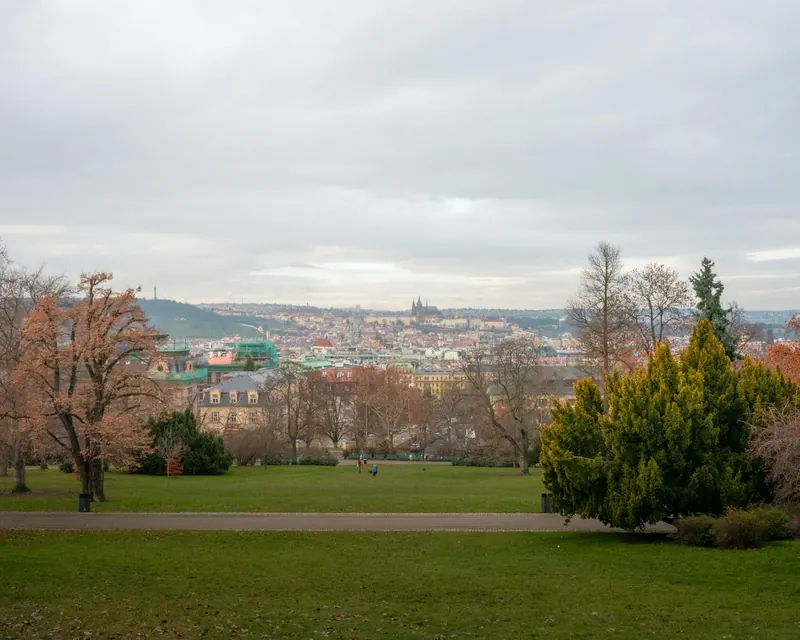
Letná Park rises above the river north of Old Town, with the Prague Metronome standing where the Stalin monument once dominated the skyline. The beer-garden ridge gives one of the clearest bridge-and-Vltava views.
Neighborhoods
 1
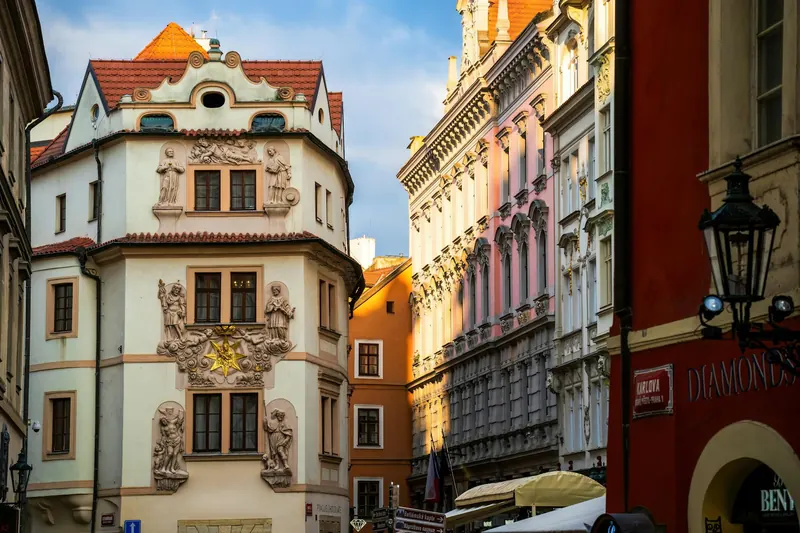
Old Town (Staré Město) & Josefov
This is Prague's densest visitor core: Old Town Square, the Astronomical Clock, Tyn Church, Josefov synagogues, and Charles Bridge approaches are packed into short cobbled lanes.
 2
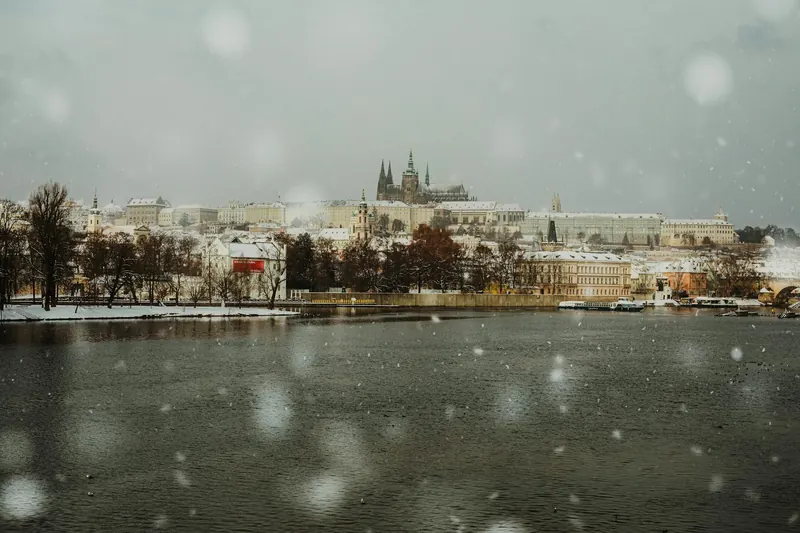
Castle District (Hradčany) & Lesser Town (Mala Strana)
The west bank climbs from Malostranska station and tram 22 to Prague Castle, St. Vitus, Nerudova Street, Kampa, and Petrin Hill. It feels slower than Old Town once tour groups leave the castle gates.
 3
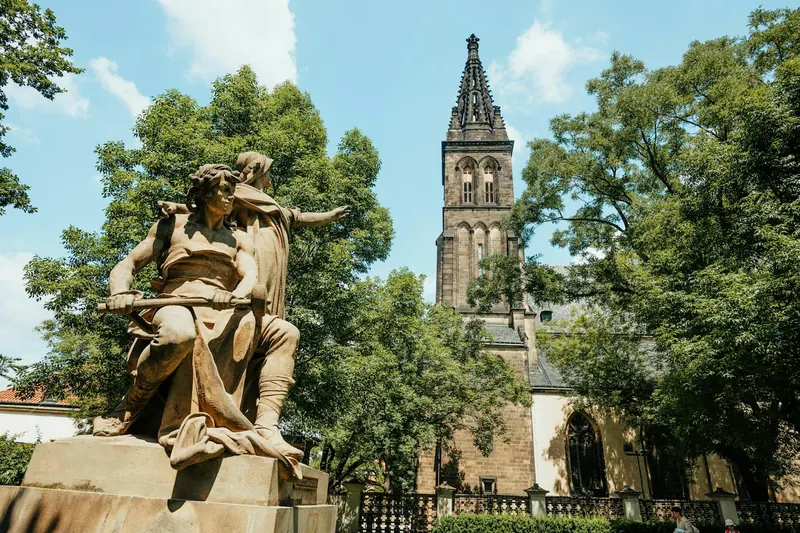
New Town (Nové Město) & Vyšehrad
Charles IV's New Town holds Wenceslas Square, the National Theatre edge, river embankments, and Vyšehrad. It is practical for hotels because metro lines and trams spread from here in every direction.
 4
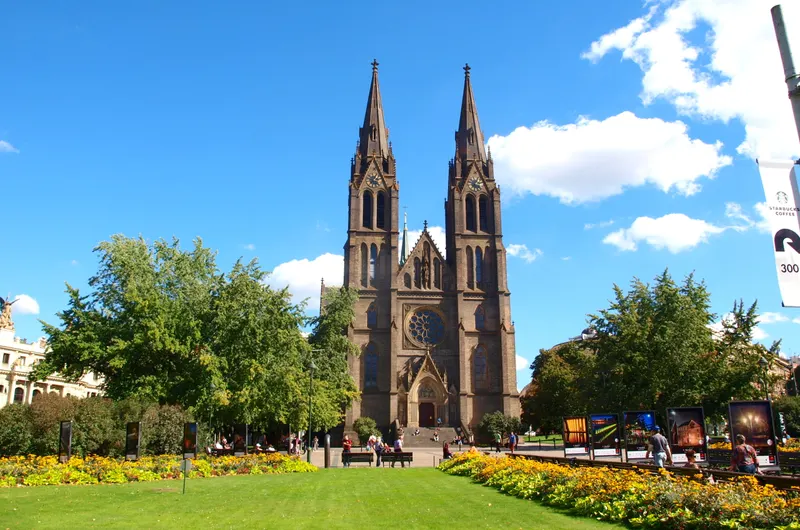
Vinohrady
Vinohrady is the polished residential eating-and-drinking district around Náměstí Míru, Jiřího z Poděbrad, cafes, wine bars, and Art Nouveau apartment blocks. It is central without Old Town pricing.
 5
Zizkov
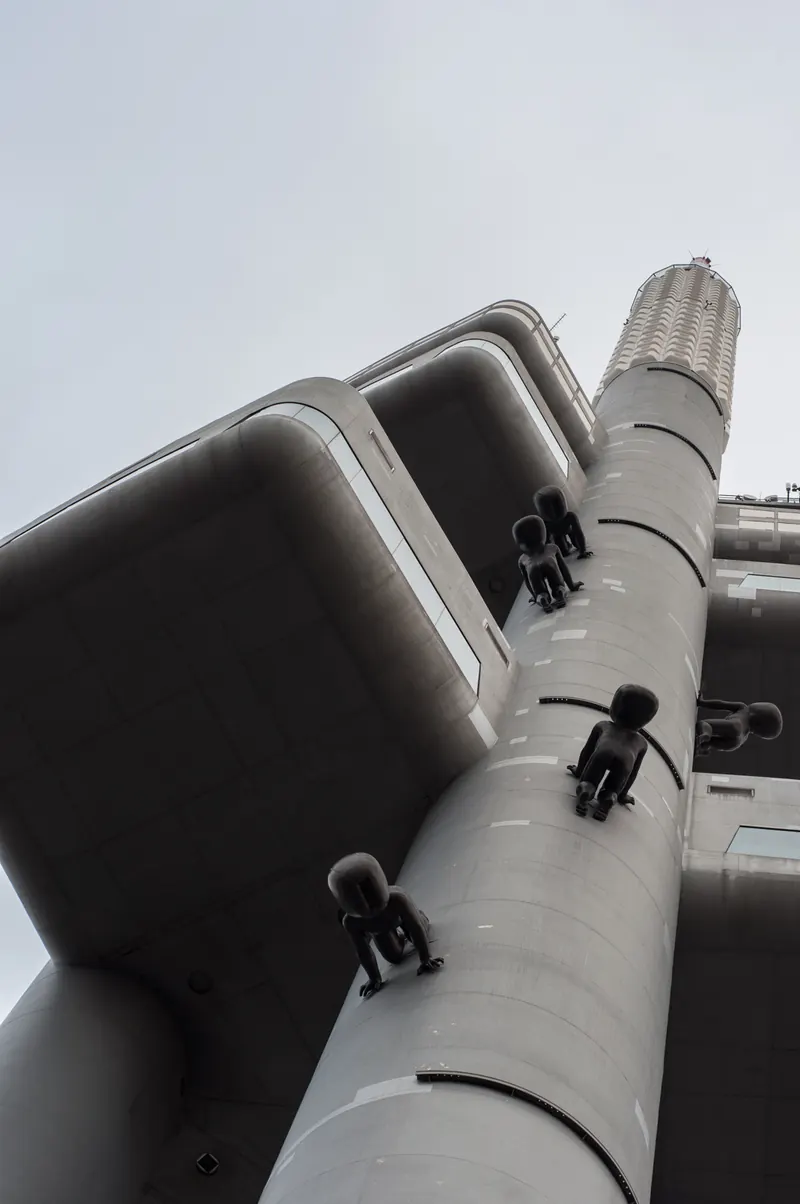
Zizkov is hillier, rougher, and bar-heavy, with the TV tower, small pubs, and fast tram links back to the centre. It works for travelers who want cheaper nights after castle-and-bridge days.
 6
Holesovice & Letná
Holesovice and Letná put modern galleries, market halls, Stromovka, Veletrzni Palace, and the Letná beer-garden ridge north of the tourist core. The district is better for repeat visitors than first-night orientation.
Getting around
Prague public transport uses metro lines A, B, and C plus an excellent tram network; buses stay mostly outside the protected historic districts, so trams and walking handle Old Town, Lesser Town, and the castle. Validate time tickets before riding, because inspectors check on trams and around Malostranské náměstí; from the airport, bus 119 links to Nadrazi Veleslavin on metro A.
Vienna
Vienna in July
TempTemperature
80°F / 60°F
26.8°C / 15.4°C
RainPrecipitation
9d
3.1in · 80mm
LightDaylight
15.5h
July is hot and showery, so schedule museums around midday heat and thunderstorms.
City overview
Vienna sits on the Danube edge with the Innere Stadt, Leopoldstadt, Neubau, Wieden, Mariahilf, Landstrasse, Hietzing, and the Ringstrasse organizing imperial palaces, coffeehouses, music, museums, markets, and wine taverns. The city is strongest when the Hofburg, Schoenbrunn, Belvedere, MuseumsQuartier, Prater, and Naschmarkt are treated as linked districts rather than isolated monuments.
Food & drink
Vienna food is built around cafes, Beisln, and wine taverns: Wiener schnitzel is a thin breaded cutlet fried crisp, Tafelspitz is boiled beef with horseradish and apple sauce, Kaiserschmarrn tears sugared pancake into pieces, and Sachertorte layers chocolate cake with apricot jam. Naschmarkt, Cafe Central, Cafe Sacher, Cafe Hawelka, Grinzing, Neubau, and Karmelitermarkt add goulash, apple strudel, apricot dumplings, melange coffee, and heuriger snacks.
Events & festivals
- Dates unconfirmed
Each day, weather permitting, you can watch an opera on a huge open-air screen.
Planning lead · dates set closer in · Source: Month Signals
- Jul 2 – Jul 4
The Donauinselfest has become one of the largest open-air festivals in Europe and each year attracts visitors from around the world.
Planning lead · projected date · Source: TripSapien festival dataset
- Jul 2 – Jul 4
Planning lead · projected date · Source: TripSapien festival dataset
Top sights
Ranked for July suitability using weather, setting, ratings, and review volume.
- 1Prater and Riesenrad
- 2Kunsthistorisches Museum
- 3Schoenbrunn Palace
- 4Hofburg Palace
- 5Belvedere Palace
- 6Stephansdom
- 7Albertina
- 8Vienna State Opera
- 9MuseumsQuartier
- 10Naschmarkt
 1
Prater and Riesenrad
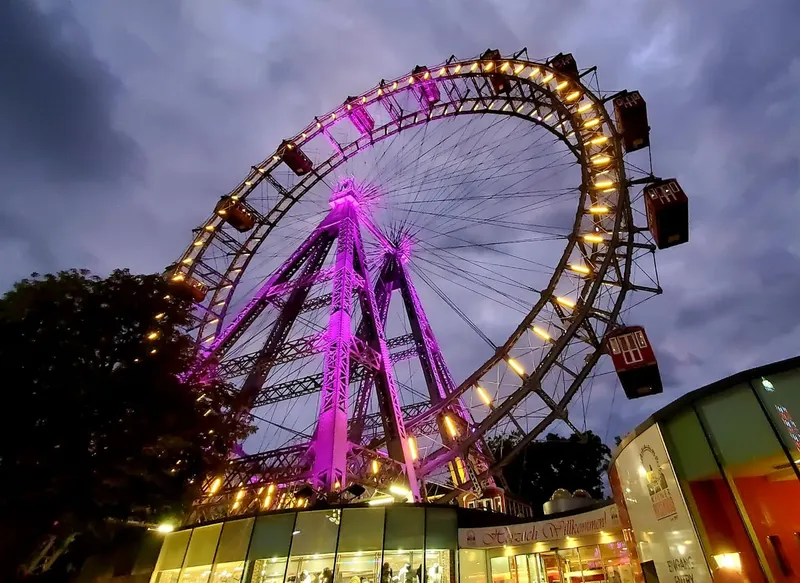
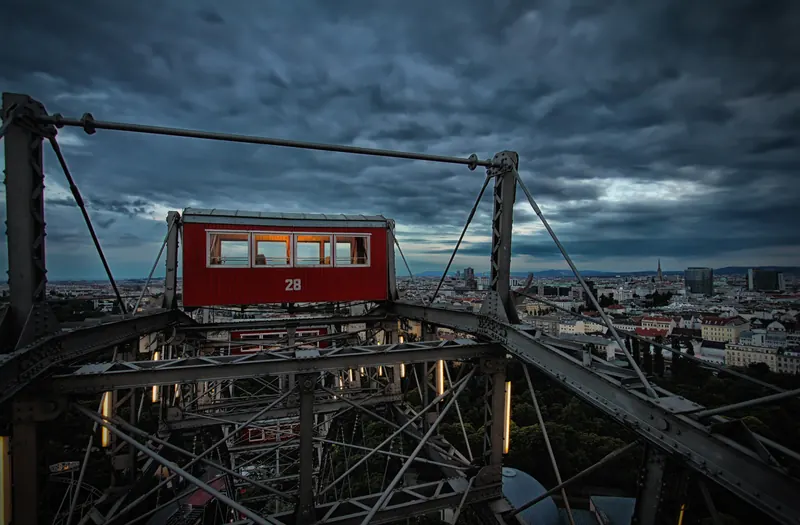
4.5★ · 50,313outdoorOpen dailyThe Prater amusement park in Leopoldstadt is centered on the 1897 Giant Ferris Wheel, old rides, beer gardens, and long park avenues. Praterstern has U-Bahn and S-Bahn access.
 2
Kunsthistorisches Museum
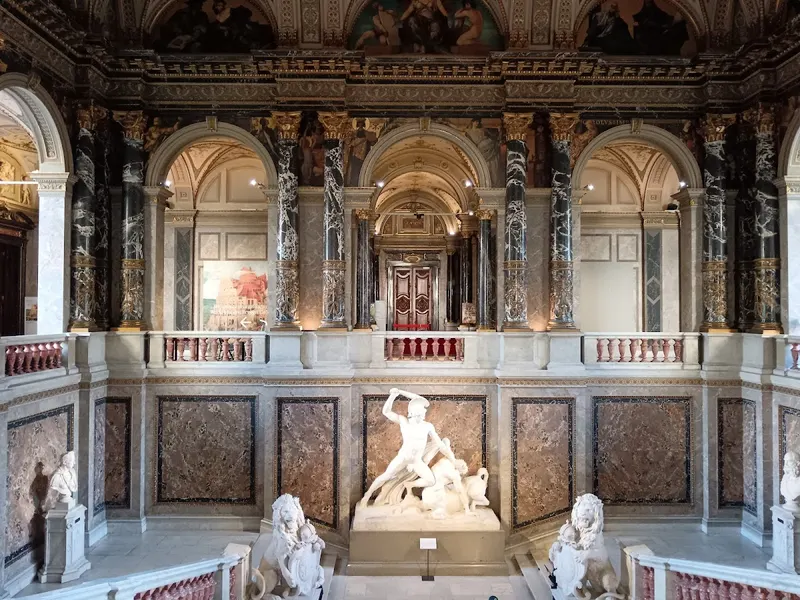
4.8★ · 36,358indoorClosed MonThe Ringstrasse museum opened in 1891 for Habsburg art collections and holds Bruegel, Rubens, Velazquez, Titian, Egyptian antiquities, and imperial objects. It faces the Natural History Museum across Maria-Theresien-Platz.
Wikipedia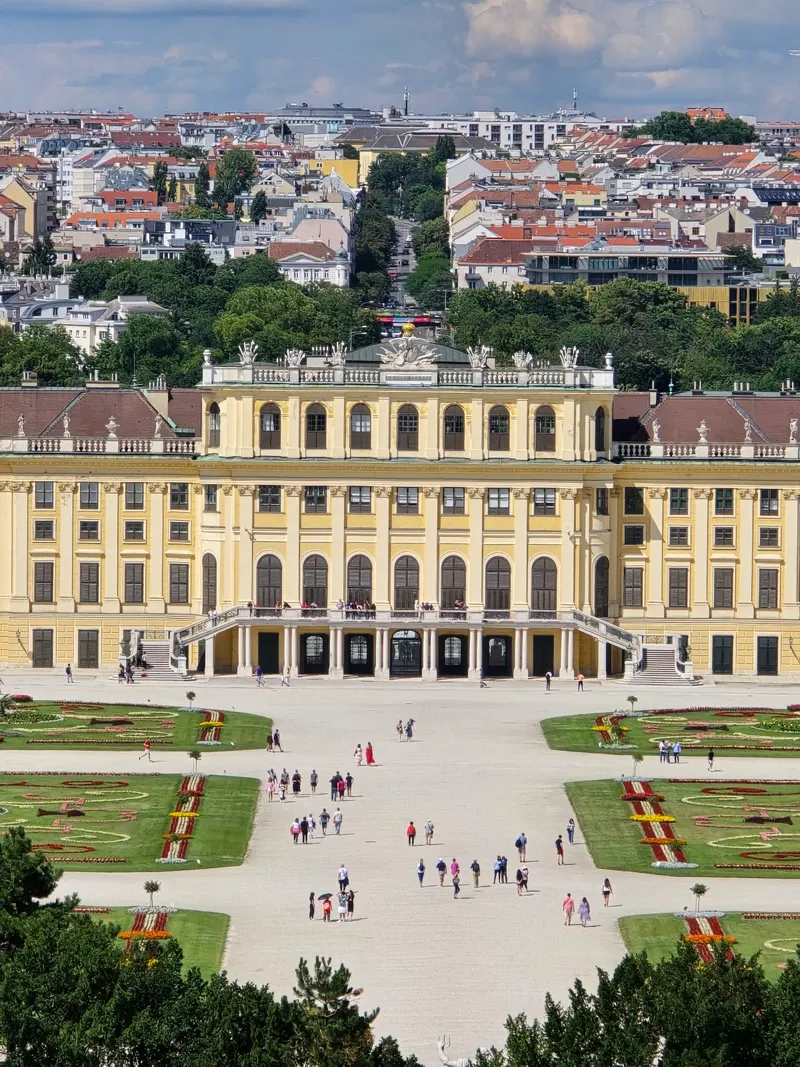 3
Schoenbrunn Palace
4.7★ · 187,013indoorOpen dailyThe Habsburg summer palace grew in the 18th century with state rooms, gardens, Gloriette, fountains, and the Tiergarten nearby. It sits in Hietzing on U4.
WikipediaPalace interior tickets are timed; gardens are busiest on mild weekends.
Show 7 more sights
4Hofburg Palace
The former imperial palace complex contains state rooms, courtyards, museums, the Austrian National Library, Spanish Riding School, and Heldenplatz. It borders the Innere Stadt and Ringstrasse.
Wikipedia5Belvedere Palace
Prince Eugene of Savoy's baroque palace complex includes Upper and Lower Belvedere, gardens, and the Klimt-heavy Austrian Gallery. It sits in Landstrasse near tram and S-Bahn stops.
Wikipedia6Stephansdom
St Stephen's Cathedral is the Gothic center of the old city, with a tiled roof, towers, catacombs, chapels, and views over Stephansplatz. U1 and U3 stop directly below.
Wikipedia7Albertina
The museum beside the Opera holds graphic art, modern collections, Habsburg state rooms, and temporary shows. Its terrace gives a direct view over the Vienna State Opera.
Wikipedia8Vienna State Opera
The opera house opened in 1869 on the Ringstrasse and remains the city's main stage for opera and ballet. It sits beside Karlsplatz and the Albertina.
Standing-room tickets and guided tours are useful when main seats are expensive or sold out.
Wikipedia9MuseumsQuartier
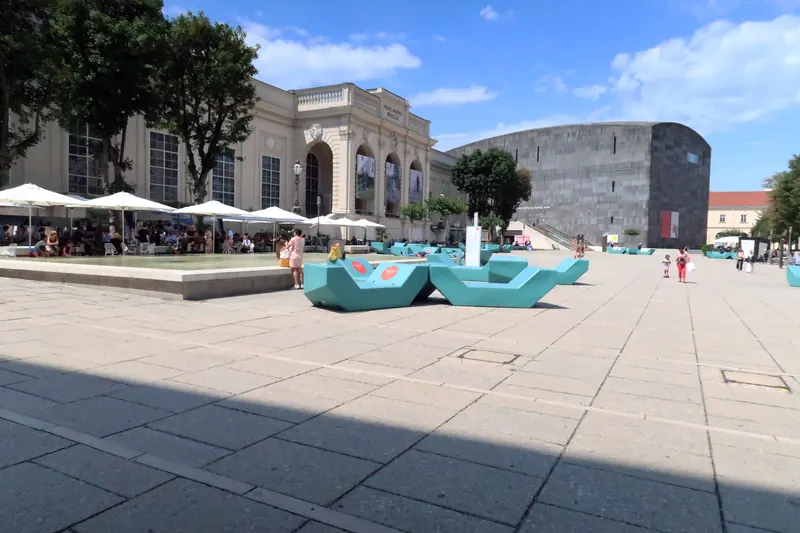
The former imperial stables now hold Leopold Museum, mumok, Kunsthalle Wien, courtyards, cafes, and events in Neubau. It links the Ringstrasse museums with Mariahilfer Strasse.
Wikipedia10Naschmarkt
The long market beside Wienzeile has produce, spices, delis, restaurants, and a Saturday flea market near Kettenbrueckengasse. It connects Wieden, Mariahilf, and the Secession area.
Wikipedia
Neighborhoods
 1
Innere Stadt and Ringstrasse
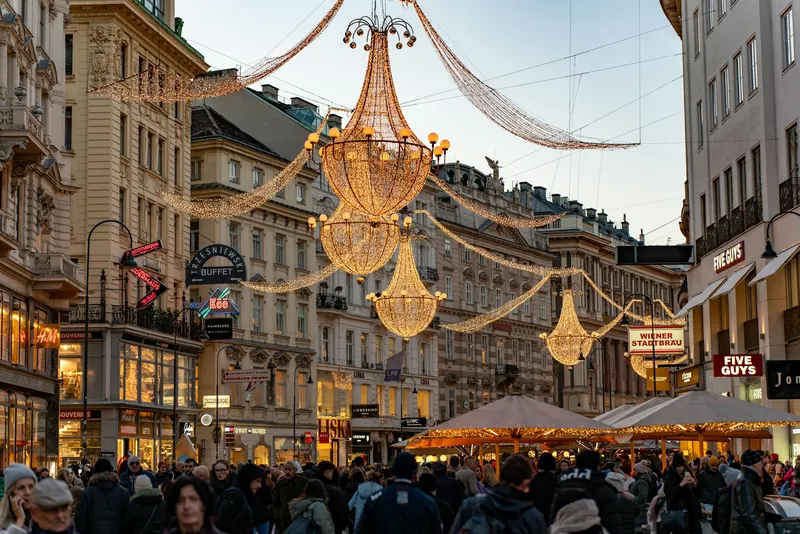
Innere Stadt is imperial and compact, with Stephansdom, Hofburg, Graben, Kohlmarkt, State Opera, Ringstrasse museums, and coffeehouses.
 2
Leopoldstadt and Prater
Leopoldstadt adds Prater rides, Augarten, Karmelitermarkt, Danube Canal bars, Jewish history, and easier park space.
 3
Neubau and MuseumsQuartier
Neubau is arts-and-design focused, with MuseumsQuartier, Spittelberg lanes, Mariahilfer Strasse, galleries, cafes, and small shops.
 4
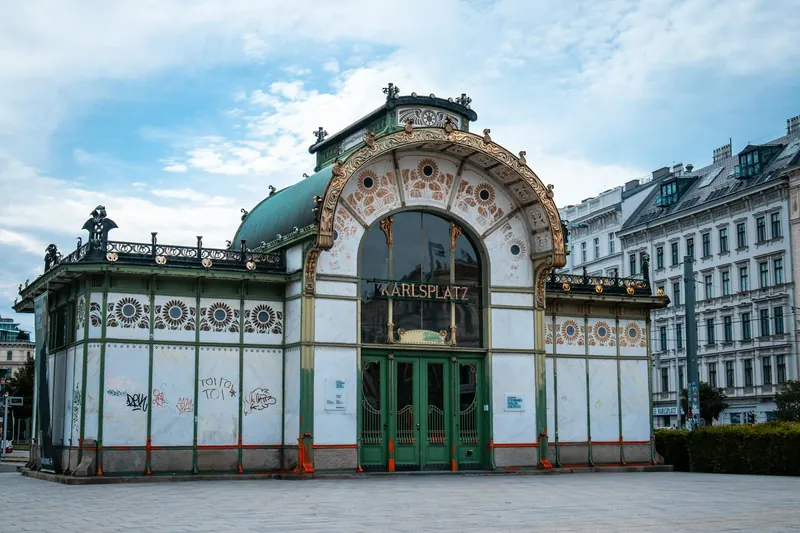
Wieden and Karlsplatz
Wieden has Karlskirche, Naschmarkt, Secession, Freihausviertel restaurants, and tram links just south of the Ring.
 5
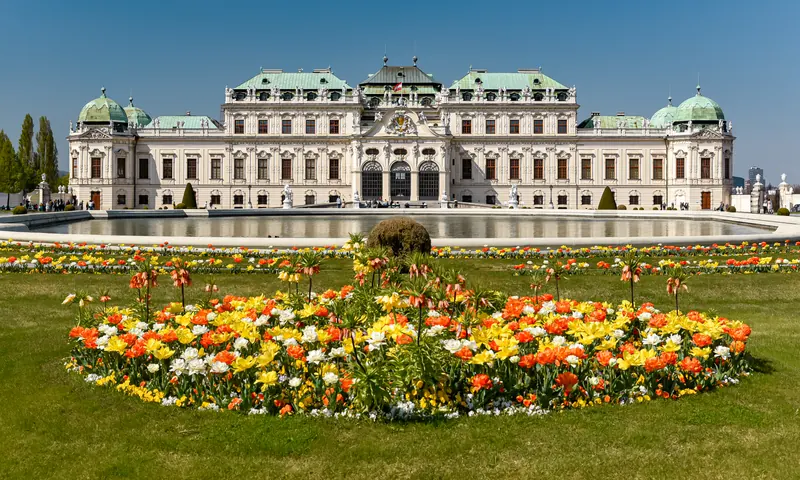
Landstrasse
Landstrasse is palace-and-transit useful, with Belvedere, Stadtpark, Hundertwasserhaus, embassies, and Wien Mitte airport-train access.
 6
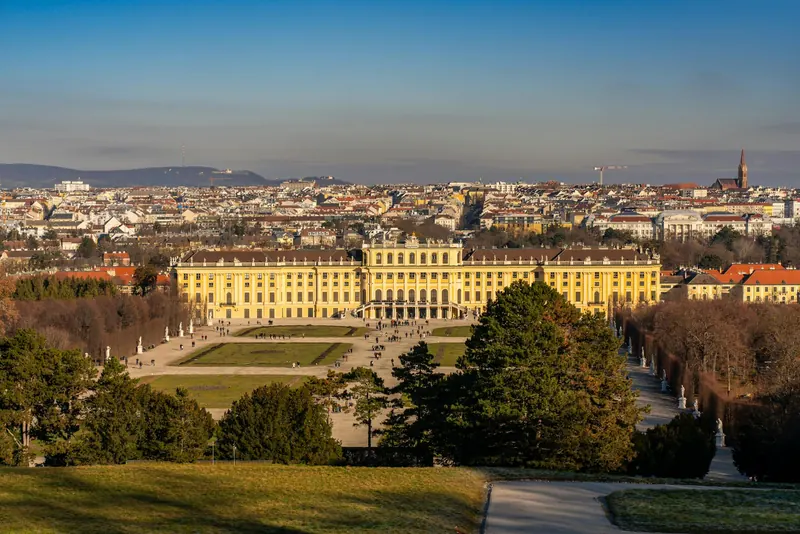
Hietzing and Schoenbrunn
Hietzing is residential and palace-led, with Schoenbrunn, Tiergarten, villas, cafes, and U4 access to the center.
Getting around
Wiener Linien runs U-Bahn, trams, buses, and night services, while OBB and S-Bahn handle airport and regional trips. Use U-Bahn for Schoenbrunn, Prater, and Hauptbahnhof, trams for Ringstrasse views, and trains for Bratislava or Wachau connections.
Budapest
Budapest in July
TempTemperature
82°F / 59°F
27.6°C / 15.2°C
RainPrecipitation
6d
2.2in · 55mm
LightDaylight
15.4h
July is hot and busy, so use early Castle Hill walks and evening river views.
City overview
Budapest is a Danube capital formed from hilly Buda, flat Pest, and older Óbuda, with bridges, thermal springs, Habsburg boulevards, and yellow trams tying the halves together. Castle Hill and Víziváros give the Buda layer, Belváros and Lipótváros handle the riverfront core, Erzsébetváros carries the Jewish Quarter and ruin bars, and Városliget adds baths and museums.
Food & drink
Budapest food means gulyás, chicken paprikás, pörkölt, töltött káposzta, lángos, túrós csusza, chimney cake, Dobos torte, Unicum, Tokaji, and fröccs. Great Market Hall, Hold Street Market, Jewish Quarter street food, Central Market paprika stalls, and classic cafes such as Gerbeaud or Ruszwurm show the useful range.
Events & festivals
- Dates unconfirmed
Another array of cultural and music events, with a Jewish touch.
Planning lead · dates set closer in · Source: Month Signals
Top sights
Ranked for July suitability using weather, setting, ratings, and review volume.
- 1Hungarian Parliament Building
- 2Széchenyi Chain Bridge
- 3Heroes' Square and City Park
- 4Great Market Hall
- 5Buda Castle and Castle Hill
- 6Fisherman's Bastion and Matthias Church
- 7St. Stephen's Basilica
- 8Dohány Street Synagogue
- 9Széchenyi Thermal Bath
- 10House of Terror Museum
 1
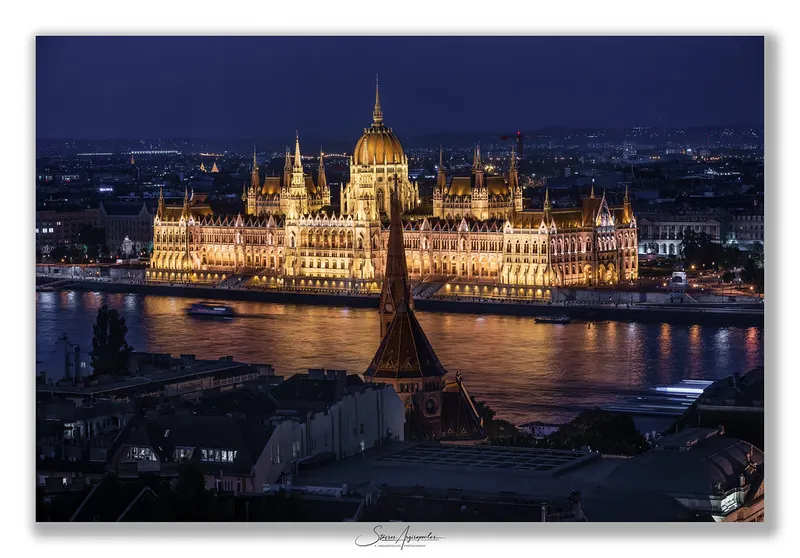
Hungarian Parliament Building
4.8★ · 32,649outdoorOpen dailyThe neo-Gothic riverside parliament opened in 1904 and stretches along Kossuth Lajos Square on the Pest bank. Guided tours show the grand staircase, crown jewels, and assembly spaces when parliament schedule allows.
WikipediaReserve official timed tours ahead; passport or ID checks are required for entry.
 2
Széchenyi Chain Bridge
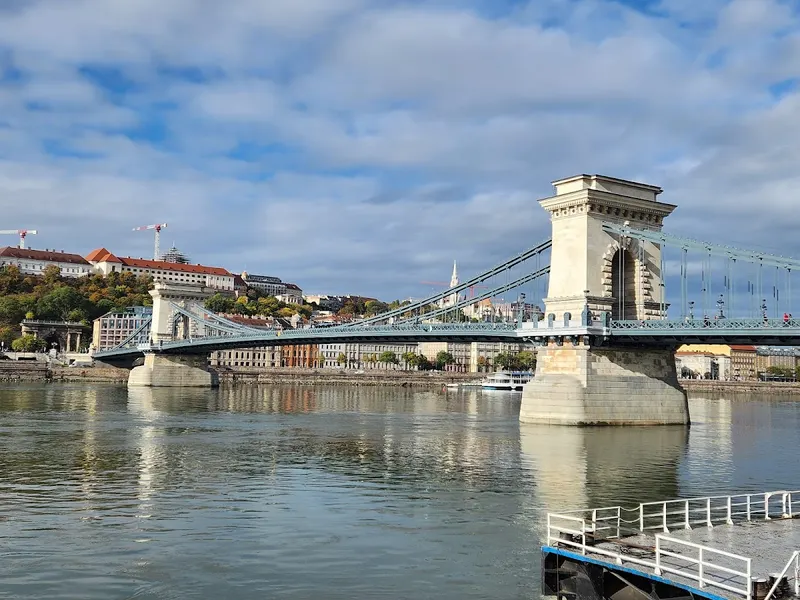
4.7★ · 65,380outdoorThe 1849 suspension bridge was Budapest's first permanent Danube crossing and links Clark Adam Square with the Pest riverfront. Night lighting makes it the city's signature bridge view.
Wikipedia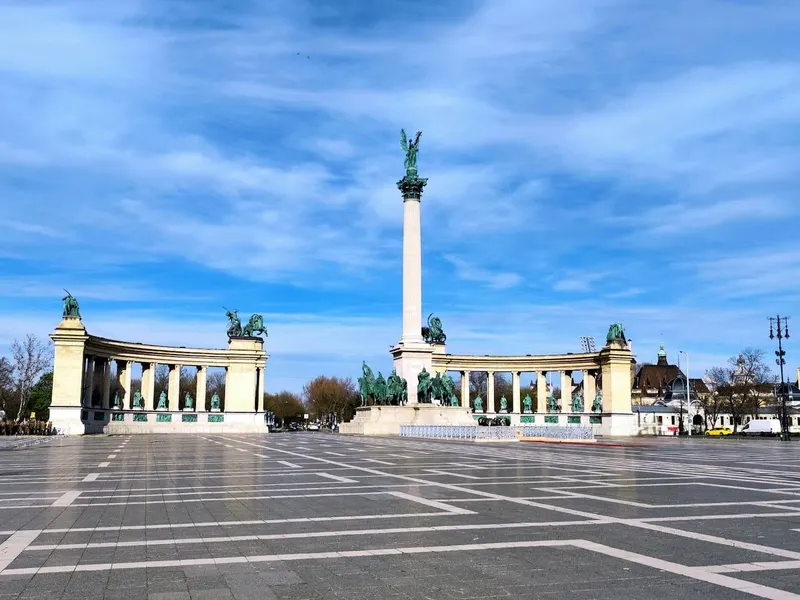 3
Heroes' Square and City Park
4.7★ · 87,966outdoorThe Millennium Monument marks the 1896 Hungarian millennium axis beside the Museum of Fine Arts, Kunsthalle, Vajdahunyad Castle, and Széchenyi Bath. Metro Line M1 runs below Andrássy Avenue to Hősök tere.
Show 7 more sights
4Great Market Hall
The 1897 market building at Fővám tér stands beside Liberty Bridge, with paprika, salami, produce, pickles, and upstairs food stalls. Tram and metro links make it an easy lunch stop.
Wikipedia5Buda Castle and Castle Hill
The castle district rises above the Danube with the former royal palace, courtyards, museums, cobbled streets, and views over Pest. The funicular from Chain Bridge dates to 1870 and was rebuilt after World War II.
6Fisherman's Bastion and Matthias Church
The neo-Romanesque terrace and the tiled-roof church stand on Castle Hill above the Danube. The church hosted royal coronations, and the terrace gives the cleanest Parliament view.
7St. Stephen's Basilica
The large neoclassical church in Lipótváros is dedicated to Hungary's first king and holds the relic known as the Holy Right. The dome terrace gives a central Pest panorama.
Wikipedia8Dohány Street Synagogue
The 1859 Moorish Revival synagogue is one of Europe's largest, with a museum, cemetery, and Holocaust memorial garden in the Jewish Quarter. It anchors Erzsébetváros history.
Wikipedia9Széchenyi Thermal Bath
The City Park bath complex opened in 1913 around hot-spring pools, saunas, steam rooms, and yellow neo-baroque courtyards. It is the classic Budapest thermal-bath experience.
Bring swimwear, sandals, and a towel; weekend afternoon entry is the most crowded window.
10House of Terror Museum
The Andrássy Avenue museum occupies the former Arrow Cross and communist secret-police headquarters. Exhibits cover fascist and communist repression in 20th-century Hungary.
Wikipedia
Neighborhoods
 1
Budavár and Várnegyed
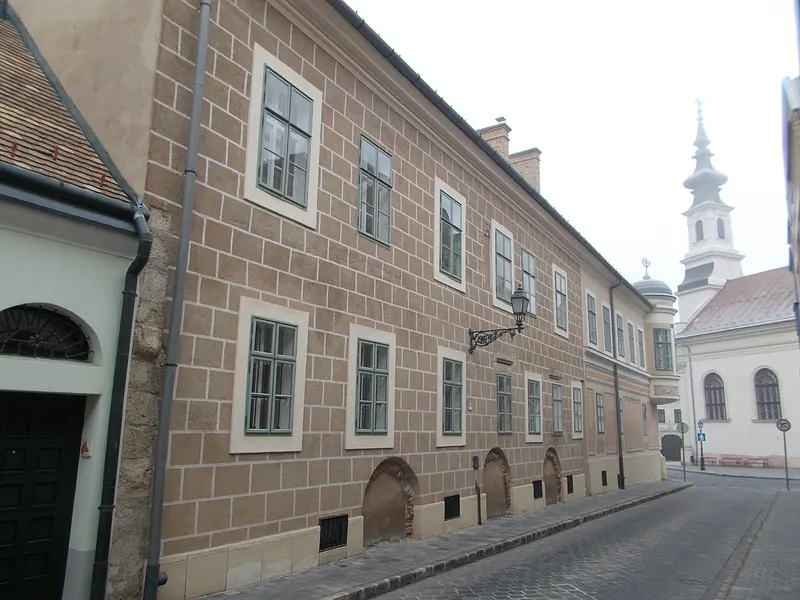
Budavár is Castle Hill Budapest, with the palace, Matthias Church, Fisherman's Bastion, museums, cobbled streets, and expensive but scenic hotels.
 2
Víziváros and Gellért Hill
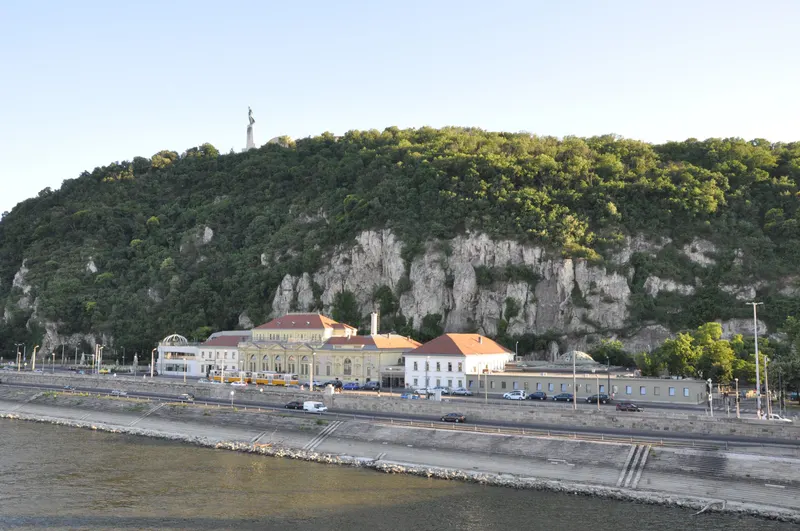
Víziváros and the Buda riverfront hold baths, Danube views, Gül Baba's tomb area, Clark Adam Square, Gellért Hill paths, and calmer evenings.
 3
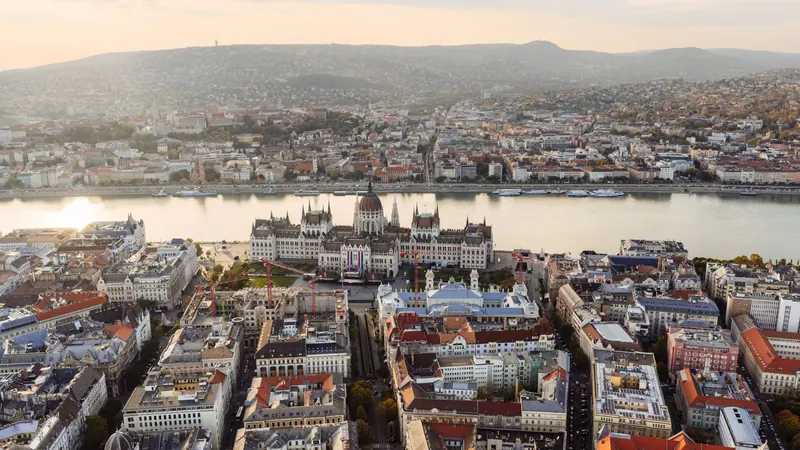
Belváros and Lipótváros
Belváros and Lipótváros are central Pest, with Parliament, St. Stephen's Basilica, Váci utca, river promenades, hotels, and tram 2 views.
 4
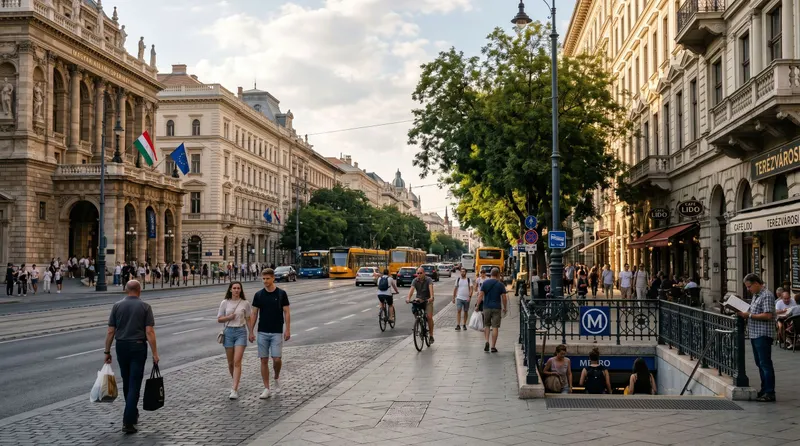
Terézváros and Andrássy Avenue
Terézváros follows Andrássy Avenue with the Opera House, House of Terror, Oktogon, embassies, cafes, and the M1 metro under the boulevard.
 5
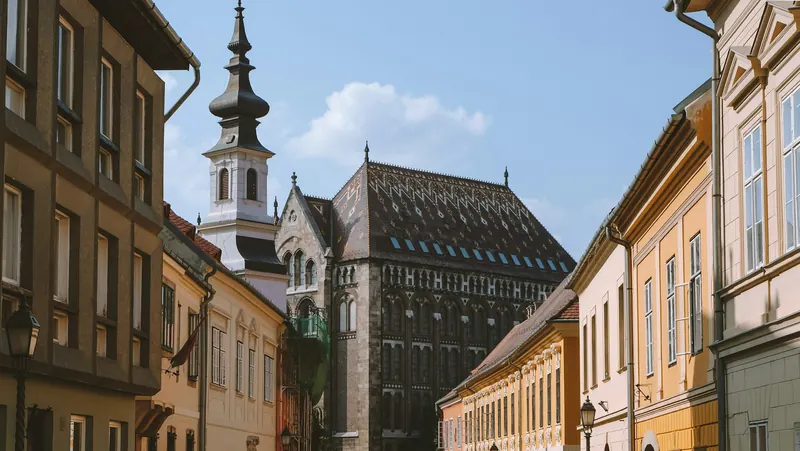
Erzsébetváros and the Jewish Quarter
Erzsébetváros is dense and late-night, with Dohány Synagogue, Kazinczy Street, ruin bars, courtyards, street food, and heavy weekend crowds.
 6
Ferencváros and Józsefváros
Ferencváros and Józsefváros add the Great Market Hall, Corvin Quarter, universities, the Palace District, craft beer bars, and less-polished residential streets.
Getting around
BKK tickets and BudapestGO cover metro lines M1-M4, trams, buses, trolleybuses, and HÉV inside city limits, with trams 2, 4, and 6 especially useful for visitors. Airport bus 100E links Ferenc Liszt Airport with the center, bus 200E connects to Kőbánya-Kispest, and walking works well inside Belváros, Castle Hill, and the Jewish Quarter.
Planning the Imperial Cities route?
Add your dates and we'll pace all 3 cities — every place checked for closures, limited hours, and booking needs in July.
Weather by month for the Imperial Cities trip
In July, climate averages for Prague, Vienna and Budapest show daytime highs from 25°C / 77°F to 28°C / 82°F, with nights down to about 13°C / 55°F in the coolest of those cities. The rainiest of those cities averages about 10 rainy days. Based on climate averages for Prague, Vienna and Budapest, July is a comfortable month by weather.
The most comfortable months for this route are September, June and August, based on average daytime temperatures and rainfall in Prague, Vienna and Budapest. July 2027 is a comfortable month.
Common questions about the Imperial Cities trip
- When is the best time to do the Imperial Cities trip?
- The most comfortable months across Prague, Vienna and Budapest are September, June and August, based on average daytime temperatures and rainfall for those cities. July is a comfortable month by weather — see the city climate sections below for the averages in July 2027.
- How many days do you need for the Imperial Cities trip?
- A comfortable Imperial Cities trip runs about 9–11 days, allowing roughly Prague 3, Vienna 3, Budapest 3 nights plus travel between stops. Add a day if you want a slower pace or extra day trips.
- What's the route for the Imperial Cities trip?
- The classic order is Prague, Vienna & Budapest. The detailed month sections below cover Prague, Vienna and Budapest.
Ready to plan the Imperial Cities trip?
Turn this route into a day-by-day plan for July 2027, every stop checked for closures and booking needs on your exact dates.