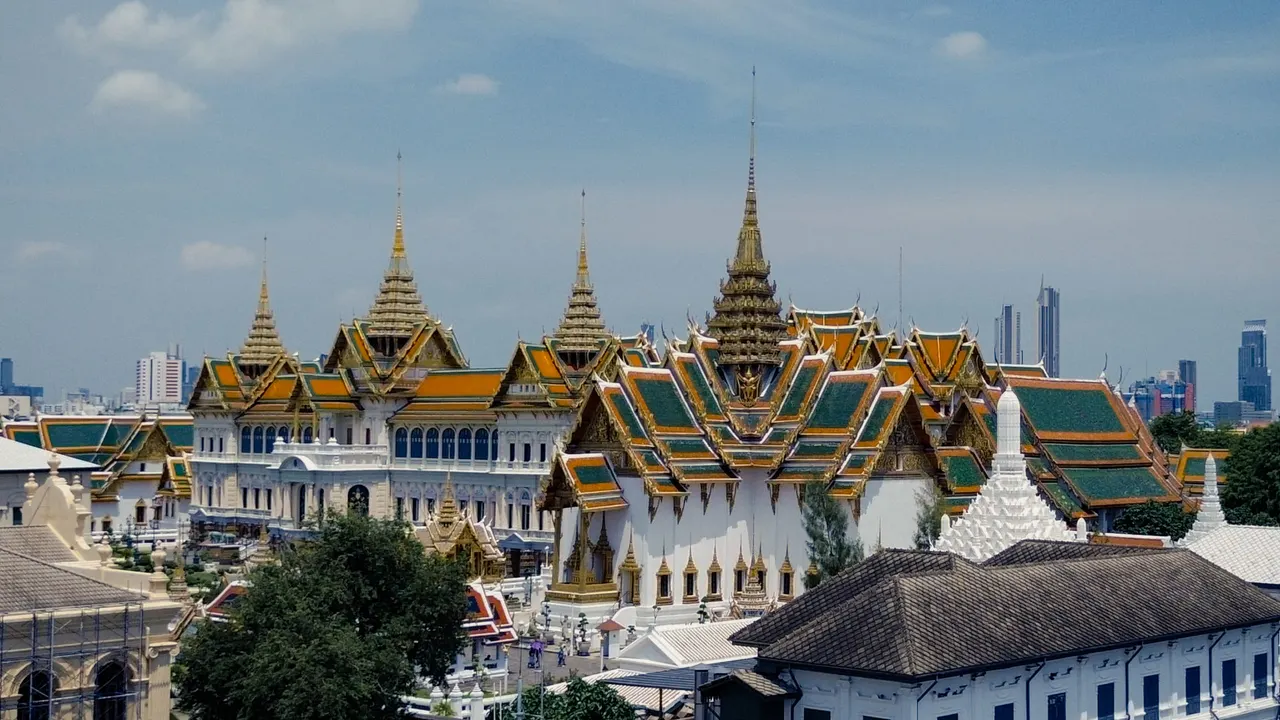
Indochina itinerary — July 2027
For the Indochina trip (Bangkok, Siem Reap & Hanoi), July 2027 is mixed for weather comfort. Across Bangkok, Siem Reap and Hanoi, daytime highs run from about 31°C / 88°F to 34°C / 93°F. Plan around 8–10 days for the full Bangkok, Siem Reap & Hanoi loop.
In this order — about 8–10 days:
- Bangkok3 nightsThailand
- Siem Reap2 nightsCambodia
- Hanoi3 nightsVietnam
- Route noteReserve the longest intercity leg first and keep transfer days free of timed sights.
By TripSapien · Updated October 29, 2026
Bangkok
Bangkok in July
TempTemperature
92°F / 80°F
33.1°C / 26.8°C
RainPrecipitation
29d
5.4in · 137.6mm
LightDaylight
12.9h
Reliably rainy. Shoulder-season pricing on hotels begins. Indoor itineraries (Jim Thompson House, Bangkok Art and Culture Centre, malls) pay off here.
City overview
Bangkok is the densely-packed Thai capital where 14th-century royal temples sit a BTS Skytrain stop away from glass-tower malls. The city sprawls along the Chao Phraya river — the river is still the fastest way across the historic core — and the neighborhoods feel like separate cities pressed together: Rattanakosin's gilded palace district, Sukhumvit's expat-and-skybar belt, Yaowarat's Chinatown food alleys, Khao San's backpacker corridor.
Food & drink
Bangkok's food scene is the city's headline attraction — street stalls outnumber restaurants, and Yaowarat (Chinatown) and Banglamphu both have evening food alleys where most dishes are under 100 baht. The Thai canon (pad thai, tom yum, green curry, som tam, mango sticky rice) is everywhere, but the city is also a destination for regional Thai cooking (Isaan in the north-east, southern Muslim-Thai curries) and Chinese-Thai dishes invented here over a century of immigration. Bangkok currently holds more Michelin stars than any other Thai city.
Holidays & observances
- Jul 28King's BirthdayPublic holiday
Top sights
Ranked for July suitability using weather, setting, ratings, and review volume.
- 1Wat Pho (Temple of the Reclining Buddha)
- 2Grand Palace & Wat Phra Kaeo (Temple of the Emerald Buddha)
- 3Wat Arun (Temple of Dawn)
- 4Wat Saket (Golden Mount)
- 5Jim Thompson House
- 6Yaowarat Road (Chinatown food street)
- 7Lumphini Park
- 8Chatuchak Weekend Market
- 9Chao Phraya Express Boat (orange flag line)
- 10Talad Rot Fai Ratchada (Train Night Market)
 1
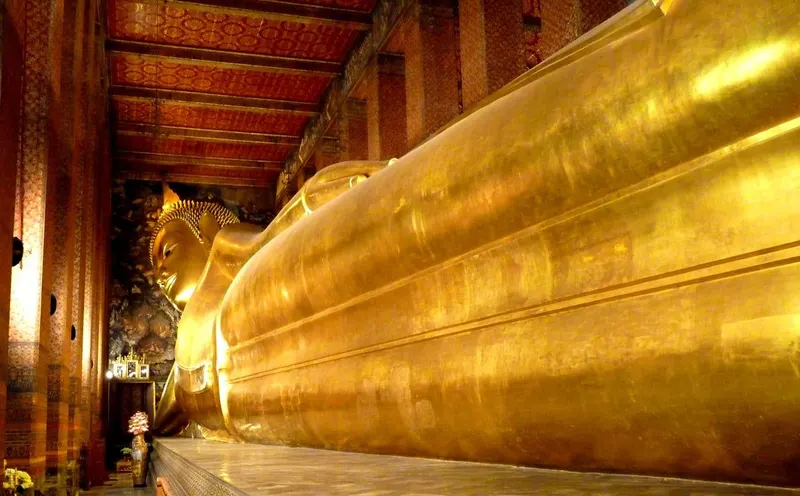
Wat Pho (Temple of the Reclining Buddha)
4.8★ · 8,349indoorOpen dailyA 46-metre gilded reclining Buddha plus the country's oldest massage school — both inside the same temple complex, walking distance from the Grand Palace via MRT Sanam Chai.
 2
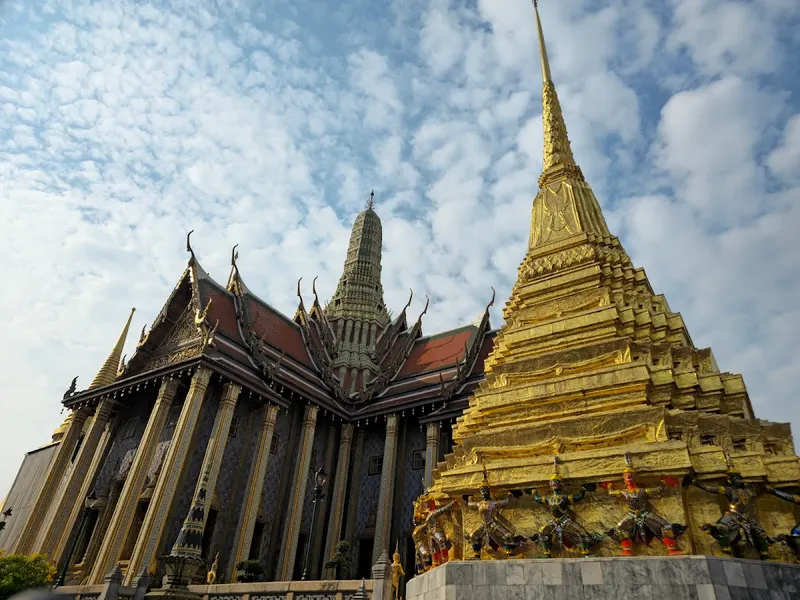
Grand Palace & Wat Phra Kaeo (Temple of the Emerald Buddha)
4.7★ · 44,180indoorOpen dailyWalled royal complex built in 1782, still used for official ceremonies. Wat Phra Kaeo inside holds the country's most-revered Buddha image, carved from a single block of jade.
Strict dress code: shoulders, knees, and upper arms must be covered. Sarongs are sold at the entrance.
 3
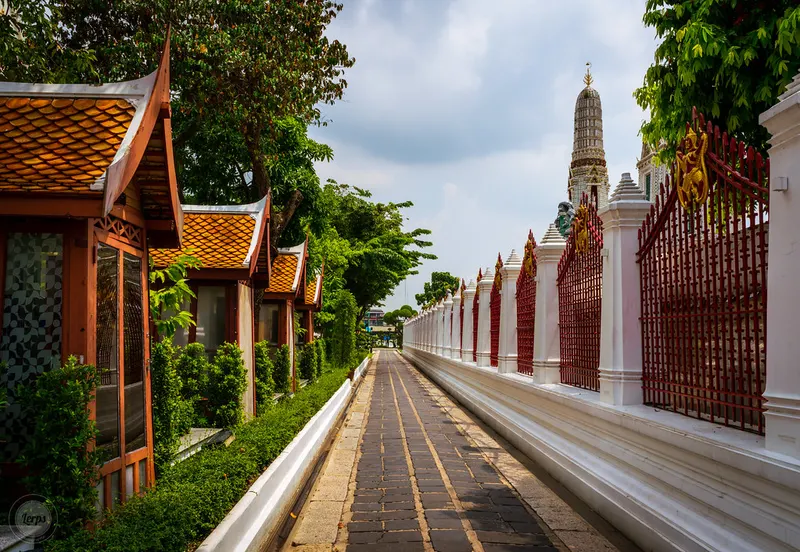
Wat Arun (Temple of Dawn)
4.7★ · 45,511indoorOpen dailyThe porcelain-encrusted spire on the Thonburi (west) bank of the Chao Phraya, climbable for a panoramic city view. The cross-river ferry from Tha Tien costs a few baht and runs throughout the day.
Show 7 more sights
4Wat Saket (Golden Mount)
A 79-metre artificial hill topped by a gold chedi, reached via 344 spiralling steps. The roof-level platform is the best non-rooftop-bar view of the Rattanakosin skyline.
5Jim Thompson House
Six traditional Thai teak houses reassembled into one residence by the American silk merchant who vanished in Malaysia in 1967. Guided tours only; the collection includes pre-Khmer sculpture and Ban Chiang pottery.
Wikipedia6Yaowarat Road (Chinatown food street)
After dark Yaowarat turns into a 1.5km outdoor restaurant — grilled river prawns, oyster omelettes, bird's-nest soup, sweet roti. Most stalls open from around 18:00.
7Lumphini Park
Bangkok's central green lung — paddleboats, monitor lizards in the lake, tai chi at sunrise. Flanked by Si Lom and Lumphini MRT stations.
Wikipedia8Chatuchak Weekend Market
Over 8,000 stalls across 27 sections — clothing, food, plants, antiques, pets. Saturdays and Sundays only.
Take MRT to Kamphaeng Phet (not Chatuchak Park) — the exits drop you inside the market.
Wikipedia9Chao Phraya Express Boat (orange flag line)
The cheap commuter river boat that doubles as a sightseeing line — stops at Tha Tien (for Grand Palace/Wat Pho), Sathorn (for BTS interchange), and Phra Arthit (for Khao San). 14 baht flat fare; runs 06:00–19:00.
10Talad Rot Fai Ratchada (Train Night Market)
Roughly 1,500 stalls in a rectangular grid behind Esplanade mall — vintage clothing, retro signage, Thai street food, photo-friendly with rainbow tarp roofs. MRT Thailand Cultural Centre. Thursday–Sunday evenings.
Neighborhoods
 1
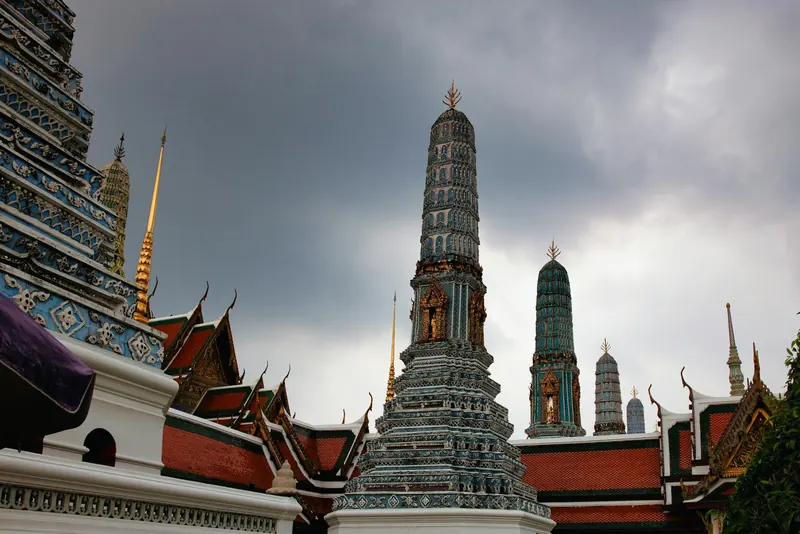
Rattanakosin (Old Bangkok)
The historic royal island between the river and Khlong Banglamphu. Grand Palace, Wat Pho, the National Museum, and most of the city's tourist-postcard sights cluster here. Quiet after dark.
 2
Sukhumvit
A long east-west axis along the Sukhumvit Line BTS — international restaurants, rooftop bars, condo towers, and most of the city's nightlife. Each soi has its own character: Thonglor for craft cocktails, Asok for shopping, Nana/Soi Cowboy for the controversial side.
 3
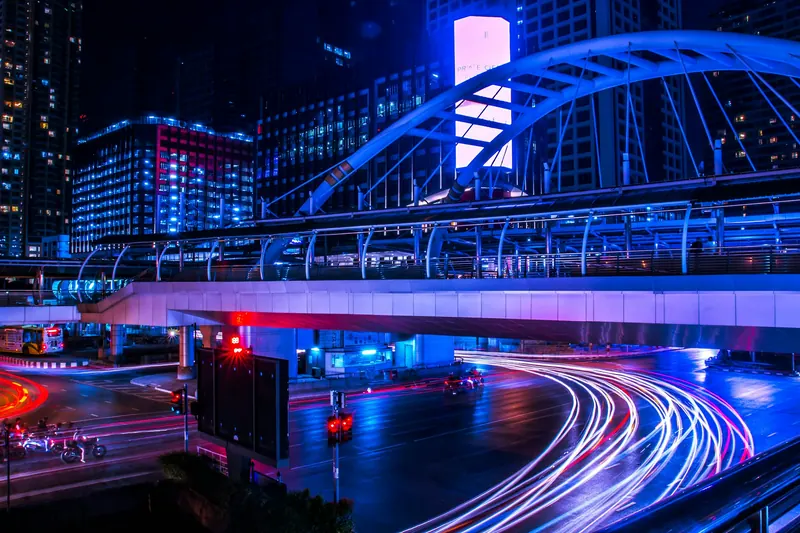
Silom & Sathorn
The financial district by day, Patpong night market and Silom Soi 4 after dark. Embassies, towers, the start of the Silom Line BTS at Sala Daeng. Closer to the river than Sukhumvit.
 4
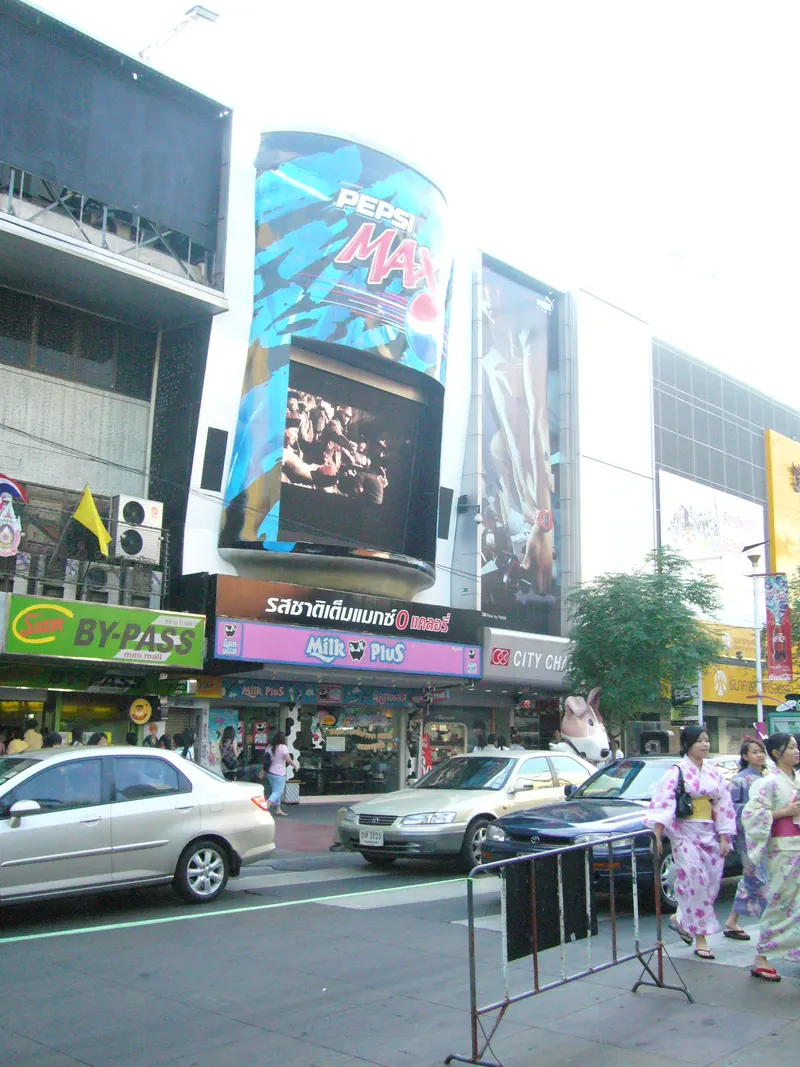
Siam Square
The commercial centre — Siam Paragon, MBK, CentralWorld, Siam Discovery all within a 500m radius. The BTS Siam interchange is the closest thing Bangkok has to a single geographic centre.
 5
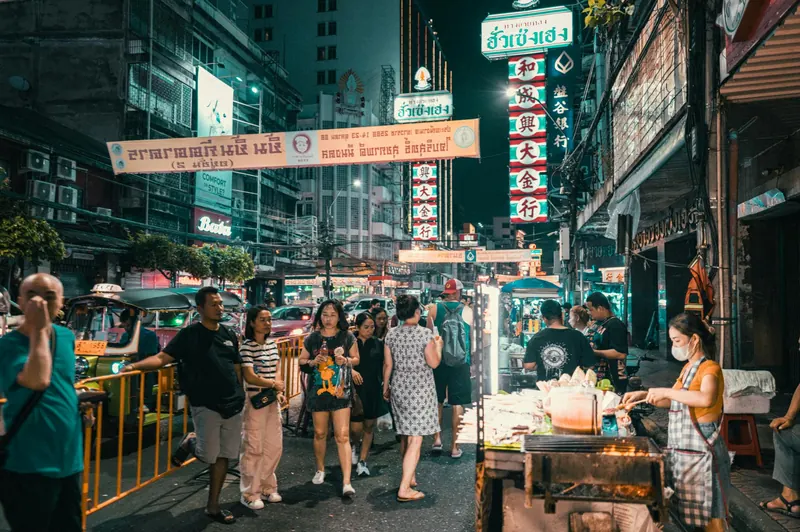
Yaowarat (Chinatown) & Phahurat
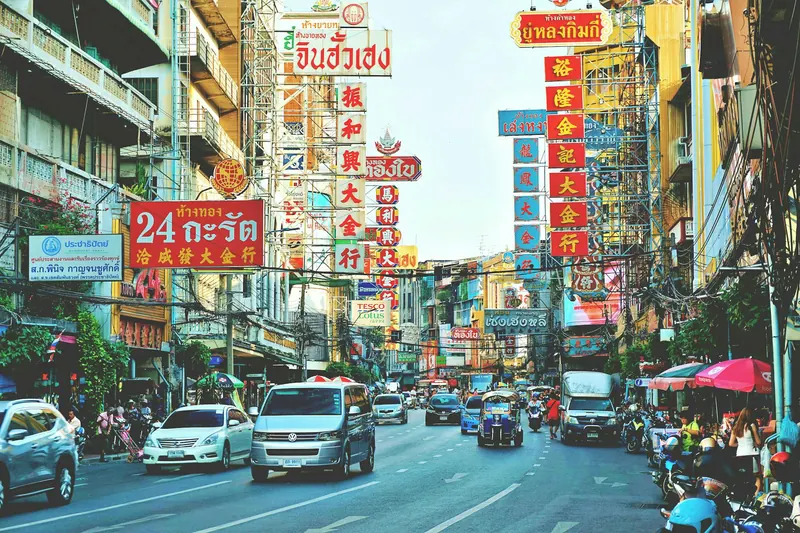
Multi-storey gold shops, neon signage, and the city's densest concentration of Chinese restaurants and street-food vendors. Phahurat, the adjacent block, is Bangkok's Little India — Sikh temple, sari shops, samosa stalls.
 6
Banglamphu / Khao San Road
Backpacker district north of Rattanakosin — cheap guesthouses, tuk-tuk touts, 7-Elevens, and the famous Khao San Road party strip. Quieter Soi Rambuttri parallel has bars and street food.
Getting around
The BTS Skytrain (Sukhumvit + Silom + Gold lines) and MRT metro (Blue + Purple + Yellow + Pink lines) cover most of the modern city — both run roughly 06:00–24:00. Buy a Rabbit card for BTS at any station (200 baht: 100 stored + 100 issuance). For the historic core stick to the Chao Phraya Express Boat (orange flag, 14 baht) — Bangkok's road traffic is genuinely notorious and the river is faster than a taxi for any palace-and-temple itinerary.
Siem Reap
Siem Reap in July
TempTemperature
88°F / 78°F
31.3°C / 25.7°C
RainPrecipitation
16d
5.6in · 142mm
LightDaylight
12.7h
July brings frequent rain and fuller moats, with cooler Angkor mornings after showers.
City overview
Siem Reap is the Cambodian base for Angkor Archaeological Park, with the Siem Reap River, Old Market, Pub Street, Wat Bo, and Kandal Village forming the city map after temple hours. The city itself adds Khmer performance, Angkor National Museum, craft workshops, and Tonlé Sap village access, so a good route alternates Angkor mornings with Old Market, Wat Bo, and river evenings.
Food & drink
Siem Reap food is gentler than Thai spice but still specific: fish amok is a coconut-curry custard often steamed in banana leaves, bai sach chrouk is grilled pork over rice, and num banh chok is rice noodles with herb-rich fish gravy. Old Market stalls, Wat Bo Road restaurants, Pub Street kitchens, Road 60 vendors, and Sombai workshops add beef lok lak, kuy teav, Khmer curry, palm-sugar sweets, and green mango salad.
Top sights
Ranked for July suitability using weather, setting, ratings, and review volume.
- 1Angkor Wat
- 2Angkor Thom and Bayon
- 3Ta Prohm
- 4Phare, The Cambodian Circus
- 5Wat Bo
- 6Angkor National Museum
- 7War Museum Cambodia
- 8APOPO Visitor Center
- 9Old Market and Pub Street
- 10Artisans Angkor
 1
Angkor Wat
4.8★ · 43,915indoorThe 12th-century temple built under Suryavarman II is the Angkor headline, with sunrise views across the moat, long bas-relief galleries, and the central towers north of Siem Reap.
Wikipedia 2
Angkor Thom and Bayon
4.8★ · 14,940indoorOpen dailyJayavarman VII walled capital holds Bayon face towers, Baphuon, the Terrace of the Elephants, and gates reached on the main Angkor loop.
 3
Ta Prohm
4.8★ · 14,534indoorOpen dailyThe late-12th-century monastery is left with large trees growing through stone corridors and courtyards. It pairs naturally with Angkor Thom on a tuk-tuk circuit.
Wikipedia
Show 7 more sights
4Phare, The Cambodian Circus
The evening circus uses acrobatics, live music, and theatre from Cambodian performers, making it the strongest city-based cultural show after temple hours.
5Wat Bo
The active pagoda east of the river has old wall paintings, monastery buildings, and quieter lanes than Pub Street. It works well with Wat Bo Road cafes.
6Angkor National Museum
The museum north of the Royal Gardens explains Khmer sculpture, lintels, religion, and Angkor chronology before or after the temple pass begins.
Wikipedia7War Museum Cambodia
The open-air museum west of town displays tanks, artillery, aircraft, and weapons tied to Cambodia late-20th-century conflict history.
Wikipedia8APOPO Visitor Center
The center explains the mine-detection rats used in Cambodian demining work, with demonstrations and context for the landmine problem around the country.
9Old Market and Pub Street
Psar Chaa sells fruit, spices, souvenirs, and food stalls beside Pub Street bars and restaurants. It is the easiest evening anchor in central Siem Reap.
10Artisans Angkor
The craft workshop teaches stone carving, lacquerware, silk painting, and woodwork in a town where temple tourism supports many craft businesses.
Wikipedia
Neighborhoods
 1
Old Market and Pub Street
This is the busiest visitor core, with Psar Chaa, Pub Street, night-market lanes, bars, souvenir stalls, and tuk-tuk queues beside the river.
 2
Wat Bo Village
Wat Bo is calmer and restaurant-heavy, with the pagoda, small hotels, cafes, guesthouses, and local streets east of the Siem Reap River.
 3
Kandal Village
Kandal Village is compact and design-minded, with coffee shops, boutiques, Common Grounds, galleries, and walkable lanes north of the Old Market.
 4
Taphul Road
Taphul Road is practical and guesthouse-oriented, with budget hotels, laundries, travel desks, small restaurants, and easy airport-road access.
 5
Sok San Road
Sok San Road runs west from the Old Market area, mixing hostels, massage shops, bars, street food, and late-night movement.
 6
Charles de Gaulle and Royal Gardens
The Angkor approach road has larger hotels, Angkor National Museum, Royal Gardens, and a quieter route toward the temple checkpoints.
Getting around
Tuk-tuks, remorks, taxis, bicycles, and hotel cars handle most movement, with temple circuits usually priced by small loop, grand loop, or day rate. Buy the Angkor pass before temple touring and group Old Market-Wat Bo-Kandal Village on foot after dark.
Hanoi
Hanoi in July
TempTemperature
92°F / 79°F
33.6°C / 26.2°C
RainPrecipitation
16d
10in · 255mm
LightDaylight
13.2h
July stays hot with heavy downpours, making covered markets and short lake walks more realistic.
City overview
Hanoi is Vietnam's Red River capital, where Hoàn Kiếm Lake, the 36-street Old Quarter, French-colonial boulevards, and West Lake sit inside a city shaped by Chinese, French, North Vietnamese, and reunification-era layers. Ba Đình carries state monuments, Hoàn Kiếm carries the old commercial core, and Tây Hồ adds lakeside temples and expat cafes.
Food & drink
Hanoi food is built around pho bo, bun cha, cha ca, banh cuon, xoi xeo, bun thang, egg coffee, and bia hoi. Dong Xuan Market, Ta Hien beer corner, Tong Duy Tan food street, and Cha Ca Street are more city-specific anchors than hotel buffets.
Top sights
Ranked for July suitability using weather, setting, ratings, and review volume.
- 1Temple of Literature
- 2Museum of Ethnology
- 3Vietnam Military History Museum
- 4Hoàn Kiếm Lake and Ngọc Sơn Temple
- 5Vietnamese Women's Museum
- 6West Lake and Trấn Quốc Pagoda
- 7National Museum of Vietnamese History
- 8One-Pillar Pagoda
- 9Old Quarter (36 Streets)
- 10Ho Chi Minh Mausoleum and Presidential Palace Area
 1
Temple of Literature
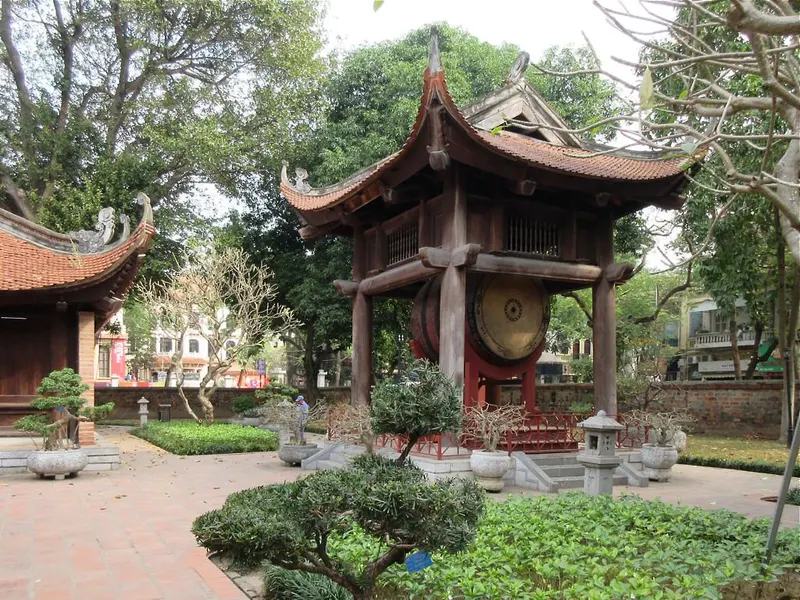
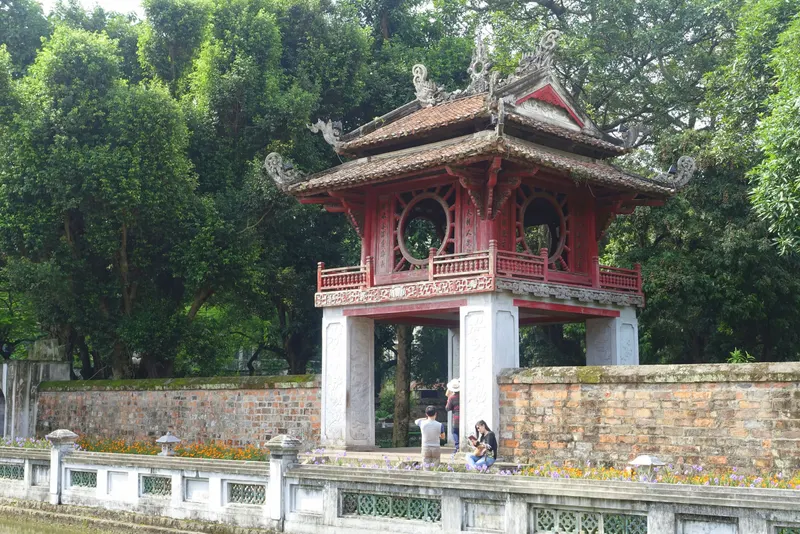
4.6★ · 26,192indoorOpen dailyFounded in 1070, Van Mieu became Vietnam's first university in 1076 and still holds courtyards, Confucian altars, and stone doctorate steles on turtle bases. It sits west of Hoàn Kiếm near Đống Đa.
Wikipedia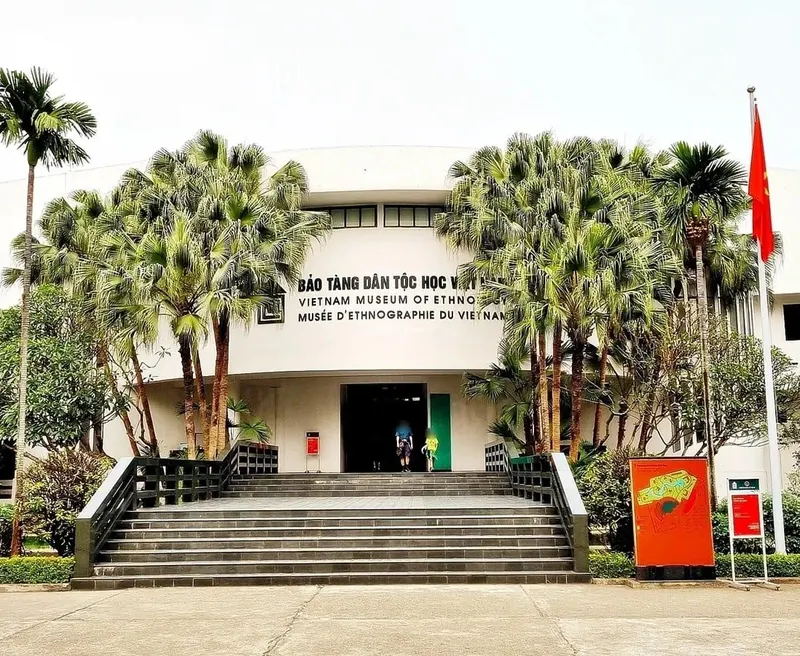 2
Museum of Ethnology
4.6★ · 15,743indoorClosed MonThe Cầu Giấy museum explains Vietnam's ethnic groups with indoor displays and outdoor reconstructed houses. It is one of the best English-labeled cultural stops outside the Old Quarter.
Wikipedia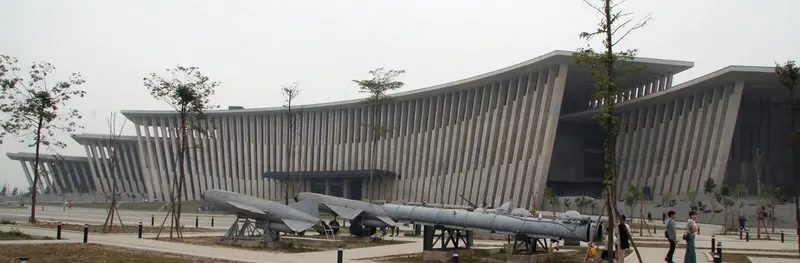 3
Vietnam Military History Museum
4.5★ · 12,954indoorClosed Mon/FriThe museum moved in 2024 to a large 39-hectare site about 12km from its former Flag Tower location. Outdoor aircraft, tanks, artillery, and bilingual exhibits cover conflicts from early Vietnam to the 20th century.
Wikipedia
Show 7 more sights
4Hoàn Kiếm Lake and Ngọc Sơn Temple
The Lake of the Returned Sword anchors central Hanoi, with Ngọc Sơn Temple reached by the red Huc Bridge. Weekend pedestrian streets around the water fill with families, electric toy cars, tai chi, and lake-edge performances.
5Vietnamese Women's Museum
The museum near Hoàn Kiếm covers family rituals, wartime roles, street vendors, Mother Goddess worship, and ethnic-minority textiles. English and French labels make it one of Hanoi's clearest museums.
Wikipedia6West Lake and Trấn Quốc Pagoda
Ho Tay is the city's largest lake, with Trấn Quốc Pagoda on a small causeway island, lakeside cafes, Quang An streets, and sunset views. It gives a slower contrast to the Old Quarter.
7National Museum of Vietnamese History
The museum occupies French colonial buildings near the Opera House and covers Vietnam from prehistory to 1945 plus revolutionary history. Architect Ernest Hebrard's Indochine style is part of the draw.
Wikipedia8One-Pillar Pagoda
Emperor Ly Thai Tong ordered the lotus-shaped wooden pagoda in 1049 after a dream of Avalokiteshvara. The French destroyed it in 1954, and the present structure is the post-withdrawal reconstruction.
Wikipedia9Old Quarter (36 Streets)
The Old Quarter grew around trade guild streets such as Hàng Bạc, Hàng Gai, Hàng Mã, and Ta Hien. Narrow tube houses, scooters, cafes, gold shops, beer corners, and Dong Xuan Market make it the city's densest walking area.
10Ho Chi Minh Mausoleum and Presidential Palace Area
Ba Đình Square holds the mausoleum, the stilt house complex where Ho Chi Minh lived from 1954 to 1969, and the French-built Presidential Palace exterior. Dress rules and bag checks are strict.
The mausoleum closes in afternoons and for annual body maintenance; confirm the schedule before crossing town.
Neighborhoods
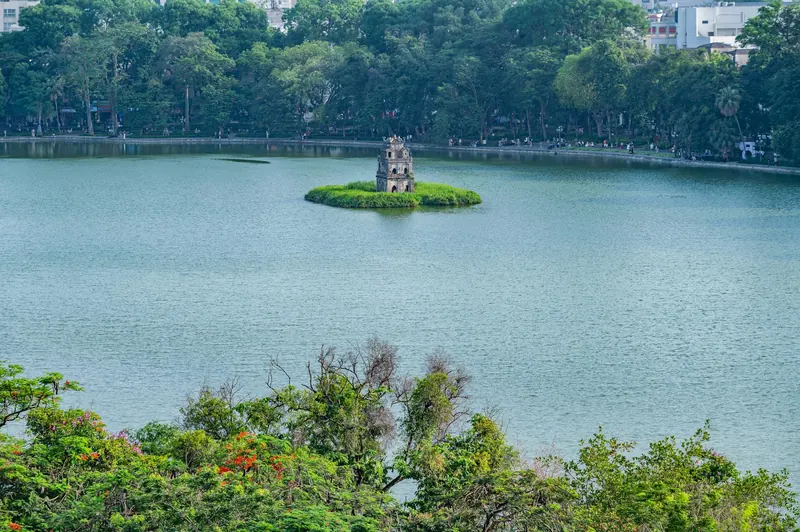 1
Hoàn Kiếm Old Quarter
The Old Quarter is compact, noisy, and commercial, with Hang streets, Dong Xuan Market, beer corners, Hoàn Kiếm Lake, and constant scooter movement.
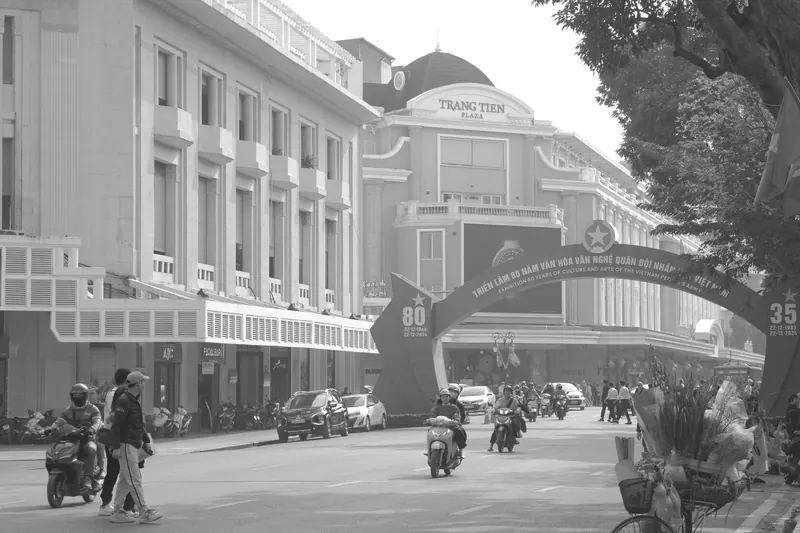 2
French Quarter and Trang Tien
The French Quarter has wider boulevards, the Opera House, Trang Tien Plaza, colonial facades, embassies, and calmer blocks southeast of Hoàn Kiếm.
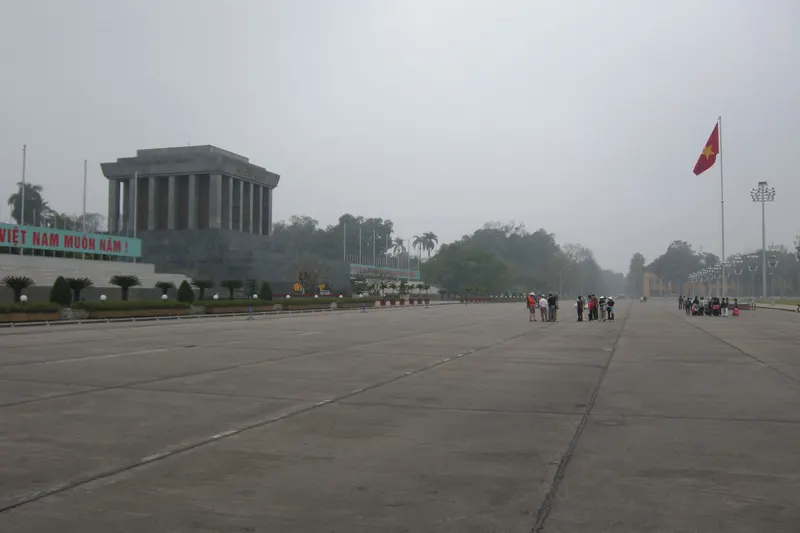 3
Ba Đình
Ba Đình feels monumental and official, with the mausoleum, Presidential Palace grounds, One-Pillar Pagoda, government buildings, and wide parade spaces.
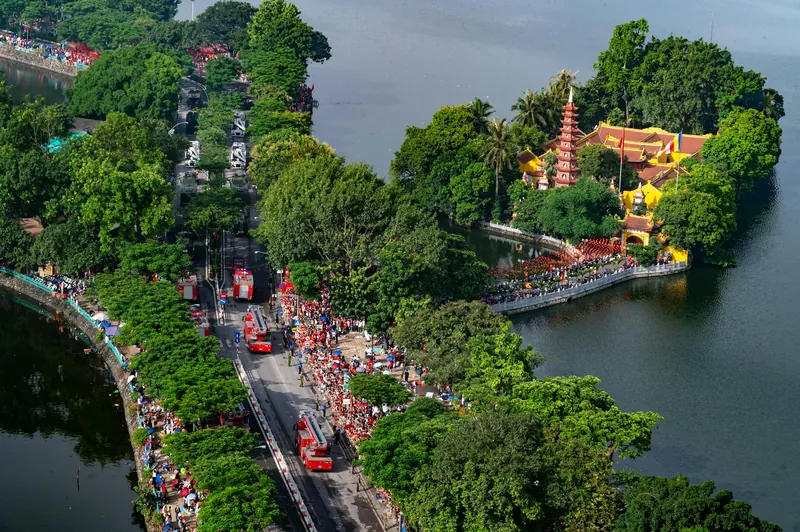 4
Tây Hồ and Quang An
Tây Hồ is lakeside Hanoi, with West Lake views, Trấn Quốc Pagoda, cafes, international restaurants, villas, and long scooter loops.
 5
Đống Đa
Đống Đa is local and academic, with the Temple of Literature, universities, train-station edges, street food, and denser residential lanes.
 6
Cầu Giấy
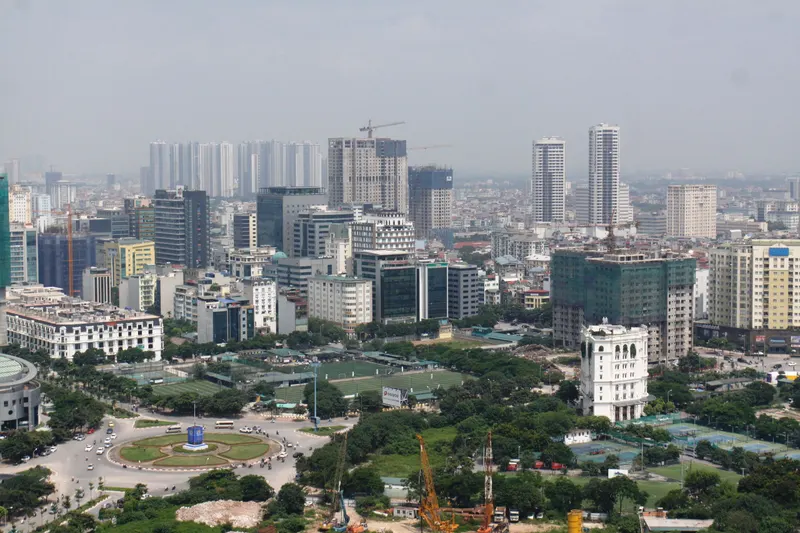
Cầu Giấy is the west-side modern district, useful for the Museum of Ethnology, offices, Korean restaurants, and newer hotels outside the heritage core.
Getting around
Hanoi buses are easiest with the BusMap Ha Noi app, while taxis and Grab are the practical tools between Old Quarter hotels, Ba Đình sights, West Lake, and outer museums. Metro Line 2A serves Cát Linh to Hà Đông, but visitors still rely on walking, rideshare motorbikes, and taxis for Hoàn Kiếm and Ba Đình.
Planning the Indochina route?
Add your dates and we'll pace all 3 cities — every place checked for closures, limited hours, and booking needs in July.
Weather by month for the Indochina trip
In July, climate averages for Bangkok, Siem Reap and Hanoi show daytime highs from 31°C / 88°F to 34°C / 93°F, with nights down to about 26°C / 79°F in the coolest of those cities. The rainiest of those cities averages about 17 rainy days. Based on climate averages for Bangkok, Siem Reap and Hanoi, July is mixed for weather comfort.
The most comfortable months for this route are December, January and November, based on average daytime temperatures and rainfall in Bangkok, Siem Reap and Hanoi. July 2027 is mixed for weather comfort.
Common questions about the Indochina trip
- When is the best time to do the Indochina trip?
- The most comfortable months across Bangkok, Siem Reap and Hanoi are December, January and November, based on average daytime temperatures and rainfall for those cities. July is mixed for weather comfort — see the city climate sections below for the averages in July 2027.
- How many days do you need for the Indochina trip?
- A comfortable Indochina trip runs about 8–10 days, allowing roughly Bangkok 3, Siem Reap 2, Hanoi 3 nights plus travel between stops. Add a day if you want a slower pace or extra day trips.
- What's the route for the Indochina trip?
- The classic order is Bangkok, Siem Reap & Hanoi. The detailed month sections below cover Bangkok, Siem Reap and Hanoi.
Ready to plan the Indochina trip?
Turn this route into a day-by-day plan for July 2027, every stop checked for closures and booking needs on your exact dates.