Mexico itinerary — July 2027
For the Mexico trip (Mexico City, Guadalajara & Cancún), July 2027 is one of the less comfortable months by weather. Across Mexico City, Guadalajara and Cancun, daytime highs run from about 24°C / 75°F to 33°C / 91°F. Plan around 9–11 days for the full Mexico City, Guadalajara & Cancún loop.
In this order — about 9–11 days:
- Mexico City4 nights
- Guadalajara2 nights
- Cancun3 nights
- Route noteReserve the longest intercity leg first and keep transfer days free of timed sights.
By TripSapien · Updated October 29, 2026
Mexico City
Mexico City in July
TempTemperature
75°F / 56°F
24.1°C / 13.3°C
RainPrecipitation
28d
5.9in · 149.1mm
LightDaylight
13.3h
July is the wettest month, so carry waterproof shoes and keep Xochimilco or park plans flexible.
City overview
México City fills a high valley at more than 2,200m, layering Mexica ruins, Spanish colonial squares, 20th-century murals, and huge modern neighborhoods. Travelers usually divide it into Centro Histórico for the Zócalo and Templo Mayor, Chapultepec-Polanco for museums and parks, and Roma, Condesa, Coyoacán, or San Ángel for food, houses, and slower walks.
Food & drink
México City food ranges from tacos al pastor, suadero, tamales, chilaquiles, pozole, tlacoyos, quesadillas, churros, and pan dulce to formal dining rooms. Mercado de San Juan, Mercado de Coyoacán, Mercado Medellin, Roma-Condesa taquerias, and Centro cantinas give a stronger first pass than one famous restaurant.
Events & festivals
- Jul 8
- Jul 9
- Jul 10
- Jul 24
Top sights
Ranked for July suitability using weather, setting, ratings, and review volume.
- 1Templo Mayor
- 2Palacio de Bellas Artes
- 3National Museum of Anthropology
- 4Chapultepec Castle
- 5Museo Soumaya
- 6Zócalo and Metropolitan Cathedral
- 7Torre Latinoamericana
- 8Frida Kahlo Museum (Casa Azul)
- 9Coyoacán center
- 10Xochimilco canals
 1
Templo Mayor
4.8★ · 35,190indoorClosed MonExcavations beside the cathedral expose the main temple of Tenochtitlan, with a museum holding sculpture, offerings, and the Coyolxauhqui stone. It gives the Zócalo its pre-Hispanic context.
Wikipedia 2
Palacio de Bellas Artes
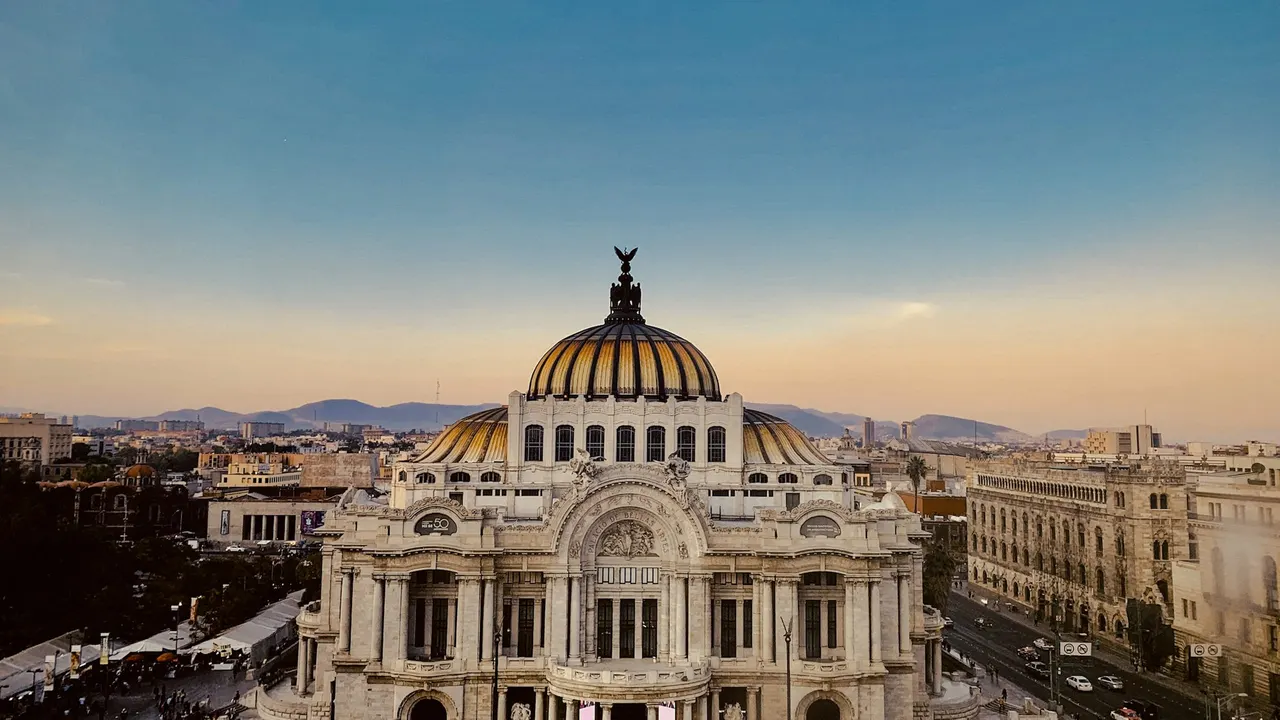
4.8★ · 196,241indoorOpen dailyThe marble arts palace opened in 1934 with Art Nouveau and Art Deco details, a Tiffany glass curtain, and murals by Diego Rivera, David Alfaro Siqueiros, and others. It stands beside Alameda Central and the metro station of the same name.
Wikipedia 3
National Museum of Anthropology
4.8★ · 92,760indoorClosed MonThe Chapultepec museum holds the Sun Stone, Maya rooms, Mexica galleries, and regional archaeology collections under a huge umbrella courtyard. It is the essential first museum for understanding sites across México.
Show 7 more sights
4Chapultepec Castle
The hilltop castle served as an imperial residence, military academy, and presidential residence before becoming the National History Museum. Its terraces look across Chapultepec Park and Reforma.
Wikipedia5Museo Soumaya
The silver curved museum in Polanco holds the Slim collection, with Rodin sculptures, European painting, and Mexican works. It sits near Plaza Carso and Museo Jumex.
Wikipedia6Zócalo and Metropolitan Cathedral
The Plaza de la Constitución is the ceremonial center of México City, bordered by the cathedral, National Palace, and government buildings. The cathedral was built from the 16th to 19th centuries over the old Mexica sacred precinct.
7Torre Latinoamericana
The 1956 skyscraper survived major earthquakes and remains a useful Centro Histórico viewpoint. Its observation deck looks toward Bellas Artes, the Zócalo, and the ring of mountains on clear days.
Wikipedia8Frida Kahlo Museum (Casa Azul)
The blue house in Coyoacán preserves rooms, works, photographs, and personal objects from Frida Kahlo and Diego Rivera. Timed tickets sell out, especially on weekends and holidays.
Reserve timed tickets in advance; same-day entry often sells out.
9Coyoacán center
Coyoacán combines plazas, markets, churches, cafes, and former village lanes south of the center. The area pairs naturally with Casa Azul, Mercado de Coyoacán, and the Leon Trotsky Museum.
10Xochimilco canals
Colorful trajineras cruise the surviving chinampa canal system in the southern borough. Go with a group, set the price before boarding, and avoid treating the area as only a party boat stop.
Neighborhoods
 1
Centro Histórico
Centro is monumental and crowded, with the Zócalo, Templo Mayor, cathedral, Bellas Artes, Alameda Central, old cantinas, pedestrian streets, and heavy weekday commerce.
 2
Roma Norte and Roma Sur
Roma is leafy and restaurant-heavy, with Porfirian houses, galleries, coffee bars, Mercado Roma, Plaza Río de Janeiro, and easy walks into Condesa.
 3
Condesa and Hipodromo
Condesa circles Parque México and Parque España with Art Deco apartments, dog walkers, late dining, bakeries, and nightlife that stays calmer than Centro.
 4
Polanco and Chapultepec
Polanco and the park edge are museum-and-shopping territory, anchored by Anthropology, Chapultepec Castle, Avenida Presidente Masaryk, Soumaya, and large hotels.
 5
Coyoacán and San Ángel
The southern old villages feel slower, with Casa Azul, Coyoacán plazas, San Ángel courtyards, Bazar Sabado, churches, and market lunches.
 6
Juárez, Zona Rosa, and Reforma
This central belt mixes embassy streets, LGBTQ nightlife, Reforma monuments, business hotels, Korean restaurants, and direct links between Centro and Chapultepec.
Getting around
The Metro, Metrobus, trolleybus corridors, RTP buses, and Ecobici bikes cover much of the city under the integrated Movilidad card, but transfers and platform crowds take patience. Traffic is severe, so combine transit for long moves with registered taxis or ride-hail for late nights and far southern sights.
Guadalajara
Guadalajara in July
TempTemperature
83°F / 61°F
28.4°C / 15.9°C
RainPrecipitation
21d
10.8in · 275mm
LightDaylight
13.1h
July is the wettest month, with green agave fields but frequent storm delays.
City overview
Guadalajara is the highland capital of Jalisco where mariachi, tequila country, colonial plazas, murals, ceramics, and a modern tech-and-university economy share the same metro map. The practical visitor route runs from Centro Histórico and Hospicio Cabañas to Avenida Chapultepec, Tlaquepaque, Tonalá, Providencia, and Zapopan.
Food & drink
Guadalajara food is Jalisco-specific: tortas ahogadas, birria, carne en su jugo, pozole rojo, jericalla, tejuino, tacos dorados, and tequila or raicilla. Mercado Libertad, Santa Tere, Las Nueve Esquinas, Avenida Chapultepec, Tlaquepaque, and Zapopan restaurants make the first food map.
Events & festivals
- Jul 2
Top sights
Ranked for July suitability using weather, setting, ratings, and review volume.
- 1Guadalajara Cathedral
- 2Hospicio Cabañas
- 3Teatro Degollado
- 4Templo Expiatorio del Santísimo Sacramento
- 5Zapopan Basílica
- 6Tlaquepaque and El Parián
- 7Bosque Los Colomos
- 8Rotonda de los Jaliscienses Ilustres
- 9Tonalá markets
- 10Mercado Libertad - San Juan de Dios
 1
Guadalajara Cathedral
4.8★ · 48,019indoorOpen dailyThe cathedral was begun in the 16th century and consecrated in 1618, while its current neo-Gothic towers followed earthquake damage in the 19th century. It anchors the cross of central plazas beside the Rotonda, Palacio de Gobierno, and Teatro Degollado.
Wikipedia 2
Hospicio Cabañas
4.8★ · 28,610indoorClosed MonManuel Tolsa designed the enormous charity hospital complex, built from 1791 into the early 19th century, and it is now a UNESCO-listed cultural institute. José Clemente Orozco's 1930s murals, especially The Man of Fire, fill the chapel vaults.
WikipediaCheck museum hours before planning around the murals because the complex sometimes closes for events.
 3
Teatro Degollado
4.8★ · 12,830indoorOpen dailyThe neoclassical theater opened in 1866 with columns, a grand staircase, and a ceiling mural of Dante's Divine Comedy. It faces Plaza de la Liberacion and remains a major venue for concerts, ballet, and folkloric performances.
Wikipedia
Show 7 more sights
4Templo Expiatorio del Santísimo Sacramento
The Neo-Gothic church was begun in 1897 and completed in the 20th century with stained glass, pointed arches, a clock tower, and a small plaza. It sits near the Americana and Chapultepec nightlife side of the city.
Wikipedia5Zapopan Basílica
The basilica was completed in the 18th century and holds the small image of Our Lady of Zapopan, one of the region's key devotional figures. The surrounding center adds plazas, museums, restaurants, and the Andares-Providencia side of the metro nearby.
6Tlaquepaque and El Parián
San Pedro Tlaquepaque is known for ceramics, galleries, mariachi restaurants, and pedestrian streets around Independencia. El Parián, the arcaded plaza of cantinas, gives the district its classic music-and-tequila setting.
7Bosque Los Colomos
The urban forest in Providencia has shaded paths, gardens, water features, stables, and a Japanese garden. It gives the city a cooler morning break from Centro Histórico streets.
8Rotonda de los Jaliscienses Ilustres
The 1952 circular monument honors notable Jalisco figures with columns, statues, and garden space beside the cathedral. It is a quick civic-history stop between the cathedral and the Regional Museum.
Wikipedia9Tonalá markets
Tonalá is a craft town on the metro's east side with pottery, glass, furniture, metalwork, and large Thursday and Sunday markets. It is more sprawling and wholesale-feeling than Tlaquepaque.
10Mercado Libertad - San Juan de Dios
The huge market building dates from the late 1950s and fills several levels with food stalls, leather goods, electronics, sweets, and everyday shopping. It sits east of the Cathedral near Plaza de los Mariachis and Hospicio Cabañas.
Neighborhoods
 1
Centro Histórico
The center is ceremonial and walkable, with the Cathedral, Teatro Degollado, Hospicio Cabañas, plazas, Palacio de Gobierno, Mercado Libertad, and mariachi routes.
 2
Americana, Lafayette, and Chapultepec
This west-central belt is social and leafy, with Avenida Chapultepec bars, cafes, galleries, old mansions, restaurants, and nightlife.
 3
Tlaquepaque
Tlaquepaque is craft-focused and festive, with pedestrian streets, ceramics stores, El Parián, galleries, mariachi, and tequila tasting rooms.
 4
Tonalá
Tonalá is market-driven and practical, with workshops, ceramics, furniture, glassware, Thursday and Sunday street markets, and more bargaining energy.
 5
Providencia and Country Club
Providencia is polished and residential, with Bosque Los Colomos, restaurants, offices, hotels, and access toward Andares and Zapopan.
 6
Zapopan
Zapopan mixes pilgrimage and modern shopping, with the Basilica, MAZ museum, plazas, Andares, restaurants, and northwest metro expansion.
Getting around
SITEUR light rail, Mi Macro bus rapid transit, buses, taxis, rideshares, and the Mi Movilidad card cover the metro, though Tlaquepaque, Tonalá, and Tequila still reward car or organized transfer planning. Centro Histórico is best walked in daylight, with Avenida Chapultepec and Tlaquepaque handled as separate evening zones.
Cancun
Cancun in July
TempTemperature
91°F / 76°F
32.5°C / 24.5°C
RainPrecipitation
12d
5.1in · 130mm
LightDaylight
13.2h
Sea
83.1°F
28.4°C
July is hot and storm-prone, with early beach starts and afternoon weather checks needed.
City overview
Cancún is a planned Caribbean resort city split between the 25km L-shaped Zona Hotelera barrier island and mainland El Centro, where local markets, bus routes, and plazas support the beach strip. The visitor map runs from Kukulcan Boulevard beaches and Nichupté Lagoon to Puerto Juárez ferries, with Maya sites at El Rey, San Miguelito, Tulum, and Chichen Itza adding the inland frame.
Food & drink
Cancún food is strongest when it leaves the hotel buffet for cochinita pibil, panuchos, salbutes, poc chuc, tikin xic fish, ceviche, marquesitas, and sopa de lima. Mercado 23, Mercado 28, Parque de las Palapas, Puerto Juárez seafood spots, and downtown taquerias around Avenida Tulum are the first route.
Top sights
Ranked for July suitability using weather, setting, ratings, and review volume.
- 1Puerto Cancún Marina Town Center
- 2Museo Maya de Cancún and San Miguelito
- 3MUSA Underwater Museum
- 4Laguna Nichupté
- 5Zona Hotelera and Playa Delfines
- 6Isla Mujeres and Playa Norte
- 7El Rey Archaeological Zone
- 8El Meco Archaeological Site
- 9Parque de las Palapas
- 10Mercado 28 and Mercado 23
 1
Puerto Cancún Marina Town Center
4.7★ · 18,468indoorOpen dailyPuerto Cancún links the mainland and Hotel Zone with a marina, mall, restaurants, cinema, and lagoon-side walkways. It is less historic than El Centro but useful for dinner, shopping, and rainy-day logistics.
 2
Museo Maya de Cancún and San Miguelito
4.5★ · 7,992indoorClosed MonThe Mayan Museum opened in 2012 with regional sculpture, ceramics, stelae, and access to the San Miguelito archaeological site behind the building. It sits on Kukulcan Boulevard and works well when beach weather turns stormy.
 3
MUSA Underwater Museum
4.4★ · 1,180indoorOpen dailyThe Museo Subacuatico de Arte began in 2009 with submerged sculptures designed to support reef habitat and divert pressure from natural reefs. Snorkel, glass-bottom boat, and dive trips usually leave from Cancún, Isla Mujeres, or Punta Nizuc.
Show 7 more sights
4Laguna Nichupté
Nichupté Lagoon sits behind the Hotel Zone with mangroves, channels, crocodile habitat, marinas, and sunset-facing water. Boat tours, paddle trips, and waterfront restaurants show a different side of Cancún than the surf beaches.
5Zona Hotelera and Playa Delfines
The Hotel Zone runs along Kukulcan Boulevard between the Caribbean Sea and Nichupté Lagoon, with Playa Delfines marking one of the broadest public beaches. The Cancún sign, open sand, lifeguard stands, and surf views sit near the southern hotel strip.
6Isla Mujeres and Playa Norte
Ferries from Puerto Juárez and the Hotel Zone reach Isla Mujeres for shallow turquoise water, Playa Norte, golf-cart loops, and Punta Sur cliffs. The island is close enough for a half-day but calmer with a full beach day.
7El Rey Archaeological Zone
El Rey preserves a small Postclassic Maya site directly inside the Hotel Zone near Playa Delfines. Low temples, platforms, iguanas, and coastal trade-route context make it the easiest Maya ruin to reach without leaving Cancún.
8El Meco Archaeological Site
El Meco is a small Maya site north of Puerto Juárez with a prominent pyramid and links to the coastal trade network around Isla Mujeres. It is a short taxi ride from the ferry terminals and much quieter than El Rey.
9Parque de las Palapas
The downtown plaza is Cancún's evening gathering point, with food carts, marquesitas, families, stage events, and nearby streets around Avenida Tulum. It is the easiest place to feel the mainland city after a beach day.
10Mercado 28 and Mercado 23
Mercado 28 is the souvenir-heavy downtown market, while Mercado 23 is more local with produce, snacks, flowers, and everyday stalls. Both sit inland from the Hotel Zone and make sense with a downtown lunch route.
Neighborhoods
 1
Zona Hotelera
The Hotel Zone is resort-focused and linear, with Kukulcan Boulevard, beaches, malls, clubs, marinas, El Rey, Museo Maya, and lagoon sunsets.
 2
El Centro and Avenida Tulum
Downtown Cancún is local and practical, with bus terminals, Avenida Tulum, Parque de las Palapas, taquerias, banks, and easier prices than the beach strip.
 3
Puerto Juárez
Puerto Juárez is ferry-oriented and breezier, with Isla Mujeres boats, seafood restaurants, small hotels, and access toward El Meco.
 4
Puerto Cancún
Puerto Cancún is polished and marina-facing, with condos, restaurants, shopping, cinema, and an easy bridge between Downtown and the Hotel Zone.
 5
Punta Cancún
Punta Cancún is the nightlife knot of the Hotel Zone, with clubs, beach bars, convention hotels, Forum Beach, and late taxis.
 6
Mercado 28 and SM 22
The market blocks are informal and inland, with souvenir stalls, casual Yucatecan food, pharmacies, small hotels, and local bus connections.
Getting around
R-1 and R-2 buses run frequently along Kukulcan Boulevard between the Hotel Zone and Downtown, while ADO buses handle the airport, Playa del Carmen, Tulum, and Valladolid. Taxis, ferries from Puerto Juárez, and organized tours fill the gaps, but agree on fares before riding outside metered systems.
Planning the Mexico route?
Add your dates and we'll pace all 3 cities — every place checked for closures, limited hours, and booking needs in July.
Weather by month for the Mexico trip
In July, climate averages for Mexico City, Guadalajara and Cancun show daytime highs from 24°C / 75°F to 33°C / 91°F, with nights down to about 13°C / 55°F in the coolest of those cities. The rainiest of those cities averages about 21 rainy days. Based on climate averages for Mexico City, Guadalajara and Cancun, July is one of the less comfortable months by weather.
The most comfortable months for this route are January, February and December, based on average daytime temperatures and rainfall in Mexico City, Guadalajara and Cancun. July 2027 is a lower-comfort month.
Common questions about the Mexico trip
- When is the best time to do the Mexico trip?
- The most comfortable months across Mexico City, Guadalajara and Cancun are January, February and December, based on average daytime temperatures and rainfall for those cities. July is one of the less comfortable months by weather — see the city climate sections below for the averages in July 2027.
- How many days do you need for the Mexico trip?
- A comfortable Mexico trip runs about 9–11 days, allowing roughly Mexico City 4, Guadalajara 2, Cancun 3 nights plus travel between stops. Add a day if you want a slower pace or extra day trips.
- What's the route for the Mexico trip?
- The classic order is Mexico City, Guadalajara & Cancún. The detailed month sections below cover Mexico City, Guadalajara and Cancun.
Ready to plan the Mexico trip?
Turn this route into a day-by-day plan for July 2027, every stop checked for closures and booking needs on your exact dates.