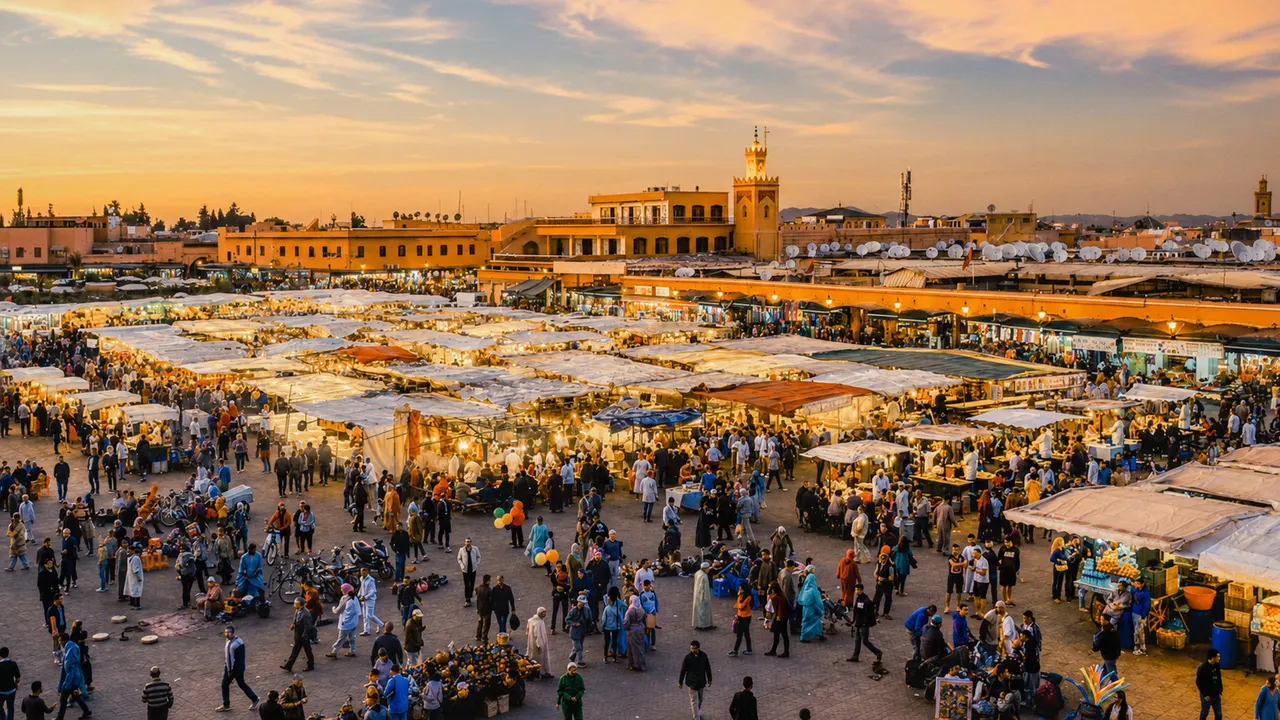
Morocco & Andalusia itinerary — March 2027
For the Morocco & Andalusia trip (Marrakesh & Seville), March 2027 is one of the most comfortable months by weather. Across Marrakesh and Seville, daytime highs run from about 22°C / 72°F to 24°C / 75°F. Plan around 6–8 days for the full Marrakesh & Seville loop.
In this order — about 6–8 days:
- Marrakesh3 nightsMorocco
- Seville3 nightsSpain
- Route noteReserve the longest intercity leg first and keep transfer days free of timed sights.
By TripSapien · Updated August 24, 2026
Marrakesh
Marrakesh in March
TempTemperature
75°F / 51°F
23.7°C / 10.4°C
RainPrecipitation
8d
1.6in · 40mm
LightDaylight
11.8h
March warms up for garden visits, Gueliz cafes, and Ourika Valley trips with occasional showers.
City overview
Marrakesh is a former imperial city where the walled Medina, Djemaa El-Fna, souks, palaces, gardens, and Gueliz sit between the High Atlas and the Haouz plain. The useful visitor split is simple: stay alert inside the dense old city, use Gueliz for easier restaurants and modern services, and treat the Atlas valleys as the natural day-trip extension.
Food & drink
Marrakesh food centers on tagine, tanjia, couscous, harira, msemen, olives, dates, chebakia, mint tea, and fresh orange juice. Djemaa El-Fna is the famous evening stage, the Medina has riad cooking and rooftop terraces, and Gueliz adds easier sit-down dining when the old-city lanes feel tiring.
Holidays & observances
- Mar 9End of Ramadan (Eid al-Fitr)Public holiday
Top sights
Ranked for March suitability using weather, setting, ratings, and review volume.
- 1Ben Youssef Madrasa
- 2Medina souks
- 3Jardin Majorelle and Yves Saint Laurent Museum
- 4Djemaa El-Fna
- 5Bahia Palace
- 6Menara Gardens
- 7Saadian Tombs
- 8Koutoubia Mosque
- 9Dar Si Said Museum
- 10El Badi Palace
 1
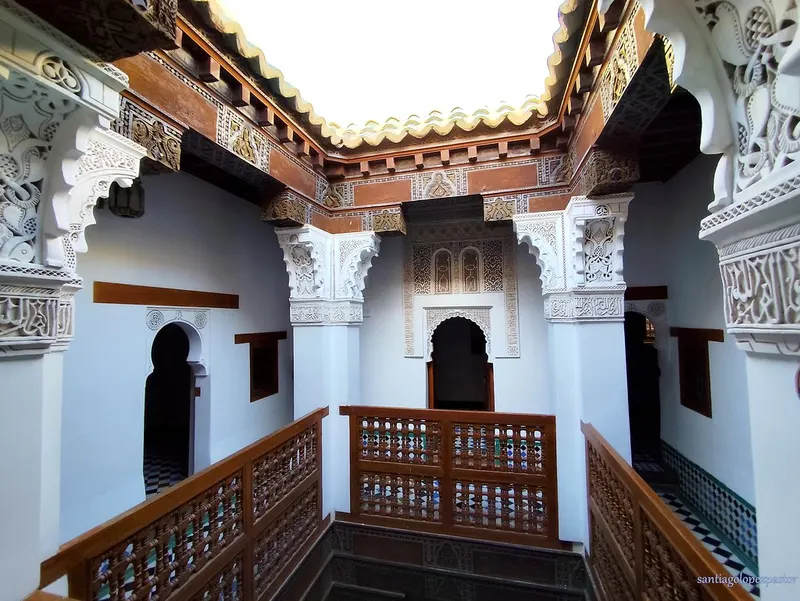
1Ben Youssef Madrasa
4.7★ · 12,289outdoorOpen dailyBen Youssef Madrasa was one of North Africa largest Quranic schools. Its courtyard, cedar wood, carved stucco, tilework, and student cells make it a key architectural stop in the Medina.
Wikipedia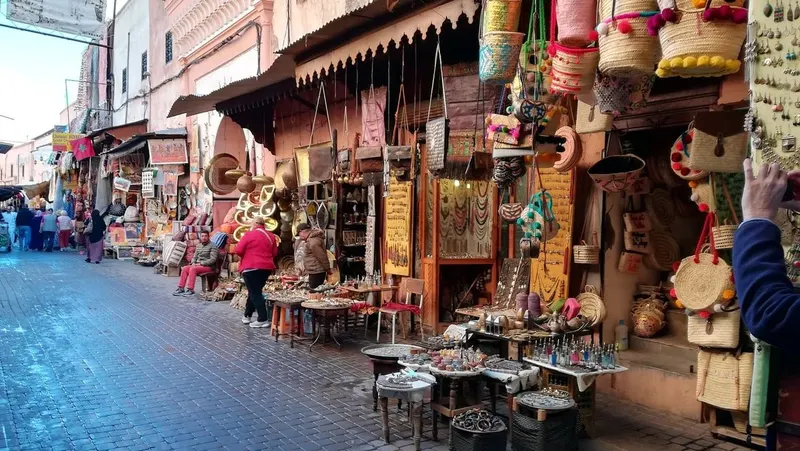 2
2Medina souks
4.4★ · 5,878outdoorOpen dailyThe souks north of Djemaa El-Fna form a dense market maze of leather, slippers, spices, lamps, textiles, metalwork, ceramics, and workshops. Go slowly, note landmarks, and expect bargaining.
 3
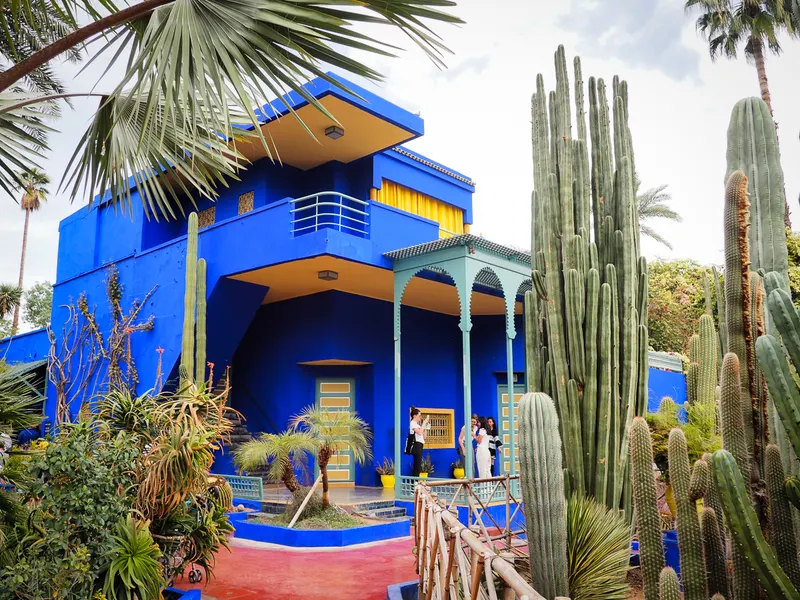
3Jardin Majorelle and Yves Saint Laurent Museum
4.4★ · 59,289outdoorOpen dailyJardin Majorelle combines cobalt-blue buildings, cactus, palms, bamboo, and a Berber Museum, while the Yves Saint Laurent Museum sits nearby. Both are popular enough to justify timed planning.
Buy timed tickets online during busy periods, especially for morning garden slots.
Show 7 more sights
- 4Djemaa El-Fna
- 5Bahia Palace
- 6Menara Gardens
- 7Saadian Tombs
- 8Koutoubia Mosque
- 9Dar Si Said Museum
- 10El Badi Palace
Neighborhoods
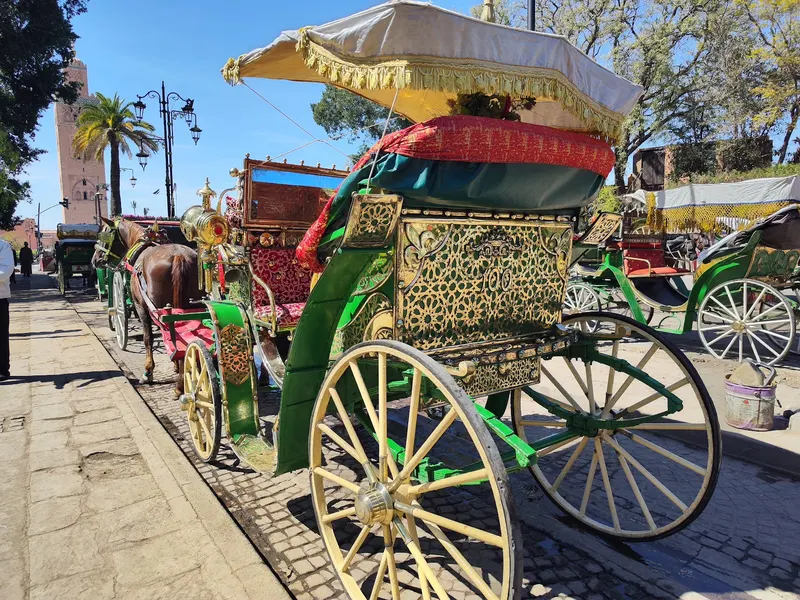 1
1Medina
The Medina is the walled old city of riads, souks, mosques, hammams, narrow lanes, food stalls, workshops, and the constant pull of Djemaa El-Fna.
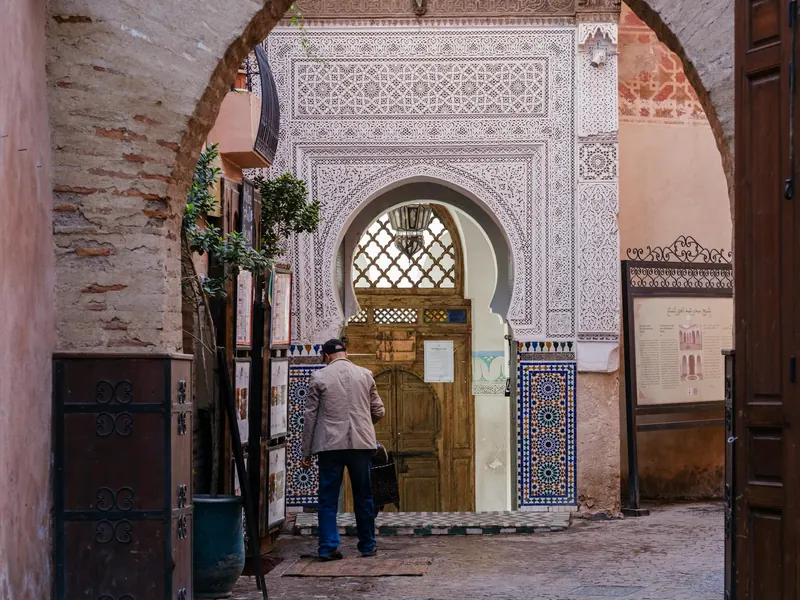 2
2Kasbah and Mellah
Kasbah and the Mellah sit south of Djemaa El-Fna with Saadian Tombs, Bahia Palace, El Badi Palace, spice markets, synagogues, and quieter guesthouse lanes.
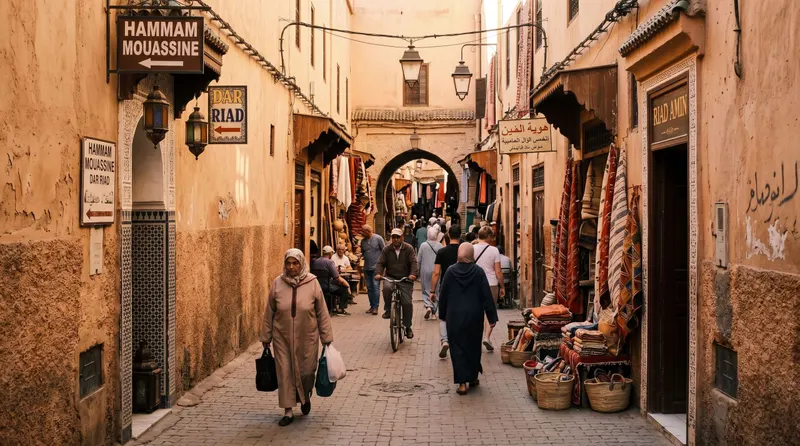 3
3Mouassine and Sidi Abdelaziz
Mouassine and Sidi Abdelaziz are central Medina quarters with riads, boutique shops, hammams, cafes, and fast access into the northern souks.
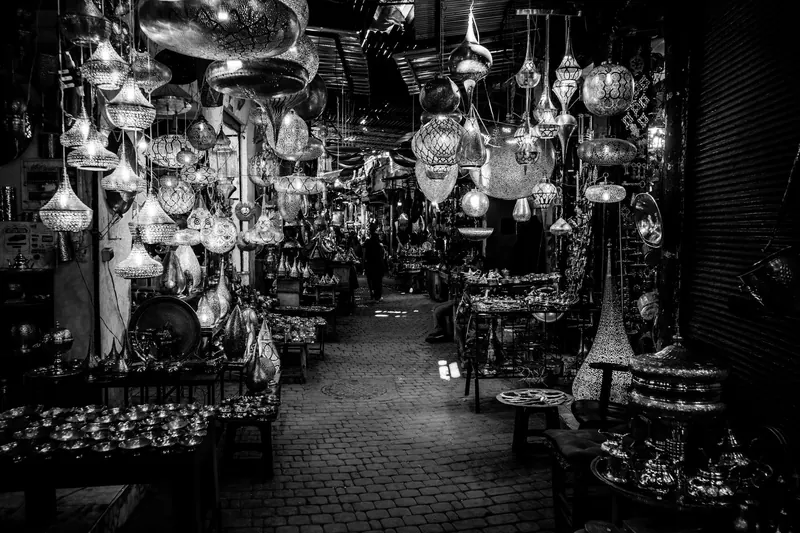 4
4Gueliz
Gueliz is the Ville Nouvelle district with easier taxis, banks, galleries, shopping streets, cafes, bars, and modern restaurants outside the old walls.
 5
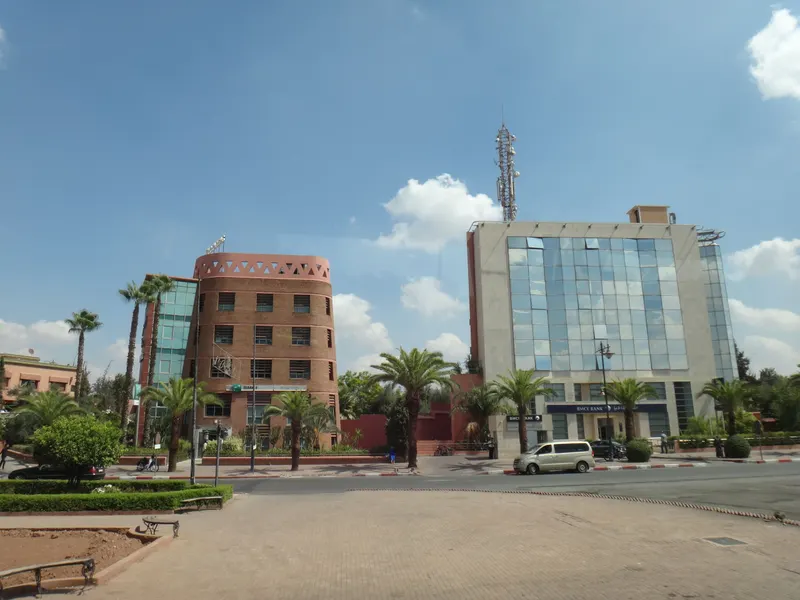
5Hivernage
Hivernage is a hotel and nightlife district west of the Medina, with resort pools, lounges, broad roads, and a calmer base for visitors using drivers.
 6
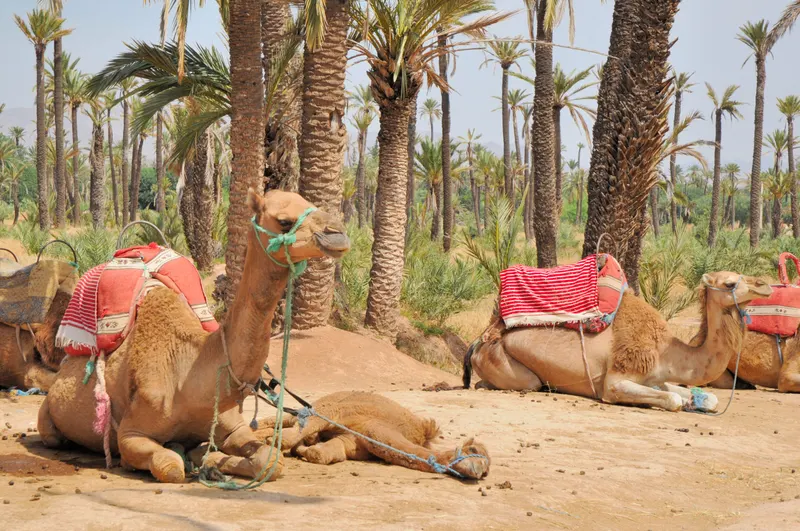
6Palmeraie
The Palmeraie is the palm-grove resort zone north of town, useful for villa stays, pool days, and resort restaurants rather than Medina wandering.
Getting around
Inside the Medina, walking is the main transport and maps lose precision in covered souks, so navigate by gates, squares, mosques, and riad landmarks. Alsa buses, petit taxis, airport bus 19, caleches, and hired drivers handle longer hops, with fares agreed before taxi rides when meters are not used.
Seville
Seville in March
TempTemperature
71°F / 49°F
21.9°C / 9.2°C
RainPrecipitation
4d
1.4in · 35mm
LightDaylight
11.7h
March is one of the best walking months, especially for Triana, Macarena, and Plaza de España.
City overview
Seville is Andalusia’s Guadalquivir River capital, where Almohad towers, Gothic vaults, Mudéjar palaces, orange-tree courtyards, and flamenco districts sit under some of Europe’s hottest summer skies. Santa Cruz frames the cathedral and Alcázar, Triana carries ceramics and flamenco across the river, and El Arenal, Macarena, and Los Remedios fill in bullring, market, and Feria layers.
Food & drink
Seville plates are built around salmorejo, gazpacho, espinacas con garbanzos, carrillada, pescaíto frito, jamón ibérico, montaditos, and torrijas. Mercado de Triana, Calle Mateos Gago, El Rinconcillo, Feria market, and Alameda bars make the tapas crawl straightforward.
Events & festivals
- Mar 1 – Mar 31
Semana Santa
The sombre Easter week processions feature thousands of people and go on all week, a spectacular display of conspicuous Catholicism.
Planning lead · dates set closer in · Source: Month Signals
- Mar 1 – Mar 31
Feria de Abril
Also known as "Feria de Sevilla" - a release after the somberness of Semana Santa.
Planning lead · dates set closer in · Source: Month Signals
- Mar 21 – Mar 28
Associated occasion: Holy Week / Easter.
Planning lead · dates set closer in · Source: TripSapien festival dataset
Holidays & observances
- Mar 26Good FridayPublic holiday
Top sights
Ranked for March suitability using weather, setting, ratings, and review volume.
- 1Plaza de España
- 2Seville Cathedral and Giralda
- 3Triana Bridge and Mercado de Triana
- 4Torre del Oro
- 5Metropol Parasol (Las Setas)
- 6Hospital de los Venerables
- 7Real Alcázar of Seville
- 8Museo de Bellas Artes
- 9Archivo General de Indias
- 10Casa de Pilatos
 1
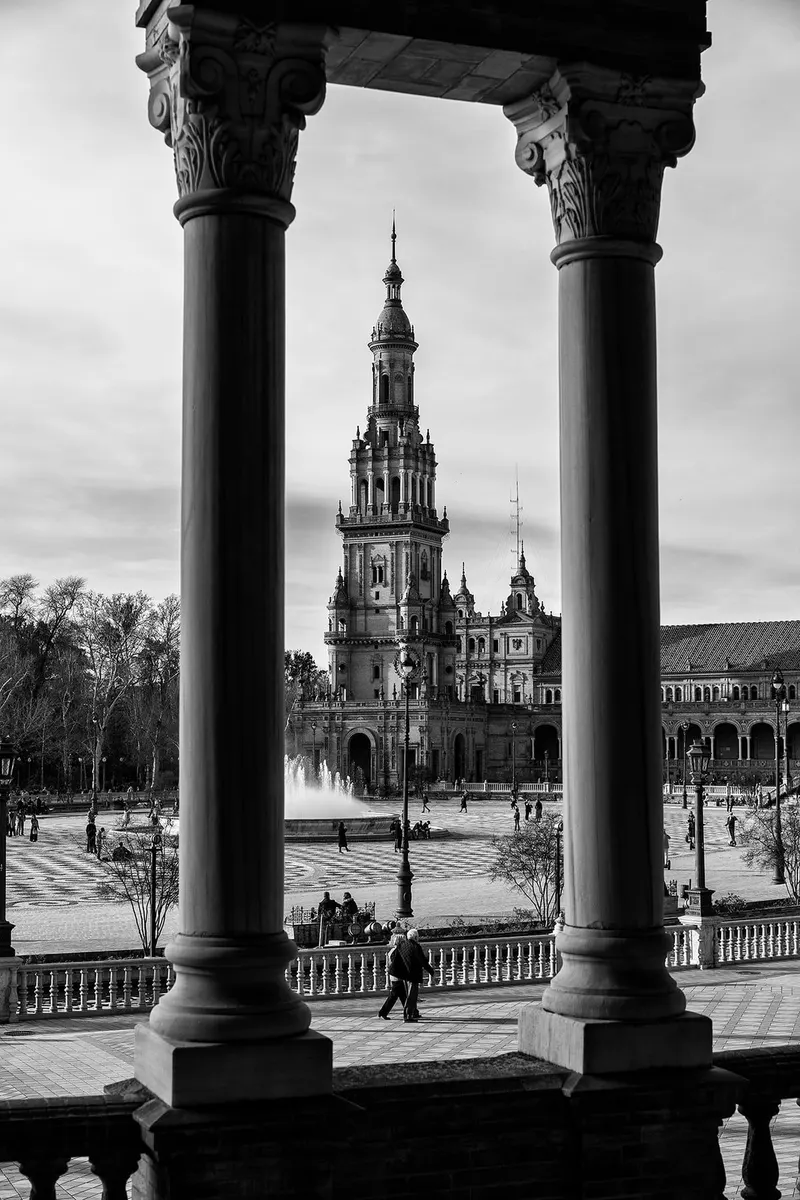
1Plaza de España
4.8★ · 184,766outdoorOpen dailyAníbal González designed the tiled crescent, bridges, and towers for the 1929 Ibero-American Exposition. The plaza sits inside Parque de María Luisa, a 15-minute walk from the cathedral area.
 2
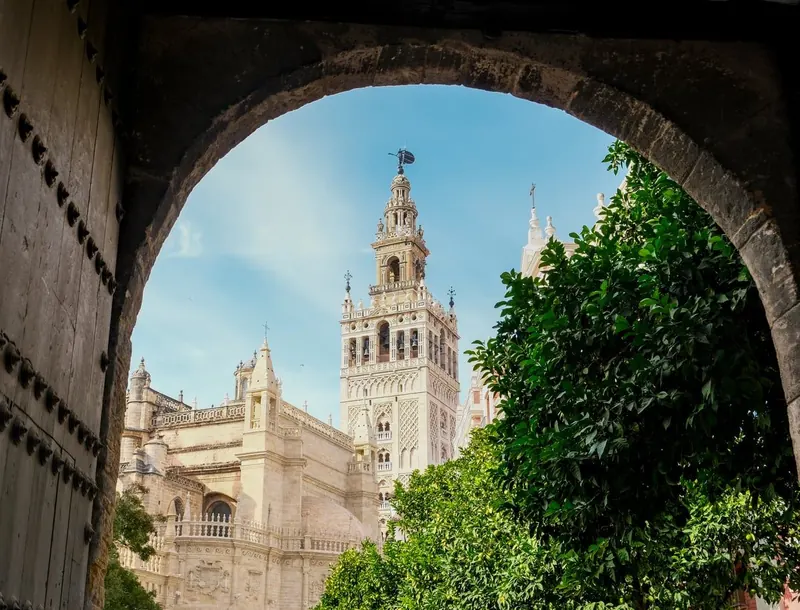
2Seville Cathedral and Giralda
4.7★ · 57,435outdoorThe cathedral was completed in 1506 on the site of the Almohad mosque, while the Giralda began as a 12th-century minaret before gaining its Renaissance belfry. The complex stands between Plaza Virgen de los Reyes and the Alcázar walls.
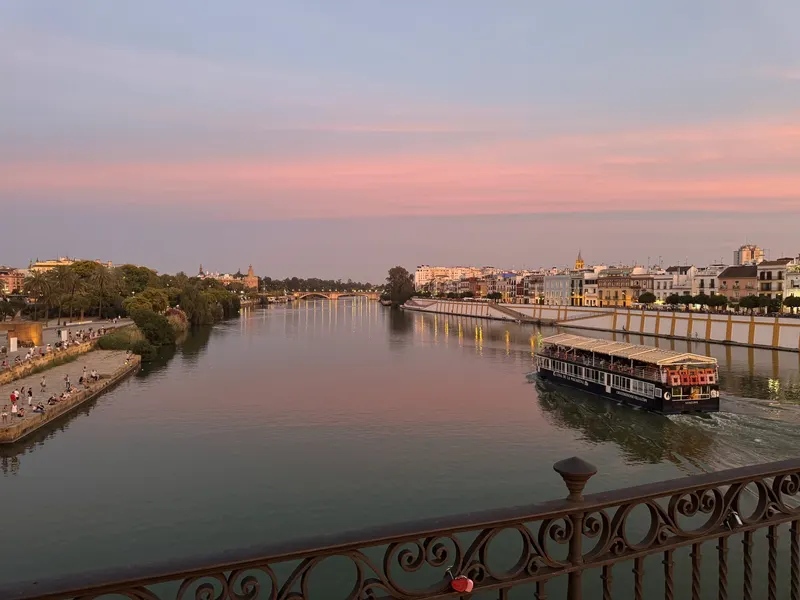 3
3Triana Bridge and Mercado de Triana
4.7★ · 21,211outdoorOpen dailyThe Isabel II Bridge opened in 1852 as Seville’s iron link to Triana, replacing a boat bridge. On the west bank, Mercado de Triana sits above the remains of San Jorge Castle.
Show 7 more sights
- 4Torre del Oro
- 5Metropol Parasol (Las Setas)
- 6Hospital de los Venerables
- 7Real Alcázar of Seville
- 8Museo de Bellas Artes
- 9Archivo General de Indias
- 10Casa de Pilatos
Neighborhoods
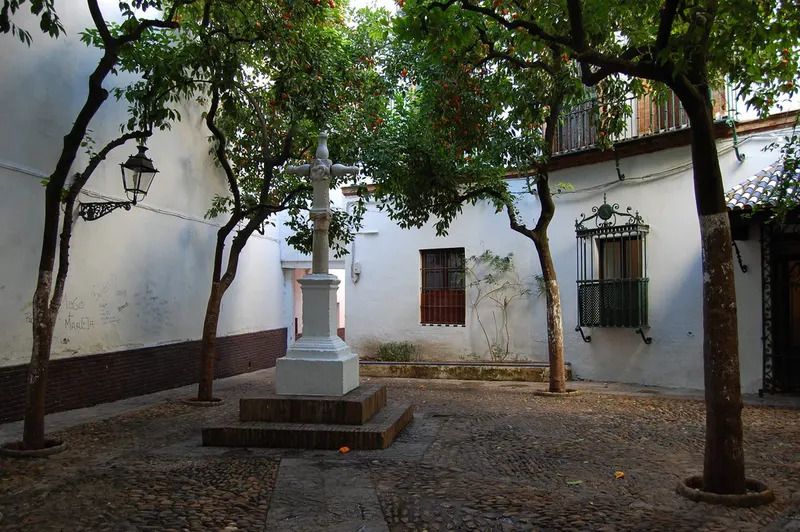 1
1Santa Cruz
Santa Cruz is the old Jewish quarter, with narrow lanes, orange trees, hidden plazas, the Alcázar, cathedral views, and heavy daytime visitor traffic.
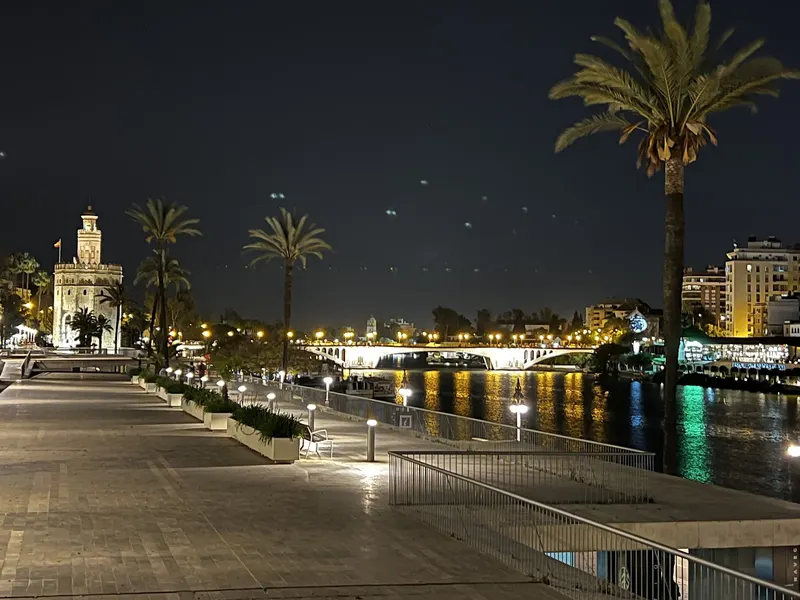 2
2El Arenal
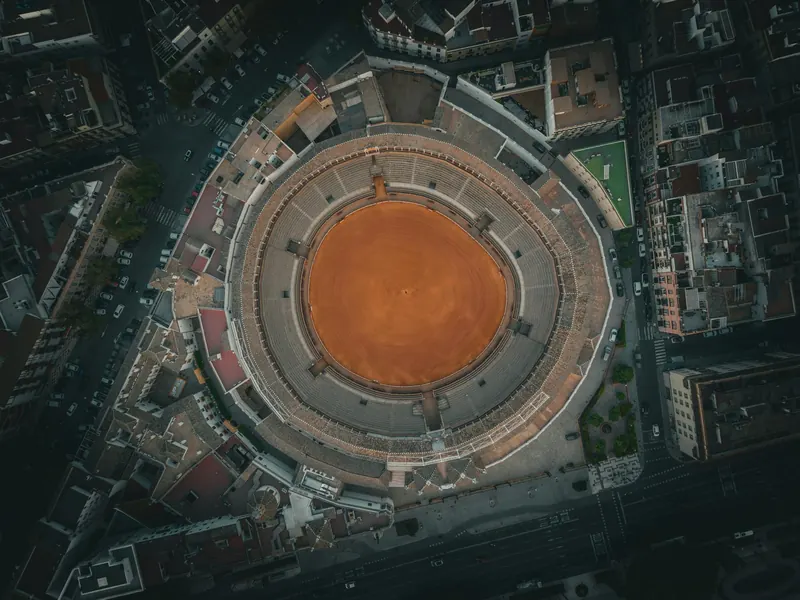
El Arenal is river-and-bullring Seville, anchored by the Maestranza, Torre del Oro, opera houses, tapas bars, and Guadalquivir boat docks.
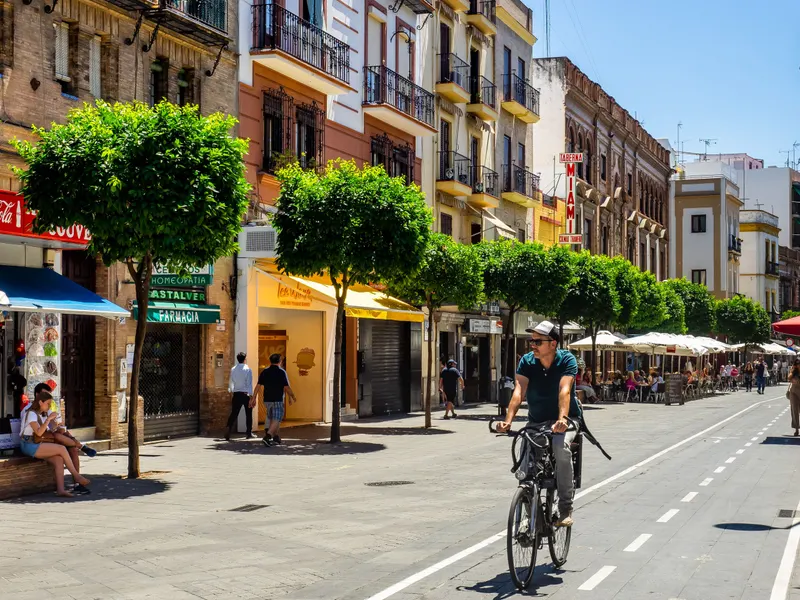 3
3Triana
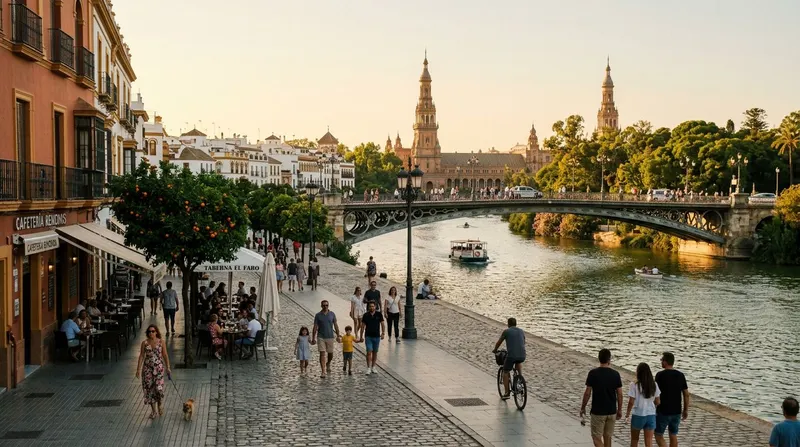
Triana feels proud and local, with ceramic workshops, Mercado de Triana, Calle Betis, flamenco bars, and deep ties to sailors and bullfighters.
 4
4Centro, Alfalfa, and Encarnación
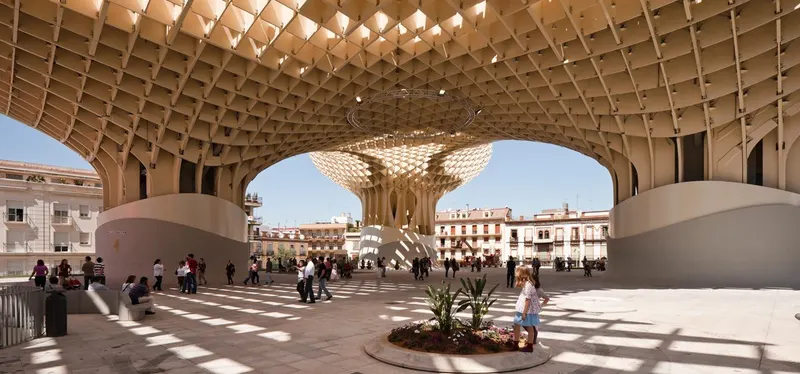
Central Seville is shopping, tapas, and nightlife, with Las Setas, Salvador church, Calle Sierpes, Plaza Nueva, and Alfalfa bars packed together.
 5
5Macarena and Feria
Macarena and Feria are market-and-procession districts, with Alameda de Hércules, Basilica de la Macarena, Feria market, and older residential streets.
 6
6Los Remedios and Parque de María Luisa
Los Remedios is the Feria de Abril side of the river, while María Luisa adds Plaza de España, shade, museums, and ceremonial exposition avenues.
Getting around
The historic core is easiest on foot, with TUSSAM buses, MetroCentro tram, one metro line, taxis, and Sevici bikes handling longer hops to Santa Justa, Triana, Los Remedios, and Plaza de España. Summer heat makes midday taxis and tram rides more practical than heroic walking.
Planning the Morocco & Andalusia route?
Add your dates and we'll pace all 2 cities — every place checked for closures, limited hours, and booking needs in March.
Weather by month for the Morocco & Andalusia trip
In March, climate averages for Marrakesh and Seville show daytime highs from 22°C / 72°F to 24°C / 75°F, with nights down to about 9°C / 48°F in the coolest of those cities. The rainiest of those cities averages about 8 rainy days. Based on climate averages for Marrakesh and Seville, March is one of the most comfortable months by weather.
The most comfortable months for this route are March, April and November, based on average daytime temperatures and rainfall in Marrakesh and Seville. March 2027 is among the highest-comfort months.
Common questions about the Morocco & Andalusia trip
- When is the best time to do the Morocco & Andalusia trip?
- The most comfortable months across Marrakesh and Seville are March, April and November, based on average daytime temperatures and rainfall for those cities. March is one of the most comfortable months by weather — see the city climate sections below for the averages in March 2027.
- How many days do you need for the Morocco & Andalusia trip?
- A comfortable Morocco & Andalusia trip runs about 6–8 days, allowing roughly Marrakesh 3, Seville 3 nights plus travel between stops. Add a day if you want a slower pace or extra day trips.
- What's the route for the Morocco & Andalusia trip?
- The classic order is Marrakesh & Seville. The detailed month sections below cover Marrakesh and Seville.
Ready to plan the Morocco & Andalusia trip?
Turn this route into a day-by-day plan for March 2027, every stop checked for closures and booking needs on your exact dates.