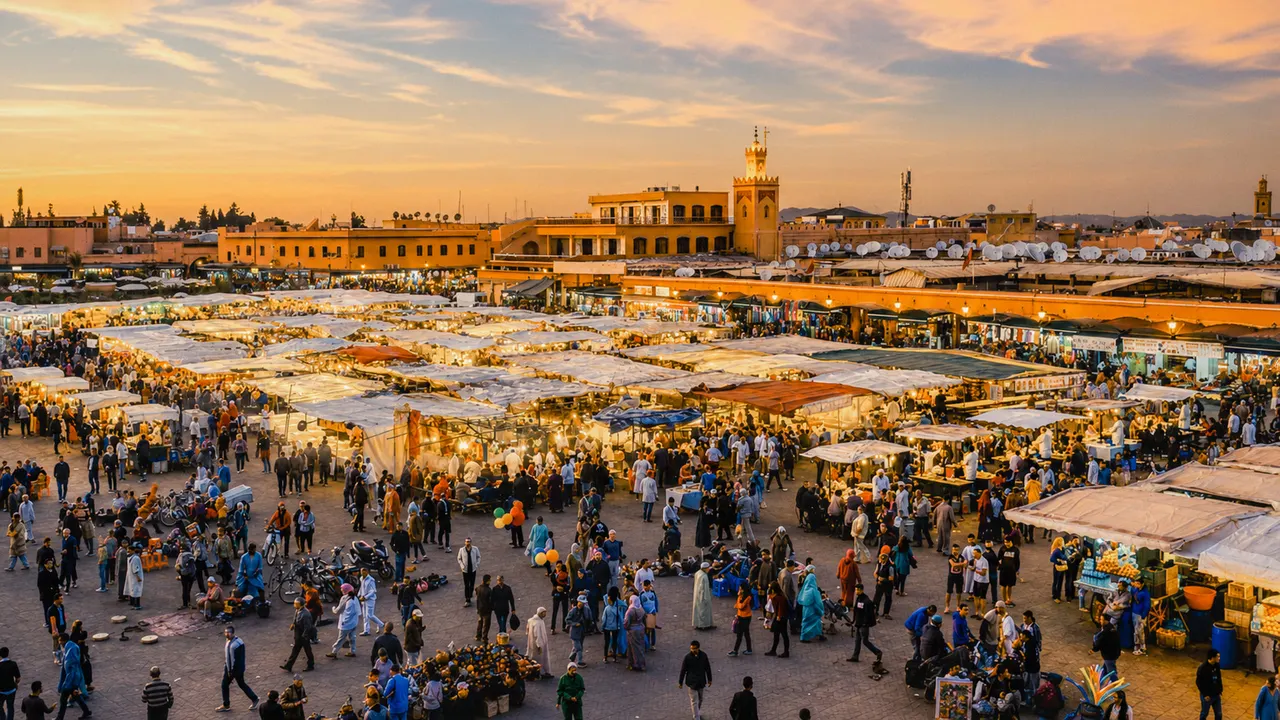
Morocco & Andalusia itinerary — July 2027
For the Morocco & Andalusia trip (Marrakesh & Seville), July 2027 is one of the less comfortable months by weather. Across Marrakesh and Seville, daytime highs run from about 36°C / 97°F to 38°C / 100°F. Plan around 6–8 days for the full Marrakesh & Seville loop.
In this order — about 6–8 days:
- Marrakesh3 nightsMorocco
- Seville3 nightsSpain
- Route noteReserve the longest intercity leg first and keep transfer days free of timed sights.
By TripSapien · Updated October 29, 2026
Marrakesh
Marrakesh in July
TempTemperature
100°F / 69°F
37.7°C / 20.6°C
RainPrecipitation
1d
0in · 1mm
LightDaylight
13.9h
July is extremely hot, so plan pool time, air-conditioned museums, and short evening market visits.
City overview
Marrakesh is a former imperial city where the walled Medina, Djemaa El-Fna, souks, palaces, gardens, and Gueliz sit between the High Atlas and the Haouz plain. The useful visitor split is simple: stay alert inside the dense old city, use Gueliz for easier restaurants and modern services, and treat the Atlas valleys as the natural day-trip extension.
Food & drink
Marrakesh food centers on tagine, tanjia, couscous, harira, msemen, olives, dates, chebakia, mint tea, and fresh orange juice. Djemaa El-Fna is the famous evening stage, the Medina has riad cooking and rooftop terraces, and Gueliz adds easier sit-down dining when the old-city lanes feel tiring.
Holidays & observances
- Jul 30Feast of the ThronePublic holiday
Top sights
Ranked for July suitability using weather, setting, ratings, and review volume.
- 1Ben Youssef Madrasa
- 2Medina souks
- 3Jardin Majorelle and Yves Saint Laurent Museum
- 4Djemaa El-Fna
- 5Bahia Palace
- 6Menara Gardens
- 7Saadian Tombs
- 8Koutoubia Mosque
- 9El Badi Palace
 1
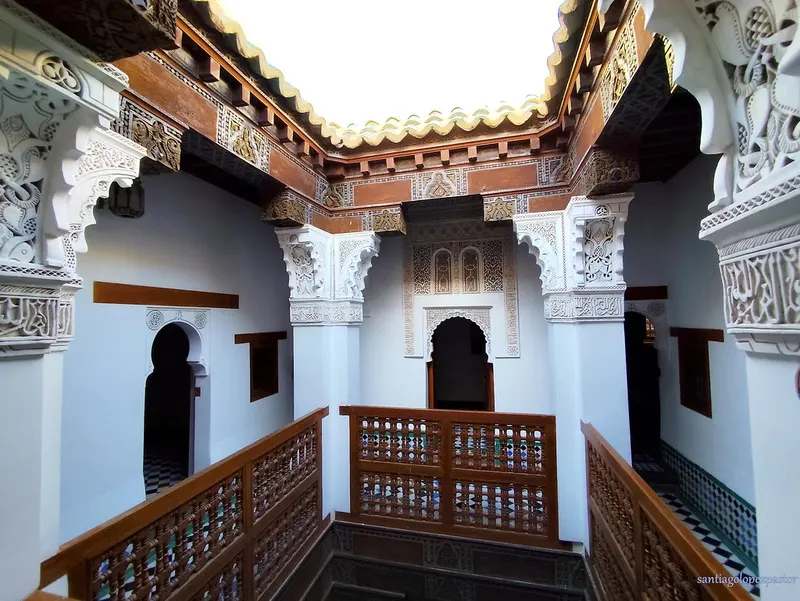
Ben Youssef Madrasa
4.7★ · 13,726outdoorOpen dailyBen Youssef Madrasa was one of North Africa largest Quranic schools. Its courtyard, cedar wood, carved stucco, tilework, and student cells make it a key architectural stop in the Medina.
Wikipedia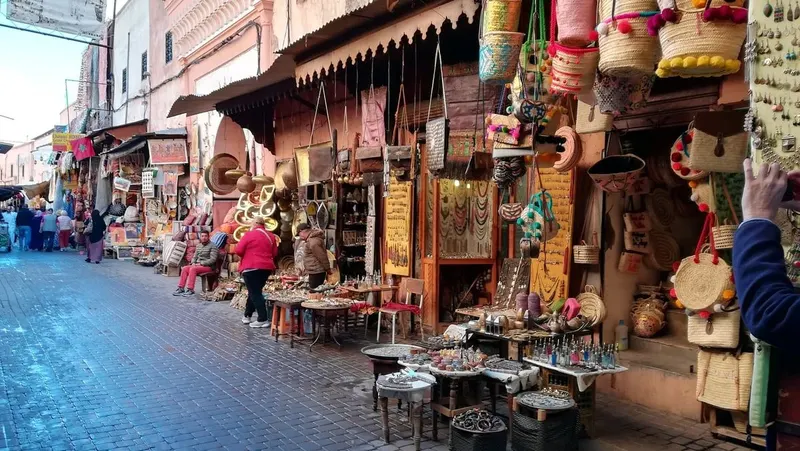 2
Medina souks
4.4★ · 6,050outdoorOpen dailyThe souks north of Djemaa El-Fna form a dense market maze of leather, slippers, spices, lamps, textiles, metalwork, ceramics, and workshops. Go slowly, note landmarks, and expect bargaining.
 3
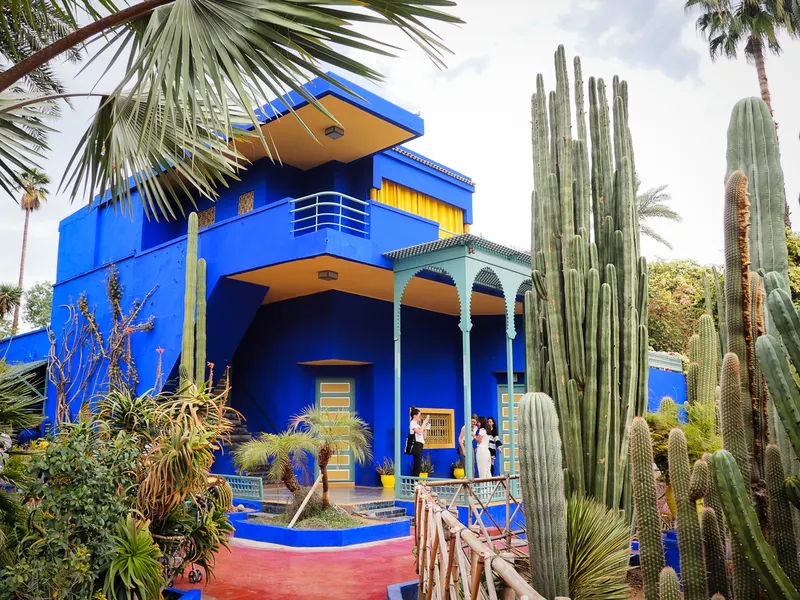
Jardin Majorelle and Yves Saint Laurent Museum
4.4★ · 61,536outdoorOpen dailyJardin Majorelle combines cobalt-blue buildings, cactus, palms, bamboo, and a Berber Museum, while the Yves Saint Laurent Museum sits nearby. Both are popular enough to justify timed planning.
Buy timed tickets online during busy periods, especially for morning garden slots.
Show 6 more sights
4Djemaa El-Fna
Djemaa El-Fna is the central Medina square, active by day with juice stalls and performers and busier after dark with food stalls, musicians, storytellers, and crowds. It is the orientation point for the souks and Koutoubia.
5Bahia Palace
Bahia Palace is a 19th-century residence of grand viziers with courtyards, painted ceilings, carved plaster, zellij tile, and shaded garden spaces. It is one of the clearest examples of Marrakesh palace craft.
Wikipedia6Menara Gardens
Menara Gardens sit west of the Medina around a large reservoir and pavilion, with Atlas views on clear days. They work best as a quiet late-afternoon break rather than a main museum stop.
Wikipedia7Saadian Tombs
The Saadian Tombs preserve the 16th-century royal necropolis of the Saadian dynasty. The Chamber of the Twelve Columns is the headline room, with marble columns, zellij, and carved decoration.
Wikipedia8Koutoubia Mosque
Koutoubia stands beside Djemaa El-Fna with the city best-known minaret and gardens around it. Non-Muslims do not enter the mosque, but the minaret anchors most central walks.
Wikipedia9El Badi Palace
El Badi is a ruined palace commissioned after the Battle of the Three Kings, now a broad complex of walls, sunken gardens, terraces, and exhibition rooms. The terrace gives useful views back toward Koutoubia.
Wikipedia
Neighborhoods
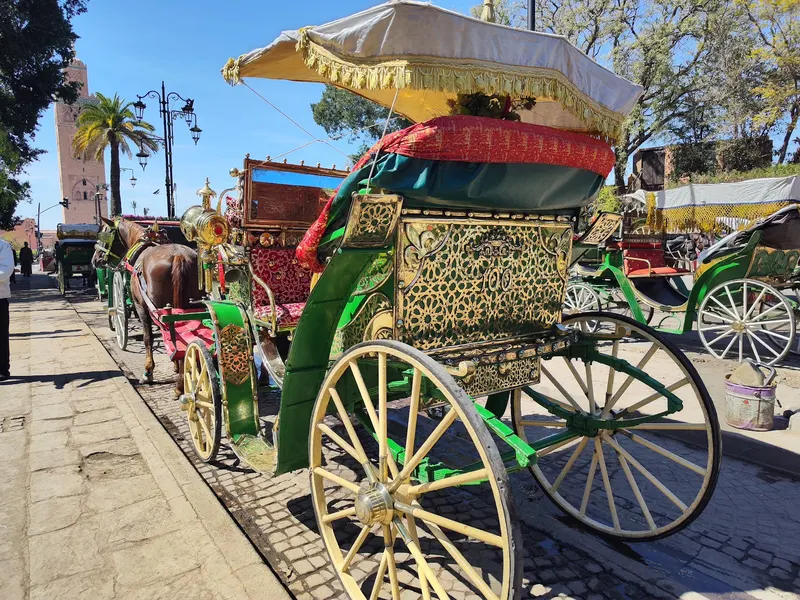 1
Medina
The Medina is the walled old city of riads, souks, mosques, hammams, narrow lanes, food stalls, workshops, and the constant pull of Djemaa El-Fna.
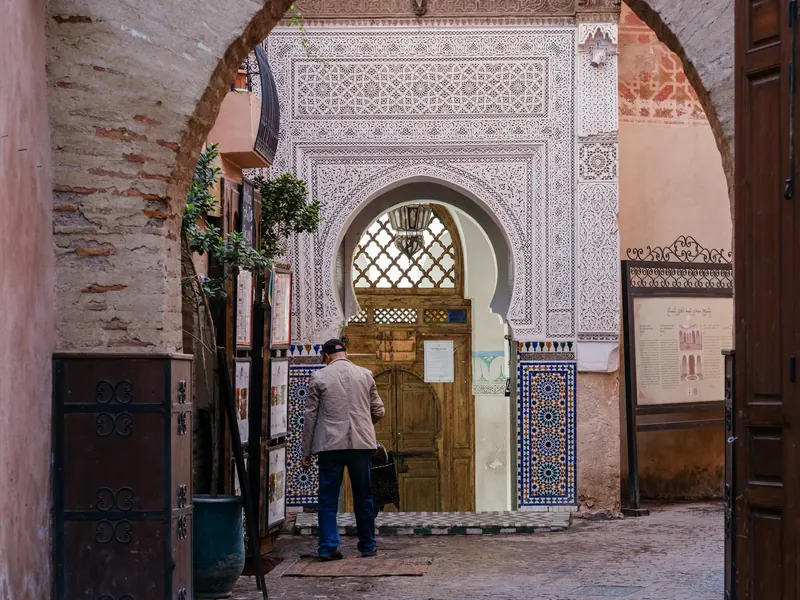 2
Kasbah and Mellah
Kasbah and the Mellah sit south of Djemaa El-Fna with Saadian Tombs, Bahia Palace, El Badi Palace, spice markets, synagogues, and quieter guesthouse lanes.
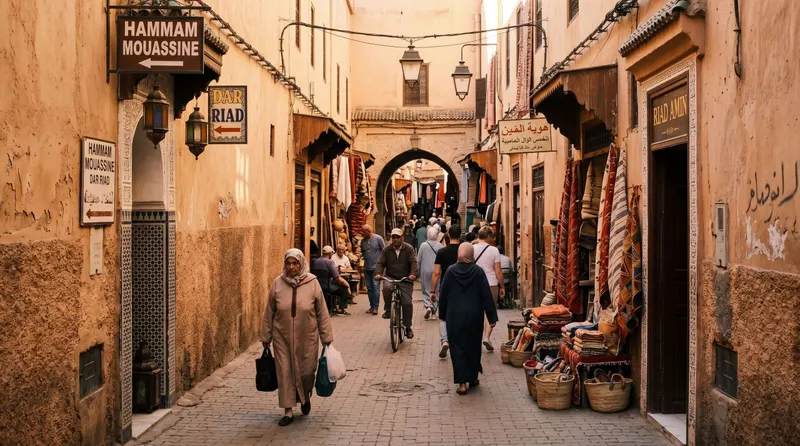 3
Mouassine and Sidi Abdelaziz
Mouassine and Sidi Abdelaziz are central Medina quarters with riads, boutique shops, hammams, cafes, and fast access into the northern souks.
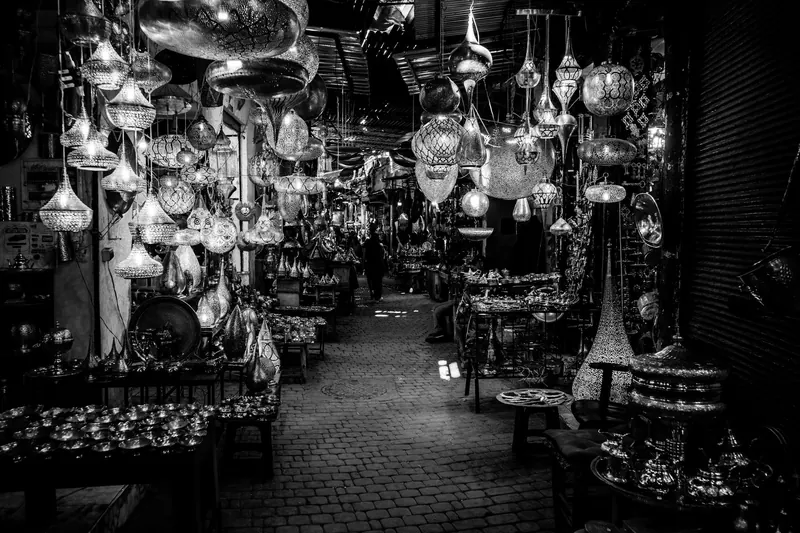 4
Gueliz
Gueliz is the Ville Nouvelle district with easier taxis, banks, galleries, shopping streets, cafes, bars, and modern restaurants outside the old walls.
 5
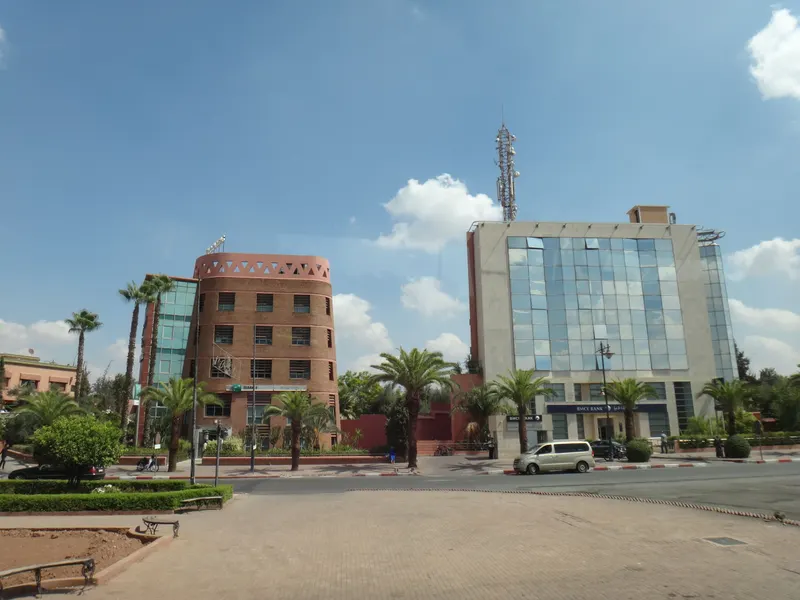
Hivernage
Hivernage is a hotel and nightlife district west of the Medina, with resort pools, lounges, broad roads, and a calmer base for visitors using drivers.
 6
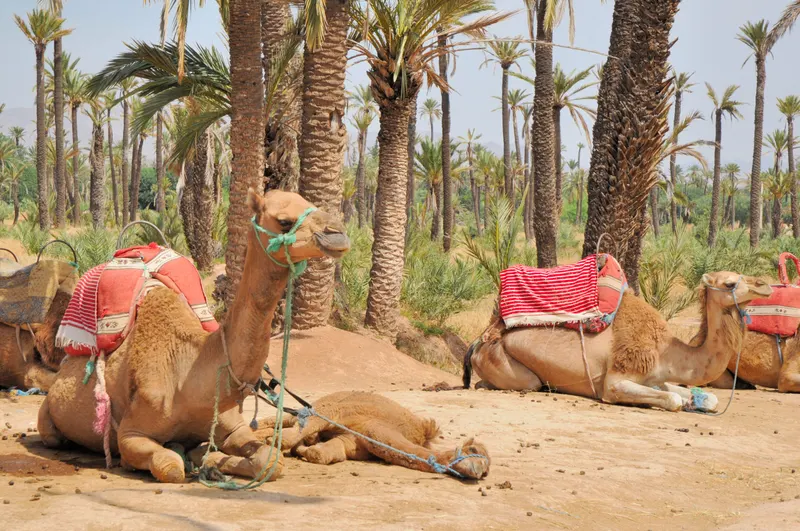
Palmeraie
The Palmeraie is the palm-grove resort zone north of town, useful for villa stays, pool days, and resort restaurants rather than Medina wandering.
Getting around
Inside the Medina, walking is the main transport and maps lose precision in covered souks, so navigate by gates, squares, mosques, and riad landmarks. Alsa buses, petit taxis, airport bus 19, caleches, and hired drivers handle longer hops, with fares agreed before taxi rides when meters are not used.
Seville
Seville in July
TempTemperature
98°F / 68°F
36.4°C / 19.8°C
RainPrecipitation
0d
0in · 0mm
LightDaylight
14.3h
July is extremely hot and dry, so plan only early mornings, late evenings, and air-conditioned interiors.
City overview
Seville is Andalusia’s Guadalquivir River capital, where Almohad towers, Gothic vaults, Mudéjar palaces, orange-tree courtyards, and flamenco districts sit under some of Europe’s hottest summer skies. Santa Cruz frames the cathedral and Alcázar, Triana carries ceramics and flamenco across the river, and El Arenal, Macarena, and Los Remedios fill in bullring, market, and Feria layers.
Food & drink
Seville plates are built around salmorejo, gazpacho, espinacas con garbanzos, carrillada, pescaíto frito, jamón ibérico, montaditos, and torrijas. Mercado de Triana, Calle Mateos Gago, El Rinconcillo, Feria market, and Alameda bars make the tapas crawl straightforward.
Top sights
Ranked for July suitability using weather, setting, ratings, and review volume.
- 1Plaza de España
- 2Seville Cathedral and Giralda
- 3Triana Bridge and Mercado de Triana
- 4Torre del Oro
- 5Metropol Parasol (Las Setas)
- 6Hospital de los Venerables
- 7Real Alcázar of Seville
- 8Museo de Bellas Artes
- 9Archivo General de Indias
- 10Casa de Pilatos
 1
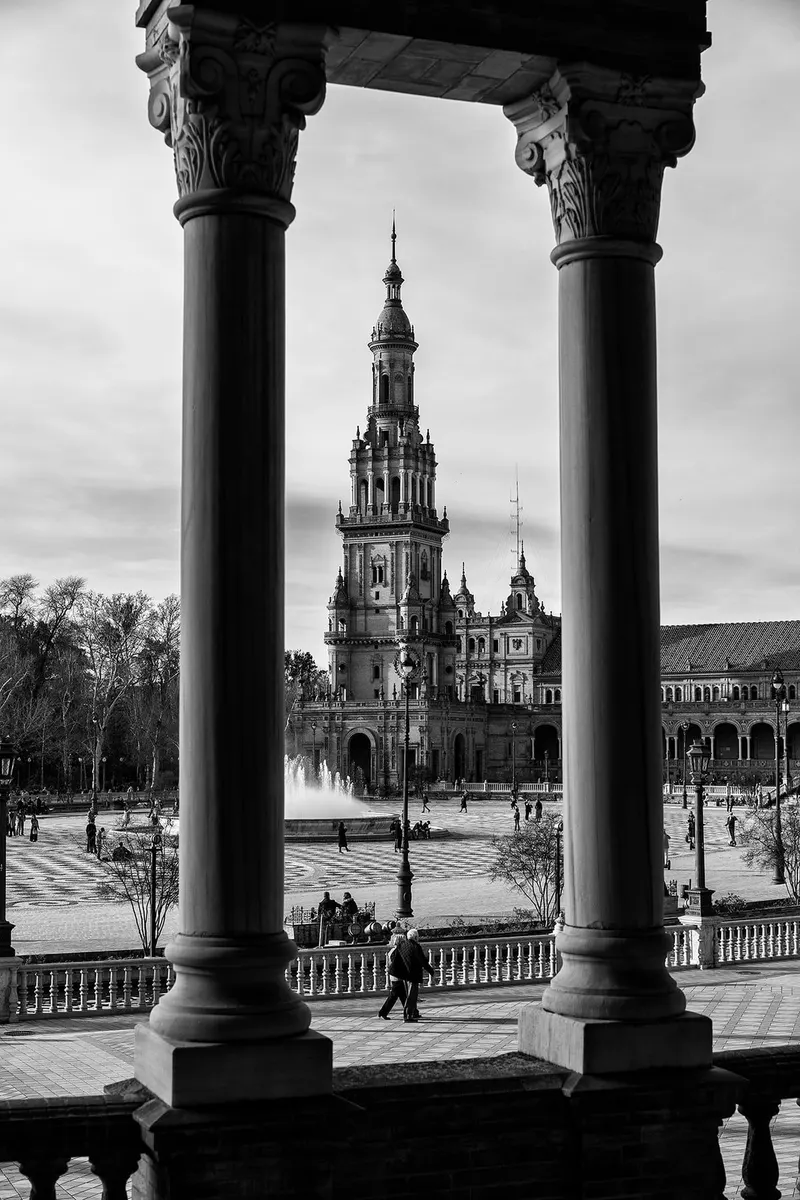
Plaza de España
4.8★ · 192,281outdoorOpen dailyAníbal González designed the tiled crescent, bridges, and towers for the 1929 Ibero-American Exposition. The plaza sits inside Parque de María Luisa, a 15-minute walk from the cathedral area.
 2
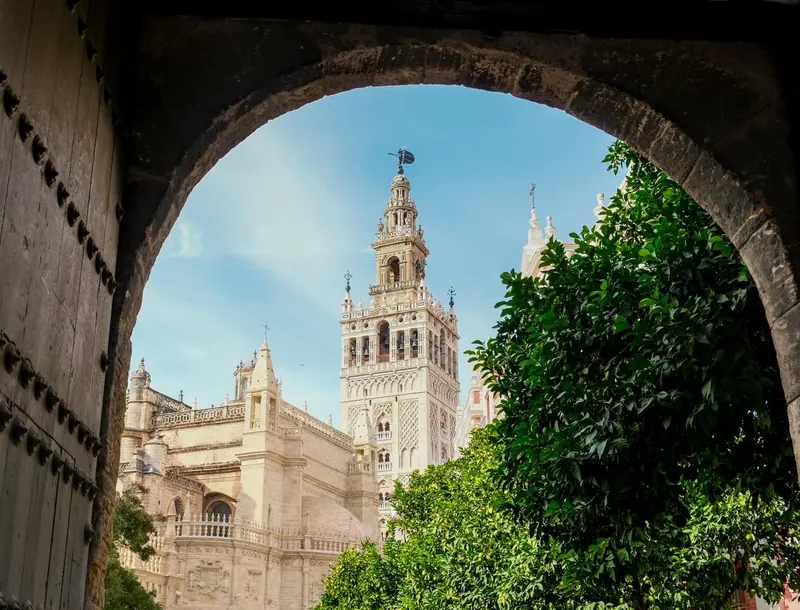
Seville Cathedral and Giralda
4.7★ · 60,694outdoorThe cathedral was completed in 1506 on the site of the Almohad mosque, while the Giralda began as a 12th-century minaret before gaining its Renaissance belfry. The complex stands between Plaza Virgen de los Reyes and the Alcázar walls.
 3
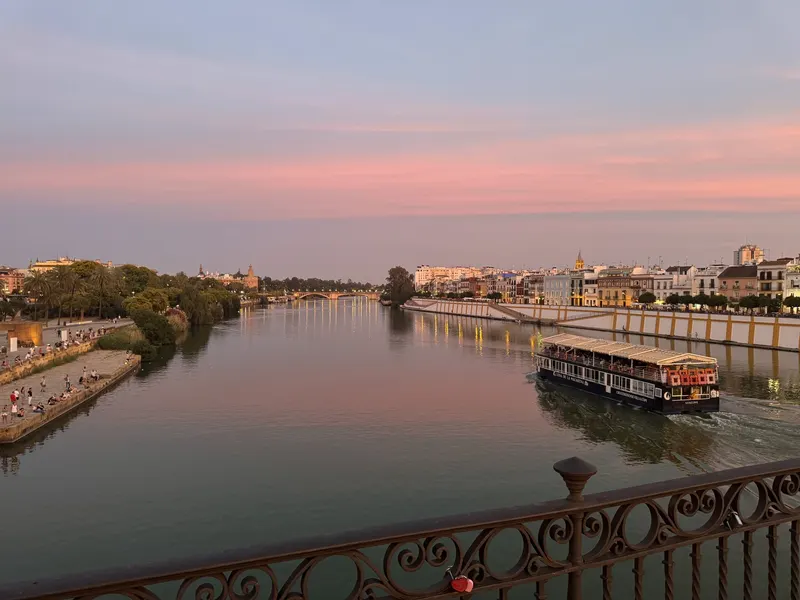
Triana Bridge and Mercado de Triana
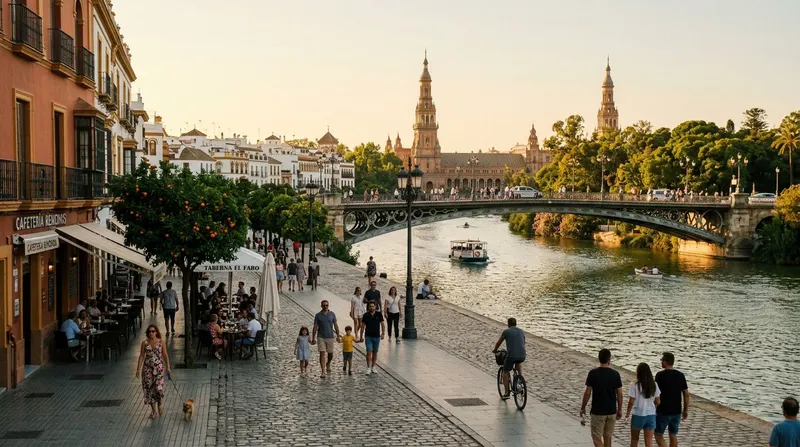
4.7★ · 21,535outdoorOpen dailyThe Isabel II Bridge opened in 1852 as Seville’s iron link to Triana, replacing a boat bridge. On the west bank, Mercado de Triana sits above the remains of San Jorge Castle.
Show 7 more sights
4Torre del Oro
The Almohads built the riverside defensive tower in the 1220s to control Guadalquivir access. It now holds a small naval museum near the Maestranza bullring and river cruises.
Wikipedia5Metropol Parasol (Las Setas)
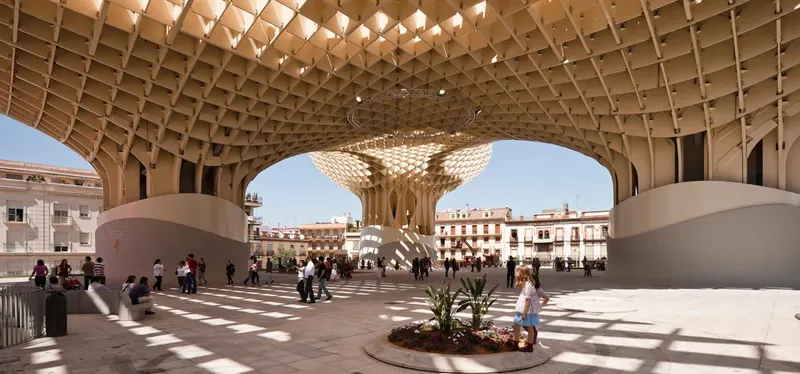
Jürgen Mayer H. completed the giant timber canopy in 2011 over Plaza de la Encarnación. The rooftop walkway gives sunset views above the old center and the basement preserves Roman remains.
6Hospital de los Venerables
The 17th-century former priests’ residence in Santa Cruz has baroque courtyards, frescoes, and the Velázquez Centre collection. It is tucked into Plaza de los Venerables behind the cathedral lanes.
Wikipedia7Real Alcázar of Seville
Pedro I built the Mudéjar palace core in the 1360s with Muslim craftsmen, later kings added gardens and apartments, and the complex remains a royal residence. It sits beside the cathedral at the edge of Santa Cruz.
Timed tickets sell out during Semana Santa, Feria de Abril, and spring weekends.
8Museo de Bellas Artes
Founded as a museum in 1839 inside the former Merced Calzada convent, it holds major works by Murillo, Zurbarán, Valdés Leal, and other Sevillian painters. The galleries stand on Plaza del Museo west of the shopping center.
9Archivo General de Indias
Juan de Herrera designed the 16th-century merchants’ exchange that became the archive for Spain’s American empire. The UNESCO-listed building stands between the cathedral and Alcázar.
Wikipedia10Casa de Pilatos
The 15th- and 16th-century palace blends Mudéjar tilework, Renaissance sculpture, patios, and gardens from the Medinaceli family. It stands northeast of Santa Cruz near Plaza de Pilatos.
Wikipedia
Neighborhoods
 1
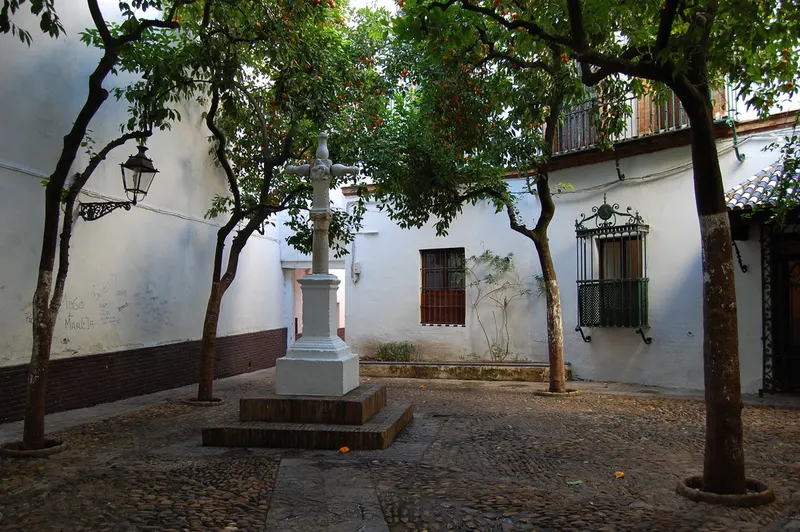
Santa Cruz
Santa Cruz is the old Jewish quarter, with narrow lanes, orange trees, hidden plazas, the Alcázar, cathedral views, and heavy daytime visitor traffic.
 2
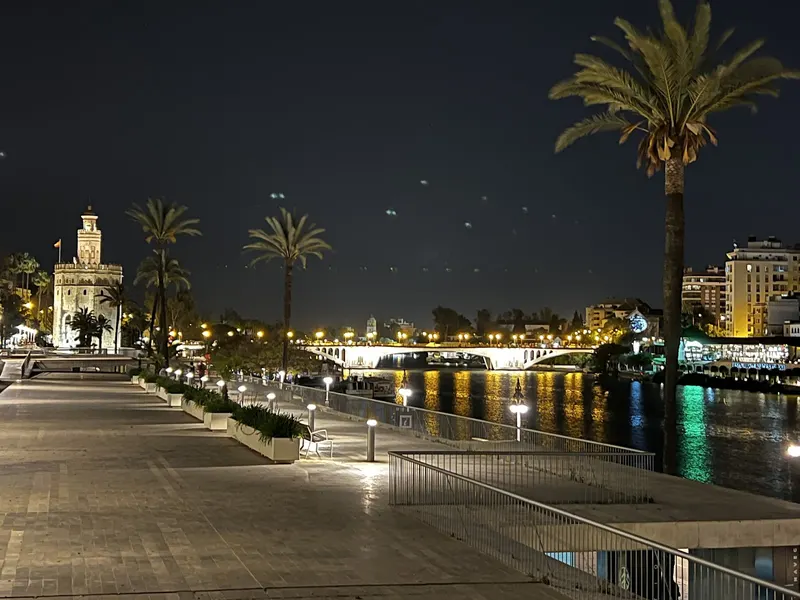
El Arenal
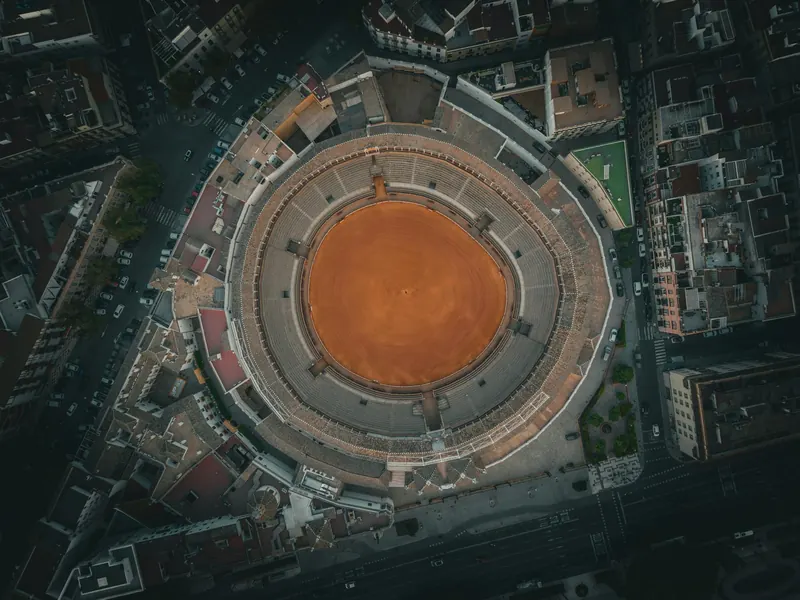
El Arenal is river-and-bullring Seville, anchored by the Maestranza, Torre del Oro, opera houses, tapas bars, and Guadalquivir boat docks.
 3
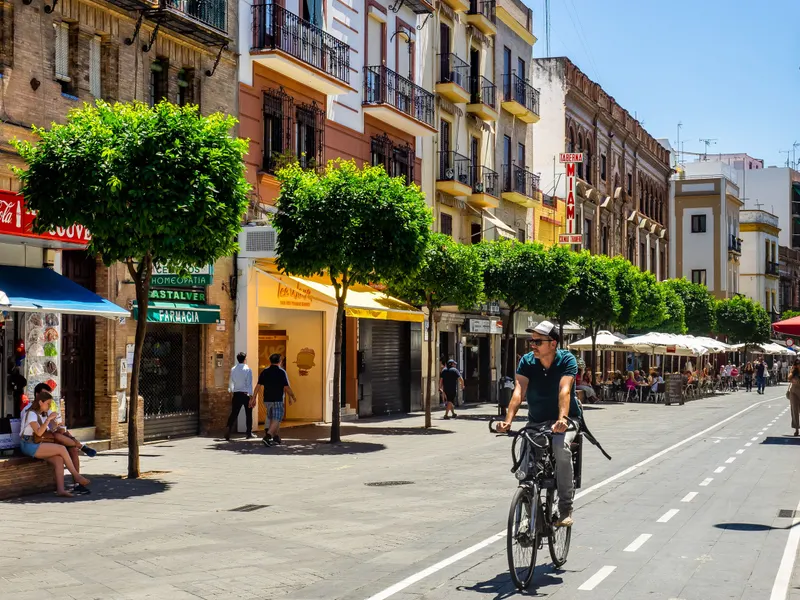
Triana
Triana feels proud and local, with ceramic workshops, Mercado de Triana, Calle Betis, flamenco bars, and deep ties to sailors and bullfighters.
 4
Centro, Alfalfa, and Encarnación
Central Seville is shopping, tapas, and nightlife, with Las Setas, Salvador church, Calle Sierpes, Plaza Nueva, and Alfalfa bars packed together.
 5
Macarena and Feria
Macarena and Feria are market-and-procession districts, with Alameda de Hércules, Basilica de la Macarena, Feria market, and older residential streets.
 6
Los Remedios and Parque de María Luisa
Los Remedios is the Feria de Abril side of the river, while María Luisa adds Plaza de España, shade, museums, and ceremonial exposition avenues.
Getting around
The historic core is easiest on foot, with TUSSAM buses, MetroCentro tram, one metro line, taxis, and Sevici bikes handling longer hops to Santa Justa, Triana, Los Remedios, and Plaza de España. Summer heat makes midday taxis and tram rides more practical than heroic walking.
Planning the Morocco & Andalusia route?
Add your dates and we'll pace all 2 cities — every place checked for closures, limited hours, and booking needs in July.
Weather by month for the Morocco & Andalusia trip
In July, climate averages for Marrakesh and Seville show daytime highs from 36°C / 97°F to 38°C / 100°F, with nights down to about 20°C / 68°F in the coolest of those cities. The rainiest of those cities averages about 1 rainy day. Based on climate averages for Marrakesh and Seville, July is one of the less comfortable months by weather.
The most comfortable months for this route are March, April and November, based on average daytime temperatures and rainfall in Marrakesh and Seville. July 2027 is a lower-comfort month.
Common questions about the Morocco & Andalusia trip
- When is the best time to do the Morocco & Andalusia trip?
- The most comfortable months across Marrakesh and Seville are March, April and November, based on average daytime temperatures and rainfall for those cities. July is one of the less comfortable months by weather — see the city climate sections below for the averages in July 2027.
- How many days do you need for the Morocco & Andalusia trip?
- A comfortable Morocco & Andalusia trip runs about 6–8 days, allowing roughly Marrakesh 3, Seville 3 nights plus travel between stops. Add a day if you want a slower pace or extra day trips.
- What's the route for the Morocco & Andalusia trip?
- The classic order is Marrakesh & Seville. The detailed month sections below cover Marrakesh and Seville.
Ready to plan the Morocco & Andalusia trip?
Turn this route into a day-by-day plan for July 2027, every stop checked for closures and booking needs on your exact dates.