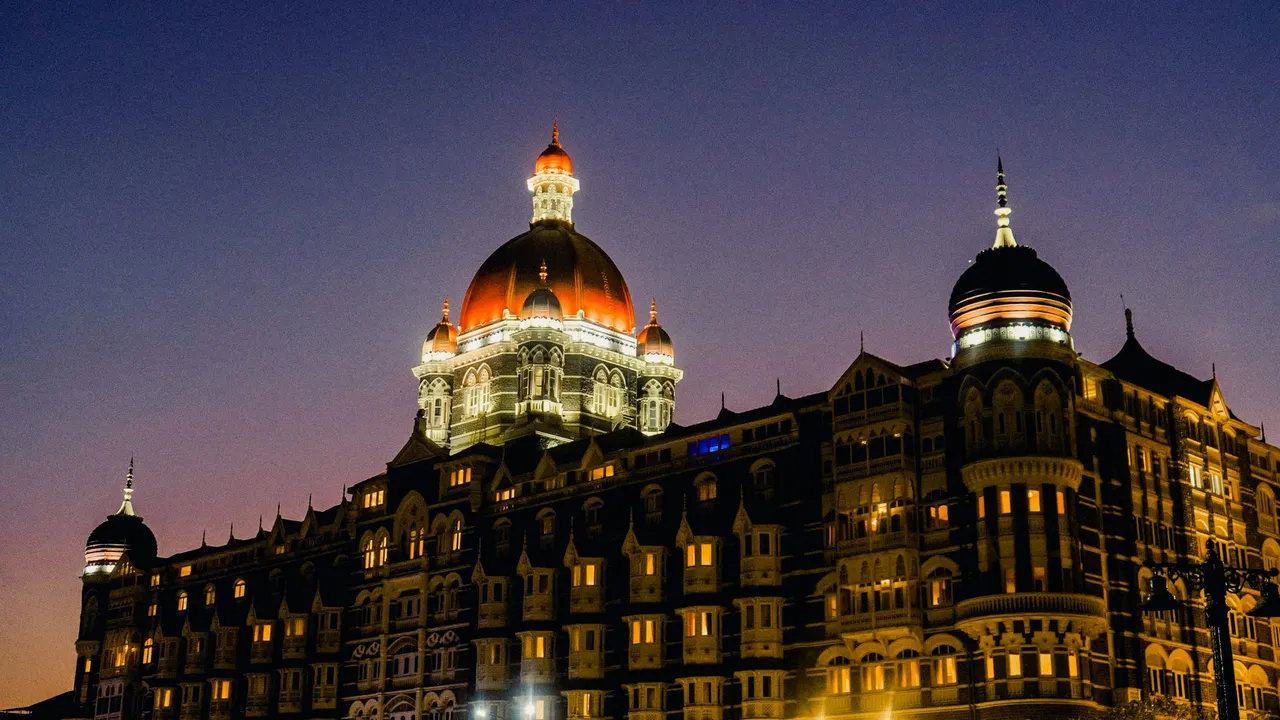
Western India itinerary — July 2027
For the Western India trip (Mumbai & Goa), July 2027 is one of the less comfortable months by weather. Across Mumbai and Panaji, daytime highs run from about 29°C / 84°F to 30°C / 86°F. Plan around 6–8 days for the full Mumbai & Goa loop.
In this order — about 6–8 days:
- Mumbai3 nights
- Panaji3 nights
- Route noteReserve the longest intercity leg first and keep transfer days free of timed sights.
By TripSapien · Updated October 29, 2026
Mumbai
Mumbai in July
TempTemperature
83°F / 79°F
28.2°C / 26°C
RainPrecipitation
31d
25.5in · 647.7mm
LightDaylight
13h
Sea
84.4°F
29.1°C
July is Mumbai's wettest month, so avoid tight cross-city schedules and watch local-train advisories during cloudbursts.
City overview
Mumbai is the Arabian Sea port city where colonial Fort offices, Marine Drive's Art Deco sweep, and Bollywood suburbs all press onto a narrow island-and-suburb rail spine. The tourist map is shaped by Mumbai Harbour and the Western/Central suburban lines: Colaba and Kala Ghoda hold the Gateway of India, CSMT, and museums, while Bandra, Juhu, and Andheri pull visitors toward cafes, film studios, and the airport.
Food & drink
Mumbai eats from street carts, Irani cafes, Udupi counters, and Konkan seafood rooms in the same day: vada pav, bhel puri, sev puri, kheema pav, filter coffee, and bombil fry are all local signatures. Colaba has Bade Miyaan and old hotel dining, Fort has Irani bakeries, Matunga has South Indian breakfast plates, and seafood restaurants such as Trishna, Apurva, and Mahesh Lunch Home sit above street-snack prices but below luxury-hotel dining.
Top sights
Ranked for July suitability using weather, setting, ratings, and review volume.
- 1Bandra Bandstand & Mount Mary Basilica
- 2Chhatrapati Shivaji Maharaj Vastu Sangrahalaya & Kala Ghoda
- 3Haji Ali Dargah
- 4Marine Drive Art Deco Ensemble
- 5Dharavi
- 6Gateway of India
- 7Chhatrapati Shivaji Maharaj Terminus (CSMT)
- 8Elephanta Caves
- 9Girgaon Chowpatty
- 10Hanging Gardens & Kamala Nehru Park
 1
Bandra Bandstand & Mount Mary Basilica
4.7★ · 17,216indoorOpen dailyBandra turns the west-suburb coast into promenades, Bollywood bungalows, cafes, and the hilltop Mount Mary Basilica. The September Mount Mary Feast fills the lanes with stalls and pilgrims for about a week.
 2
Chhatrapati Shivaji Maharaj Vastu Sangrahalaya & Kala Ghoda
4.6★ · 39,807indoorOpen dailyThe former Prince of Wales Museum anchors the Kala Ghoda art district near the National Gallery of Modern Art and Jehangir Art Gallery. Its Indo-Saracenic dome sits a short walk from the High Court and Mumbai University.
 3
Haji Ali Dargah
4.4★ · 22,044indoorOpen dailyThe white-domed shrine stands on a tiny islet about 500 metres off the Worli coast and is reached by a causeway at low tide. Wikivoyage notes the dargah draws more than 80,000 visitors a week, so tide and crowd timing both matter.
Wikipedia
Show 7 more sights
4Marine Drive Art Deco Ensemble
The C-shaped bayfront promenade lines up Art Deco apartment blocks facing the Arabian Sea, part of the UNESCO-listed Victorian Gothic and Art Deco Ensembles added in 2018. Sunset walks often pair it with Girgaon Chowpatty at the northern end.
5Dharavi
Dharavi in South Central Mumbai is one of Asia's densest working districts, with recycling, leather, pottery, and food workshops packed between Mahim and Sion. It is best understood through a guided walk that explains the businesses rather than treating the neighborhood as a photo stop.
Wikipedia6Gateway of India
The basalt arch on Mumbai Harbour was built for the 1911 visit of King George V and Queen Mary, then became the ceremonial departure point for the last British troops in 1948. Ferries to Elephanta Island leave from the quay beside it.
Wikipedia7Chhatrapati Shivaji Maharaj Terminus (CSMT)
Frederick William Stevens completed this Indo-Saracenic railway station in 1888 as Victoria Terminus; UNESCO lists it for the Gothic stonework, domes, and railway-age scale. It is still a working Central Railway hub, so visit outside peak commuter crush.
8Elephanta Caves
Rock-cut Shaiva cave temples sit on an island in Mumbai Harbour, reached only by boat from the Gateway of India. The main cave centres on a three-faced Shiva sculpture and usually needs a half-day once ferry time is included.
Ferries are exposed to monsoon disruption; confirm sailings before booking a June-September cave day.
Wikipedia9Girgaon Chowpatty
Mumbai's classic city beach sits at the top of Marine Drive and becomes a street-food promenade after sunset. During Ganesh Chaturthi, the beach is one of the main immersion points for processions from Girgaon, Dadar, Lalbaug, and Parel.
Wikipedia10Hanging Gardens & Kamala Nehru Park
These Malabar Hill gardens look back across Back Bay toward Marine Drive and the Fort skyline. They work as a low-effort afternoon break between Haji Ali, Walkeshwar, and the bayfront.
Neighborhoods
 1
Colaba
Colaba is the harbour-side base for first-timers: the Gateway of India, Taj Mahal Palace Hotel, ferry piers, Colaba Causeway stalls, and late-night Bade Miyaan kebabs all sit within a walkable triangle.
 2
Fort & Kala Ghoda
Fort is Mumbai's stone civic core, with CSMT, the Municipal Corporation building, High Court, and Mumbai University in a tight grid. Kala Ghoda softens the district with galleries, museum courtyards, and the annual arts-festival footprint.
 3
Marine Drive & Malabar Hill
This bayfront belt is slower and wealthier than Fort: Art Deco apartments, Girgaon Chowpatty, Walkeshwar lanes, Hanging Gardens, and Kamala Nehru Park all face Back Bay.
 4
Bandra, Khar & Juhu
The Western suburbs trade office towers for seaside cafes, film-industry addresses, Mount Mary, Bandstand, and Juhu Beach. Staying here makes airport runs easier but puts Fort and Colaba a long train or taxi ride away.
 5
Dadar, Parel & Matunga
This central belt holds flower markets, Ganesh Chaturthi processions, old mill lands, and South Indian restaurants around Matunga. It is practical for train access and less polished than Colaba or Bandra.
 6
Dharavi & Mahim
Dharavi and Mahim sit between the island city and the western suburbs, where pottery lanes, leather workshops, recycling yards, churches, and mosques share very little tourist polish. Go with a local guide and keep the camera away unless invited.
Getting around
Mumbai moves on the Western, Central, and Harbour suburban rail lines, with CSMT and Churchgate handling the historic core; avoid inbound trains toward those terminals from 8:30-10:30 and outbound trains from 17:30-20:30. Metro Line 1 links Versova-Andheri-Ghatkopar, Line 3 is expanding airport/BKC/Colaba access, BEST buses sell day passes, and ferries from the Gateway of India are essential for Elephanta.
Panaji
Panaji in July
TempTemperature
84°F / 75°F
28.9°C / 24.1°C
RainPrecipitation
27d
39.2in · 995mm
LightDaylight
12.8h
July is peak monsoon, with beach swimming limited and Dudhsagar scenery at its strongest.
City overview
Goa is searched as a beach state, but the route for this page starts in Panaji on the Mandovi River and spreads to Fontainhas, Miramar, Old Goa, Calangute, Anjuna, Palolem, and the Western Ghats. The useful frame is Panaji for Portuguese-era streets and river logistics, North Goa for crowded beach markets and nightlife, South Goa for quieter sand, and Old Goa for 16th-century churches.
Food & drink
Goa food includes fish curry rice, prawn balchao, pork vindaloo, xacuti, cafreal, poi bread, bebinca, sol kadhi, feni, and beach-shack seafood. Panaji taverns, Fontainhas cafes, Mapusa market, Calangute shacks, Margao restaurants, and Palolem beach kitchens give the first route.
Top sights
Ranked for July suitability using weather, setting, ratings, and review volume.
- 1Basilica of Bom Jesus
- 2Se Cathedral
- 3Fontainhas and São Tomé
- 4Mandovi River sunset cruise
- 5Palolem and Agonda beaches
- 6Dudhsagar Falls
- 7Calangute, Baga, and Anjuna beaches
- 8Miramar Beach
- 9Dona Paula
- 10Dr. Salim Ali Bird Sanctuary
 1
Basilica of Bom Jesus
4.5★ · 70,348indoorOpen dailyThe Old Goa basilica is one of the major 16th-century church sites in the former Portuguese capital and is commonly paired with Se Cathedral nearby.
Wikipedia 2
Se Cathedral
4.5★ · 7,058indoorOpen dailyThe large Old Goa cathedral stands among convents, museums, and church ruins that show the former colonial capital beyond beach tourism.
Wikipedia 3
Fontainhas and São Tomé
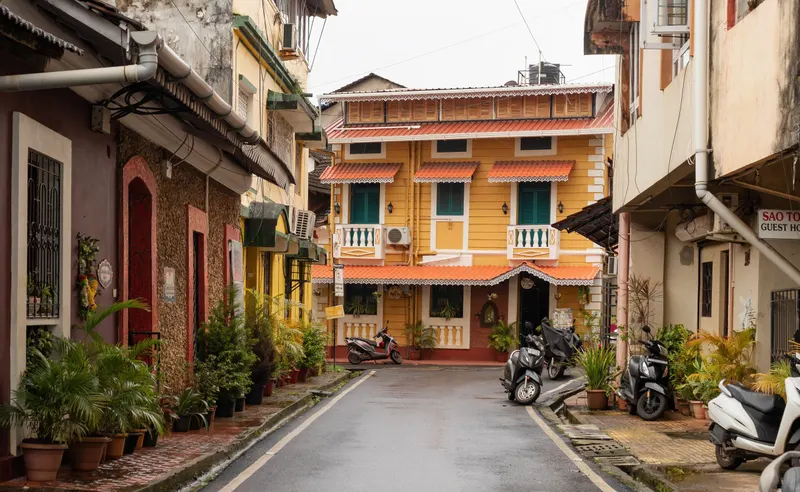
mixedPanaji Latin-quarter lanes hold painted houses, chapels, galleries, bakeries, and guesthouses close to the Mandovi River and 18th June Road.
Show 7 more sights
4Mandovi River sunset cruise
Evening boats leave from the Panaji side of the Mandovi and combine river views, bridges, music, and a quick orientation to the capital.
5Palolem and Agonda beaches
South Goa beaches around Canacona are calmer than the northern belt, with huts, kayaking, cafes, and longer stays on wider sand.
6Dudhsagar Falls
The waterfall in the Western Ghats is Goa classic inland day trip, strongest after monsoon rain and dependent on forest-access rules.
Wikipedia7Calangute, Baga, and Anjuna beaches
North Goa beach towns carry the busiest market, water-sports, restaurant, and nightlife scene, especially around Calangute, Baga, and Anjuna.
8Miramar Beach
The city beach sits just west of Panaji where the Mandovi meets the Arabian Sea, useful for short sunset walks rather than a full beach day.
9Dona Paula
The headland south of Panaji has sea views toward Mormugao and a long association with film shoots and short sightseeing drives.
Wikipedia10Dr. Salim Ali Bird Sanctuary
The Chorao island sanctuary across the Mandovi from Ribandar has mangroves, birds, ferries, and a quieter wetland counterpoint to beach towns.
Wikipedia
Neighborhoods
 1
Panaji and Fontainhas
The capital is administrative and walkable, with Latin-quarter lanes, the Mandovi promenade, galleries, cafes, casinos, and bus links.
 2
Old Goa
Old Goa is church-and-heritage focused, with the basilica, Se Cathedral, convent ruins, museums, and a quieter inland rhythm.
 3
Calangute, Baga, and Candolim
The North Goa beach belt is crowded and commercial, with beach shacks, clubs, water sports, hotels, markets, and heavy traffic.
 4
Anjuna, Vagator, and Assagao
This northern pocket is more alternative and cafe-heavy, with markets, cliffs, guesthouses, nightlife, and inland villages.
 5
Margao and Colva
South Goa commercial life centers on Margao, with Colva beach, markets, churches, rail access, and a less party-driven base.
 6
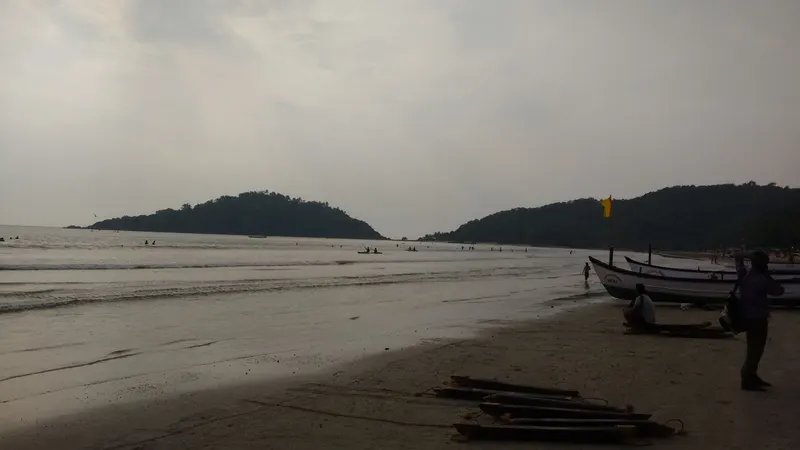
Palolem and Agonda
The far-south coast is slower and beach-focused, with huts, kayaking, yoga, seafood, and long transfer times from Panaji.
Getting around
Kadamba buses, taxis, motorcycle taxis, scooters, ferries, and hired cars handle Goa, but beach-to-beach travel is slow and ride pricing should be fixed before departure. Base in Panaji for Old Goa and Mandovi sights, North Goa for nightlife, or South Goa for quieter beach time.
Planning the Western India route?
Add your dates and we'll pace all 2 cities — every place checked for closures, limited hours, and booking needs in July.
Weather by month for the Western India trip
In July, climate averages for Mumbai and Panaji show daytime highs from 29°C / 84°F to 30°C / 86°F, with nights down to about 24°C / 75°F in the coolest of those cities. The rainiest of those cities averages about 27 rainy days. Based on climate averages for Mumbai and Panaji, July is one of the less comfortable months by weather.
The most comfortable months for this route are January, February and December, based on average daytime temperatures and rainfall in Mumbai and Panaji. July 2027 is a lower-comfort month.
Common questions about the Western India trip
- When is the best time to do the Western India trip?
- The most comfortable months across Mumbai and Panaji are January, February and December, based on average daytime temperatures and rainfall for those cities. July is one of the less comfortable months by weather — see the city climate sections below for the averages in July 2027.
- How many days do you need for the Western India trip?
- A comfortable Western India trip runs about 6–8 days, allowing roughly Mumbai 3, Panaji 3 nights plus travel between stops. Add a day if you want a slower pace or extra day trips.
- What's the route for the Western India trip?
- The classic order is Mumbai & Goa. The detailed month sections below cover Mumbai and Panaji.
Ready to plan the Western India trip?
Turn this route into a day-by-day plan for July 2027, every stop checked for closures and booking needs on your exact dates.