Things to do in Hamburg
Top things to do in Hamburg include Speicherstadt, Elbphilharmonie, Altstadt, Neustadt, and HafenCity. Plan each day around one neighborhood to avoid backtracking, then add your dates to check opening hours and booking needs.
First visit? Start with these — and plan each day around one neighborhood:
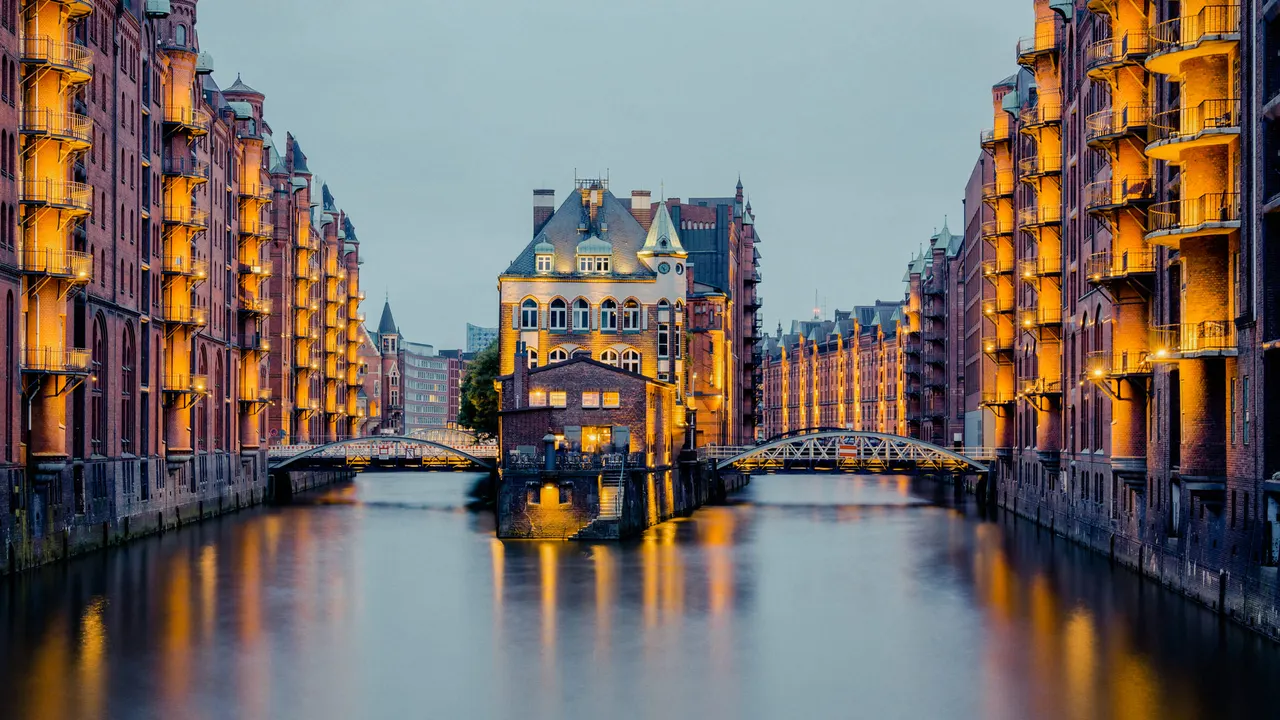
- SpeicherstadtThe UNESCO warehouse district was built from the 1880s with red-brick blocks, canals, bridges, winches, and former coffee and spice storage.
- Elbphilharmonie★ 4.6 · 96.9k reviewsHerzog & de Meuron set the 2017 concert hall above the former Kaispeicher A warehouse at the western edge of HafenCity.
- Altstadt, Neustadt, and HafenCityThe central water district has Rathaus, canals, Speicherstadt, Elbphilharmonie, Deichstrasse, shopping streets, and new HafenCity blocks.
- Getting aroundHVV runs U-Bahn, S-Bahn, buses, harbor ferries, and regional trains on one ticket system.
By TripSapien · Updated November 3, 2026
About Hamburg
City overview
Hamburg sits on the Elbe and Alster, where Speicherstadt warehouses, HafenCity towers, St Pauli nightlife, Altona river terraces, Eppendorf streets, and the port define a Hanseatic city built around water and trade. The city feels maritime without being on the open sea, with ferries, canals, brick warehouses, concert halls, parks, and market mornings doing much of the work.
Food & drink
Hamburg food is harbor-city cooking: fischbroetchen are filled fish rolls often made with herring, matjes, or fried fish, Franzbroetchen is the local cinnamon-sugar pastry, Labskaus mixes corned beef, potato, beet, egg, and pickles, and pannfisch pairs fried fish with mustard sauce. Fischmarkt, Speicherstadt roasteries, Sternschanze, Portuguese Quarter, Lange Reihe, and Ottensen make the strongest route for seafood, pastries, and coffee.
What Hamburg is best for
Hamburg is best for architecture, food, nightlife, art, and history.
- How long to stay
- A weekend to a week
- Typical budget
- Mid-range
Top sights
Ranked using weather, setting, ratings, and review volume.
- 1Miniatur Wunderland
- 2St Michael's Church
- 3Hamburg Rathaus
- 4Landungsbruecken and the harbor
- 5Old Elbe Tunnel
- 6Reeperbahn and St Pauli
- 7Planten un Blomen
- 8International Maritime Museum
 1
Miniatur Wunderland
4.8★ · 115,554The model railway museum fills Speicherstadt rooms with detailed rail networks, airports, cities, ships, mountains, lighting cycles, and moving scenes. It is one of Hamburg's busiest indoor attractions.
WikipediaTimed tickets are strongly advised for weekends, holidays, and rainy days.
 2
St Michael's Church
4.7★ · 25,811The baroque Lutheran church, known as Michel, was rebuilt after fires and war damage and remains Hamburg's skyline church. The tower viewpoint looks across Neustadt, the port, and the Alster.
Wikipedia 3
Hamburg Rathaus
4.7★ · 8,175The neo-Renaissance city hall opened in 1897 and fronts Rathausmarkt beside the Binnenalster. Its courtyards, senate rooms, and ornate facade show the wealth of the Free and Hanseatic City.
Wikipedia
Show 5 more sights
4Landungsbruecken and the harbor
The floating piers at St Pauli connect harbor cruises, ferry 62, the Old Elbe Tunnel, fish restaurants, and views of cranes and container terminals. U3 and S-Bahn trains stop directly above the waterfront.
5Old Elbe Tunnel
The 1911 tunnel carries pedestrians, cyclists, and limited vehicles under the Elbe from Landungsbruecken to Steinwerder. Its tiled tubes and lift shafts give a practical view back to the skyline.
Wikipedia6Reeperbahn and St Pauli
The Reeperbahn is St Pauli's nightlife and red-light corridor, tied to music clubs, theatres, Beatles history, football bars, and late food. It sits between Millerntor, Grosse Freiheit, and the harbor slope.
7Planten un Blomen
The central park links former ramparts, gardens, greenhouses, lawns, playgrounds, and summer water-light concerts. It runs from Dammtor toward St Pauli and the Messe grounds.
Wikipedia8International Maritime Museum
The museum occupies the Kaispeicher B warehouse and covers ship models, naval history, navigation, trade, uniforms, and maritime art. It is an easy HafenCity stop near Speicherstadt.
Neighborhoods
 1
St Pauli and Reeperbahn
St Pauli is loud and late, with Reeperbahn clubs, Millerntor Stadium, Beatles-Platz, Grosse Freiheit, theaters, and harbor slopes.
 2
Altona and Ottensen
Altona and Ottensen feel local and river-facing, with cafes, Altonaer Balkon, fish market access, independent shops, and Danish-era history.
 3
Sternschanze and Karolinenviertel
Sternschanze and Karoviertel are bar-and-boutique dense, with Schulterblatt, Rote Flora, street food, small shops, and Messe access.
Show 26 more neighborhoods
- 4St Georg and Lange Reihe
St Georg sits by Hauptbahnhof and the Alster, with Lange Reihe restaurants, hotels, galleries, churches, and a mixed nightlife scene.
- 5Eppendorf and Winterhude
Eppendorf and Winterhude are leafy and northern, with canals, townhouses, Stadtpark, cafes, boutiques, and Alster-side walking routes.
- 6Altona
Historically a significant harbor town under Danish administration from 1640 to 1864, with a major Jewish community developing there starting in 1611. The Hamburg-Altona–Kiel railway opened in 1844.
- 7Altona-Altstadt
Hamburg's old western city, rebuilt after wartime destruction along the Elbe above the fish market. The Sunday Fischmarkt and dock infrastructure keep the waterfront rough-edged, while the Altona Museum, Jewish cemetery, and cafés around Große Bergstraße recall an independent port town absorbed by Hamburg only in 1938.
- 8Bahrenfeld
A mix of residential areas and industrial sites, with the Altona-Blankeneser Railway running through it. The Altonaer Volkspark is nearby, providing green space for relaxation.
- 9Barmbek
Barmbek-Süd was developed as a workers' quarter in the 1910s and 1920s, rebuilt in the 1950s with brick architecture after World War II. It contains the Shopping-Center Hamburger Meile and the Alster-City office area.
- 10Barmbek-Nord
Barmbek-Nord in Hamburg offers the Kulturflohmarkt Museum der Arbeit and the Buchhandlung Hoffmann bookstore. It also has flea markets and bookstore boutiques.
- 11Barmbek-Sued
Developed as a workers' quarter in the 1910s and 1920s, rebuilt in the 1950s with brick architecture after World War II. It contains the Shopping-Center Hamburger Meile, which opened in 1970.
- 12Bergedorf
- 13Billstedt
- 14Blankenese
- 15Borgfelde
- 16Bramfeld
- 17Curslack
- 18Dulsberg
- 19Ehestorf
Home to the Freilichtmuseum am Kiekeberg, an open-air museum that shows life from 1600 to 1950 with historic buildings, animals, and crafts.
- 20Eidelstedt
Eidelstedt features a town center at Eidelstedter Platz with a shopping center and is characterized by residential developments from the 1950s to 1970s. The area is fairly green and offers a quiet atmosphere away from busy roads.
- 21Eilbek
Eilbek has local stops such as café brooks for breakfast and vegan brunch, Jana Juwelier for jewelry, and H1 Club & Lounge for nightlife with hip-hop music. Dubai Juwelier in Hamburg is another option for jewelry shopping.
- 22Eimsbüttel
Eimsbüttel features multi-story old buildings on tree-lined streets and is home to the University of Hamburg. The area includes parts of Hamburg's former Jewish quarter along Grindelallee.
- 23Eissendorf
Eissendorf features Eißendorfer Straße, which connects the center of Harburg to the outskirts, and has a mix of historical buildings and residential areas. The Göhlbachtal park offers green space, while the Eißendorfer Forst provides a natural escape nearby.
- 24Eppendorf
A mix of residential areas and local shops, with a lively atmosphere and several parks. The area is known for its historic charm, with streets like Eppendorfer Weg offering various dining options and boutiques.
- 25Farmsen
Farmsen has local stops such as Einkaufstreffpunkt Farmsen, Rahlstedt Center, and Antiques Günter Rusch. The area features a basic indoor mall, clothing and specialty stores, and a market for antiques.
- 26HafenCity
Hamburg's rebuilt harbor quarter, where a landmark concert hall rises above the brick warehouses of the Speicherstadt, a UNESCO World Heritage Site alongside the Kontorhausviertel.
- 27Hamm
Once a garden suburb for traders and merchants, but it was mostly flattened during the Second World War. It contains several churches, including the Church of the Trinity, Dankeskirche, Wichernkirche, Pauluskirche, and Simeonkirche.
- 28Hammerbrook
After the Hamburg fire of 1842, Hammerbrook developed as a working-class district and was heavily bombed in 1943, leading to its later transformation into an office location. The area is now seeing new apartment developments, with Deichtorplatz marking its western edge.
- 29Harburg
A borough on the southern banks of the Elbe, covering parts of the port of Hamburg as well as residential and rural areas. It contains restaurants like Delhi Heights and Panthera Rodizio, along with The Old Dubliner.
Day trips
65km / 40-50min by regional train from Hamburg Hauptbahnhof
Luebeck
The Hanseatic old town has Holstentor, brick churches, Buddenbrookhaus, canals, and marzipan shops.
55km / 30-40min by regional train from Hamburg Hauptbahnhof
Lueneburg
The salt-trade town has stepped gables, red-brick lanes, the old harbor crane, breweries, and quick access to heathland.
120km / about 55min by Intercity train from Hamburg Hauptbahnhof
Bremen
Market square, Roland statue, Schnoor lanes, Böttcherstrasse, and Weser river walks make a full rail day.
Getting around
HVV runs U-Bahn, S-Bahn, buses, harbor ferries, and regional trains on one ticket system. Use U3 for the center-harbor-St Pauli loop, S-Bahn for airport and Altona, ferries for Elbe views, and regional trains for Luebeck and Lueneburg.
Planning a Hamburg trip?
Add your dates and we'll check every place for closures, limited hours, and booking needs before you go.
Things to do in Hamburg by month
Pick a month for weather, any sourced events, holidays or observances, and seasonal timing. August, July and June have the most comfortable weather (tagged below).
Common questions about Hamburg
- Which neighborhoods should I explore in Hamburg?
- Altstadt, Neustadt, and HafenCity, St Pauli and Reeperbahn, Altona and Ottensen are useful starting points. Plan each day around one or two neighboring areas to avoid unnecessary backtracking.
- When is the best time to visit Hamburg?
- August, July, June balance comfortable temperatures with fewer rainy days in Hamburg.
- How many days do you need in Hamburg?
- a weekend to a week gives you time for architecture, food, and nightlife in Hamburg. Choose your month to see date-specific details.
- What is Hamburg known for?
- Hamburg is best for architecture, food, nightlife, art, and history. For matched places, TripSapien checks available hours, closure signals, and booking links.
Ready to plan Hamburg?
Turn everything above into a day-by-day Hamburg plan, with every place checked for closures and booking needs on your dates.