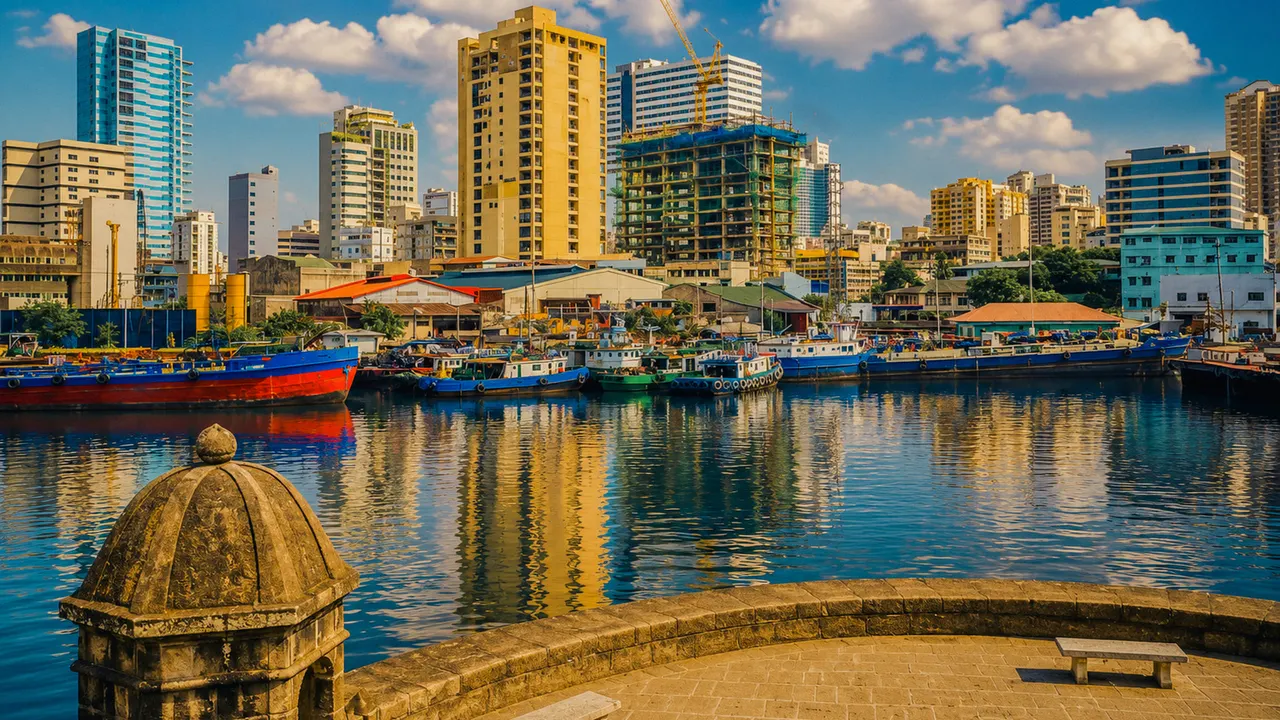
Manila events & things to do in July 2027
Start with San Agustín Church, Casa Manila, plus National Museum Complex. July in Manila averages 31°C / 87°F highs, 26°C / 79°F nights, and about 30 rainy days.
Expect 31°C/87°F days and about 30 rainy ones in July. Start with these:
- San Agustín ChurchBuilt 1587–1606 and the only Intramuros church to survive the 1945 battle — the oldest stone church in the Philippines and a UNESCO World Heritage…
- Casa ManilaA reconstructed 19th-century merchant's mansion across from San Agustín — the full ilustrado interior of hardwood floors, capiz-shell windows, and…
By TripSapien · Updated October 29, 2026
Manila in July 2027
Weather
TempTemperature
87°F / 79°F
30.7°C / 26.1°C
RainPrecipitation
30d
12.4in · 315.4mm
LightDaylight
13h
Sea
85.8°F
29.9°C
Deep wet season — the second-wettest month; museums, malls, and food crawls carry the itinerary.
Events & festivals
Event calendar- Jul 9 – Jul 11
Philippine International Comics Festival (Komiket)
The Philippine International Comics Festival gathers more than 200 creators for three days of indie komiks, artist alleys, and panels — 2026's Country of Highlight was Japan.
Planning lead · projected date · Source: festival calendar
About Manila
City overview
Manila is the layered, chaotic heart of a 24-million-person megacity — a Spanish walled capital founded in 1571, flattened in the 1945 Battle of Manila, and rebuilt into a metro of sixteen cities where Intramuros' stone churches, the world's oldest Chinatown, and the glass towers of Makati and BGC are all 'Manila' to a visitor. Come for the history and the food, stay patient with the traffic, and finish every day where locals do: watching the sun drop into Manila Bay.
Food & drink
Filipino food is built for sharing: adobo (the soy-vinegar braise), sinigang's sour tamarind broth, crackling lechon, and silog breakfasts of garlic rice and egg. Manila adds the Binondo Chinatown canon — fresh lumpia, pancit, dumpling houses — and Poblacion's new-guard kitchens reworking it all. Finish with halo-halo, the shaved-ice everything-dessert. Street-food courage earns isaw (grilled chicken skewers) and balut; and yes, Jollibee is a legitimate cultural institution — order the Chickenjoy once.
Top sights
- 1
National Museum Complex
indoorThree free national museums around Rizal Park — Fine Arts (Juan Luna's monumental Spoliarium), Anthropology, and Natural History with its DNA-helix 'Tree of Life' atrium.
Wikipedia - 2
Ayala Museum
indoorMakati's private museum of Philippine history and gold — the sixty-diorama history walk and the pre-colonial gold collection are the clearest telling of the national story anywhere.
Wikipedia - 3
Manila Ocean Park
indoorThe bayside oceanarium behind the Quirino Grandstand — a 25-metre walk-through shark-and-ray tunnel, penguins, and evening shows, an easy add-on to a Rizal Park day.
Wikipedia
Show 5 more sights
4Las Piñas Bamboo Organ
St. Joseph Parish Church's one-of-a-kind 1824 pipe organ — 902 of its 1,031 pipes are bamboo, built by Father Diego Cera and still played; the small museum tells the restoration story.
Wikipedia5Intramuros & Fort Santiago
The 1571 Spanish walled city — Fort Santiago at the river mouth holds the shrine and cell of national hero José Rizal, and the ramparts walk gives the best sense of what colonial Manila was. Kalesa horse-carriages and bamboo-bike tours loop the walls.
6Rizal Park (Luneta)
The 58-hectare national park where Rizal was executed in 1896 — his monument under permanent honor guard, gardens, and the open-air grandstand, between Intramuros and the bay.
7Binondo
The world's oldest Chinatown, founded 1594 — Binondo Church's pagoda-influenced tower, Ongpin Street's gold shops and apothecaries, and the food crawl that is the real reason everyone comes.
Wikipedia8Bonifacio High Street (BGC)
The open-air spine of Bonifacio Global City — three pedestrian blocks of shops, restaurants, and public art in the metro's most walkable district, liveliest from late afternoon.
Neighborhoods
 1
Intramuros
The walled colonial quarter — cobbles, churches, university campuses, and golden-hour rampart walks. Touristy by day, atmospheric and quiet by evening.
 2
Binondo
Chinatown at full commercial boil — gold dealers, herbal shops, lumpia and dumpling institutions, best worked as a progressive lunch crawl off Ongpin Street.
 3
Ermita & Malate
The bayfront civic-and-hotel belt — Rizal Park, the National Museums, Roxas Boulevard sunsets, and Malate's old entertainment strip behind them.
Show 27 more neighborhoods
- 4Makati — CBD & Poblacion
Two cities in one: the Ayala Center's polished malls and towers, and Poblacion — the former red-light barrio turned the metro's best bar-hopping grid of speakeasies, rooftops, and hole-in-the-wall kitchens.
- 5BGC (Bonifacio Global City)
The planned district on a former army base — clean grid, street art, High Street retail, rooftop bars. The un-Manila Manila, and where the metro goes to breathe.
- 6Quezon City — Maginhawa & Diliman
The university north — UP Diliman's campus sprawl and Maginhawa Street's student food strip of third-wave cafés and budget kitchens.
- 7Bel-Air One
Bel-Air One in Manila features Helm and offers Spanish restaurants.
- 8Bel-Air Two
- 9Concepcion Uno
A residential area with the Immaculate Conception Parish Church as a central landmark.
- 10Divisoria
Known for its mass market shops selling low-priced goods and diverse manufacturing activities. The Tutuban Center and a central night market draw visitors looking for bargains and local products.
- 11Don Galo
- 12Ebaiu
- 13Ermita
A center for finance, education, culture, and commerce in Manila, with a mix of business and entertainment activities. It features landmarks like the Manila Bay and is known for its nightlife and dining options along streets like Pedro Gil.
- 14Fort Bonifacio
Home to the Philippines' top science museum, The Mind Museum, and the Manila American Cemetery and Memorial, the largest American World War II cemetery globally. This area also features shopping malls and the Market!
- 15Grace Park East
Grace Park East in Manila features Caloocan City People's Park, a city park for visitors.
- 16Jesus de La Pena
- 17Malate
Known for its lively nightlife, with bars and clubs lining the streets, especially along Adriatico Street. The area also features the historic Malate Church and is close to the Manila Bay promenade for sunset views.
- 18Maypajo
San Roque Cathedral. The area is primarily residential.
- 19Murphy
- 20Obrero
- 21Paco
Paco Park is Manila's historic cemetery, with other historic cemeteries also found in the area.
- 22Parián
Originally built as a market and became a Chinese ghetto during Spanish rule. The area is historically significant and features the Puerta del Parián, which connects it to Intramuros.
- 23Plainview
- 24Port Area
- 25Quiapo
Known for its lively market, where there is everything from fresh produce to traditional Filipino street food like fish balls and halo-halo. The Quiapo Church, famous for its Black Nazarene statue, attracts thousands of devotees each January during the Feast of the Black Nazarene.
- 26Sampaloc
Sampaloc has local stops such as the Dangwa Flower Market and Nuestra Señora del Perpetuo Socorro Parish Church. Notable landmarks include the Miguel de Benavides Monument.
- 27San Miguel
- 28San Nicolas
- 29San Rafael
San Rafael in Manila is home to the SM Mall of Asia and the SM Moa Eye, an observation deck.
- 30Santa Ana
Day trips
~60km south / ~2h by bus or car (longer back on Sunday evenings)
Tagaytay & Taal Volcano
The ridge town above Taal Lake, with the volcano island in its crater lake below — ridge-restaurant lunches with the view, bulalo soup, and cooler air. Since the 2020 eruption, viewing is from the ridge and boat tours; the island summit stays closed.
~100km southeast in Laguna / ~2.5h by car
Pagsanjan Falls
The canoe run through a jungle gorge — expert boatmen pole and haul you up fourteen rapids to the falls, then shoot you back down. Start early; afternoon queues are long.
Manila Bay mouth — pre-booked tour required
Corregidor Island
The fortress island where the WWII Pacific campaign turned — gun batteries, the Malinta Tunnel complex, and the ruins of the Mile-Long Barracks. Regular public ferries have been suspended in recent years; book an organized tour, don't turn up at a pier.
Getting around
Rail beats road at rush hour: LRT-1 runs the tourist spine (Rizal Park, Ermita, Binondo edges), LRT-2 crosses east, MRT-3 rides EDSA past Makati — all cheap and all crushed 07:00-10:00 and 17:00-20:00. Grab is the default for everything else (agree nothing, it's app-priced); jeepneys are the iconic ₱-cheap local layer once you can read the route boards. Traffic is the one true constant — never schedule two far-apart things back-to-back, and treat EDSA at rush hour as a hard no.
Planning a Manila trip?
Add your dates and we'll check every place for closures, limited hours, and booking needs in July.
Common questions about Manila in July
- Best rainy-day things to do in Manila in July
July averages 30 rainy days in Manila, so keep these indoor stops as realistic backups.
- San Agustín Church — Built 1587–1606 and the only Intramuros church to survive the 1945 battle — the oldest stone church in the Philippines and a UNESCO World Heritage Site, with a trompe-l'oeil ceiling and a monastery museum.
- Casa Manila — A reconstructed 19th-century merchant's mansion across from San Agustín — the full ilustrado interior of hardwood floors, capiz-shell windows, and courtyard, room by room.
- National Museum Complex — Three free national museums around Rizal Park — Fine Arts (Juan Luna's monumental Spoliarium), Anthropology, and Natural History with its DNA-helix 'Tree of Life' atrium.
- Ayala Museum — Makati's private museum of Philippine history and gold — the sixty-diorama history walk and the pre-colonial gold collection are the clearest telling of the national story anywhere.
- Manila Ocean Park — The bayside oceanarium behind the Quirino Grandstand — a 25-metre walk-through shark-and-ray tunnel, penguins, and evening shows, an easy add-on to a Rizal Park day.
- What to pack for Manila in July
Pack for July's weather, not a generic Manila checklist.
- Light, breathable daytime clothes for average highs around 31°C / 87°F.
- Breathable evening clothes because nights stay near 26°C / 79°F.
- Compact rain gear and shoes that handle wet pavement across about 30 rainy days.
- How many days do you need in Manila
- 4 days covers the main Manila highlights at a realistic pace. Add 3 extra days if you want the listed day trips.
Ready to plan Manila?
You've seen what's on — now get a day-by-day Manila plan for July 2027, every place checked for your exact dates.