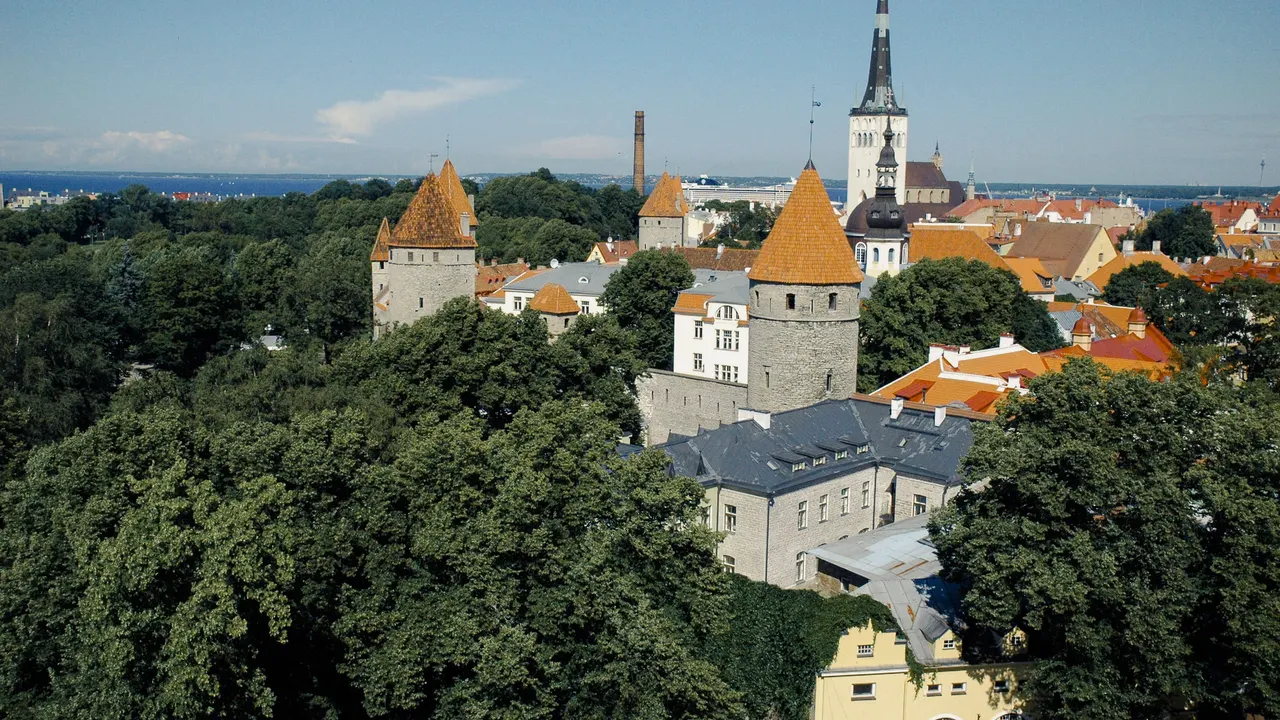
Baltic Capitals itinerary — July 2027
For the Baltic Capitals trip (Tallinn, Riga & Vilnius), July 2027 is one of the most comfortable months by weather. Across Tallinn, Riga and Vilnius, daytime highs run from about 22°C / 72°F to 24°C / 75°F. Plan around 6–8 days for the full Tallinn, Riga & Vilnius loop.
In this order — about 6–8 days:
- Tallinn2 nightsEstonia
- Riga2 nightsLatvia
- Vilnius2 nightsLithuania
- Route noteReserve the longest intercity leg first and keep transfer days free of timed sights.
By TripSapien · Updated October 30, 2026
Tallinn
Tallinn in July
TempTemperature
72°F / 56°F
22.2°C / 13.1°C
RainPrecipitation
9d
3.1in · 80mm
LightDaylight
17.6h
Sea
63°F
17.2°C
July is the warmest month, with beach and festival crowds making Pirita and Telliskivi busier than in spring.
City overview
Tallinn sits on the Gulf of Finland, where the UNESCO Vanalinn rises above ferry terminals, Soviet-era waterfront remnants, and newer glass towers in Kesklinn. First-time visitors usually split time between Toompea and the Lower Town, Kalamaja and Telliskivi north of the railway, and Kadriorg or Pirita along the eastern coast.
Food & drink
Tallinn food is Baltic and Nordic-Estonian: black rye bread anchors meals, kiluvoileib layers sprats on bread with egg or herbs, mulgipuder mixes potato and barley, kama blends roasted grains into yogurt or kefir, and verivorst is blood sausage for colder months. Balti Jaama Turg beside the railway station, Old Town cellars around Raekoja plats, and Telliskivi restaurants make it easy to compare smoked fish, kohuke, traditional plates, and newer Nordic-Baltic cooking.
Events & festivals
- Dates unconfirmed
First held in 1869, takes place every five years.
Planning lead · dates set closer in · Source: Month Signals
- Jul 29
- Jul 30 – Aug 1
The Tallinn Rock Festival is a high-energy music event held in Tallinn that celebrates rock and alternative music with a mix of local Baltic talent and international acts.
Planning lead · projected date · Source: TripSapien festival dataset
Top sights
Ranked for July suitability using weather, setting, ratings, and review volume.
- 1Tallinn Town Hall and Town Hall Square
- 2Viru Gate and City Wall
- 3Toompea Castle
- 4Seaplane Harbour
- 5Kumu Art Museum
- 6Alexander Nevsky Cathedral
- 7St Olaf Church
- 8Kiek in de Kök and the Bastion Passages
- 9Kadriorg Palace
- 10Telliskivi Creative City
 1
Tallinn Town Hall and Town Hall Square
4.7★ · 11,255outdoorTallinn Town Hall is the only surviving Gothic town hall in Northern Europe, with its present form from the early 15th century. Raekoja plats remains the Lower Town market square and the winter Christmas-market anchor.
 2
Viru Gate and City Wall
4.7★ · 12,527outdoorOpen dailyThe paired Viru Gate towers mark the eastern entrance into the Old Town from modern shopping streets. Wall sections, towers, and lanes nearby make the medieval city plan legible in a short walk.
 3
Toompea Castle
4.6★ · 911outdoorToompea Castle grew from the medieval fortress on the limestone hill and now holds the Riigikogu, Estonia parliament, behind its pink Baroque facade. It sits above the Lower Town, a few minutes from Alexander Nevsky Cathedral and the Patkuli viewpoint.
Wikipedia
Show 7 more sights
4Seaplane Harbour
The Lennusadam museum occupies concrete seaplane hangars built before the First World War. Inside are the submarine Lembit, maritime aircraft, icebreaker stories, and harbor exhibits north of Kalamaja.
Wikipedia5Kumu Art Museum
Kumu opened in 2006 as the main building of the Art Museum of Estonia, cut into the limestone edge of Kadriorg Park. The galleries cover Estonian art from 18th-century portraits to Soviet and contemporary work.
Wikipedia6Alexander Nevsky Cathedral
The Russian Orthodox cathedral opened on Toompea in 1900 with onion domes, mosaics, and a heavy political presence from the imperial period. It faces the parliament building across Lossi plats.
7St Olaf Church
St Olaf Church is a medieval landmark whose spire once made it one of the tallest buildings in the Baltic region. The church stands near the northern edge of the Old Town wall, close to the Fat Margaret tower.
8Kiek in de Kök and the Bastion Passages
The 15th-century artillery tower now links city-wall history with underground bastion passages below Toompea. It is a short uphill walk from Freedom Square and Harju Gate.
9Kadriorg Palace
Peter the Great ordered the Baroque palace and formal park in 1718 for Catherine I. The palace now holds foreign art collections and sits beside Kumu, the presidential palace, and Kadriorg ponds.
Wikipedia10Telliskivi Creative City
The former industrial blocks beside Balti Jaam now hold studios, restaurants, Fotografiska Tallinn, street art, and weekend markets. It is the easiest way to connect Kalamaja with the Old Town on foot.
Wikipedia
Neighborhoods
 1
Vanalinn and Lower Town
The Lower Town is compact and medieval, with Raekoja plats, Viru Gate, St Olaf Church, guild houses, and cobbled lanes inside the old walls.
 2
Toompea
Toompea feels ceremonial and elevated, with the castle, Alexander Nevsky Cathedral, St Mary Cathedral, and Patkuli and Kohtuotsa viewpoints above the red roofs.
 3
Rotermann and Kesklinn
Rotermann and central Kesklinn mix brick warehouses, malls, hotels, offices, Viru Keskus, and the practical route between Old Town and the port.
 4
Kalamaja and Telliskivi
Kalamaja is the wooden-house and creative district, anchored by Telliskivi, Balti Jaam Market, Seaplane Harbour, and Patarei prison walls.
 5
Kadriorg
Kadriorg is leafy and museum-focused, with Kadriorg Palace, Kumu, the presidential palace, Japanese Garden, and tram links back to the center.
 6
Pirita
Pirita is the seaside and forest edge, with Pirita Beach, the convent ruins, the TV Tower, botanical gardens, and yachting history from the 1980 Olympics.
Getting around
Tallinn old town is best on foot, while trams, trolleybuses, buses, and the Uhiskaart fare card cover Kadriorg, Pirita, Kalamaja, and the airport. Tram 4 links the airport with the center, and ferries leave from terminals just east of the Old Town.
Riga
Riga in July
TempTemperature
74°F / 56°F
23.6°C / 13.2°C
RainPrecipitation
9d
3.1in · 80mm
LightDaylight
17h
Sea
68°F
20°C
July is warmest, with Jurmala beaches and Rīga festival nights busy between summer showers.
City overview
Rīga is a Daugava River capital where UNESCO-listed Vecriga, Centrs boulevards, and one of Europe densest Art Nouveau districts sit between the river bridges and the city canal. Travelers usually read the city through the Old Town around Town Hall Square, Alberta iela and Elizabetes iela in Centrs, and the left-bank wooden-house districts around Agenskalns and Kalnciema.
Food & drink
Rīga food is hearty and Baltic, with grey peas and bacon, rye bread, piragi, smoked sprats, cold beet soup, sklandrausis carrot-potato tart, and black balsam in bar cocktails. Rīga Central Market, Lido cafeterias, Āgenskalns Market, and Old Town restaurants cover the range from cheap dairy-and-fish halls to polished modern Latvian menus.
Events & festivals
- Dates unconfirmed
Latvian Song and Dance Festival
One of the key cultural events in Latvia, which started in 1873 as a singing festival.
Planning lead · dates set closer in · Source: Month Signals
- Dates unconfirmed
Planning lead · dates set closer in · Source: Month Signals
Top sights
Ranked for July suitability using weather, setting, ratings, and review volume.
- 1Freedom Monument
- 2Kalnciema Quarter
- 3Rīga Central Market
- 4Latvian National Museum of Art
- 5Latvian National Opera
- 6House of the Blackheads
- 7Rīga Cathedral
- 8St Peter Church
- 9Museum of the Occupation of Latvia
- 10Alberta iela Art Nouveau district
 1
Freedom Monument
4.7★ · 12,500outdoorOpen dailyKarlis Zale completed the 42-metre Freedom Monument in 1935 as a symbol of Latvian independence. It stands where the Old Town opens into the canal parks and Brivibas bulvaris.
Wikipedia 2
Kalnciema Quarter
4.5★ · 4,391outdoorClosed SunKalnciema Quarter preserves wooden architecture on the left bank and hosts markets, concerts, and design events. It shows the Pardaugava side of Rīga beyond the Old Town and Art Nouveau core.
 3
Rīga Central Market
4.4★ · 56,217outdoorOpen dailyThe market opened in 1930 inside and around five former Zeppelin hangars near the railway and bus stations. Fish, dairy, pickles, bread, flowers, and seasonal berries make it the most useful food stop in the city.
Wikipedia
Show 7 more sights
4Latvian National Museum of Art
The museum occupies a 1905 building by Wilhelm Neumann and reopened after a major restoration in 2016. Its collection is the clearest way to connect Rīga art, national identity, and the Centrs boulevards.
Wikipedia5Latvian National Opera
The white opera house opened in 1863 as the German Theatre and now anchors the canal edge near the Old Town. It pairs well with the Freedom Monument and Bastejkalns park walks.
Wikipedia6House of the Blackheads
The merchant guild house on Town Hall Square began in the 14th century and was rebuilt in the late 1990s after wartime destruction. Its stepped facade stands beside the modern Town Hall and a short walk from Rīga Cathedral.
7Rīga Cathedral
Bishop Albert founded Rīga Cathedral in 1211, and later Gothic, Romanesque, Baroque, and 19th-century work shaped its present form. The cathedral square anchors the quieter western side of Vecriga.
Wikipedia8St Peter Church
St Peter Church is a medieval Old Town landmark with a rebuilt tower and an observation platform over the Daugava and red roofs. It is a few blocks from Town Hall Square and Livu Square.
9Museum of the Occupation of Latvia
The museum on Town Hall Square documents Soviet and Nazi occupation periods from 1940 through restored independence. It gives necessary context before reading the city only as pretty Hanseatic streets.
Wikipedia10Alberta iela Art Nouveau district
Alberta iela and nearby Elizabetes iela hold ornate early-20th-century facades with masks, flowers, sphinxes, and sculpted doorways. The streets sit north of the Esplanade, about 15 minutes on foot from the Freedom Monument.
Neighborhoods
 1
Vecriga
The UNESCO Old Town is compact and theatrical, with Town Hall Square, Rīga Cathedral, St Peter Church, Livu Square, city-wall remnants, bars, and hotel lanes packed together.
 2
Centrs and Art Nouveau district
Centrs feels grander and more residential, with Alberta iela, Elizabetes iela, the National Museum of Art, Esplanade, and embassies north of the canal.
 3
Moscow District and Spikeri
The southeast edge around Central Market and Spikeri has warehouses, market halls, railway infrastructure, Jewish heritage sites, and a rougher post-industrial texture.
 4
Āgenskalns
Agenskalns on the left bank mixes wooden houses, a restored market hall, leafy streets, and local cafes away from the Old Town weekend crowds.
 5
Kalnciema Quarter
Kalnciema is the polished wooden-house pocket for Saturday markets, design stalls, concerts, and food events near the airport road.
 6
Mežaparks
Mezaparks is the green northern district, with villas, Rīga Zoo, lake paths, and the Song Festival grounds connected by tram from the center.
Getting around
Rigas Satiksme runs trams, trolleybuses, buses, and airport bus 22 under one ticket system, with e-talons or mobile tickets replacing cash on board. Vecriga is walkable, while tram lines are more useful for Centrs, Mezaparks, and left-bank market trips.
Vilnius
Vilnius in July
TempTemperature
75°F / 56°F
23.8°C / 13.6°C
RainPrecipitation
10d
3.1in · 80mm
LightDaylight
16.5h
July is warmest and wettest, with thunderstorms interrupting Trakai and Kernave day plans.
City overview
Vilnius is an inland Neris River capital whose large Baroque Old Town climbs from Cathedral Square toward Gediminas Hill and east into Užupis. The first-trip map is Senamiestis for churches and university courtyards, Užupis for the self-declared art republic, and Naujamiestis or the station district for newer food, museums, and nightlife.
Food & drink
Vilnius food centers on cepelinai potato dumplings, saltibarsciai cold beet soup, kepta duona fried bread, kibinai, kugelis, and honey cake. Hales Market by the station, Stikliai Street restaurants, Užupis cafes, and craft-beer bars around Naujamiestis give the best first-pass food map.
Events & festivals
- Jul 10 – Jul 22
Since 2016, this festival has been growing in size and creativity.
Planning lead · projected date · Source: TripSapien festival dataset
Holidays & observances
- Jul 6Statehood DayPublic holiday
Top sights
Ranked for July suitability using weather, setting, ratings, and review volume.
- 1Three Crosses Hill
- 2Vilnius University
- 3Užupis Constitution and Angel
- 4St Anne Church and Bernardine Church
- 5Gediminas Castle Tower
- 6Vilnius Cathedral and Bell Tower
- 7Palace of the Grand Dukes of Lithuania
- 8Gate of Dawn
- 9Museum of Occupations and Freedom Fights
- 10MO Museum
 1
Three Crosses Hill
4.7★ · 5,854outdoorOpen dailyThe white monument stands on a wooded hill above the Vilnia river, with a panorama back to Gediminas Tower and the Old Town. The climb is short but steep from Bernardine Garden.
 2
Vilnius University
4.6★ · 974outdoorClosed Sat/SunFounded in 1579, the university fills a maze of courtyards, arcades, and halls between Pilies Street and the presidential palace. Its ensemble makes the Old Town feel more lived-in than a museum quarter.
Wikipedia 3
Užupis Constitution and Angel
4.6★ · 1,829outdoorOpen dailyUžupis declared itself a playful republic in 1997 and displays its constitution on mirrored plaques near Paupio Street. The Angel of Užupis column marks the neighborhood main square east of the Old Town.
Show 7 more sights
4St Anne Church and Bernardine Church
The late-Gothic brick St Anne Church stands beside the larger Bernardine complex on the edge of Užupis. The pair sits a short walk from Pilies Street and the Vilnia river.
5Gediminas Castle Tower
The brick tower is the surviving symbol of the Upper Castle on the hill tied to Grand Duke Gediminas. It rises above Cathedral Square and gives the clearest view over the Neris, Old Town, and Three Crosses Hill.
6Vilnius Cathedral and Bell Tower
The neoclassical cathedral was rebuilt by Laurynas Gucevicius in the late 18th century on the city main sacred site. The free-standing bell tower and Cathedral Square form the natural start of an Old Town walk.
7Palace of the Grand Dukes of Lithuania
The palace was reconstructed on the Lower Castle site and now explains the Grand Duchy through archaeological foundations, ceremonial rooms, and state history. It stands directly behind Vilnius Cathedral.
Wikipedia8Gate of Dawn
The 16th-century city gate holds the Chapel of Our Lady of the Gate of Dawn, one of Vilnius most important Catholic pilgrimage images. It marks the southern entrance into the Old Town from Aušros Vartų street.
Wikipedia9Museum of Occupations and Freedom Fights
The museum occupies the former KGB headquarters and prison on Gedimino prospektas. Its cells and exhibits cover Soviet repression, resistance, deportations, and independence-era memory.
Wikipedia10MO Museum
Daniel Libeskind designed the private modern-art museum that opened in 2018 near Pylimo Street. It gives Naujamiestis a contemporary counterpoint to Old Town churches and state museums.
Wikipedia
Neighborhoods
 1
Senamiestis
The Old Town is broad and layered, with Cathedral Square, Pilies Street, Vilnius University, Town Hall Square, Gate of Dawn, and dozens of Baroque churches inside a walkable core.
 2
Užupis
Užupis feels small, artistic, and self-aware, with its constitution wall, Angel column, galleries, riverside paths, and views back toward St Anne Church.
 3
Naujamiestis
Naujamiestis is the newer city west and south of the Old Town, with MO Museum, cafes, bars, converted industrial buildings, and bus links near Pylimo Street.
 4
Station District and Naujininkai
The station area mixes Hales Market, rail platforms, hostels, street food, and nightlife venues just south of the Gate of Dawn.
 5
Snipiskes and New City Centre
Snipiskes shows Vilnius contrast, with wooden houses, the Europa mall, Konstitucijos prospektas towers, and the modern business district north of the Neris.
 6
Zverynas
Zverynas is leafy and residential, with wooden villas, embassies, the Neris riverbank, and easy access to Vingis Park.
Getting around
Vilnius has no metro, but trolleybuses, buses, and the Vilniecio kortele or Trafi/JUDU mobile tickets cover the station, airport, Užupis edge, and newer districts. The Old Town is best walked, with taxis useful after late Naujamiestis or Užupis nights.
Planning the Baltic Capitals route?
Add your dates and we'll pace all 3 cities — every place checked for closures, limited hours, and booking needs in July.
Weather by month for the Baltic Capitals trip
In July, climate averages for Tallinn, Riga and Vilnius show daytime highs from 22°C / 72°F to 24°C / 75°F, with nights down to about 13°C / 55°F in the coolest of those cities. The rainiest of those cities averages about 10 rainy days. Based on climate averages for Tallinn, Riga and Vilnius, July is one of the most comfortable months by weather.
The most comfortable months for this route are July, August and June, based on average daytime temperatures and rainfall in Tallinn, Riga and Vilnius. July 2027 is among the highest-comfort months.
Common questions about the Baltic Capitals trip
- When is the best time to do the Baltic Capitals trip?
- The most comfortable months across Tallinn, Riga and Vilnius are July, August and June, based on average daytime temperatures and rainfall for those cities. July is one of the most comfortable months by weather — see the city climate sections below for the averages in July 2027.
- How many days do you need for the Baltic Capitals trip?
- A comfortable Baltic Capitals trip runs about 6–8 days, allowing roughly Tallinn 2, Riga 2, Vilnius 2 nights plus travel between stops. Add a day if you want a slower pace or extra day trips.
- What's the route for the Baltic Capitals trip?
- The classic order is Tallinn, Riga & Vilnius. The detailed month sections below cover Tallinn, Riga and Vilnius.
Ready to plan the Baltic Capitals trip?
Turn this route into a day-by-day plan for July 2027, every stop checked for closures and booking needs on your exact dates.