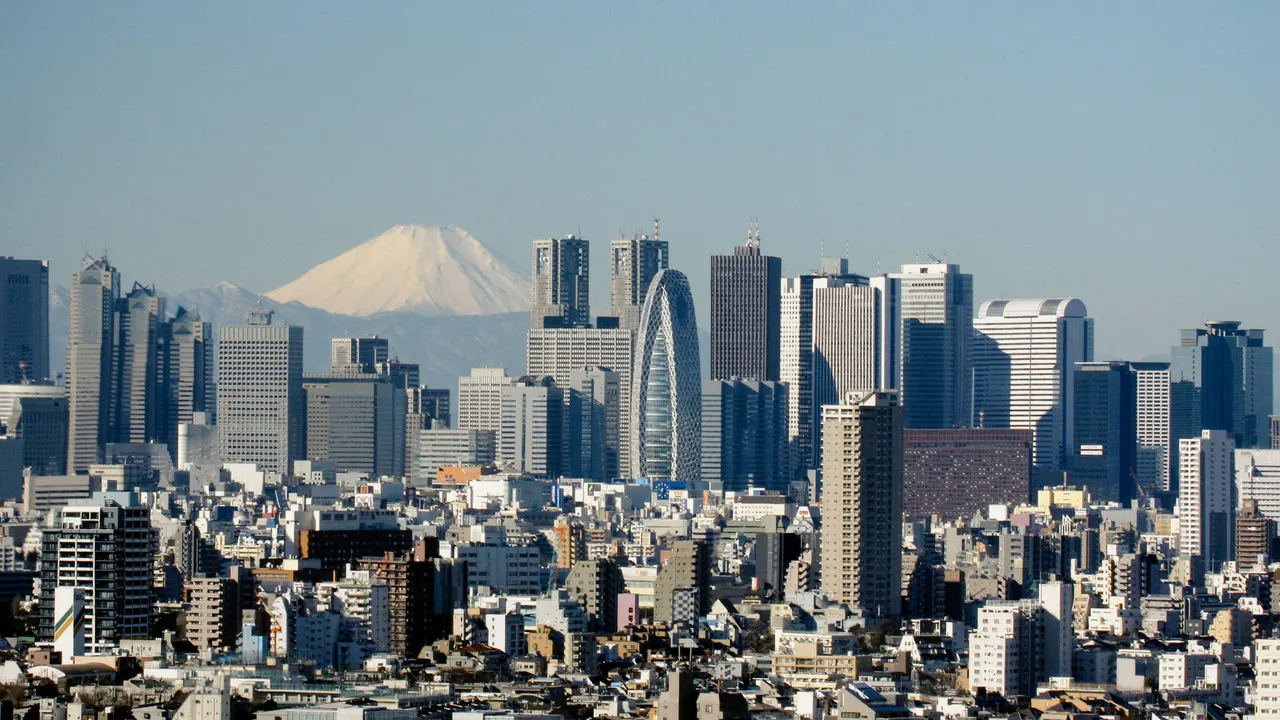
Japan Golden Route itinerary — July 2027
For the Japan Golden Route trip (Tokyo, Kyoto & Osaka), July 2027 is mixed for weather comfort. Across Tokyo, Kyoto and Osaka, daytime highs run from about 30°C / 86°F to 32°C / 90°F. Plan around 9–11 days for the full Tokyo, Kyoto & Osaka loop.
In this order — about 9–11 days:
- Tokyo4 nights
- Kyoto3 nights
- Osaka2 nights
- Route noteReserve the longest intercity leg first and keep transfer days free of timed sights.
By TripSapien · Updated October 30, 2026
Tokyo
Tokyo in July
TempTemperature
85°F / 74°F
29.2°C / 23.3°C
RainPrecipitation
18d
6in · 152.3mm
LightDaylight
14.5h
Sea
80.4°F
26.9°C
July turns hot and humid after the rainy season, so schedule shrine and market walks early and use museums at midday.
City overview
Tokyo is a rail-shaped metropolis where the JR Yamanote loop frames the old shogun centre, while Shinjuku, Shibuya, Ueno, Asakusa, Ginza, and Odaiba pull visitors into separate city-centres. The Sumida River, Tokyo Bay, and the former Edo castle grounds still organize the first-timer map even when the subway makes the city feel borderless.
Food & drink
Tokyo is one of the world's densest restaurant cities, with Edo-mae sushi, tempura, unagi, soba, ramen, tonkatsu, and Tsukishima monjayaki all tied to specific districts. Tsukiji Outer Market is the breakfast anchor, Ginza and Nihonbashi handle high-end sushi counters, Shinjuku and Ebisu cover izakaya nights, and the city has held more Michelin-starred restaurants than any other city in several guide years while still rewarding cheap station-counter meals.
Events & festivals
- Jul 31
Sumida River Fireworks Festival
Planning lead · dates set closer in · Source: TripSapien festival dataset
Holidays & observances
- Jul 19Marine DayPublic holiday
Top sights
Ranked for July suitability using weather, setting, ratings, and review volume.
- 1Meiji Jingu & Harajuku
- 2Ueno Park, Tokyo National Museum & Ameyoko
- 3Senso-ji & Nakamise-dori
- 4Akihabara Electric Town
- 5Odaiba & the Yurikamome
- 6Shibuya Crossing
- 7Imperial Palace East Gardens
- 8Tokyo Skytree & Sumida River
- 9Ginza & Tsukiji Outer Market
- 10Toyosu Market
 1
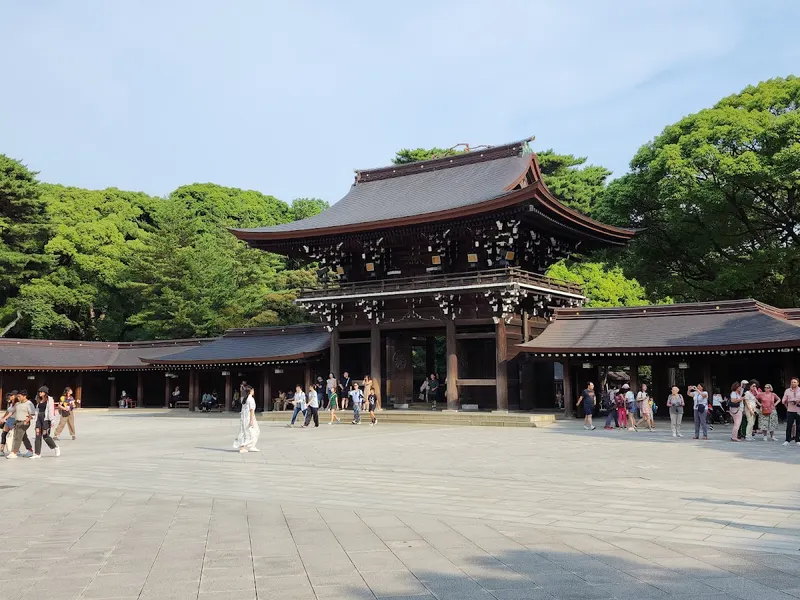
Meiji Jingu & Harajuku
4.7★ · 54,032indoorThe shrine forest beside Harajuku Station creates a quiet break between Yoyogi Park, Takeshita-dori fashion crowds, and Omotesandō shopping. It works best early before school groups and weekend cosplay traffic build.
 2
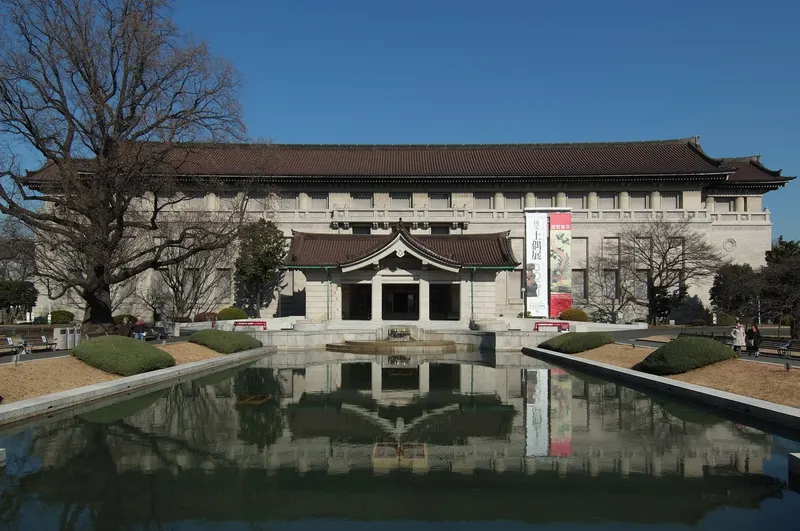
Ueno Park, Tokyo National Museum & Ameyoko
4.5★ · 31,741indoorClosed MonUeno combines major museums, parkland, cherry blossoms, and the Ameyoko market lanes running toward Okachimachi. In sakura season, blue tarps under the trees change the park's rhythm completely.
 3
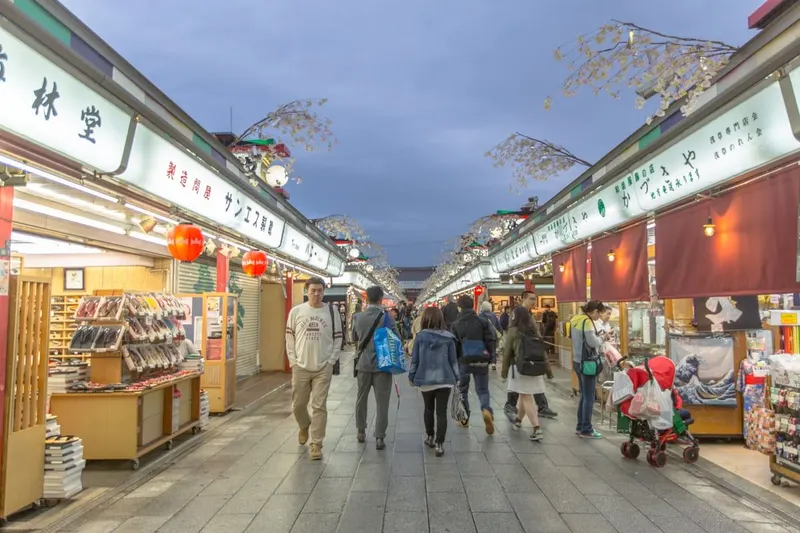
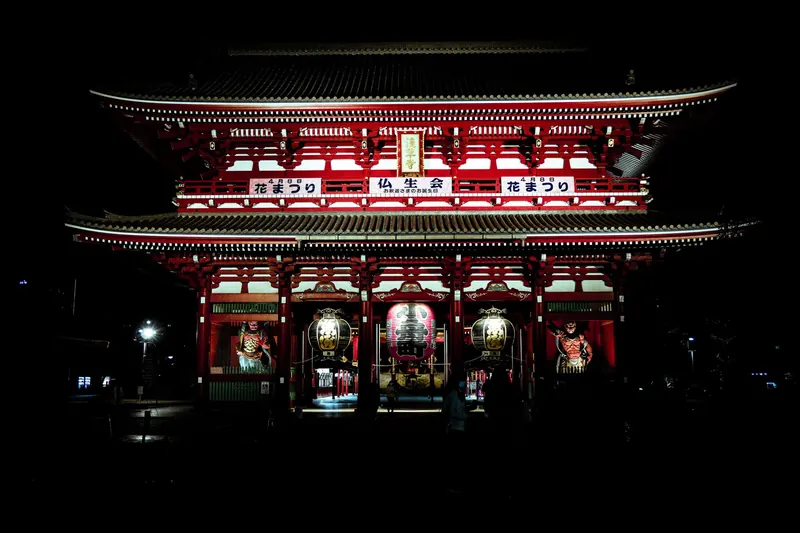
Senso-ji & Nakamise-dori
4.3★ · 15,766mixedOpen dailyAsakusa's temple approach runs through Nakamise-dori souvenir stalls to Tokyo's most famous Buddhist temple. It is the clearest surviving entry point into the old shitamachi east side.
Show 7 more sights
4Akihabara Electric Town
Akihabara in Chiyoda shifted from electronics stalls to a dense mix of parts shops, anime stores, arcades, maid cafes, and otaku retail. Side streets are better than the main avenue for specialist shops.
5Odaiba & the Yurikamome
Odaiba sits on Tokyo Bay, reached by the automated Yurikamome line over the Rainbow Bridge. It is a useful change of scale after dense rail hubs, with waterfront views, malls, and big exhibition spaces.
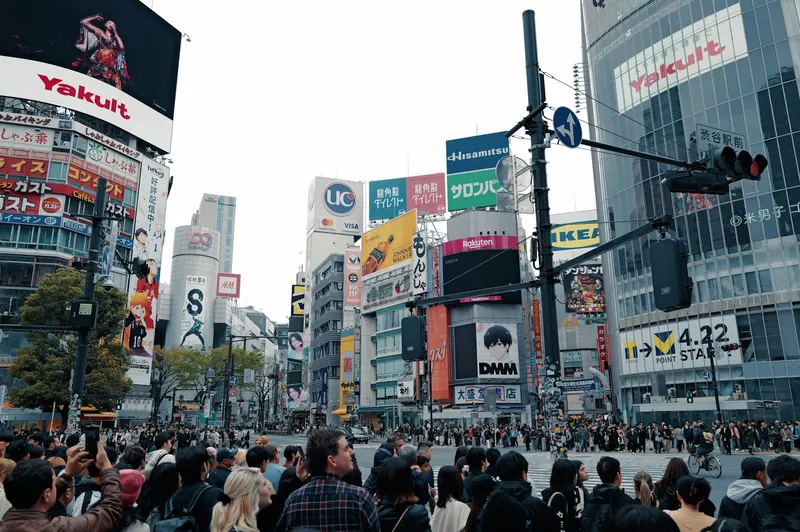
6Shibuya Crossing
The scramble crossing outside Shibuya Station is a rail-node spectacle rather than a long sight. Pair it with Hachiko, Center-gai, Harajuku, or the Shibuya Sky side of the station.
Wikipedia7Imperial Palace East Gardens
The former Edo Castle site sits in Chiyoda inside the Yamanote loop, with moats, stone walls, and garden paths near Tokyo Station. The main palace remains closed except for limited public occasions, so the East Gardens are the everyday visit.
Wikipedia8Tokyo Skytree & Sumida River
The 634-metre Skytree rises on the east side near Oshiage, giving the clearest aerial read of the Sumida River and central Tokyo spread. Combine it with Asakusa by walking or taking a short train hop.
9Ginza & Tsukiji Outer Market
Ginza is Tokyo's high-end shopping grid, while Tsukiji Outer Market still feeds visitors with breakfast sushi, tamagoyaki, and knife shops after the wholesale fish market moved to Toyosu.
10Toyosu Market
Toyosu replaced Tsukiji as Tokyo's wholesale fish-market complex and keeps the tuna auction behind observation areas. It pairs with teamLab Planets, Ariake, or Odaiba by rail and foot.
Auction viewing windows are early; apply for lottery-style close viewing when that program is open.
Wikipedia
Neighborhoods
 1
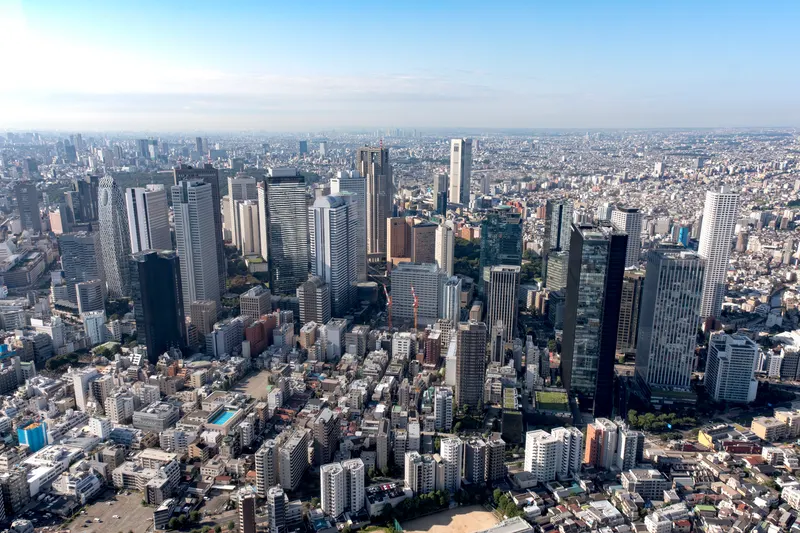
Shinjuku
Shinjuku is a transport machine, nightlife district, and hotel base in one: the station, Tokyo Metropolitan Government towers, Kabukichō, Golden Gai, and department-store basements all stack together.
 2
Shibuya, Harajuku & Ebisu
This west-side belt is youth fashion, crossings, music shops, cafes, and shrine forest. Shibuya and Harajuku bring the crowds; Ebisu is the calmer dinner-and-bar release valve.
 3
Ueno, Asakusa & Taito
Taito keeps the old-town Tokyo feeling with Senso-ji, Ueno museums, Ameyoko, kitchenware streets, and Sumida River access. It is better for temples and markets than late-night skyscraper views.
 4
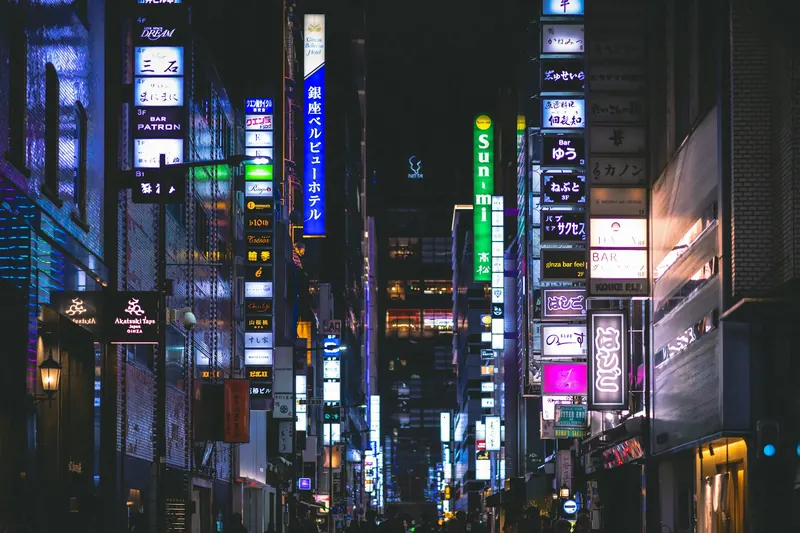
Ginza, Nihonbashi & Tsukiji
Chuo is polished and expensive: Ginza stores, Kabuki-za, Nihonbashi department stores, and Tsukiji breakfasts sit on a gridded east-centre map.
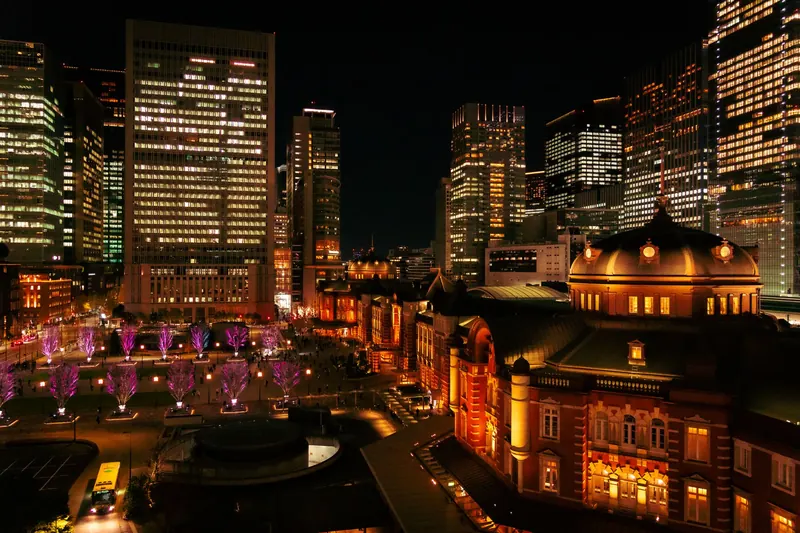 5
Chiyoda, Marunouchi & Akihabara
Chiyoda mixes the Imperial Palace, Tokyo Station, Marunouchi offices, Jimbocho bookshops, and Akihabara hobby retail. It is the business core with sudden specialist pockets.
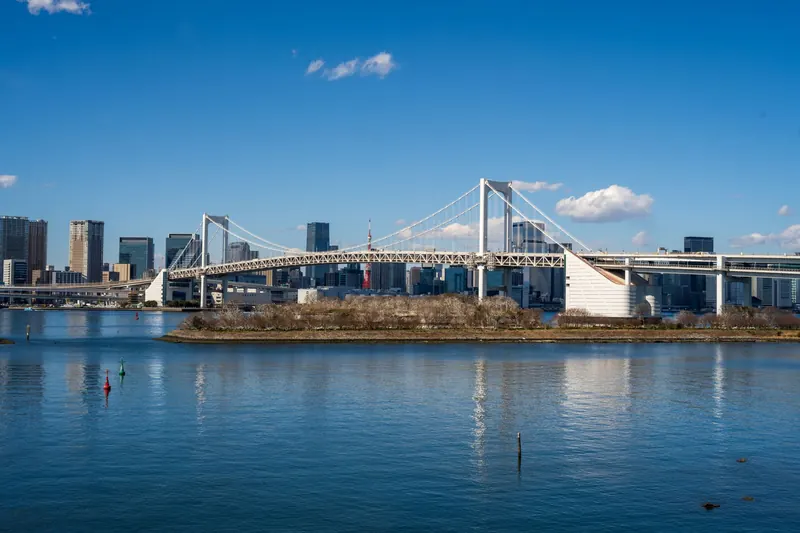 6
Minato, Roppongi & Odaiba
Minato covers embassies, Roppongi museums and nightlife, Tokyo Tower, Shiodome, and bayfront Odaiba. It is spread out, so rail-line choice matters more here than in Taito.
Getting around
Tokyo runs on JR, Tokyo Metro, Toei Subway, and private railways; Suica and PASMO IC cards remove fare math across almost all of them, while the Yamanote loop is the mental map for first-timers. Haneda is the closer airport, Narita is about 70km east, and subway fares in 2026 start around 180 yen with Tokyo Metro/Toei passes useful only on heavy subway-only days.
Kyoto
Kyoto in July
TempTemperature
90°F / 74°F
32°C / 23.6°C
RainPrecipitation
13d
8.9in · 225mm
LightDaylight
14.1h
July is hot, humid, and wet, with Gion Matsuri crowds making central buses and hotel locations important.
City overview
Kyoto sits in a mountain basin in Kansai, with the Kamo River, Higashiyama slopes, Arashiyama hills, and an 794 grid plan shaping temple routes across the former imperial capital. Gion and Higashiyama carry the geisha lanes and hillside temples, Arashiyama holds river-and-bamboo scenery, and Central Kyoto links Kyoto Station, Nijō Castle, Nishiki Market, and the Imperial Palace.
Food & drink
Kyoto food is seasonal and temple-adjacent: kaiseki sequences small courses around season and vessel, shojin ryori is Buddhist vegetarian temple cooking, yudofu near Nanzen-ji turns simmered tofu into the main event, and yuba brings tofu skin into soups and set meals. Nishiki Market, Pontocho, Kiyamachi, Kyoto Station ramen floors, Gion restaurants, Fushimi sake streets, and Uji stops add hamo, matcha sweets, yatsuhashi, and sake tastings.
Events & festivals
- Jul 1 – Jul 31
The Gion Festival (祇園祭, Gion Matsuri) is one of the largest and most famous festivals in Japan, taking place annually during the month of July in Kyoto.
Planning lead · dates set closer in · Source: TripSapien festival dataset
- Jul 17 – Jul 24
Gion Matsuri Yamaboko Procession
Associated occasion: Gion Matsuri.
Planning lead · projected date · Source: TripSapien festival dataset
Holidays & observances
- Jul 19Marine DayPublic holiday
Top sights
Ranked for July suitability using weather, setting, ratings, and review volume.
- 1Sanjūsangen-do
- 2Kiyomizu-dera
- 3Fushimi Inari Taisha
- 4Kinkaku-ji
- 5Ginkaku-ji and the Philosopher Path
- 6Ryōan-ji
- 7Kyoto Imperial Palace and Kyoto Gyoen
- 8Nijō Castle
- 9Nishiki Market
- 10Arashiyama Bamboo Grove and Tenryū-ji
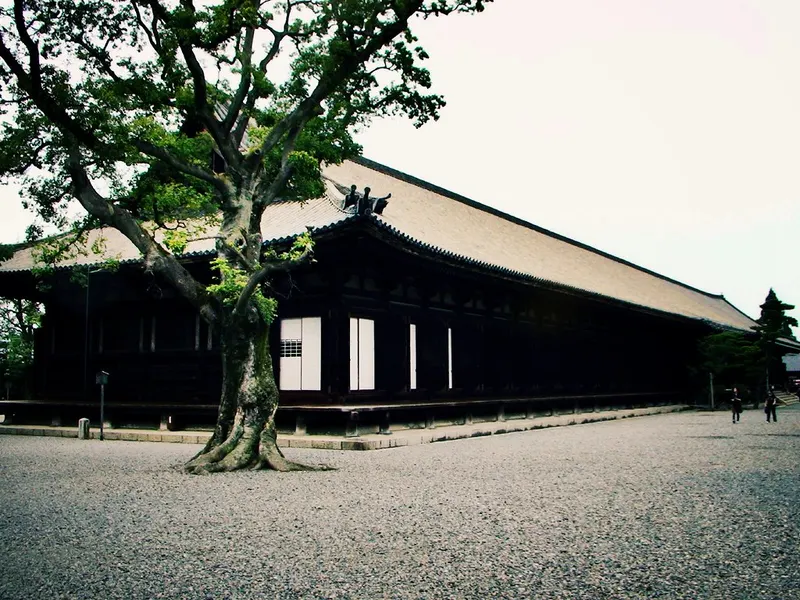 1
Sanjūsangen-do
4.7★ · 17,558indoorOpen dailyThe long temple hall near Shichijo holds 1,001 images of Kannon in a single dramatic interior. It works well with Kyoto National Museum and routes between Kyoto Station and Higashiyama.
Wikipedia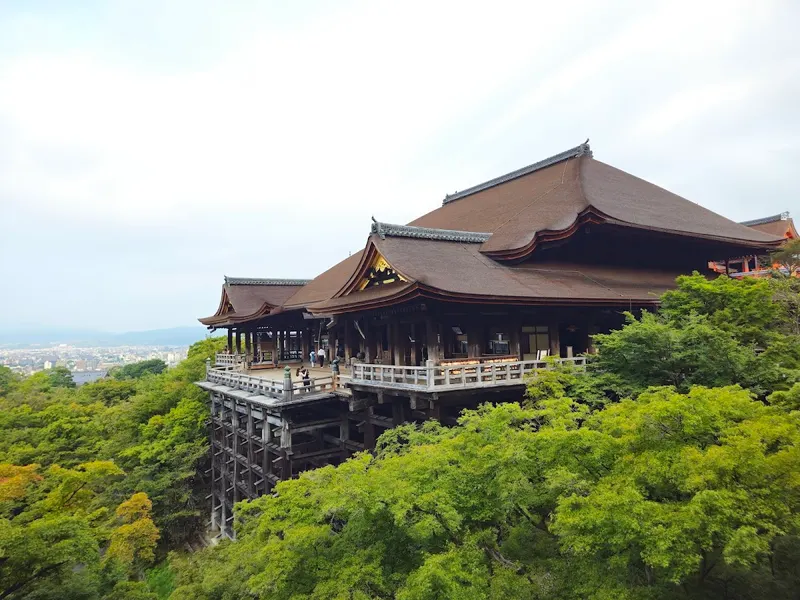 2
Kiyomizu-dera
4.6★ · 73,840indoorOpen dailyThe Higashiyama temple is famous for its large wooden stage above the hillside and the approach streets of Sannenzaka and Ninenzaka. It is one of the Historic Monuments of Ancient Kyoto in the UNESCO listing.
WikipediaArrive near opening or late afternoon; the Higashiyama approach lanes bottleneck during cherry blossom and autumn color weeks.
 3
Fushimi Inari Taisha
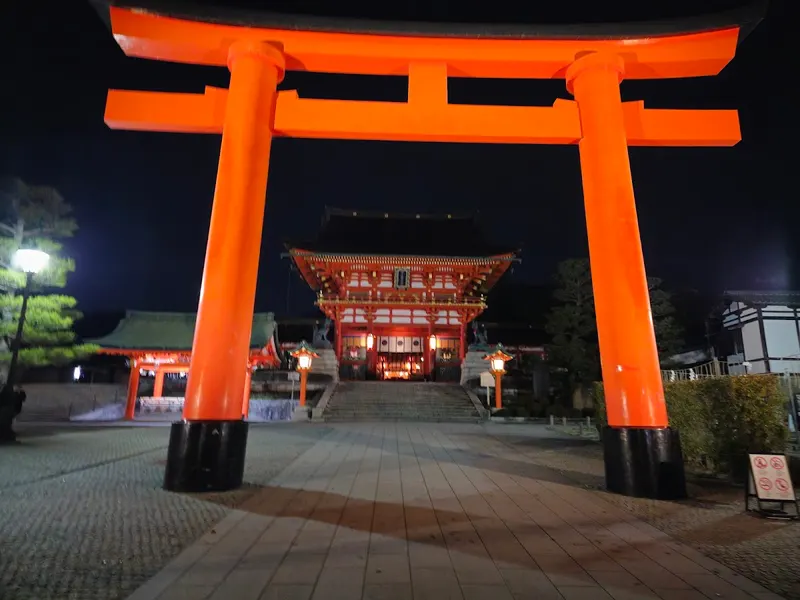
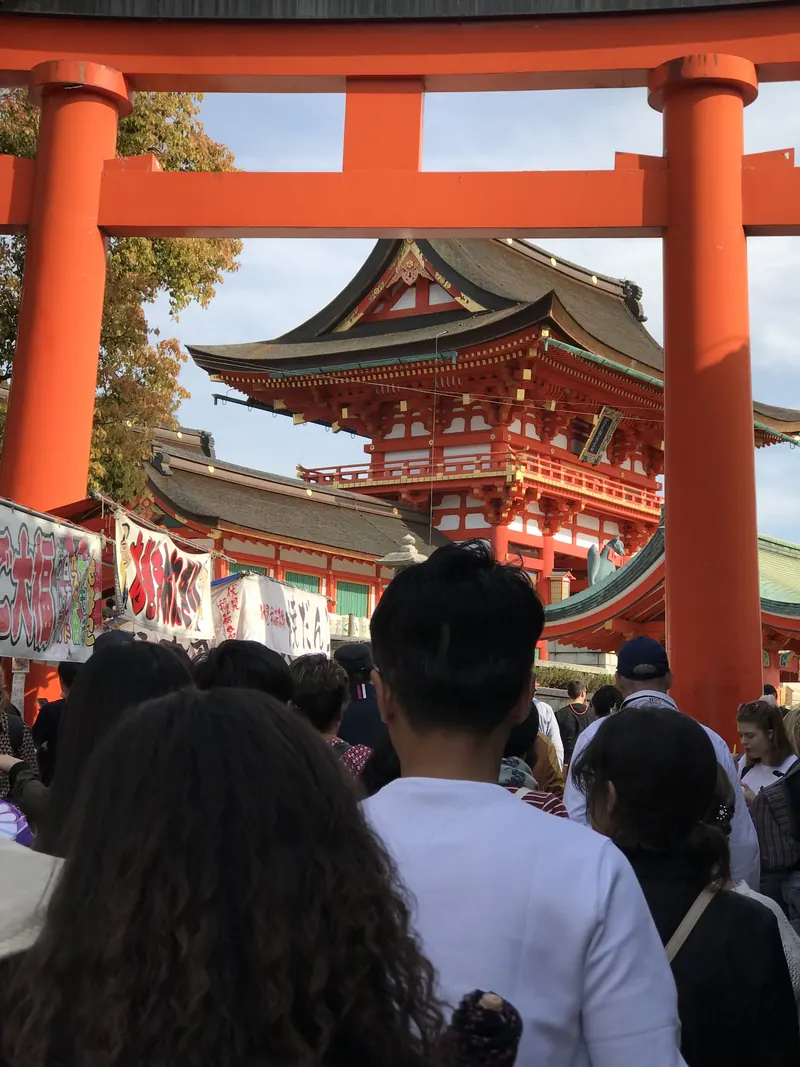
4.6★ · 93,091indoorOpen dailyThousands of vermilion torii gates climb Mount Inari from the shrine beside JR Inari station. The full mountain loop takes far longer than the first photo corridor and thins out above the lower shrines.
Wikipedia
Show 7 more sights
4Kinkaku-ji
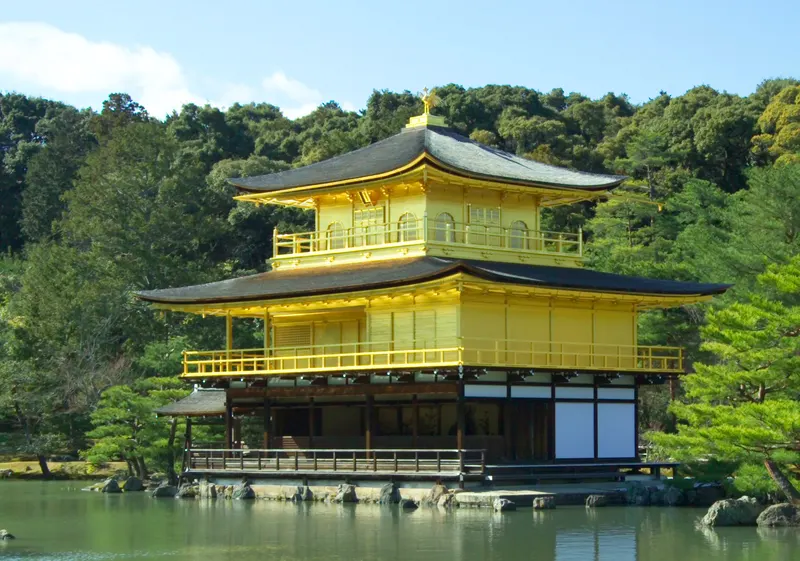
The Golden Pavilion in northern Kyoto reflects across its pond as one of the city best-known temple images. It sits in a temple-rich northern district with Ryōan-ji and Ninna-ji nearby.
Wikipedia5Ginkaku-ji and the Philosopher Path
Ginkaku-ji, the Silver Pavilion, anchors the northern end of the Higashiyama walking route. The Philosopher Path follows a canal south toward Nanzen-ji and is strongest in cherry blossom season.
6Ryōan-ji
Ryōan-ji is known for its dry rock garden in northern Kyoto and sits close to Kinkaku-ji on the same temple arc. The restrained garden gives a different pace from the larger shrine crowds.
Wikipedia7Kyoto Imperial Palace and Kyoto Gyoen
The Imperial Palace stands inside Kyoto Gyoen, the large central park that preserves the court-era layout before the 1868 move to Tokyo. Palace visits, broad gravel paths, and seasonal trees give the city center breathing room.
8Nijō Castle
Nijō Castle was a Tokugawa shogun residence in central Kyoto and is part of the UNESCO group. Painted rooms, defensive gates, gardens, and nightingale floors explain power in Kyoto after the imperial court era.
Wikipedia9Nishiki Market
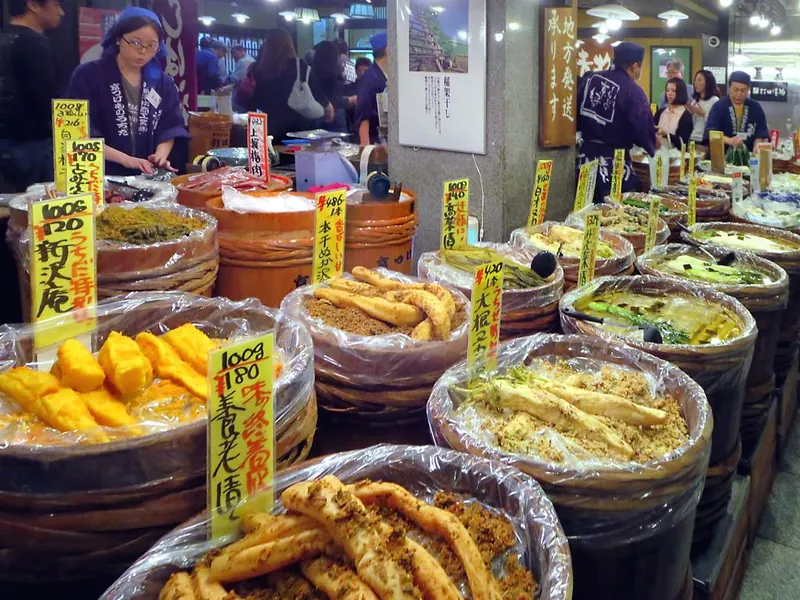
Nishiki Market runs through downtown Kyoto with pickle shops, seafood counters, tea sweets, yuba, knives, and snack stalls. It connects naturally with Teramachi, Shinkyogoku, and Kawaramachi shopping streets.
Wikipedia10Arashiyama Bamboo Grove and Tenryū-ji
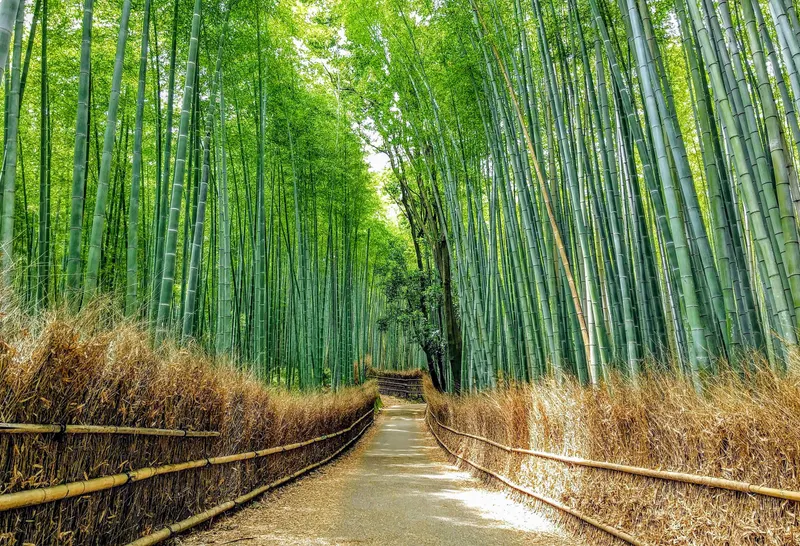
Arashiyama pairs the famous bamboo path with Tenryu-ji, Togetsukyo Bridge, and the Katsura River below wooded hills. JR Saga-Arashiyama, Randen trams, and Hankyu Arashiyama all reach the district.
Neighborhoods
 1
Gion and Higashiyama
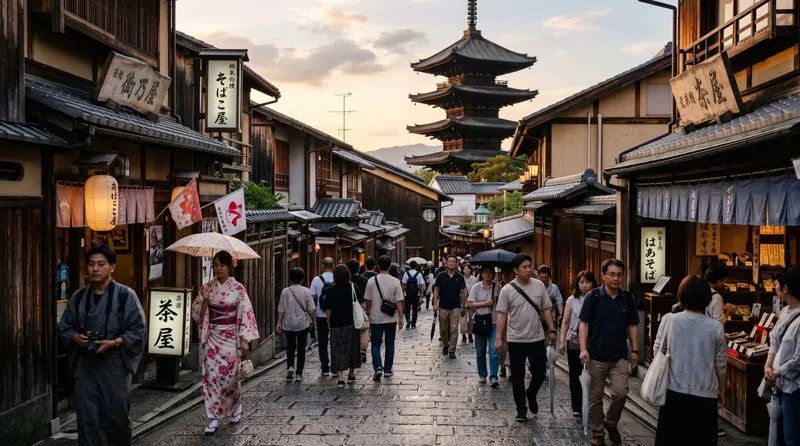
Gion and Higashiyama are Kyoto lanes and slopes, with Hanami-koji, Yasaka Shrine, Kiyomizu-dera, Sannenzaka, Ninenzaka, teahouses, and heavy evening foot traffic.
 2
Downtown Kyoto and Nishiki
Downtown centers on Shijo-Kawaramachi, Nishiki Market, Teramachi, Shinkyogoku, Pontocho, Kiyamachi, and the Kamo River dining terraces.
 3
Arashiyama and Sagano
Arashiyama and Sagano feel greener and slower, with bamboo groves, Tenryu-ji, Togetsukyo Bridge, riverboats, monkey park climbs, and temple lanes.
 4
Northern Kyoto
Northern Kyoto collects Kinkaku-ji, Ryōan-ji, Ninna-ji, Kamigamo Shrine, Shimogamo Shrine, university edges, and quieter residential streets.
 5
Central Kyoto and Kyoto Station
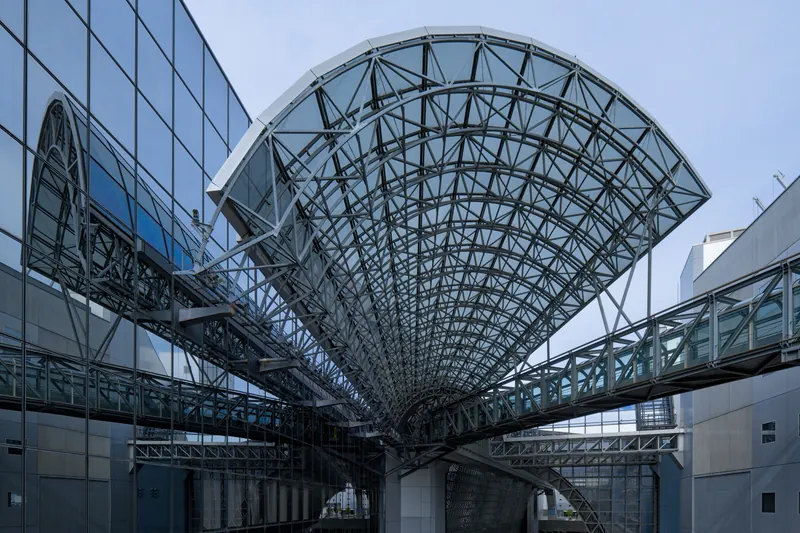
Central Kyoto includes Kyoto Station, Nijō Castle, Kyoto Gyoen, the Imperial Palace, Nishi Hongan-ji, business hotels, and bus hubs.
 6
Fushimi and Southern Kyoto
Fushimi and southern Kyoto add Fushimi Inari, sake breweries, Tofuku-ji, Daigo-ji, and rail links toward Uji and Nara.
Getting around
Use ICOCA on JR, Keihan, Hankyu, Kyoto Subway, city buses, Randen, and most regional rail; Kyoto Station, Shijo-Kawaramachi, Sanjō Keihan, and Kitaoji are the useful transfer points. Buses reach Kinkaku-ji and many northwestern temples, Keihan is best for Gion-Fushimi Inari, Hankyu helps Arashiyama, and bicycles work well in the central grid outside peak crowds.
Osaka
Osaka in July
TempTemperature
89°F / 77°F
31.6°C / 25°C
RainPrecipitation
21d
7.4in · 188.4mm
LightDaylight
14.5h
Sea
85.6°F
29.8°C
July is hot, humid, and rainy, making early castle visits and late Dōtonbori grazing better than midday routes.
City overview
Osaka is Kansai's food-and-rail hub, historically called Naniwa and shaped by rivers, canals, merchant districts, and the north-south pull between Umeda and Namba. Kita, Minami, Tennoji, Shinsekai, Osaka Castle, and the Bay Area each have a distinct use: trains and towers, neon food streets, old temples, working-class kushikatsu, castle park, and theme-park waterfront.
Food & drink
Osaka is Japan's kuidaore city, where takoyaki, okonomiyaki, kushikatsu, udon, pressed sushi, and negiyaki are core itinerary items rather than snacks between sights. Dōtonbori and Kuromon Ichiba are the easy first stop, Shinsekai is the kushikatsu base around Daruma, and the city is usually cheaper and louder than Tokyo or Kyoto for counter meals.
Events & festivals
- Jul 24 – Jul 25
The festival commemorates the death anniversary of the deity Sugawara no Michizane, of these festivals, the one held in Osaka at Osaka Tenmangu Shrine is the largest.
Planning lead · dates set closer in · Source: TripSapien festival dataset
- Jul 24 – Jul 25
Tenjin Matsuri Land and Boat Processions
Associated occasion: Tenjin Matsuri.
Planning lead · dates set closer in · Source: TripSapien festival dataset
Holidays & observances
- Jul 19Marine DayPublic holiday
Top sights
Ranked for July suitability using weather, setting, ratings, and review volume.
- 1Osaka Aquarium Kaiyukan
- 2Sumiyoshi Taisha
- 3National Bunraku Theater
- 4Tsūtenkaku & Shinsekai
- 5Dōtonbori
- 6Shitennoji
- 7Abeno Harukas 300
- 8Universal Studios Japan
- 9Osaka Castle & Osaka Castle Park
- 10Kuromon Ichiba Market
 1
Osaka Aquarium Kaiyukan
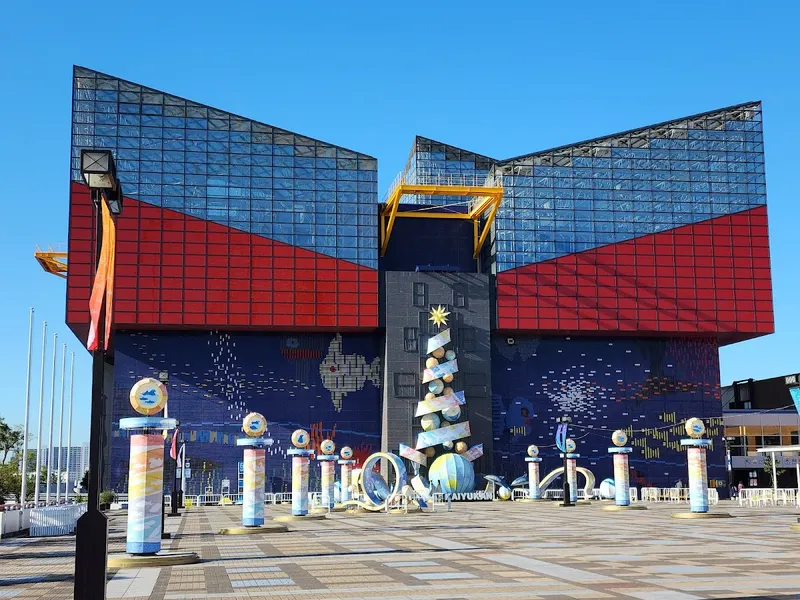
4.5★ · 62,681indoorOpen dailyKaiyukan is one of the world's largest aquariums, with 11,000 tons of water and displays that include whale sharks, otters, dolphins, and seals. Tenpozan Ferris Wheel and the ferry toward Universal Studios Japan sit nearby.
Wikipedia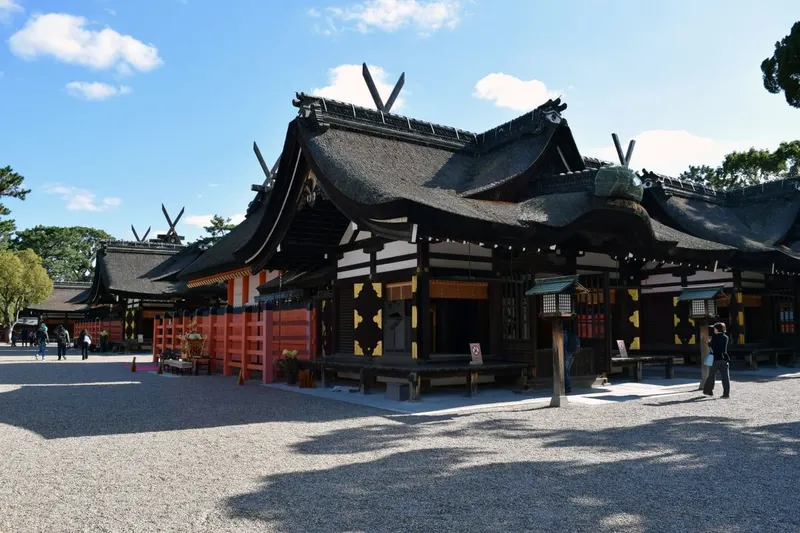 2
Sumiyoshi Taisha
4.5★ · 14,281indoorOpen dailySumiyoshi Taisha south of the centre is one of Japan's oldest Shinto shrines and is known for its arched bridge over a pond and unusual architecture. It gives Osaka a strong shrine stop without leaving the city.
Wikipedia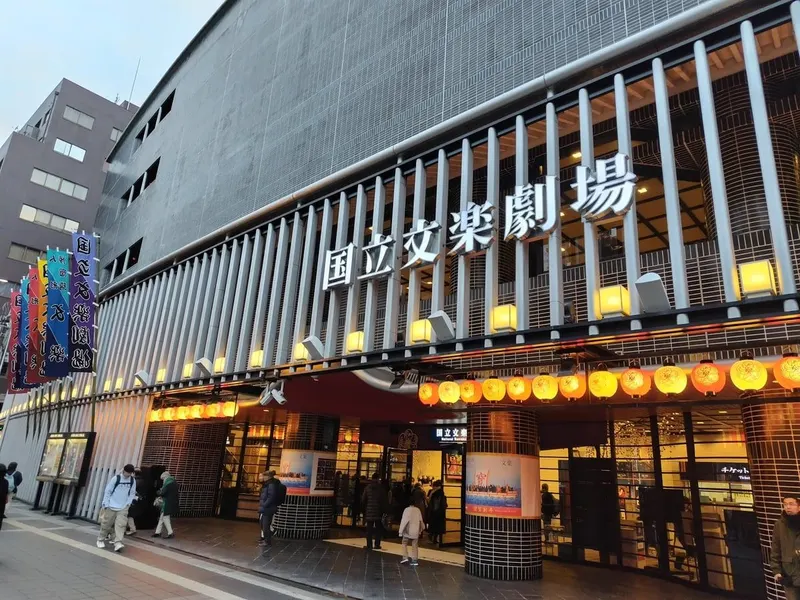 3
National Bunraku Theater
4.2★ · 1,909indoorOpen dailyThe theater near Nipponbashi is one of the few places to see bunraku, the Edo-period puppet theater that uses large puppets operated by three handlers with narration and music. It belongs on the map with Kuromon Market and Namba.
Wikipedia
Show 7 more sights
4Tsūtenkaku & Shinsekai
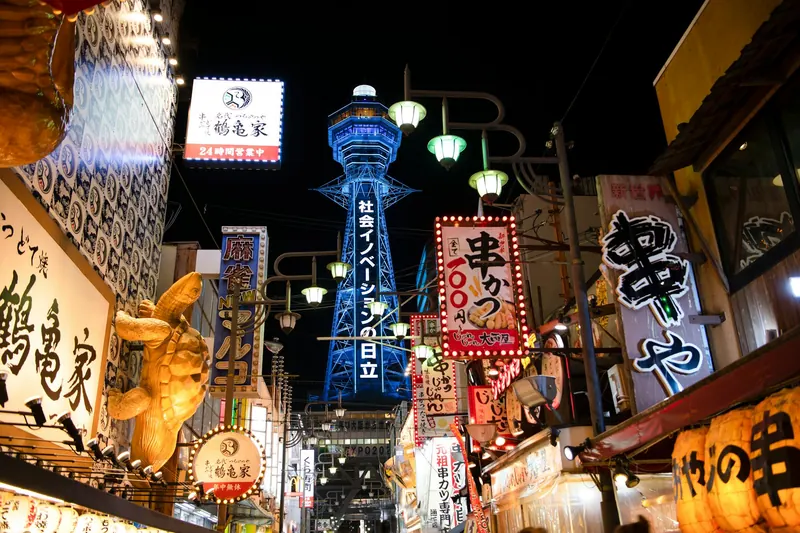
Tsutenkaku is the tower symbol of Shinsekai, a once-amusement district that now mixes carnival games, pachinko, street food, and kushikatsu restaurants. The current tower was designed by Tachu Naito, the engineer behind Tokyo Tower.
5Dōtonbori
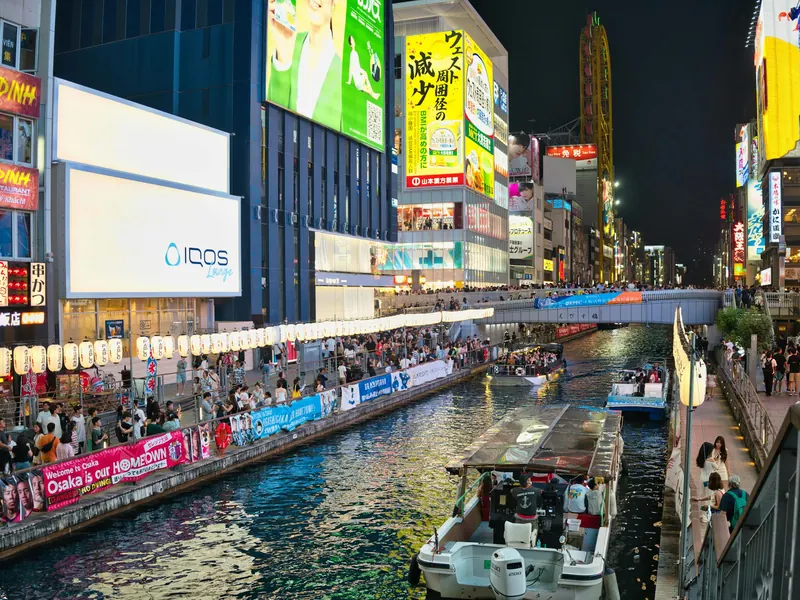
Dōtonbori is Minami's canal-side neon food strip, famous for giant restaurant signs, takoyaki, okonomiyaki, crab, and late-night crowds. It is the core first-night walk from Namba or Shinsaibashi.
Wikipedia6Shitennoji
Shitennoji was founded by Emperor Suiko in 593, making it one of Japan's oldest Buddhist temple sites. Most present buildings are post-World War II reconstructions, but the layout preserves early continental style.
Wikipedia7Abeno Harukas 300
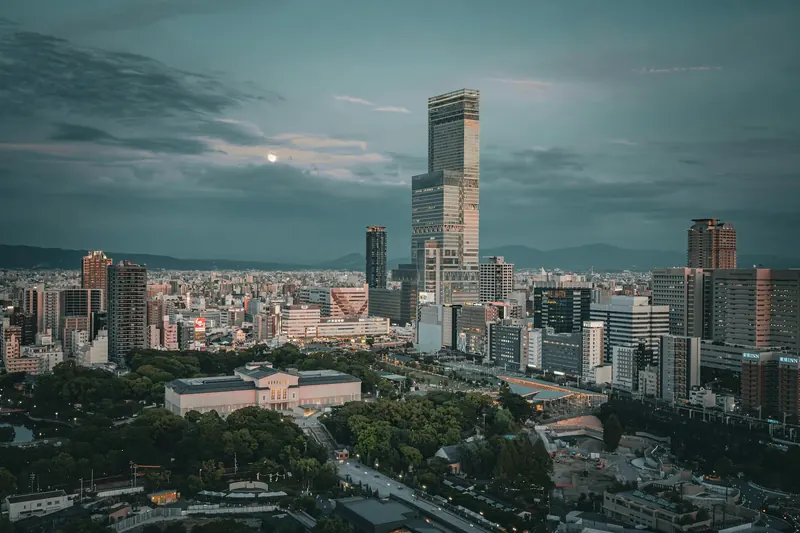
Abeno Harukas rises over Tennoji and Osaka-Abenobashi stations, with the Harukas 300 observatory on the 60th floor at 300m. Free city views are also possible from public windows around the 16th to 30th floors.
8Universal Studios Japan
Universal Studios Japan anchors the Bay Area and is Japan's second-largest theme park. It is connected to central Osaka by rail spurs from the Osaka Loop Line and can consume a full day.
Buy dated park tickets and timed-entry options ahead for peak school holidays and major ride areas.
Wikipedia9Osaka Castle & Osaka Castle Park
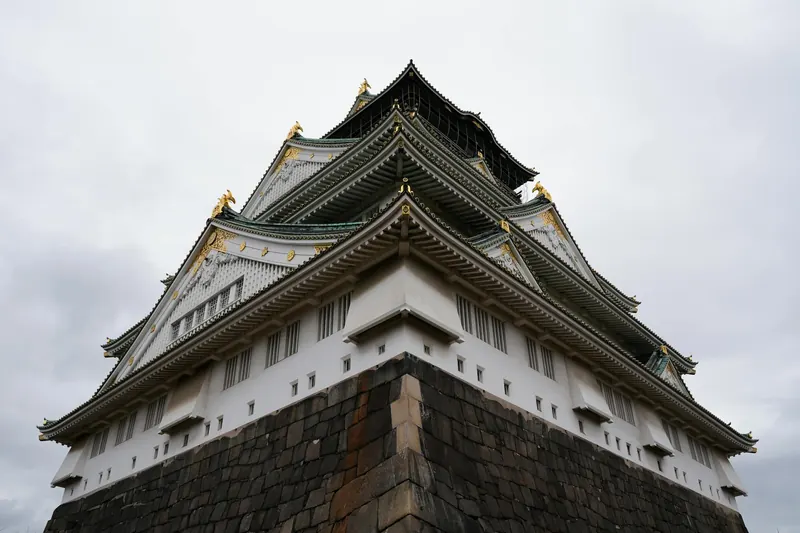
Osaka Castle is one of Japan's most visited sights, although the current keep is a reconstruction with a modern museum interior. The surrounding park, moats, and nearby Osaka Museum of History give the better read on why the castle matters.
10Kuromon Ichiba Market
Kuromon Ichiba sits near Namba as a seafood, fruit, snack, and kitchen-goods market. It is touristy now, but still useful for a quick grazing route before Dōtonbori or Den Den Town.
Neighborhoods
 1
Kita, Umeda & Osaka Station
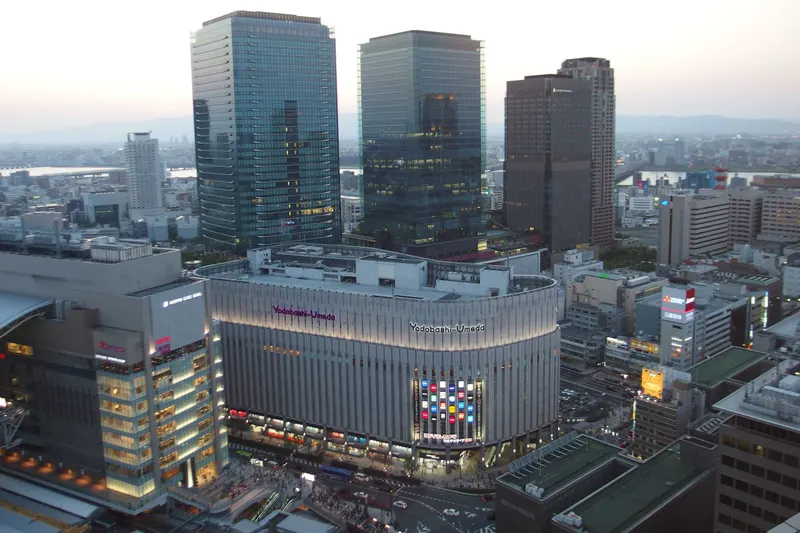
Kita is the northern rail-and-office centre, with JR Osaka, Umeda stations, department stores, underground malls, and the Umeda Sky Building. It is practical for hotels and regional day trips.
 2
Minami, Namba & Shinsaibashi
Minami is the neon food-and-shopping core, with Namba, Shinsaibashi, Dōtonbori, Horie, Amerikamura, and dense late-night streets. First-time visitors spend more time here than anywhere else.
 3
Tennoji & Abeno
Tennoji is a major rail hub with Shitennoji, Tennōji Park, the zoo, Abeno Harukas, and links to Nara. It feels older and more local than Umeda.
 4
Shinsekai
Shinsekai sits west of Tennoji around Tsutenkaku, Jan-Jan Yokocho, kushikatsu counters, arcade games, and old amusement-district texture. Stay alert but do not skip it for food.
 5
Osaka Castle & Kyobashi
The castle side combines broad parkland, Osaka Business Park, history museums, and Kyobashi nightlife. It is better for daytime space than for a first restaurant base.
 6
Bay Area
The Bay Area is purpose-built leisure: Universal Studios Japan, Kaiyukan, Tenpozan Ferris Wheel, malls, and ferries. It is a full-day zone rather than a casual after-dinner walk.
Getting around
Osaka moves on Osaka Metro, JR, Hankyu, Hanshin, Kintetsu, Keihan, and Nankai lines; ICOCA IC cards remove fare math across almost all of them, while the Midosuji subway line links Shin-Osaka, Umeda, Shinsaibashi, Namba, and Tennoji in one spine. Kansai Airport connects by Nankai to Namba or JR to Tennoji and Osaka, and the JR Osaka Loop Line helps with castle, Tennoji, and Universal Studios spurs.
Planning the Japan Golden Route route?
Add your dates and we'll pace all 3 cities — every place checked for closures, limited hours, and booking needs in July.
Weather by month for the Japan Golden Route trip
In July, climate averages for Tokyo, Kyoto and Osaka show daytime highs from 30°C / 86°F to 32°C / 90°F, with nights down to about 23°C / 73°F in the coolest of those cities. The rainiest of those cities averages about 13 rainy days. Based on climate averages for Tokyo, Kyoto and Osaka, July is mixed for weather comfort.
The most comfortable months for this route are November, October and April, based on average daytime temperatures and rainfall in Tokyo, Kyoto and Osaka. July 2027 is mixed for weather comfort.
Common questions about the Japan Golden Route trip
- When is the best time to do the Japan Golden Route trip?
- The most comfortable months across Tokyo, Kyoto and Osaka are November, October and April, based on average daytime temperatures and rainfall for those cities. July is mixed for weather comfort — see the city climate sections below for the averages in July 2027.
- How many days do you need for the Japan Golden Route trip?
- A comfortable Japan Golden Route trip runs about 9–11 days, allowing roughly Tokyo 4, Kyoto 3, Osaka 2 nights plus travel between stops. Add a day if you want a slower pace or extra day trips.
- What's the route for the Japan Golden Route trip?
- The classic order is Tokyo, Kyoto & Osaka. The detailed month sections below cover Tokyo, Kyoto and Osaka.
Ready to plan the Japan Golden Route trip?
Turn this route into a day-by-day plan for July 2027, every stop checked for closures and booking needs on your exact dates.