Things to do in Fukuoka
Top things to do in Fukuoka include Fukuoka Castle Ruins and Maizuru Park, Ōhori Park, Hakata. Plan each day around one neighborhood to avoid backtracking, then add your dates to check opening hours and booking needs.
First visit? Start with these — and plan each day around one neighborhood:
- Fukuoka Castle Ruins and Maizuru Park★ 4.1 · 5.0k reviewsKuroda Nagamasa built Fukuoka Castle from 1601 to 1607, and stone walls, gates, moats, and viewpoints remain inside Maizuru Park.
- Ōhori Park★ 4.5 · 15.9k reviewsThe city opened Ohori Park in 1929 around a large pond modeled on West Lake garden scenery from China.
- HakataHakata is the rail-and-temple side, with Hakata Station, Tochoji, Kushida Shrine, Canal City, old merchant lanes, and easy airport subway access.
- Getting aroundFukuoka City Subway links the airport, Hakata, Tenjin, Nakasu, Ōhori, Nishijin, and Meinohama, with Hakata only two stops from the domestic terminal.
By TripSapien · Updated November 3, 2026
About Fukuoka
City overview
Fukuoka is Kyushu's gateway city, where Hakata station, Tenjin shopping streets, Nakasu yatai, and Hakata Bay beaches sit closer together than Tokyo or Osaka travelers expect. The useful split is Hakata for rail and temples, Tenjin and Daimyo for shopping and nightlife, and Ōhori, Momochi, and the bayfront for parks, museums, and sea air.
Food & drink
Fukuoka food is Hakata-specific and night-stall friendly: tonkotsu ramen uses cloudy pork-bone broth and thin noodles, mentaiko seasons cod roe with chile, motsunabe simmers beef or pork offal with cabbage and garlic chives, and mizutaki is a chicken hotpot. Nakasu river stalls, Nagahama ramen shops, Yanagibashi Rengo Market, and Tenjin department-store basements add goma saba, gyoza, late yatai noodles, and seafood counters.
What Fukuoka is best for
Fukuoka is best for food, architecture, art, nightlife, and history.
- How long to stay
- A weekend to a week
- Typical budget
- Mid-range
Top sights
Ranked using weather, setting, ratings, and review volume.
- 1Kushida Shrine
- 2Tochoji Temple
- 3Canal City Hakata
- 4Fukuoka Tower
- 5Fukuoka Asian Art Museum
- 6Hakata Machiya Folk Museum
- 7Momochi Seaside Park
- 8Dazaifu Tenmangū
 1
Kushida Shrine
4.3★ · 14,188Founded in 757, Kushida Shrine is Hakata's guardian shrine and the spiritual home of the Hakata Gion Yamakasa festival. The shrine is a short walk from Canal City and the Kawabata shopping arcade.
Wikipedia 2
Tochoji Temple
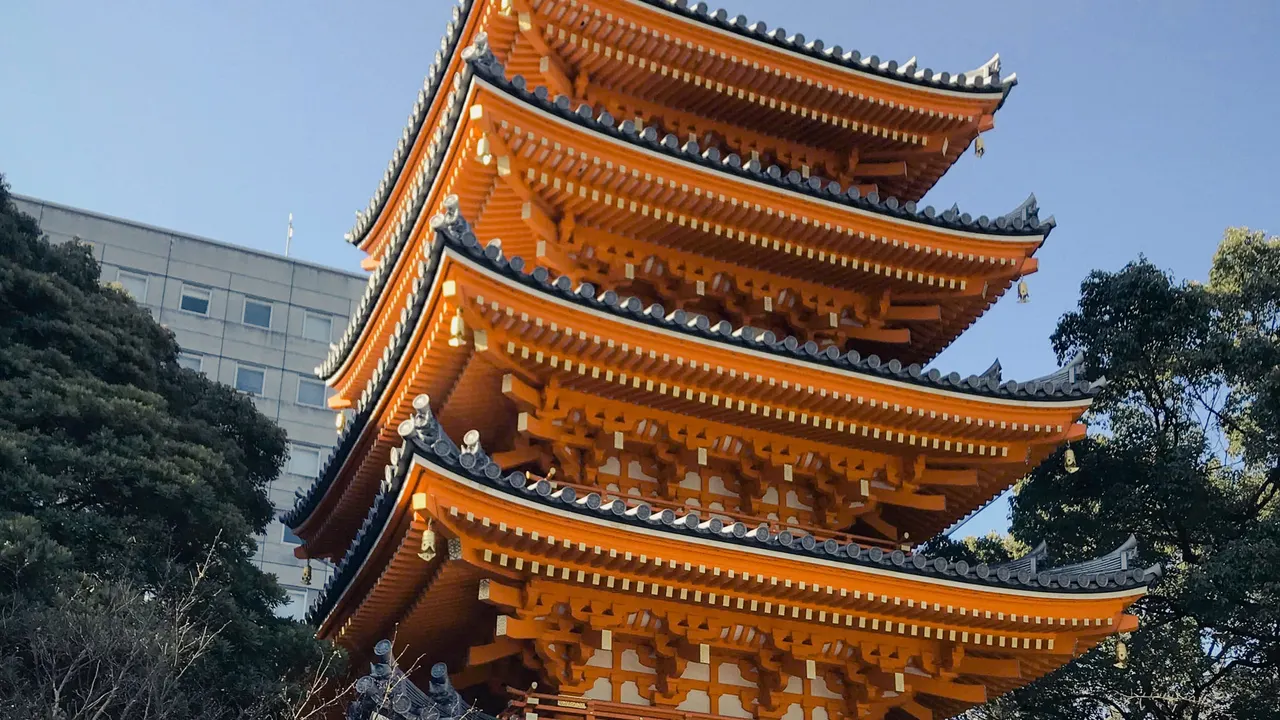
4.4★ · 4,182Kukai is said to have founded Tochoji in 806 after returning from China, and the temple now houses a large wooden Fukuoka Daibutsu completed in 1992. It is near Gion subway station and Hakata old-town lanes.
 3
Canal City Hakata
4.2★ · 56,296The Jerde Partnership designed this curved shopping-and-entertainment complex, which opened in 1996 around an artificial canal. It sits between Hakata Station, Nakasu, and Kushida Shrine.
Wikipedia
Show 5 more sights
4Fukuoka Tower
Built for the 1989 Asia-Pacific Exposition, the 234-metre mirrored seaside tower is Japan's tallest beachside tower. The observation deck overlooks Momochi Seaside Park, Hakata Bay, and the city grid.
Wikipedia5Fukuoka Asian Art Museum
The museum opened in 1999 inside the Riverain Center and focuses on modern and contemporary art from across Asia. It sits above Nakasu-Kawabata station, close to yatai streets and the river.
Wikipedia6Hakata Machiya Folk Museum
Opened in 1995, this small museum recreates Hakata merchant-house life with festival displays, weaving demonstrations, and old-town tools. It stands across from Kushida Shrine.
7Momochi Seaside Park
The reclaimed waterfront was developed for the 1989 expo and now holds beaches, Marizon pier, Fukuoka Tower, and waterfront cafes. It is west of the city center near Nishijin and the PayPay Dome.
8Dazaifu Tenmangū
The shrine honoring scholar Sugawara no Michizane dates to the 10th century and is Kyushu's classic exam-success pilgrimage. It is outside central Fukuoka but close enough for a half-day from Tenjin.
Wikipedia
Neighborhoods
 1
Tenjin
Tenjin is the shopping and transit core, anchored by department stores, underground malls, buses, Nishitetsu trains, and food courts around Watanabe-dori.
 2
Nakasu
Nakasu is the neon island between rivers, known for yatai stalls, bars, clubs, canal views, and late-night ramen near Nakasu-Kawabata station.
 3
Daimyo and Imaizumi
Daimyo and Imaizumi feel younger and boutique-heavy, with vintage shops, cafes, izakaya, small bars, and side streets west of Tenjin.
Show 26 more neighborhoods
- 4Ōhori and Ropponmatsu
Ōhori and Ropponmatsu are park-and-residential districts, with Ōhori Park, Fukuoka Castle ruins, art museums, universities, and calmer restaurants.
- 5Momochi, Nishijin, and the bayfront
Momochi and Nishijin mix beaches, Fukuoka Tower, PayPay Dome, schools, and suburban shopping along the western waterfront.
- 6Arato
- 7Chikkohonmachi
築港本町 has local stops such as Hakata Port Tower, Bayside Place Hakata Pier, and Restaurant Sola. The area features shopping, dining, and an observation deck with views of the port.
- 8Chiyo
Known for the Tomb of the Wet Kimono, which is associated with the Japanese idiom for false accusation.
- 9Chuo Ward
Tenjin is the largest downtown area in Kyushu, packed with shops and restaurants, while Ohori Park and Fukuoka Castle Ruins offer green spaces and historical sites. Nagahama is known for Nagahama Ramen.
- 10Daimyō
- 11Gokushomachi
Home to Tochoji Temple, a Heian-era temple with a large wooden Buddha statue and ancient carvings. It also contains Japan's First Tea Tree, a descendant of the tree that introduced tea to Japanese culture.
- 12Higashi Ward
Higashi-ku is Fukuoka's east ward, containing the Hakozaki Shrine and Kashii-gū. It also features Marine World Uminonakamichi and Island City.
- 13Imaizumi
- 14Jōnai
- 15Kego
- 16Minami Ward
- 17Minato
- 18Nagao
- 19Ōhori
- 20Ohorikoen
- 21Ōmiya
- 22Ōtemon
- 23Otogana
- 24Ropponmatsu
- 25Saitozaki
Saitozaki in Fukuoka features Marine World Uminonakamichi, a zoo aquarium with dolphin and sea lion shows.
- 26Sawara Ward
Sawara-ku is a large ward containing several distinct areas. Momochihama has Fukuoka Tower, Fukuoka City Museum, and Fukuoka City Library, while Nishijin features Nishijin Praliva and Seinan Gakuin University.
- 27Shiojizaka
- 28Tani
- 29Uomachi
Day trips
16km / 35min by Nishitetsu train from Tenjin via Futsukaichi
Dazaifu
Dazaifu Tenmangū, Kyushu National Museum, plum sweets, and temple approaches make this the simplest culture trip from Fukuoka.
55km / about 50min by Nishitetsu limited express from Tenjin
Yanagawa
Canal boat rides, eel restaurants, and old merchant houses give Yanagawa a lowland water-town feel south of the city.
30km / 45min by JR Chikuhi Line or car from Hakata
Itoshima
Beaches, cafes, Futamigaura torii, and sunset coastline make Itoshima the favorite sea-and-countryside escape west of Fukuoka.
Getting around
Fukuoka City Subway links the airport, Hakata, Tenjin, Nakasu, Ōhori, Nishijin, and Meinohama, with Hakata only two stops from the domestic terminal. IC cards such as Hayakaken, nimoca, Suica, and ICOCA work on subway, Nishitetsu trains, buses, and convenience-store payments.
Planning a Fukuoka trip?
Add your dates and we'll check every place for closures, limited hours, and booking needs before you go.
Things to do in Fukuoka by month
Pick a month for weather, any sourced events, holidays or observances, and seasonal timing. May, October and June have the most comfortable weather (tagged below).
Common questions about Fukuoka
- Which neighborhoods should I explore in Fukuoka?
- Hakata, Tenjin, Nakasu are useful starting points. Plan each day around one or two neighboring areas to avoid unnecessary backtracking.
- When is the best time to visit Fukuoka?
- May, October, June balance comfortable temperatures with fewer rainy days in Fukuoka.
- How many days do you need in Fukuoka?
- a weekend to a week gives you time for food, architecture, and art in Fukuoka. Choose your month to see date-specific details.
- What is Fukuoka known for?
- Fukuoka is best for food, architecture, art, nightlife, and history. For matched places, TripSapien checks available hours, closure signals, and booking links.
Ready to plan Fukuoka?
Turn everything above into a day-by-day Fukuoka plan, with every place checked for closures and booking needs on your dates.